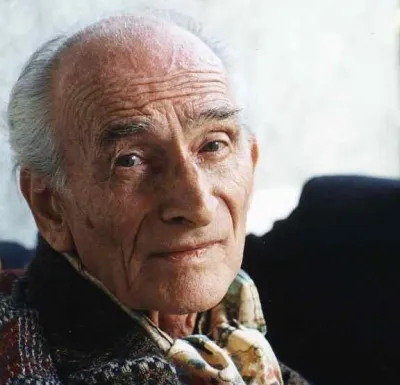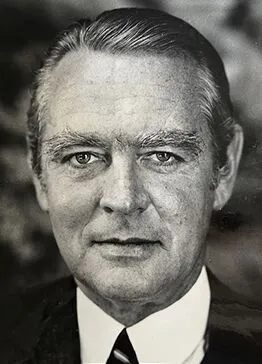
Berthold Beitz
Human Design Chart
Biography
He died on 30 July 2013, age 99.
Berthold Beitz as a Manifesting Generator 6/2 in Human Design
Manifesting Generator 6/2 — Design at a Glance
Berthold Beitz worked with hybrid energy: He had the constant power of a Generator paired with the lightning-fast execution force of a Manifestor. His design allowed him to skip steps and quickly pull results into his life. This speed, however, was a double-edged sword. Often Berthold Beitz acted too quickly and skipped important intermediate steps, forcing him later to backtrack and fill in these gaps. This led to frustration, the specific suffering path of his type. Additionally, he tended to juggle multiple projects instead of focusing on one thing at a time. As long as he did not internally agree, his creative power would quickly turn into dissatisfaction.
The key to his effectiveness lay in reacting rather than initiating. He had to wait for impulses from life and check if his sacral center responded with a clear 'yes'. Only then could he act. With the correct application of this strategy, Berthold Beitz developed a 'play mode'. Variety and fun were not distractions but essential fuel. In this state, multitasking was no problem but rather a source of deep satisfaction. His success rested on learning to channel his enormous energy through constant internal agreement checks instead of fighting against the current of his own nature.
Emotional Authority
Berthold Beitz's decision-making followed a clear rhythm of emotional detachment and conscious time delay. His design suggested that spontaneous impulses were often misleading; true clarity emerged only after an emotional wave subsided. This resulted from his Emotional Authority: With his Emotions Center defined, he was subject to constant mood swings. The world appeared colored by the current mood – sometimes enthusiastic, sometimes negative. A feeling in the moment was merely a snapshot, not necessarily his truth. Quick decisions based on this state could have negative consequences.
The mechanics of his authority required patience and multiple 'sleeping over' of decisions. The longer he waited, the deeper he could see. He should be hesitant and ask himself several times until intense feelings subsided. Only then did emotional distance emerge; clarity and calmness set in. This process was especially crucial for long-term, life-defining steps to avoid negative repercussions and find his own truth.
The 6/2 Profile — Role Model / Hermit
Berthold Beitz's design laid out a clear developmental dynamic: In the early years, a process of trial and error dominated, marked by the necessity to learn through personal experience. This phase of experimentation served as preparation for later maturity. With the transition into adulthood, particularly after age 30, this attitude fundamentally changed. Berthold Beitz then showed a tendency towards deep introspection and withdrawal to look at accumulated experiences from a distance. This process of self-reflection was his time of healing and understanding.
This transformation reflects the mechanics of his profile. The early phase corresponded to learning through direct confrontation with personal limits, while later development was marked by the ability to withdraw and focus. From this distance, Berthold Beitz developed a stance of integrity and overview. He became a source of wisdom not through theoretical knowledge but through condensed experience of his own path. Other people sought him out to share in this clarity. His role as an exemplar arose from the ability to clearly recognize the essence of others and smooth their way through personal authenticity. The initial restlessness thus transformed into a calm, instructive authority based on genuine self-awareness.
Split Definition — Defined & Open Centers
Berthold Beitz exhibited a constant mechanical drive and willpower paired with reliable expressiveness. His design was characterized by defined Heart and Sacral centers, granting him permanent access to willpower and vital energy. This combination created a strong, self-determined presence that he clearly communicated through his defined Throat center. His voice spoke from an 'I' that knew what it wanted and did – an expression of determination and action capability not dictated by the mind but springing from this inner source of power.
At the same time, Berthold Beitz had defined Solar Plexus and Spleen centers. This meant that emotional depth and intuitive security were constant factors in his life. The Solar Plexus required patience; his internal authority lay in waiting for the emotional wave to gain clarity before acting. The Spleen provided him with spontaneous, momentary intuitions for survival and well-being, which he could trust without having to rationalize them. These defined centers formed the foundation of his action competence: willpower, energy, expression, emotional clarity through time, and intuitive security in the present.
In contrast, his Head, Ajna, and G centers were open. The open Head center led him not to have a constant mental pressure or inspiration; instead, he tended to engage with others' questions or become mentally confused if he did not listen to his inner authority. An open Ajna center meant a flexible but unstable mind that absorbed concepts and ideas from the environment without identifying them as personal truth. He could easily be influenced by other people's opinions or try to find answers that were not his own.
The open G center showed in a lack of fixed identity and direction. Berthold Beitz relied on relationships and environments to initiate discovering who he was and where he was going. He reflected the energy of his environment and could easily adapt or lose himself if he wasn't at the right place. This openness made him vulnerable to searching for identity and love through external validation rather than owning it from within.
Additionally, his Root center was open, meaning that he absorbed stress from the environment. He tended to take on adrenalized pressure that did not belong to him and could experience hyperactivity or burnout if trying to escape this foreign pressure or use it instead of simply recognizing and letting it be.
Berthold Beitz's design thus combined strong, defined power in will, energy, expression, emotions, and intuition with openness for mental inspiration, identity, and external stress that he had to learn not to take on as his own responsibility. His challenge lay in aligning these powerful inner resources towards emotional clarity and intuitive security without becoming impulsive or being distracted by external mental and identity-related influences.
Channels for intimacy, intuitive precision and binding power.
Berthold Beitz's design was characterized by a synthesis of the urge for merging, the necessity to perfect skills, and a strong will to control the material plane. This configuration shaped his actions as someone who combined intimacy, talent, and economic power.
The Channel of Union 59-6 connected the Sacral center with the Solar Plexus through the Gates of Sexuality (59) and Friction (6). This Tribal channel rooted him in a powerful quantum energy called Intimacy. The emotional wave of pleasure and pain determined the timing for friendships before deeper binding. His urge was to merge; through patience and waiting for emotional clarity, he could shape relationships healthily and satisfyingly. This availability allowed him to quickly enter others' aura and ease confidentiality, paving the way for fertility in every creative endeavor.
Simultaneously, the Channel of Wavelength 48-16 connected his Spleen center with his Throat center through the Gates of Depth (48) and Dexterity (16). Seeking life-critical information and perfecting skills through repetition, this combination transformed pure dexterity into talent. He needed recognition and resources to continue the process of perfection. The intuitive depth from the Spleen center was communicated through technical mastery in the Throat center, often serving a deeper purpose and improving others' lives.
The material aspect was shaped by the Channel of the Money Line 21-45 between Heart and Throat centers. With the Gates of the Hunter (21) and Gatherer (45), he took on the material plane to earn money through willpower. His challenge lay in exercising control without being controlled. He worked best as his own boss, following his natural rhythm. This channel demanded responsibility and hierarchy for securing tribal survival. By balancing work and rest while protecting his interests during service to others, he mastered economic structures and secured financial independence.
Tribal Circuitry — Circuit Signature
Berthold Beitz showed himself as someone who strategically used material resources for the future. His design combined logical structuring with instinctive genetic protection. The Understanding Circuit gave him the ability to share rational insights free from emotions. Through Channel 16-48 ("The Wavelength"), his Throat and Spleen centers were directly connected, enabling clear communication of visual information and guiding society towards a better future.
Parallel to this, the Ego Circuit served not individual 'I', but tribal community. Here cooperation and joint creation of prosperity was key. Channel 21-45 ("The Money Line") linked his Throat with Heart center, promoting material resource accumulation through mutual support and traditional values. As this circuit lacked a connection to the Sacral center, Berthold Beitz needed rest periods for energy regeneration for the tribe.
A third aspect was the Archer Circuit securing family survival. Channel 6-59 ("Union") connected his Sacral with Solar Plexus centers. This connection underpinned his actions with primal energies of protection, defense, and genetic nutrition provision.
Due to his Shared Definition, these energies existed in two separate groups. The Throat, Spleen, and Heart center connection formed a cohesive power for strategic resource acquisition and communication. Sacral and Solar Plexus centers formed a separate parallel unit for instinctive family protection. These two systems worked alongside each other without directly flowing into one another, leading Berthold Beitz to experience logical future planning and deep genetic instincts as distinct yet complementary forces.
Left Angle Cross of Healing 2
Berthold Beitz's design includes the configuration of the left healing cross 2. As there are no specific mechanical details or accompanying events specified in the available data, it is not possible to derive a character emphasis or behavioral pattern from this structure. The presence of this cross indicates a certain energetic alignment within the Human Design system without determining concrete action patterns or life events. Without further information about the involved gates, channels, or centers, the statement power of this configuration for Berthold Beitz remains limited to merely naming the structure. No assumptions are made about his personality, decisions, or life path as these do not emerge from the raw content provided. The mechanics of this cross stand isolated without contextual integration into his overall profile. Thus, the description is confined to noting the presence of this specific design element. Further interpretations or biographical attributions based on the given facts are neither possible nor permissible.
Saturn Return · Uranus Opposition · Chiron Return · 2nd Saturn Return — Life Cycles
Berthold Beitz's life path was marked by clear structuring moments that combined responsibility and sudden turns. In 1941, at age 28, his first Saturn return occurred – a cycle often condensing years of groundwork into substantial results. That year he was appointed commercial director of the Karpaten Oil AG in Boryslaw, marking the typical densification of structure and duty consciousness.
Ten years later, in 1952 at age 39, the Uranus opposition took effect. This aspect stands for sudden changes and unexpected promotions through external circumstances. Berthold Beitz was appointed general representative of his company by Alfried Krupp – a moment of rapid, almost improvised authority assumption reflecting the dynamics of this astrological influence.
His second Saturn return around age 58 in 1971 brought another phase of confirmation and institutional recognition. He received the Federal Cross of Merit for his engagement in trade and economic relations with Eastern Bloc countries. This cycle underscored the long-term viability of his role, anchoring his achievements within a broader societal structure, corresponding to the Saturn return theme of sustained responsibility.
Manifesting Generator · Emotional Authority — Synthesis
Berthold Beitz's life was characterized by a profound inner dynamic between action and reaction. As an Manifesting Generator, he possessed the ability to quickly initiate things (Gate 59), yet his defined Sacral Center always required a sacral response to ensure sustainable energy. This combination led to a lifestyle where initiative and waiting were inseparable – constant navigation between the urge for implementation and the need for inner affirmation. The connection of Heart and Throat centers amplified this impulse by giving him the ability to clearly communicate his willpower as long as he relied on his inner authority. A focus on refining (Gate 62) and correcting patterns points towards a deep engagement with details and precision, which helped him tackle challenges and find solutions.
A central paradox in Beitz's design lies in the interplay between his defined emotional center and the tendency of the Manifesting Generator to initiate multiple things simultaneously. While the emotional wave pattern required thorough consideration (Gate 46), his energy favored quick responses to impulses. This created a tension field between the need for clarity through time and natural inclination towards versatility, forcing him always to find ways to align inner reflection with external actions.
3 Defined Channels
Incarnation Cross - Left Angle Cross of Healing 2
Solar Return
The Solar Return shows the moment when the sun returns to its exact birth position - your personal solar year.
Life Cycles
Discover the life cycles with a detailed triple view (birth chart, cycle chart, composite).
Human Design Profile
- Strategy
- To respond - wait for something to respond to
- Authority
- Emotional Authority
- Profile
- 6/2 - Role Model / Hermit
- Definition
- Split Definition
- Incarnation Cross
- Left Angle Cross of Healing 2
- Date of Birth
- 26.09.1913 20:00
- Place of Birth
- Kruckow, Germany
Frequently Asked Questions
What was Berthold Beitz's Human Design type?
What Profile did Berthold Beitz have according to his Human Design?
What Authority did Berthold Beitz have according to Human Design?
What incarnation cross was assigned to Berthold Beitz?
When was Berthold Beitz born?
Discover your own Human Design
Are you also a Manifesting Generator? Find out in a personal reading how to unfold your multi-talents and direct your energy wisely.
More Personalities
Back to overviewAldair

Alizée

Angeli

Arletty
Artus

Balthus