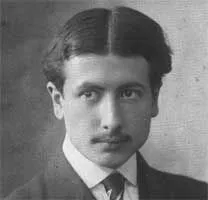
Photo: Wikimedia Commons
Botho Strauss
Human Design Chart
Biography
Strauß presently lives in Berlin as well as in the nearby Uckermark region.
Botho Strauss as a Generator 6/2 in Human Design
Generator 6/2 — Design at a Glance
Botho Strauss revealed himself as someone who could channel his enormous stamina and strength not through spontaneous initiatives but by reacting to external impulses. His Generator design meant that he was most efficient in using energy when externally triggered, similar to an obedient workhorse that only starts moving upon receiving commands. This mechanism implies that his inner 'yes', a gut feeling for the right task, was the decisive trigger.
When Botho Strauss initiated things on his own without sensing internal resonance, it quickly led to energy loss and frustration. His system was designed to generate satisfaction through reaction rather than constantly pushing forward with projects lacking internal confirmation. The risk lay in either being held back from working on what truly fulfilled him or engaging in activities that merely wasted his strength.
When he responded to signals from his environment and his sacral center confirmed it was time to act, nothing could stop him. In these moments, a profound inner fulfillment took place; the reward system of his design functioned optimally. If he did not follow this strategy of waiting and reacting, sooner or later he encountered persistent feelings of frustration and energy depletion as he worked against his nature.
Sacral Authority
Botho Strauss exhibited a decision-making approach based on direct physical reactions. As a Generator, he possessed sacral authority, meaning that his strategy and inner guidance were identical: He reacted to life around him rather than actively initiating it. This configuration significantly simplified his orientation process since no cognitive analysis was required before action.
His responses manifested as an immediate gut feeling or a noticeable surge of energy triggered by external stimuli. Often these signals appeared in short sounds like grunts or affirming 'Mhm'. When his sacral motor kicked in, he felt vital and energized; the resulting activity was carried out with great enthusiasm and without compulsion. This allowed him to fully immerse himself in action and find satisfaction independent of an external purpose.
Furthermore, his activated spleen center acted as a supportive instance. This connection gave him the ability to react particularly quickly and spontaneously. He had direct access to his instinctive perception and physical well-being. The combination of sacral energy and spleen-supported intuition enabled Botho Strauss to reliably guide himself from inner impulses without lengthy deliberation processes.
The 6/2 Profile — Role Model / Hermit
Botho Strauss revealed in his early phase as someone who learned through intense experimentation and the principle of trial and error. Until around age 30, the dynamics of his Profile 6/2-Line shaped this approach: He gathered diverse experiences, withdrew after setbacks to reflect, and did not immediately seek final answers but engaged with the process. This period was marked by a playful search where mistakes were accepted as necessary steps.
With entering the second half of life, this attitude fundamentally changed. The activation of the sixth line led Botho Strauss to increasingly distance himself from earlier experiments. He metaphorically retreated into a phase of deep introspection to reflect with great clarity on his past life. This period served for healing and gaining deeper self-awareness. From this inner work emerged wisdom visible to others. People sought him out to partake in these insights and learn from his ability for profound self-reflection. His role shifted from an experimenting seeker to a role model offering orientation through successful integration of personal experiences. The earlier confusion or uncertainty of the second line was transformed into a clear, observing stance that helped others better understand their mental processes and be freed from constant thought loops.
Single Definition — Defined & Open Centers
Botho Strauss revealed himself as someone with a fixed, reliable self-identity and a clear sense of direction. His defined G Center gave him the ability to love others without becoming dependent on them, as well as a natural authority that could show others new paths. This inner security was supported by his defined Sacral Center, which functioned as the motor for immense vital energy. For him, it was essential to use this power through reaction – not initiation – to find deep satisfaction and avoid frustration. Additionally, a defined Root Center shaped his life with a constant, adrenalized pressure that propelled him forward and helped him master existential challenges.
At the same time, Botho Strauss was open in other areas to external influences and conditioning. His open Head and Ajna Centers meant he did not have consistent mental inspiration; he tended to engage with doubts or questions from others rather than trust his own inner clarity. Similarly, his open Throat Center showed a vulnerability to pressure to demand attention instead of waiting for invitations to speak. His open Heart Center made him susceptible to the need to prove his worth through promises or competitions, often ending in cycles of disappointment. Furthermore, his open Solar Plexus absorbed the emotions of the environment, causing him to personalize foreign feelings and avoid confrontation. Finally, his undefined Spleen was marked by a fundamental survival fear that led him to cling to uncertain situations or make spontaneous decisions for a false sense of well-being.
Channels for self-love, focused details and quiet endurance.
Botho Strauss revealed himself through an intense, almost meditative ability to focus paired with a deep need for authentic self-validation. His design laid the foundation for someone who not only sees details but logically penetrates them to their core while using his own inner truth as a compass.
This attitude was rooted in the Channel of Concentration 52-9, an energetic format between Root and Sacral Centers. It connected the passive urge of Gate 52 to hold back and avoid distractions with the focus on facts from Gate 9. This created an internal tension – comparable to a yoga pose – that held him until his Sacral Center reacted. Only then could he precisely apply his energy to correct or perfect patterns. Without such focus, he tended towards restlessness; with it, he became a master of detailed analysis.
Parallel to this, the Channel of Exploration 34-10 between Sacral and G Centers worked. It linked the inner strength of Gate 34 to hold onto personal convictions with the behavior of Gate 10, which honors and loves oneself. This drove him to act independently of external expectations and live out his uniqueness. Through this combination, he learned to accept himself without imposing his values on others but by authentically responding to inspire self-love in them.
Additionally, prioritized Gates like 16 (Experimenting), 64 (Clarity from Experience), and 63 (Doubt as a Motor) contributed by promoting a mental process that resolved uncertainties through logical scrutiny. Gates like 53 (Freedom for the New) and 54 (Connection of Worldliness and Spirituality) underscored the drive to go new ways and see success as a basis for deeper understanding. Gate 60 demanded acceptance of limits, while Gate 46 emphasized dedication to the physical process. Together they formed a profile marked by concentrated logic and unwavering self-truth.
Individual Circuitry — Circuit Signature
Botho Strauss revealed himself through his design as someone whose inner convictions and action impulses were closely intertwined. This connection results from the Centering Circuit, which in him directly connects the Identity Center with the Sacral Center. This channel fosters a solid, courageous personality with strong individual views. However, without a connection to the Throat Center, these firm beliefs often remained hard to put into words; the energy was inwardly directed and individualistic, less focused on external communication.
Parallel to this, another stream worked: the Understanding Circuit connected Strauss' Sacral with his Root Center. This generated a focused rational energy aimed at improving things through logic and structure. Since both circuits run over his defined Sacral Center – which functions as part of the only large energetic group (Sacral, Root, Heart) – these forces formed a cohesive whole. The pulsing energy of centering met the focused ratio of understanding. Both streams converged in the same central definition, meaning that Strauss' inner identity and strategic action did not stand isolated but worked as one coherent force uniting individual constancy with rational future perspectives.
Left Angle Cross of Identification 2
Botho Strauss revealed himself through a profound inclination to continuously examine and redefine his own identity in interaction with the environment. His design laid the foundation for a process where self-discovery is understood not as a static state but as dynamic recognition.
This trait stems from the configuration of the 'left cross of identification'. In Human Design, this structure describes a specific life task: the continuous examination of who one is and what one is not. It involves an internal mechanism that encourages clarifying personal boundaries through comparison with others. The energy of this cross promotes the ability to recognize patterns of identification – how strongly self-image depends on external influences or projections.
For Botho Strauss, this meant a constant challenge to distinguish between authentic experience and assumed roles. The mechanics support the notion that insight into oneself often arises only through encounters with the foreign or different. It is a path of differentiation: as he identifies himself, he simultaneously learns where identification ends and his true essence begins. This process sharpens the quality of his existence, as each recognition also represents a demarcation. The resulting clarity does not come from isolation but through an active, conscious engagement with the constant question of one's being in the context of the whole.
Saturn Return · Uranus Opposition · Chiron Return · 2nd Saturn Return — Life Cycles
Botho Strauss showed himself to be someone whose creative phases were marked by clear structural turning points. His configuration tended towards transforming internal processes into external, tangible forms, with the quality of work at its core. This was evident in 1971: At age 27, the premiere of 'Die Hypochonder' took place. This first Saturn Return often marks the moment when years of groundwork condenses into a viable result and a new level of responsibility is taken on.
Later, another rhythm came into play. In 1984, at age 40, he published his controversial novel 'Der junge Mann'. This coincided with the Uranus Opposition, a phase often characterized by unexpected breaks or radical reorientations – here showing a need for change and challenging established patterns.
The following life phase brought deeper purpose. In 1993, at age 49, he received the Berlin Theatre Prize. The Chiron Return is an achievement cycle in which one's incarnation cross unfolds and meaning becomes experiential; this prize signalled recognition of his specific life task. Finally, in 2001, he was awarded the Lessing Prize by the Free and Hanseatic City of Hamburg at age 57. The second Saturn Return often solidified these achievements by transforming them into a stable, long-term structure and anchoring the attained position sustainably.
Generator · Sacral Authority — Synthesis
A central red thread in this design is the deep connection to sacral energy (Generator Type, Sacral Authority) and the resulting drive to act through work and activity. The ability to fully immerse oneself in tasks – as long as they arise from inner consent – seems to be a constant. This is underscored by the defined G Center, which emphasizes clear direction and joy in connection, as well as Channel Concentration (52/9), providing form energy when focus and stillness are present. The recurring recognitions for his work (Theatre Prize, Lessing Prize) seem to confirm this energetic alignment, just as the need to withdraw into phases of intense reflection (6/2 Profile) to recharge and realign direction.
The design reveals a central paradox between the desire for deep immersion in work and the cyclical experience of withdrawal and reevaluation. The 6/2 line points towards an intensive phase of experimentation, followed by a necessary retreat for self-discovery. This stands in tension with the Generator Type's constant drive to activity and the Sacral Center's responsiveness to external stimuli. Developing wisdom (6/2 Profile) therefore requires not only experience but also the willingness to regularly withdraw from the world to process these experiences and direct them into new directions – a dance between engagement and distance.
2 Defined Channels
Incarnation Cross - Left Angle Cross of Identification 2
Solar Return
The Solar Return shows the moment when the sun returns to its exact birth position - your personal solar year.
Life Cycles
Discover the life cycles with a detailed triple view (birth chart, cycle chart, composite).
Human Design Profile
- Type
- Generator
- Strategy
- To respond - wait for something to respond to
- Authority
- Sacral Authority
- Profile
- 6/2 - Role Model / Hermit
- Definition
- Single Definition
- Incarnation Cross
- Left Angle Cross of Identification 2
- Date of Birth
- 02.12.1944 22:05
- Place of Birth
- Naumburg (Sachsen-Anhalt), GER
Frequently Asked Questions
What is Botho Strauss's Human Design type?
What Profiles does Botho Strauss have?
What Authority does Botho Strauss have?
What incarnation cross does Botho Strauss have?
When was Botho Strauss born?
Discover your own Human Design
Are you also a Generator? Find out in a personal reading how to use your sacral energy correctly and discover deep satisfaction.
More Personalities
Back to overviewAaliyah

Alain-Fournier
Alexia

Angèle

Angeli
Anne-Marie