
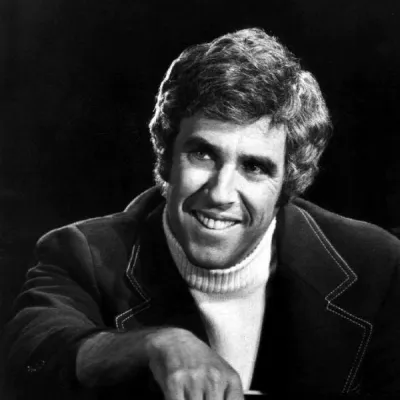
Burt Bacharach
Human Design Chart
Biography
His second of four marriages was to Angie Dickinson in 1965; they divorced after 11 years of marriage, in 1982, and six years of separation, with one child, Nikki, born in 1966. Bacharach and Dickinson's relationship suffered severely when Nikki was born three months premature with severe eye problems. It also didn't help that, according to Angie, Burt cheated on her; she did not remarry.
In 1978, he met Carole Bayer Sager when he asked her to add lyrics to some of his music. After a year of collaboration, they fell in love and married in 1982. A great professional match, they shared a 1981 Academy Award for "Arthur's Theme," and a 1987 Grammy for "That's What Friends Are For." Their personal collaboration dissolved with their separation in December 1990, and officially in July 1991 when Sager filed for divorce, citing irreconcilable differences. Their marriage produced one adopted son, five-year-old Christopher Elton. His fourth marriage, to Jane, resulted in one son, Oliver, and one daughter, Raleigh.
Bacharach saw his first horse race at 14 and fell in love with the graceful animals. In 1983 he bought his first racehorse and was so obsessed that he could not even write a note for six months. From then on, he spent spare time with his horses and the races.
In April 2000, Bacharach stumbled on a darkened stage at the Indiana Roof Ballroom during a sound check, and his fall required shoulder-replacement surgery. On 19 March 2001, he filed a $15 million lawsuit against a company headed by Indiana Pacers owner Melvin Simon, owners of the ballroom.
The Human Design of Burt Bacharach: Manifesting Generator 3/5
Manifesting Generator 3/5 — Design at a Glance
Burt Bacharach revealed himself as someone who could achieve quick results by skipping conventional steps. His design as an Manifesting Generator combined the constant energy of a Generator with the direct action of a Manifestor, allowing him to quickly draw things into his life and work on multiple projects simultaneously without necessarily leading to overload.
However, the challenge lay in the tension between this natural speed and the risk of frustration. If he initiated from non-self rather than reacting to impulses, he tended to skip important steps, forcing him often to backtrack and make up for missed steps, which blocked his energy. The central prerequisite for his well-being was therefore constant validation through the sacral center. Only when it gave a clear internal “yes” could he enter into a productive play mode.
In this state, he enjoyed variety and the possibility of pursuing several threads simultaneously. The demand to finish one thing before starting another stood in opposition to his nature. Instead, he drew deep satisfaction from creation itself as long as he responded to life and included his authority. His effectiveness lay in not directing his speed against himself but channeling it through conscious reaction to impulses. Thus, potential frustration was transformed into a powerful, satisfying creative force that allowed him to master complex tasks with ease and speed without losing his inner resonance.
Emotional Authority
Burt Bacharach showed an internal decision-making structure that required time and emotional distance. His inner authority lay in the defined Emotional Center, meaning his feelings came in waves; the world appeared colored by the current mood. What was exciting at one moment could be negative the next. However, his immediate feeling was only a snapshot, not necessarily his deeper truth yet. Spontaneous reactions from this emotional heat often proved unreliable or even harmful to his life path.
The mechanics of his authority required patience. He had to let decisions mature to distinguish between passing mood and true clarity. The process of waiting and reviewing important questions multiple times was essential. Over time, intense feelings subsided, he gained emotional distance. Only then did calmness set in and he could see through the process. This approach was particularly crucial for long-term decisions with significant influence on his life course. Only through this hesitation and waiting out the emotional wave did he find his true inner truth instead of being led by fleeting impulses.
The 3/5 Profile — Martyr / Heretic
Burt Bacharach revealed himself as someone who gained knowledge not from books but through personal, often painful experimentation. His design established a foundational stance: first, he had to experience everything personally and make mistakes to gather practical wisdom. This experience then became the basis for offering solutions to others.
This aligned with Profile 3/5, the Experimenter and Hero. Line 3 drove him to test things individually and learn through trial and error. He showed courage but also risked public failures, which defined his vulnerability. Only after this private learning process did he take on the role of Line 5: the rescuer or hero who acts with a practical treasure trove of experience.
This dynamic created strong appeal; people sought his advice and solutions because they stemmed from real practice. At the same time, there was tension between the need for free experimentation and the expectation to always appear competent. Failing in public space was especially painful as it undermined the projected authority of the “hero.” Bacharach lived this dialectic: he used his personal adventures and mistakes to later emerge as an authoritative figure with practical answers, where power and organization in crisis times became central themes of his influence.
Split Definition — Defined & Open Centers
Burt Bacharach revealed himself as someone with a consistent inner energy architecture: His defined centers Ajna, Throat, Sacral, Solar Plexus, and Root provided him with constant mental concepts, reliable communication skills, vital reactive energy, emotional depth, and structural life pressure. This combination shaped him as a person with clear expression and the ability to turn thoughts into actions without being distracted by external impulses. His mind worked continuously, helping him penetrate complex connections and express them authentically.
At the same time, he was influenced situationally through his open centers – Head, G, Heart, and Spleen. The open Head Center made him receptive to inspirations from the environment but also left him vulnerable to doubts when there was no clear inner answer. He tended to question whether he was asking the right questions or missing important insights. His open G Center meant that his identity and direction were strongly shaped by places and relationships; he often sought the right setting to feel secure. The open Heart Center led him rarely to act out of sheer will but rather waited for resonance, instead of making promises he couldn't keep. Additionally, his open Spleen Center was sensitive to well-being and fear signals, which made him cautious in dealing with spontaneous decisions.
This mechanism is evident in Burt Bacharach finding his strength in reacting to external stimuli while possessing a deep emotional and mental stability that allowed him to have a lasting impact.
Channels for structuring, emotional transformation and maturation.
Burt Bacharach revealed himself as someone whose thinking often preceded the general perception by years. His design inclined towards mutative, innovative perspectives which only found acceptance when communicated at the right moment. This dynamic was significantly influenced by the Channel of Structuring 43-23. This channel connected Ajna Center with Throat Center: Gate 43 received spontaneous insights and breakthroughs while Gate 23 assimilated these into clear, metaphorical language. Without patience for his own timing, his unique knowledge often faced rejection as odd; with the right strategy, however, it led to reinforcement and changed how others saw and thought.
In the background, other energies were at work. The Channel of Transience 36-35 drove him to seek new emotional experiences. Through Gate 36 (Crisis) and Gate 35 (Change), he resisted restrictive patterns to set things in motion and gain wisdom through experience. Parallel to this, the Channel of Maturation 42-53 promoted a cyclical process: He went through experiences fully, reflected on them, and built upon them rather than proceeding goal-oriented.
Individual Gates complemented this picture. Gate 16 enabled the expression of skills through continuous experimentation, while Gate 9 supported detailed work and perfectionism through repeated pattern correction. Gate 4 helped develop formulas to clarify suspicious patterns to succeed despite ignorance. Gate 20 anchored him in the present moment, fostered awakening to his uniqueness, and allowed correct action in the current moment. This configuration described a person who left their mark through experimenting, detail accuracy, and the ability to simplify complex insights – always dependent on resonance with his inner timing.
Collective Circuitry — Circuit Signature
Burt Bacharach was marked by two separate yet parallel operating energetic streams. The Knowledge Circuit connected his Ajna- with Throat Center via the Channel of Structuring (Gates 43-23). This promoted an acoustically pulsating creativity and a drive to go on a unique path. New identity arose through formulating knowledge into the world.
Parallel to this, the Meaning-Finding Circuit operated as two independent segments. The connection between Throat- and Solar Plexus Center (Channel of Transience, Gates 35-36) let cyclical emotions visually collapse to process past experiences. Separately, the Channel of Maturation (Gates 42-53) connected Sacral with Root Center. This ensured a deep instinctive processing of meaning questions from the past that did not directly merge with emotional expression in the Throat-Solar Plexus field.
The tension lay between individual transformation through new structured expression and reflective, wave-like processing of old feelings. While one system aimed at acoustic innovation and identity, the other served collective learning from past cycles. This divided definition meant Burt Bacharach experienced these forces not as a single flow but as coexisting different fields: once creation of the new, then reflection on the old.
Right Angle Cross of Explanation 2
There were no specific mechanical data available to characterize Burt Bacharach. The raw content only mentioned the "right cross of explanation 2," without defining its substantive meaning or impact on his design. Without any Gate activations, Channel activations, or Center activations provided, it was not possible to derive a behavioral pattern or specific life purpose. Lacking these mechanical foundations, there was no basis for analyzing his inner dynamics or strategic approach to life. The design therefore offered no clues as to how he managed energy, made decisions, or interacted with his environment. Any speculation about his personality would be pure conjecture and not derivable from the available Human Design facts. Thus, the description of his design remained empty in this context. There was no documented event that could serve as evidence for a specific mechanism. The absence of details meant that no connection could be made between his chart configuration and his actual life. Without this link, it was impossible to describe how his energy manifested or what themes might have shaped him. Therefore, the chapter could not make any statement about Burt Bacharach based on the provided data.
Saturn Return · Uranus Opposition · Chiron Return · 2nd Saturn Return — Life Cycles
Burt Bacharach's life followed a clear, cyclical structure marked by three essential phases. These phases were not arbitrarily determined but corresponded to the astrological cycles of Saturn Return and Uranus Opposition, which in his design acted as times of condensation and transformation.
1957, at the age of 29, his first Saturn Return occurred. This cycle demanded structure and stability. For Bacharach, this energy condensed into a concrete professional decision: he began collaborating with lyricist Hal David and recorded his first hit that same year. This was the moment when groundwork transformed into a viable outcome.
The second phase began in 1970 as the Uranus Opposition became active. At age 42, Bacharach faced the challenge of questioning the status quo and the necessity for renewal. This pressure culminated in a career peak: he won an Oscar for the film soundtrack "Raindrops Keep Fallin' on My Head". Here it was evident how internal tensions were transformed into external success.
The third cycle began in 1982 with his second Saturn Return at age 54. Again, it was about solidifying the foundation, this time on a personal level. Bacharach married Carole Bayer Sager. This marriage marked the culmination of a long journey towards a stable partnership that profoundly shaped the structure of his life. Each step was an expression of the underlying mechanics of his design.
Manifesting Generator · Emotional Authority — Synthesis
Burt Bacharach lived a lifestyle marked by an inner drive for authentic expression. His design as a Manifesting Generator, coupled with emotional authority and the Profile of the Experimenter/Savior, points to someone who was constantly in motion—not driven by external forces but rather by a deep, sacral energy source (Sacral Center). This energy compelled him to try new things (Line 3), gather experiences, and then transform these into creative solutions (Line 5). The connection between Ajna Center and Throat Center enabled him to develop concepts and express them through his voice, yet always under the influence of the emotional wave that required time for maturation and clarity. This process of experimenting, reflecting, and communicating formed the foundation of his work.
Central in Burt Bacharach’s design is a paradox between the need for rapid manifestation (Manifestor aspect) and the necessity of emotional clarity (emotional authority). He had the ability to initiate things quickly, yet true satisfaction came only when his decisions were confirmed by waiting for the emotional wave. This tension between impulsivity and reflection shaped his creative process and led to a unique approach where innovation and emotional depth merged. The open definition of certain centers (G Center, Heart, Spleen Centers) amplified this dynamic by making him receptive to external influences while also emphasizing the need to trust his inner truth.
3 Defined Channels
Incarnation Cross - Right Angle Cross of Explanation 2
Solar Return
The Solar Return shows the moment when the sun returns to its exact birth position - your personal solar year.
Life Cycles
Discover the life cycles with a detailed triple view (birth chart, cycle chart, composite).
Human Design Profile
- Strategy
- To respond - wait for something to respond to
- Authority
- Emotional Authority
- Profile
- 3/5 - Martyr / Heretic
- Definition
- Split Definition
- Incarnation Cross
- Right Angle Cross of Explanation 2
- Date of Birth
- 12.05.1928 01:15
- Place of Birth
- Kansas City, MO, United States
Frequently Asked Questions
What was Burt Bacharach's Human Design type?
What Profile did Burt Bacharach have in Human Design?
Which Authority guided Burt Bacharach?
What incarnation cross did Burt Bacharach have?
When was Burt Bacharach born?
Discover your own Human Design
Are you also a Manifesting Generator? Find out in a personal reading how to unfold your multi-talents and direct your energy wisely.
More Personalities
Back to overviewAaliyah

Aldair

Alexia

Alizée

Angèle

Angeli
