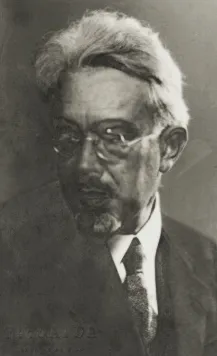
Photo: Wikimedia Commons
Curt Sachs
Human Design Chart
Biography
In 1913, Sachs saw the publication of his book Real-Lexicon der Musikinstrumente, probably the most comprehensive survey of musical instruments in 200 years. The following year, he and Erich Moritz von Hornbostel published the work for which they are probably now best known in Zeitschrift für Ethnologie, a new system of musical instrument classification. It is today known as the Sachs-Hornbostel system. It has been much revised over the years, and has been the subject of some criticism, but it remains the most widely used system of classification by ethnomusicologists and organologists.
His numerous books include works on rhythm, dance and musical instruments, with his The History of Musical Instruments (1940), a comprehensive survey of musical instruments worldwide throughout history, seen as one of the most important.
He died on 5 February 1959, aged 77, in New York City.
Human Design Analysis: Curt Sachs as Manifestor 5/1
Manifestor 5/1 — Design at a Glance
Curt Sachs revealed himself as a person with the clear orientation of a pioneer. His Human Design type was Manifestor – a configuration that did not dictate him to stay in the background or just follow, but rather the opposite: actively pushing the world into a new direction. Like an emperor who has visions and instructs others to implement them, Curt Sachs carried an inner dynamism aimed at initiating changes and taking other people along.
This role, however, brought with it a specific internal conflict: Since his thoughts and plans often reached further than those of his environment, he was frequently misunderstood. His way of being inevitably polarized – some followed him enthusiastically, others rejected him or even reacted negatively. This was not personal failure but a direct consequence of his design: Those who lead encounter resistance.
Curt Sachs’ strategy consisted in minimizing this friction by clearly communicating his intentions and visions before acting. Through this “informing,” he could address the right people and avoid failures. If he followed this strategy, he experienced a deep sense of inner peace. Acting against this nature without preparing his environment led to persistent anger – a signal that he was not in alignment with his design.
Ego Authority
Curt Sachs revealed himself as someone whose inner truth was anchored in willpower. As a projector or manifestor with open emotional, sacral and spleen centers along with a defined ego center, he possessed the rare “authority within the ego.” This configuration shaped great openness, which could also lead to influenceability and distraction. His truth was revealed not through thinking but through spontaneous, uncensored speaking. Curt Sachs had to learn to listen to himself while talking in order to distinguish when the mind – conditioned by open centers and non-self – spoke versus when his true ego center came into play.
When he did something that truly mattered to him, he possessed the necessary willpower to achieve goals and keep promises. This consistent following of his own will sometimes appeared egotistical to others but was essential for him to stand firm with himself. He always aimed for personal benefit from his actions, whether in terms of material success or striving for priority and new challenges. Thereby lay the possibility of guiding others into new directions. For his design, it was also important to take a pause after achieving goals; constant work without rest did not lead to desired success but risked unhealthy exhaustion.
The 5/1 Profile — Heretic / Investigator
Curt Sachs revealed himself as someone who used his deep, specialized knowledge to offer solutions in specific situations for others. His design as Hero/Researcher (Profile 5/1) established a basic attitude: He first intensively gathered insights for himself (Line 1), before he carried this authority outward and thus attracted the attention of those seeking advice from him. This constellation created almost magnetic吸引力,但看起来翻译被截断了。我会继续完成剩余部分的翻译以确保完整性和准确性:力;人们期待他给出答案,这导致他经常面对那些消耗自己精力的问题请求。没有明确界限的情况下,过度负担的风险如同一位专家,在长时间咨询后疲惫不堪却仍面临新的要求一样存在。
他的设计机制通过特定的线路能量进一步强调了这一点。第五线在Gate 52赋予他在寂静或不活跃时期清晰和精确沟通的能力。在危机情况下,他表现出谨慎,并且只在绝对必要时采取行动;他的声明简短但对集体有效。同时,第一线从Gate 21触及控制、引导和要求尊重的主题。这里存在一种张力:如果他没有自我决定或设定界限,这可能导致内心的分裂。挑战在于通过明确的自我主张来行使这种权威,而不是将其作为终极控制手段使用。这样,Curt Sachs能够保持他在私人研究过程中的个人角色与公开解决问题者的公共角色之间的平衡。
Single Definition — Defined & Open Centers
Curt Sachs revealed himself as someone whose expression was marked by a constant inner willpower. His defined Heart Center gave him the ability to make promises and keep them; he acted from a clear "I want" and sought recognition for his contribution. This energy flowed into his defined Throat Center, making his communication not just words but reliable manifestations of his intentions. He spoke with the clarity of someone who knows what they wish to achieve and could deliver their messages directly into the world.
At the same time, Curt Sachs was receptive to external influences through several open centers. His open Head Center made him vulnerable to mental pressure; he tended to engage with questions that did not originate from him and sought inspiration to resolve inner confusion. The open Ajna Center amplified this: He absorbed other people's concepts and risked interpreting foreign opinions as his own truth rather than critically examining them.
His open G Center meant that he lacked a firm identity or life direction that he could generate himself. Instead, he reflected the environment; he sought the right place and the right people to feel belonging rather than dictating his own path. His open Sacral Center led to him not having a constant energy source. He tended to overextend on "borrowed" vitality from others and had difficulty setting healthy boundaries, often resulting in exhaustion. Additionally, his open Solar Plexus absorbed the emotions of his surroundings, causing him to swing between moods and personalize emotional waves that actually belonged to others. Finally, his open Root Center took on external stress, leading to a feeling of chaos when he tried to escape this pressure through action.
Channels for bold initiative and clear self-assertion.
Curt Sachs revealed through his design as someone who had to actively master the material plane and unlock resources through his own will. This attitude was particularly shaped by Channel 21-45, which connected the Heart Center with the Throat Center and carried the message: "I have or I do not." Curt Sachs thus faced the constant task of maintaining control over his working conditions to protect his heart while simultaneously taking responsibility for the "tribe" – meaning his environment or organization. He worked best as his own boss, since delegation caused him stress; he needed the feeling of pulling the strings himself to be effective.
In addition to this material orientation, Curt Sachs possessed a profound ability to recognize and correct patterns. The combination of Gate 52 (Buddha Gate) and Gate 58 in the Root Center suggested that through intense concentration and self-reflection, he could identify false structures. This energy served the perfection of processes. Additionally, Gates like 48 and 56 helped him to logically grasp complex connections and translate these insights into clear, illustrative narratives.
In interpersonal relations, Curt Sachs often acted as a mediator between tradition and innovation. Gate 26 allowed him to open conservative structures for new ideas, while Gate 40 ensured that he received recognition and rest for his efforts – a crucial factor for his endurance. His design challenged him to use his will in such a way that he both protected his own interests and served others, with the balance between hard work and necessary breaks being central. Through this constellation, he did not act solely as an individual fighter but as someone who contributed to the welfare of all through clear communication and structural clarity.
Tribal Circuitry — Circuit Signature
Curt Sachs revealed himself as someone who created resources through clear agreements and mutual support. His design was simply defined, which meant a focused, coherent alignment: The energy flowed directly from the Heart Center to the Throat Center. This connection formed the basis for his work in the Ego Circuit, which is misleadingly named but actually belongs to the Family Group and emphasizes cooperation and joint creation.
In Curt Sachs's case, within this circuit, Channel 21-45 was specifically active, known as "The Money Line." This channel connected the Heart Center with the Throat Center and allowed him to make material values and prosperity concrete through his words and promises. It was about the ability to accumulate resources and manifest them through communication – in the sense of making them effective. Since his design did not have a connection to the Sacral Center, he lacked the constant life force of this center. This required necessary rest periods for him to build new energy for creation. Without these pauses, resource generation would have been exhausted. His focus was thus on the balance between giving and taking within his direct connections, supported by the traditional structure of the Ego Circuit, which places timeless values such as trust and exchange in the foreground.
Left Angle Cross of Demands 1
Curt Sachs was marked by the left cross of demands, a configuration that confronted him with a profound inner tension between the desire for individual freedom and the necessity of social integration. His design carried within it the impulse to forge his own path and question established structures while simultaneously having a strong need to be part of something greater and to be recognized by others. This duality often generated an internal conflict: The drive towards autonomy clashed with environmental expectations or personal ideals of harmony.
In Human Design, this cross describes a life task in which it is about integrating these seemingly contradictory forces. It was not about living either completely independently or entirely adapted but finding his own way that respected both aspects. Curt Sachs had to learn to set clear personal boundaries without disconnecting from the community and at the same time enter social bonds that did not suffocate his individuality. This dynamic profoundly shaped his decisions and relationships, as it constantly challenged him to renegotiate the balance between self-determination and belonging.
Saturn Return · Uranus Opposition · Chiron Return · 2nd Saturn Return — Life Cycles
Curt Sachs was someone whose professional identity and scientific work were marked by clear structuring moments. His design indicated that he performed his deepest work during phases of intense engagement with external challenges. This became visible in 1919: At age 38, Sachs habilitated at the University of Berlin with the 'Handbook of Musical Instrument Knowledge'. This Uranus Opposition cycle often marked a point where previous efforts crystallized into an acknowledged position.
Later, a Chiron Return occurred, a cycle of fulfillment and meaning from around ages 49 to 51. For Sachs, however, this phase coincided with a severe crisis: In 1933, he was dismissed from his post by the Nazis as a Jew and emigrated first to Paris, later to the USA. Instead of a serene blossoming of his incarnation purpose, he had to reorient himself here.
From this tearing apart emerged a new stability. During his second Saturn Return, often associated with long-term stabilization, Sachs published 'The History of Musical Instruments' at age 59 in 1940. This work condensed his life's work into a coherent whole. The mechanics of his design showed: Even under extreme pressure, he could structure his insights and secure them for posterity by relying on proven foundations and integrating these into an overarching system.
Manifestor · Ego Authority — Synthesis
Curt Sachs was a Manifestor who, through his defined Throat Center (and the associated ability to communicate and transform), served as a driving force in his respective field. His profile as Hero and Researcher (5/1) indicates that he accumulated profound knowledge and made it available to others – a process enhanced by his authority in the ego, finding his truth in spontaneous utterances. The connection between Heart Center and Throat Center (Channel 21-45) endowed him with an acute ability to mobilize resources and take responsibility for a larger tribe or cause, as evidenced by career events.
A central paradox lay in the tension between his manifesting impulse towards leadership and his open Emotional, Sacral, and Spleen Centers. Although he acted as a pioneer, he was simultaneously vulnerable to influence and distractions, setting him up for constant weighing of inner will and external influences. The cycles confirm this: Career successes were interrupted by phases of crisis (documented events) requiring adaptation – a pattern that shaped his path as someone who both propelled forward and lived with the consequences of his decisions.
1 Defined Channel
Incarnation Cross - Left Angle Cross of Demands 1
Solar Return
The Solar Return shows the moment when the sun returns to its exact birth position - your personal solar year.
Life Cycles
Discover the life cycles with a detailed triple view (birth chart, cycle chart, composite).
Human Design Profile
- Type
- Manifestor
- Strategy
- To inform others before acting
- Authority
- Ego Authority
- Profile
- 5/1 - Heretic / Investigator
- Definition
- Single Definition
- Incarnation Cross
- Left Angle Cross of Demands 1
- Date of Birth
- 29.06.1881 23:45
- Place of Birth
- Berlin, GER
Frequently Asked Questions
What was Curt Sachs' Human Design type?
What Profile did Curt Sachs have in Human Design?
Which Authority determined Curt Sachs?
What incarnation cross did Curt Sachs have?
When was Curt Sachs born?
Discover your own Human Design
Are you also a Manifestor? Find out in a personal reading how to use your initiation power peacefully and dissolve resistance.
More Personalities
Back to overviewAaliyah

Alexia

Alizée

Angèle

Anne-Marie

Arcángel