
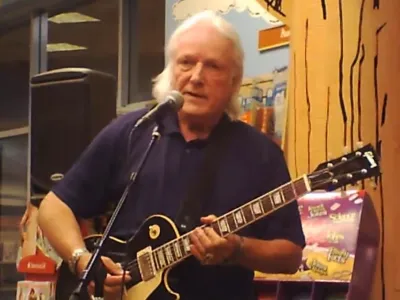
Dick Wagner
Human Design Chart
Biography
His first band, called the Bossmen, was a favorite in the Detroit area and scored radio play with the Wagner-penned composition "Baby Boy", "You're the Girl for Me" and others. Wagner formed his next band, the Frost, with Donny Hartman, Bobby Rigg and Gordy Garris, in the late 1960s and built up a substantial following in the Michigan area. The band featured the dual lead guitars of Wagner and Hartman. The band released three albums during their tenure together on Vanguard Records, Frost Music and Rock and Roll Music (both 1969), plus Through the Eyes of Love (1970). Wagner was the principal songwriter, arranger and lead singer of The Frost. Their live appearances brought out large crowds of young fans throughout the region.
In 1972, Wagner moved to New York and formed the short-lived group "Ursa Major". The original line-up included Billy Joel on keyboards and Rick Mangone on drums. As Billy Joel had to leave the band for personal reasons, Wagner replaced him with former Amboy Dukes bassist Greg Arama. They released one seminal, acclaimed self-titled album as a power trio. The band toured nationally with Jeff Beck and then with Alice Cooper.
In 1973, Wagner was recruited by producer Bob Ezrin for Lou Reed's band along with Steve Hunter. Wagner and Hunter were featured guitarists on Lou Reed's dark and controversial 1973 studio album, Berlin. Soon after, Wagner and Hunter were joined by Prakash John, Pentti "Whitey" Glan and Ray Colcord for Lou Reed's Rock 'n' Roll Animal Tour. As band leader and arranger, Wagner took the early Lou Reed songs that had been recorded by the Velvet Underground and rearranged them for the concert stage.
Dick Wagner as a Manifesting Generator 6/2 in Human Design
Manifesting Generator 6/2 — Design at a Glance
Dick Wagner revealed himself as someone who possessed hybrid energy: the constant power of a Generator paired with the lightning-fast execution capability of a Manifestor. His design suggested that he could draw things into his life without going through the usual step-by-step process. However, this speed was a double-edged sword. Often, he would skip important steps, leading to having to go back and make up for them later – a source of deep frustration for him. Additionally, his system tended to react simultaneously to numerous impulses, causing him to start multiple projects at once. If his inner authority wasn't in sync, his creative drive quickly turned into exhaustion.
The mechanics of his Manifesting Generator therefore required a precise strategy: first wait until life gives an impulse and then check if his Sacral Center – his energy source – responds with a clear “yes”. Only this confirmation justified the start. Once this resonance was established, he could dive into a playful mode. In this state, handling various tasks in parallel wasn't a burden but rather the source of his deepest satisfaction. His effectiveness thus depended less on linear planning and more on learning to channel his immense speed through conscious reactions to inner signals, instead of blindly charging ahead.
Emotional Authority
Dick Wagner lived with an internal compass needle that didn’t immediately point north but found its direction only after emotional waves subsided. His inner authority lay in the defined Solar Plexus Center, meaning he could never or should never make decisions in the heat of the moment. For his design, this emotional authority was always prioritized, regardless of other defined centers in his chart; it dictated the rhythm of his internal yes-no process.
The mechanics of this system generated a constant fluctuation of feelings. Dick Wagner saw the world through the lens of his current mood: A project could appear brilliant in the morning but feel worthless by evening. This extreme polarity was no deception, but rather a natural process of the emotional center. His immediate feeling was always just a snapshot, an initial impulse that didn’t yet represent deeper truth. Quick, spontaneous reactions to these transient states often would have led him astray.
Clarity only set in through time delay. Dick Wagner needed several days’ distance for intense emotions to subside. Only when the emotional fog cleared and calm returned could he see what truly mattered. This process of “sleeping on it” was no weakness or hesitation, but rather his essential strategy to distinguish his deeper truth from passing moods. Only through this patience did he manage to make long-term decisions that aligned with his true nature, instead of becoming a victim of fleeting enthusiasm or disappointment.
The 6/2 Profile — Role Model / Hermit
Dick Wagner’s design was marked by a clear developmental arc: In the early years of life, an impulsive and experimental approach dominated. As a 6/2 profile, Line 3 acted before Saturn returned, leading to a phase of trial and error. Here, it was about gathering experience through direct action, often requiring retreats due to setbacks.
Around thirty years in, this dynamic fundamentally changed. Line 6 became active, prompting Dick Wagner to seek deeper reflection. He metaphorically retreated into a “cave” to look back at earlier experiments with distance. This period served for healing and intense self-knowledge. Gate 26 demanded perseverance; the process of influence lasted a lifetime and required pauses as well as commitment to the welfare of the “tribe.”
Simultaneously, nuances of Line 2 shaped his actions. It conveyed a shy but aesthetically delicate sensitivity. Dick Wagner used this trait to precisely identify weak points in situations or structures – similar to a strategic guerrilla approach. The challenge was always finding the right moment for approaching or retreating. Only after this long phase of introspection did he emerge as a wise advisor. Others then sought his path, learning from his deep insight and ability for self-reflection. His authority didn’t come from imposing himself but through timely action at the right place once the ego had matured.
Single Definition — Defined & Open Centers
Dick Wagner revealed himself through a design with defined throat, defined G Center, and defined sacral energy as someone who possessed a clear inner direction and carried this into the world through his voice. His communication was not just an exchange of thoughts but an expression of a consistent identity; he spoke from the knowledge of who he was and where he belonged. This reliability in his mode of expression aligned with the vital force of his sacral center, which provided him with an immense energy source. As a Generator, his strategy was not to initiate but to wait for life and respond correctly. His sacral response – a spontaneous 'yes' or 'no' from the gut – determined whether he had the energy for a task. This protected him from exhaustion and frustration if he trusted this mechanical truth.
At the same time, Dick Wagner had a defined solar plexus, meaning his emotional wave was his inner authority. He needed time to gain clarity; decisions were only truly made when the emotional high or low subsided. This depth allowed him to understand connections on spiritual and emotional levels rather than just reacting superficially.
In contrast, he possessed open centers for head (mind), Ajna (understanding), heart (willpower), and root (stress). His open Head Center tended to pick up mental pressure from the environment or engage with questions that were not his own. He was prone to losing himself in intellectual monologues or seeking inspiration to fill uncertainties, which often led him into a cycle of self-doubt and trying to prove his worth through performance, resulting in failure. His open Ajna Center reflected concepts and opinions from his environment; he had to learn to use these ideas as playgrounds for the mind without taking them as personal truth. His open Heart Center lacked consistent willpower; he was not designed to make promises or push through resistance. Instead, he risked getting caught in a cycle of self-doubt and trying to prove his worth through performance, which often led to failure. The open Root Center absorbed external stress; he could take on the pressure from others and amplify it, leading to unrest if he did not recognize that this stress was not his own. Through trusting his sacral response and emotional clarity, however, he could use these open fields as mirrors rather than getting lost in them.
Channels for intimacy, intuitive clarity and emotional transformation.
Dick Wagner's design was characterized by an intense search for authentic intimacy and the expression of individual truth. The Channel of Union 59-6 connected his sacral life force with his emotional wave, leading him to seek relationships based on deep fusion. This configuration required patience: he had to wait until his emotional clarity arrived to determine if a connection was truly fruitful or just superficial friction.
At the same time, the Channel of Awakening 10-20 shaped how he moved through the world. He lived the principle 'I am' by acting and speaking in the present moment. His survival depended on accepting himself and carrying this self-love outward, making him a quiet source of inspiration for his environment.
This attitude was deepened by the Channel of Perfect Form 57-10. Here intuitive insight flowed directly into his behavior. Dick Wagner acted spontaneously from a profound inner knowledge based on physical well-being. He ignored future fears and instead perfected his existence in the moment, which gave him an unusual calmness.
The Channel of Brainwave 57-20 gave this intuition a clear voice. When he spoke, it was often with piercing precision that hit the core before others could logically follow. This was not an intellectual construct but a direct expression of his survival intelligence in the present moment.
Furthermore, the Channel of Discovery 29-46 showed his persistence. He positively responded to new experiences and fully immersed himself without drawing premature conclusions. His success lay in the endurance to follow a process until its end to then recognize the true meaning of his discoveries.
Finally, the Channel of Transience 36-35 drove him to constantly collect new experiences. He sought the new, often through creating crises or changes to break out of stagnation. This restless search for emotional depth and wisdom through experience shaped his life path significantly.
Individual Circuitry — Circuit Signature
Dick Wagner's design revealed a coherent, continuous energy flow. As a Simple Defined individual, he had one single connected stream that linked his throat, solar plexus, identity, sacral, and spleen centers. This unity defined how he worked: He did not act from separate impulses but from an integrated source.
The Knowledge Circuit introduced the Channel of Lightning Strike (20-57). It connected his throat center with his spleen. Dick Wagner showed himself through innovative, creative insights that he could express audibly or in the moment immediately. His creativity was pulsing and served to express his unique individuality.
Parallel to this, the Meaning Circuit worked. It included the Channel of Transience (35-36) between throat and solar plexus centers as well as the Channel of Discovery (46-29) between identity and sacral centers. These two segments were directly connected in him since all five centers lay in a group. He reflected past experiences emotionally (solar plexus), found meaning within them, and shared these insights through his voice (throat). At the same time, he channeled his life force (sacral) over self-understanding (identity) into concrete actions. This cycle was wave-like: emotions rose, led to insights, then subsided.
The Protector Circuit brought in the Channel of Union (59-6). It connected his sacral center directly with his solar plexus. This gave him a primal, instinctive energy for protection and preservation of his genetic line. His life force was closely intertwined with his emotional waves, fostering care and readiness to defend.
Finally, the Integration Circuit integrated the Channels of Awakening (20-10) and Perfect Form (10-57). These reconnected throat, identity, and spleen centers again. Dick Wagner responded to life, channeled this power through intuitive knowledge and correct behavior, and manifested it in the present moment. His highest individuality showed itself in his ability to immediately transform inner intuition into outer expression. All circuits flowed together: creativity, emotional meaning-making, instinctive protection, and intuitive integration formed a single strong life energy.
Left Angle Cross of Confrontation 2
Dick Wagners design was characterized by the imprint of the left cross of confrontation. This specific configuration established a fundamental attitude oriented towards direct confrontation with resistance and challenges. Instead of avoiding or circumventing conflicts, his inner compass sought out situations where he could prove himself. The energy of this cross promoted an active stance of opposition that is not to be understood as aggression in a negative sense but rather as a necessary process for clarifying boundaries and truths.
For Dick Wagner, this meant that friction and resistance were not obstacles to avoid but essential components of his developmental path. By directly addressing problems, he gained clarity about his own position and strength. Confrontation served as a tool to break through illusions and penetrate to the core substance of things. His design prompted him not to lose himself in harmonious facades but to accept and respond to the raw reality of situations. This dynamic created a life path characterized by the readiness to speak uncomfortable truths and push against resistance, thereby achieving inner integrity and external impact. Confrontation was thus no coincidence but a structural component of his way of interacting with the world and solidifying his identity in confrontation.
Saturn Return · Uranus Opposition · Chiron Return · 2nd Saturn Return — Life Cycles
Dick Wagner demonstrated himself as someone who strengthened his creative identity through concrete, sustainable structures. In 1972, at the age of 30, he began his long-term collaboration with Alice Cooper – a milestone that fell precisely within the first Saturn return cycle. This cycle often marks the transition from experimental searching to responsible anchoring of one's talent. For his design, this was the moment when years of musical groundwork condensed into a professional foundation. The first Saturn return demands the integration of earlier experiences into a sustainable life form; Wagner did not use this phase for short-term successes but laid the groundwork for a career based on consistency. This configuration indicates that his success was less about impulsive discoveries and more about the discipline to pour his musical vision into recurring, reliable forms. His collaboration with Cooper was thus no coincidence but the result of an inner maturation catalyzed by the Saturn cycle. Wagner lived this phase by entering into a partnership that clearly defined his role as producer and composer and allowed him to exert his influence consistently over years.
Manifesting Generator · Emotional Authority — Synthesis
Dick Wagner was a Manifesting Generator whose life was marked by a dynamic interaction between rapid initiation and deep emotional processing. His defined Sacral Motor (and the associated constant energy) propelled him to react quickly to opportunities (Manifestor aspect), while his emotional authority required thorough maturation of decisions. This combination led to an initial process of collecting many experiences and experimenting – a trial-and-error process (6/2 Profile) – before he developed profound wisdom in later years that attracted others. The Channel of Union points to intense life energy amplified through relationships and creative connections.
A central paradox in his design lay between the drive for rapid implementation (sacral center and Manifestor traits) and the necessity of emotional clarity (emotional center). He lived this tension by initially taking many paths to gather experiences before withdrawing to process them. This ultimately led to deep wisdom he shared – a process of transformation and expression of new ideas (Knowledge Circuit), enhanced by his defined Throat Center, and found in an event marking his professional breakthrough.
6 Defined Channels
Incarnation Cross - Left Angle Cross of Confrontation 2
Solar Return
The Solar Return shows the moment when the sun returns to its exact birth position - your personal solar year.
Life Cycles
Discover the life cycles with a detailed triple view (birth chart, cycle chart, composite).
Human Design Profile
- Strategy
- To respond - wait for something to respond to
- Authority
- Emotional Authority
- Profile
- 6/2 - Role Model / Hermit
- Definition
- Single Definition
- Incarnation Cross
- Left Angle Cross of Confrontation 2
- Date of Birth
- 14.12.1942 10:50
- Place of Birth
- Oelwein, IA, United States
Frequently Asked Questions
What was Dick Wagner's Human Design type?
What Profile did Dick Wagner have in Human Design?
What authority did Dick Wagner possess?
What incarnation cross did Dick Wagner have?
When was Dick Wagner born?
Discover your own Human Design
Are you also a Manifesting Generator? Find out in a personal reading how to unfold your multi-talents and direct your energy wisely.
More Personalities
Back to overviewAaliyah

Aldair

Alexia

Alizée

Angèle

Angeli
