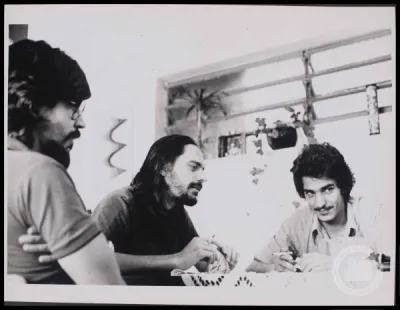
Photo: Wikimedia Commons
Édith Piaf
Human Design Chart
Biography
She was born literally in the streets of Paris, under a lamppost at rue de Belleville on a freezing winter night on a policeman's cape, the illegitimate child of a wanton chanteuse and a street acrobat. More or less abandoned by her mom, the child was brought up in a brothel in Normandy run by her dad's kin. As a child she was blinded for three years with cataracts on both eyes, but miraculously recovered her sight at age six. The local priest urged that she be moved to a different environment, so her dad took her, putting her to work passing the hat while he performed. Though her father trained her to follow his vocation, she became a street singer instead.
At 14, she left her dad to strike out on her own. The following year she met her 12-year-old half sister and the two joined forces. For the rest of her life, the two were inseparable and for two decades, plumbed the depths of dirt, depravity and poverty.
Piaf's first love affair ended in desertion and a stillborn baby. She had a love affair of two years with Marcel Cerdan until his death in a plane crash on 27 October 1949.
After years of being never far from the streets, Piaf suddenly shot to stardom, the onstage rage of Paris. Other than a sudden freedom to indulge in extravagance, her life changed little. Money continued to slip through her fingers as easily as lovers slipped in and out of her bed. Her entire life had been extravagant, with the use of her body and her talent, with drugs and alcohol, overwork and poverty, always pushing herself. Always putting her freedom above all else, she sang, "Non, Je Ne Regrette Rien," as one who truly did regret nothing. She looked the part of her name, "Piaf," (little sparrow), in her too-big black dress, a tiny wisp of a woman.
She started a downhill slide.
Édith Piaf — Manifesting Generator with Profile 4/6
Manifesting Generator 4/6 — Design at a Glance
Edith Piaf had a hybrid energy configuration that marked her as an Manifesting Generator. She possessed the constant, sacral life force of a Generator combined with the direct action power of a Manifestor. This allowed her to pull things into her life quickly and often skip steps in the process.
Her strategy was not to initiate but to respond to external impulses. Only when her inner authority agreed would her actions be effective. Without this resonance, she tended to act too quickly or juggle multiple projects at once, leading to important intermediate steps being neglected, which resulted in backlog and frustration – a classic sign of the non-self theme for this type.
Success came to Edith Piaf primarily when she entered into a playful mode with much variety. In this state, she could use her speed without overextending herself. She derived deep satisfaction from her work as long as she listened to her inner signals and experienced parallel task handling as enriching rather than a source of stress. Her strength thus lay in the ability to act quickly and diversely, provided each action sprang from genuine internal agreement.
Emotional Authority
Edith Piaf showed an internal decision-making structure that did not rely on immediate clarity but on the rhythmic up-and-down of her emotions. Her design suggested she was subject to emotional waves that constantly colored her perception: in one moment she could be enthusiastic about something, and in the next view the same situation negatively. This defined Emotional Center was her inner authority and always took precedence over all other defined centers in her chart.
This mechanism meant that her immediate feeling often was just a snapshot, not the final truth. Quick, spontaneous reactions from a strong emotional state risked being based on transient impulses rather than deep knowledge. For Edith Piaf, strategic hesitation was essential. She needed time and patience to let intense feelings subside. Only through multiple “sleeping on” of a decision did she gain the necessary emotional distance.
This process of delay allowed her to distinguish between temporary mood and her true inner truth. Over time, calmness set in, serving as an indicator for a mature, well-founded decision. This path was particularly important for long-term life decisions, ensuring that her choice was guided by stable internal authority rather than fleeting emotion.
The 4/6 Profile — Opportunist / Role Model
Edith Piaf's design indicated a tendency to oscillate between the deep desire for emotional connection and the distance of a wise observer. In her first thirty years, she acted experimentally; line 6 of her profile behaved like a line 3 at that time, leading to much experimentation in relationships. This early period was marked by searching for the right place within the social fabric.
The mechanics of Profile 4/6 describe a lifelong conflict between Heart and Head. Line 4 stood for the desire for community and emotional bonding, with the big heart always acting cautiously to avoid being hurt by false people. At the same time, line 4 brought the ability to convey transpersonal ideas and inspire others to believe in set concepts.
In later life, Edith Piaf was expected to meet the high standards of a role model. Line 6 represented the highest form of reason and the pursuit of peace and justice. She tried to control her emotions and establish conditions for a better world. This internal tension between the heart's need for belonging and the head's rational distance shaped her development towards cooperation with others as a path to wisdom.
Split Definition — Defined & Open Centers
Édith Piaf's Human Design profile pointed towards a powerful, authentic expression that flowed directly from her inner identity and emotional feelings. Her defined G Center provided her with a consistent self-identity and a clear sense of direction, while the also defined Sacral Center acted as an engine generating tremendous vital energy. This combination ensured she not only knew who she was but also had the physical strength to live this out throughout her life. Her communication, guided by the defined Throat Center, served as a transmission belt for these inner states; she spoke and acted not from abstract concepts but transmuted her feelings and identity directly into the world.
Especially defining was her defined Solar Plexus, which functioned as an emotional authority. Édith Piaf appeared as someone whose perception was marked by waves of passion and longing. She needed time to gain emotional clarity since her truth only revealed itself at the end of the emotional cycle. This contrasted with her open centers: Head, Ajna, and Heart. Without constant mental inspiration or fixed conceptual opinions, she tended to absorb mental pressure from her environment without identifying it as her own claim. Her open Heart Center meant that she was not designed to give promises out of willpower or prove her worth through competition; instead, she reflected the ego claims of others, making her vulnerable to conditioning if she did not trust her inner authority.
Her defined Spleen Center protected her with intuitive warning signals in the here and now, while the Root Center provided the necessary pressure to advance in the material world. Together, these defined centers formed a robust foundation of vitality, emotional depth, and intuitive security that allowed her to follow a coherent life path despite the fleeting nature of her mental and willful areas. The mechanics of her design emphasized the importance of waiting for the sacral answer and emotional clarity to avoid energy depletion and frustration through false initiatives.
Channels & Gates
Édith Piaf was someone who combined logical leadership with emotional intensity. Her profile pointed towards a tendency toward collective authority that, however, strongly depended on her inner mood wave. This duality shaped how she entered the world: on one hand structured and direction-setting, on the other impulsive and dramatic.
The Alpha Animal Channel 7-31 connected her G Center with her Throat Center. This created a potential for logical, collective leadership based on tested patterns. Gate 7 provided the role of self, while Gate 31 emphasized the influence of voice as a collective leader. For Édith Piaf, this meant that her leadership role often appeared as 'power behind the throne' or as a pack leader. She could only lead effectively when invited by the majority; her authority rested on trust and understanding existing social patterns.
Simultaneously, the Openness Channel 12-22 between Solar Plexus Center and Throat Center was active. This channel steered her emotional, mutative expression. Gate 22 brought capriciousness, passion, and drama, while Gate 12 introduced a certain caution and restraint. Édith Piaf used her voice as a tool to transform others, but this process depended on the ebb and flow of her emotional wave. She needed patience until the right mood was there for her transformative effect to unfold; if she acted against these inner rhythms, misunderstandings could arise; in the right phase, however, she touched her audience deeply.
The combination of these two mechanisms created a contrast: while the Alpha Animal sought recognition and invitation by the community, the Openness Channel demanded respect for her individual emotional authority. Édith Piaf lived within this tension between the need to lead logically and the necessity to surrender to her emotional truth. Her strength lay in integrating these two forces not as contradictions but as complementary aspects of her expression.
Circuit Signature
Édith Piaf was shown through a split definition, dividing her energy into two clearly separate poles. The first pole included the Throat, Solar Plexus, and Sacral Centers, connected by the Knowledge Circuit. Here pulsating, acoustic energies promoted the urge to transform and express a unique identity emotionally, not through cool logic but through intuitive, wave-like impulses that carved new paths.
Parallel to this existed an entirely separate pole of Spleen and Root Centers, part of the Ego Circuit. This area focused on cooperation and joint creation of resources in the stem context. Since there was no connection to the Sacral Center, here the necessity for timeless rest pauses was crucial to ensure material security through touch and smell senses.
Spanning between these poles lay an inner conflict: the acoustic urge towards individual self-expression and emotional change stood in contrast to the conservative, tactile need for material stability and mutual support. These two systems did not work together but existed as parallel forces that shaped Édith Piaf's impulse towards creative expression as well as her need for peaceful resource care.
Right Angle Cross of Eden 4
Édith Piaf's Human Design profile carried the signature of the right cross of Eden 4. This configuration established an existential dynamic characterized by profound introspection and a drive towards truth or redemption. The right cross of Eden is associated with archetypal themes of destiny and life-altering experiences within Human Design mechanics. The number 4 within this structure refers to a specific expression of this energetic quality, often perceived as challenging because it places individuals in situations that test their resilience and essence. For Édith Piaf, this meant her life was marked by an inner tension that not only reflected external circumstances but also possessed a deeper, almost mythical dimension. The energy of this cross acts like a catalyst for transformation through suffering or intense emotional experiences. It is about more than just enduring pain; it involves seeking a higher meaning or truth that can only be revealed through overcoming adversity. Édith Piaf emerged as someone whose existence was profoundly influenced by this strong, often fateful current. The mechanics of the right cross of Eden 4 describe a path leading through trials to ultimately achieve deeper insight or redemption. This archetypal structure shaped her deeper existential dynamics and connected her with themes that transcend the mundane and venture into the realm of destiny.
Saturn Return · Uranus Opposition · Chiron Return · 2nd Saturn Return — Life Cycles
Édith Piaf's Human Design profile indicated a tendency towards structural consolidation in early midlife, followed by a phase of sudden change. In 1943, at age 28, she was on a concert tour in Berlin and posed for photographers near the Brandenburg Gate. This marked her first Saturn Return cycle: an astrological transit that defines moments of maturation and responsibility. Here, years of groundwork often coalesced into a solid outcome that shaped her subsequent career.
Later, her chart showed another dynamic through the Uranus Opposition. This cycle represents unexpected breaks and reorientations in personal surroundings. In 1952, at age 37, Édith Piaf married singer Jacques Pills. This event illustrated the mechanics of the Uranus Opposition: a sudden change in relationship structure that broke existing patterns and forced new paths. The combination of Saturn Return and Uranus Opposition described a life course marked by firm milestones of responsibility but also vulnerable to abrupt turning points. These transits acted as structural hinges propelling her development – not through linear progress, but through phases of consolidation and sudden transformation.
Manifesting Generator · Emotional Authority — Synthesis
Édith Piaf lived a life driven by a deep inner urge for expressive power and the desire for connection. Her profile as an Manifesting Generator (with defined Sacral Center) indicated someone who possessed both the ability to quickly initiate things and also needed to respond to sacral impulses. This combination was evident in a lifestyle marked by rapid decisions and skipping steps – a pursuit of movement and transformation (Knowledge Circuit), yet always requiring a return to inner truth. The defined Throat Center amplified this urge to express and enabled her to channel messages from various body centers into the world.
A central paradox lay in the tension between the desire for autonomy (Alpha Channel) and the emotional wave of her authority. Piaf was destined to take a leading role and forge her own path, yet her decisions always had to mature through the sieve of emotions. The profile as Networker/Role Model intensified this dynamic: the longing for belonging (Line 4) clashed with the need to act from a higher perspective and impart wisdom (Line 6). This inner conflict shaped her life journey and was evident in transitions between personal freedom and the expectation to serve as an example.
5 Defined Channels
Incarnation Cross - Right Angle Cross of Eden 4
Solar Return
The Solar Return shows the moment when the sun returns to its exact birth position - your personal solar year.
Life Cycles
Discover the life cycles with a detailed triple view (birth chart, cycle chart, composite).
Human Design Profile
- Strategy
- To respond - wait for something to respond to
- Authority
- Emotional Authority
- Profile
- 4/6 - Opportunist / Role Model
- Definition
- Split Definition
- Incarnation Cross
- Right Angle Cross of Eden 4
- Date of Birth
- 19.12.1915 05:00
- Place of Birth
- Paris, France
Frequently Asked Questions
What was Édith Piaf's Human Design type?
What Profile did Édith Piaf have in Human Design?
Which Authority guided Édith Piaf's decisions?
What incarnation cross did Édith Piaf have?
When was Édith Piaf born?
Discover your own Human Design
Are you also a Manifesting Generator? Find out in a personal reading how to unfold your multi-talents and direct your energy wisely.
More Personalities
Back to overviewAaliyah

Aldair
Alexia

Alizée

Angèle

Angeli