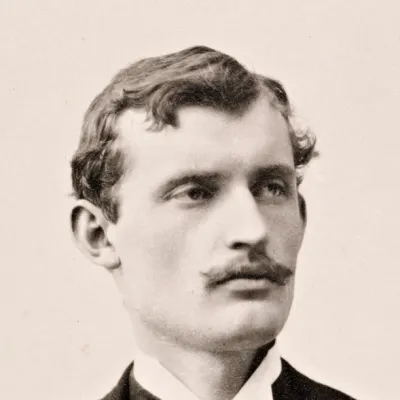
Edvard Munch
Human Design Chart
Biography
Human Design Analysis: Edvard Munch as Manifestor 4/6
Manifestor 4/6 — Design at a Glance
Edvard Munch's design established him as a pioneer and visionary whose nature lay in leading the world into new directions. Similar to an emperor in ancient Rome, he had great plans for his realm but did not wage the necessary wars himself; instead, he sent others out to conquer lands on his behalf. This structure brought with it a specific challenge: He was often misunderstood and polarized his surroundings. Because he thought further ahead than many of his contemporaries, he found admirers who followed him while others rejected or even hated him due to these vast visions. To find the right followers, it was crucial for his design to inform others accurately about his intentions at the right time. This formed his ideal strategy. When he adhered to this approach, he was rewarded with a sense of inner peace. Living against this pattern, however, led to an enduring, deep-seated anger within him. His path thus revolved around the tension between his leading role and the need for clear communication to minimize resistance in order to achieve the peace that was due to him.
Emotional Authority
Edvard Munch's design featured a tendency towards intense emotional fluctuations. His inner authority lay in the defined Emotional Center. This configuration meant he was subject to a constant wave of feelings, showing up as an ongoing rise and fall. The world appeared colored by his current mood; something could inspire him one moment and seem negative the next. However, his immediate feeling was only a snapshot, not a final claim on truth. Quick, spontaneous decisions made in this emotional heat often had negative consequences. The mechanics of his inner authority required patience: He needed to let decisions mature and sleep on them multiple times. Only when intense feelings subsided and an emotional distance was gained did clarity set in. This process of calmness was crucial for long-term life decisions. Emotional authority always took precedence over other defined centers in his chart, regardless of further configurations. Edvard Munch thus showed himself to be someone who had to learn to dress properly and ask himself multiple times before acting. The necessity of waiting shaped how he dealt with important turning points, as only through time did the deeper truth behind transient moods become apparent.
The 4/6 Profile — Opportunist / Role Model
Edvard Munch revealed himself as someone oscillating between a deep need for belonging and the urge towards detached wisdom. His design as a 4/6er 'Networker/Roles Model' defined this dynamic: In his first thirty years, he intensely experimented in relationships because the sixth line still acted like a third one. Later, an inner conflict emerged – the heart (line 4) wanted community, while the head (line 6) sought the solitary perspective from the mountain to grasp meaning. This tension between cooperation and isolation was constitutive for his experience.
Additionally, specific line influences played out: Gate 26 in the fourth line provided a protective function through targeted information control; it involved consciously forgetting or censoring certain things to maintain the status quo and community; uncovering hidden aspects was avoided. Parallel to this, Gate 47 in the sixth line showed an ability to distinguish between meaningful and meaningless, but harbored a tendency towards complaining or lamenting when clarity is lacking. This position on the 'roof' of the hexagram offered an overview of cyclical processes. After his Church Return, Edvard Munch learned to endure these challenges more soberly and better tolerate the futility of certain quests rather than falling into depression.
Split Definition — Defined & Open Centers
Edvard Munch revealed himself as someone with a deeply rooted inner direction and a reliable self-identity. His defined G Center gave him a clear sense of his own mission, allowing him to naturally introduce others into new perspectives without feeling unsure himself. This internal strength contrasted with his emotional state: The also defined Solar Plexus Center made him an inner authority that required patience. He had to learn to wait out the waves of his feelings in order to gain emotional clarity rather than impulsively reacting to highs and lows. His perception was further shaped by a defined Spleen Center, which gave him spontaneous, intuitive intelligence in the present moment. This existential awareness helped him make health-promoting decisions and protect himself from harmful influences. The constant pressure of his defined Root Center drove him to deal with stress and master material or emotional challenges, energizing his actions. At the same time, he was vulnerable to conditioning through open centers. His open Head and Ajna Centers made it easy for him to get mentally confused; he tended to engage with other people's questions or seek answers that weren't his own, which could distract him from his inner authority. Additionally, lacking a consistent willpower in his open Heart Center, he might try to prove his worth through promises or competitive thinking – a pattern that could lead him into spirals of self-doubt. His open Sacral Center also made him sensitive to the energy of his environment; he absorbed foreign vitality and amplified it, leading to exhaustion if not handled properly due to lacking constant generative energy within himself. This constellation created a person of deep emotional and intuitive intelligence who had to learn to set aside mental noise and external expectations in order to follow his true identity.
Channels for life purpose, inspiring presence and emotional openness.
Edvard Munch's design inclined him towards a profound, often combative search for individual meaning. The Life Struggle Channel 38-28 connected the Root Center with the Spleen Center. This created an internal pressure to defend one's own integrity against external distractions and recognize higher value in every conflict. It was not just survival struggle but the stubborn will to find significance even if it meant isolation or resistance.
This inner stance found expression through the Inspiration Channel 1-8, linking G Center with Throat Center. Here, he showed the ability to inspire others simply by being present and authentic. Edvard Munch was designed to act as a living example; his actions spoke louder than words. He drew attention by fully embodying his unique identity, potentially changing observers' perspectives and inspiring their creativity.
Simultaneously, the Openness Channel 22-12 between Solar Plexus Center and Throat Center shaped his social interaction. His emotional wave determined when he opened up or withdrew. In moments of emotional resonance, he could deeply touch others through voice and expression, channeling moodiness and passion artistically. If the mood wasn't there, however, he appeared harsh or isolated. This dependence on internal wave movement caused his impact on others to fluctuate strongly – sometimes magnetically attractive due to emotional depth, other times inaccessible due to defensive withdrawal.
The individual Gates 26 and 45 in Heart Center underscored the ability to implement innovations despite conservative resistance and to bundle energy for the tribe, while Gates like 47 and 48 in the background promoted collective understanding of meaning connections and deep patterns.
Individual Circuitry — Circuit Signature
Edvard Munch's design inclined him towards a pulsating, acoustic expression style that emphasized his unique individuality. As a person with split definition, his energetic makeup consisted of two non-directly connected blocks: a flow between Throat, Solar Plexus, and Identity Centers as well as a separate interplay of Spleen and Root Centers. This separation meant that emotional waves and inner convictions were strongly linked but operated independently from physical intuition or survival instinct.
The Knowledge Circuit significantly shaped this dynamic. Through the Inspiration Channel (1-8), he received mental impulses that manifested in Throat Center. The Openness Channel (12-22) promoted flexible perception, while the Life Struggle Channel (28-38) between Spleen and Root Centers caused constant internal struggle to recognize essentials and mobilize energy. Since these two groups were not connected, creative impulses and the drive for change existed as parallel, independent forces within him. His identity was reinforced by mutations and innovative flashes of insight he articulated through emotional resonance from Solar Plexus Center. This created a life task of uncovering hidden connections and conveying them in such a way that others could absorb them – driven by melancholic but creative energy always seeking the essential.
Right Angle Cross of Rulership 4
Edvard Munch's Design indicated a tendency towards a strong, often isolated leadership role. He was someone who not only accepted responsibility but actively carried it out—often without the expected support system. This configuration describes the mechanics of the right cross in the Governing Center: an area that defines authority and assertiveness, yet here marked by a specific energetic structure that aimed more at self-determination than collective affirmation.
In Human Design, the right cross represents a connection between the will to lead and an inner source of definition. Edvard Munch lived with this tension: He had the power to make decisions and guide others, but this power arose from a very personal, often lonely place. It was not a leadership role in terms of charismatic attraction or public stage, but rather a quiet yet unyielding presence. His authority came from within, not without.
This mechanics shaped his way of operating: He did not lead through conventional persuasive power, but simply by the fact of his existence and decisions. Others reacted to it, often unconsciously, because his energy had a clear though elusive structure. It was a design that led him into situations where he had to make decisions alone—not for lack of options, but because his inner logic did not allow for compromise.
Without external validation or support from other Governing Centers, this leadership role often remained misunderstood. Edvard Munch carried the burden of responsibility himself, which could lead to deep internal isolation. His strength lay in this independence: He needed no confirmation to act. Yet it was precisely this that made him vulnerable to misunderstandings, as his authority was not always visible or comprehensible.
Overall, Edvard Munch's Design mirrored a complex leadership structure: strong, independent, but often left alone with the consequences of his decisions. It was a configuration that led him to operate in the world without conforming to it—and with an intensity that would tolerate neither ignorance nor rejection.
Saturn Return · Uranus Opposition · Chiron Return · 2nd Saturn Return — Life Cycles
Edvard Munch's Design inclined towards deep inner processing, often manifesting as emotional intensity. This configuration described a life task of making internal states visible and bringing them into the world. His first Saturn Return marked a turning point where years of groundwork condensed. In 1890, at age 27, after his father's death, Munch painted "Night in Saint-Cloud," characterized by loneliness and melancholy. This event corresponded to the mechanics of the Saturn Return: a crisis phase that structures and forces internal content to take form.
Later, the Uranus Opposition acted as a catalyst for new connections and sharing insights. In 1903, at age 40, Munch donated the eponymous painting to the Behn House out of connection. This was a typical expression of this phase: one's own creation is shared to find broader resonance and establish new networks.
Finally, the Chiron Return is a fulfillment cycle in which the incarnation cross unfolds if the person lives according to their strategy. In 1912, at age 49, Munch was given a significant place among the pioneers of modern art at the large Sonderbund exhibition in Cologne. This success was not merely a healing of old wounds but the visible bloom of his life purpose: his unique perspective was recognized and received its just appreciation in public perception.
Manifestor · Emotional Authority — Synthesis
Edvard Munch lived a lifestyle marked by a deep internal tension between the desire for connection and the need for individual expressive power. The definition of the Heart (Line 4 in Profile) and the G Center, coupled with emotional authority, pointed to someone who sought intense relationships and felt strongly connected to others' emotions. At the same time, his defined Throat Center, particularly through the Channel of Inspiration (1-8), indicated a pronounced ability to formulate and publicly express personal visions – an expression of the wisdom circuitry aligned towards creative transformation. This drive for authenticity and self-realisation seemed to repeatedly emerge as a key moment throughout the cycles of his life journey.
A central paradox lay in Munch's need for belonging (Line 4) often conflicting with his desire to be perceived as a unique individual and adopt a mutative perspective (Gate 1). The emotional wave accompanying his decisions required time to mature, while the Channel of Inspiration urged him to bring his inner images outwards. His right-hand Authority cross intensified this internal conflict by indicating both a search for control and an urge to let go – a tension that manifested in the crises and successes of his life cycles.
3 Defined Channels
Incarnation Cross - Right Angle Cross of Rulership 4
Solar Return
The Solar Return shows the moment when the sun returns to its exact birth position - your personal solar year.
Life Cycles
Discover the life cycles with a detailed triple view (birth chart, cycle chart, composite).
Human Design Profile
- Type
- Manifestor
- Strategy
- To inform others before acting
- Authority
- Emotional Authority
- Profile
- 4/6 - Opportunist / Role Model
- Definition
- Split Definition
- Incarnation Cross
- Right Angle Cross of Rulership 4
- Date of Birth
- 12.12.1863 12:00
- Place of Birth
- Løten, Norway
Frequently Asked Questions
What was Edvard Munch's Human Design type?
Which profile did Edvard Munch have?
What authority did Edvard Munch have?
What incarnation cross did Edvard Munch have?
When was Edvard Munch born?
Discover your own Human Design
Are you also a Manifestor? Find out in a personal reading how to use your initiation power peacefully and dissolve resistance.
More Personalities
Back to overviewBaekhyun

Balthus
Beyoncé

Christian-Jaque
Fergie

Halston