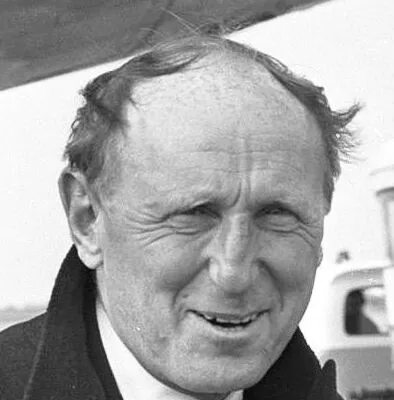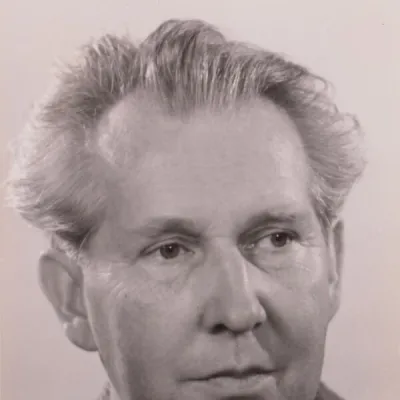
Erich Arendt
Human Design Chart
Biography
He died on 25 September 1984 in Wilhelmshorst, aged 81.
Human Design Analysis: Erich Arendt as Projector 4/6
Projector 4/6 — Design at a Glance
Erich Arendt's design tends towards focused perception; his aura acts like a bright flashlight that immediately recognizes system errors. As a projector, he does not have a constant intrinsic energy source due to the undefined Sacral Center. Instead, his rhythm shows phases of high activity followed by essential rest periods to avoid exhaustion.
The mechanics of his design require a specific strategy: Direct criticism of others' mistakes would often lead to rejection, like shining a bright light in someone's face. Instead, Erich Arendt was most effective through his own harmonious glow. By embodying functional patterns himself, he automatically drew those around him. People sought him out for advice because his presence was attractive and helpful.
The key to his success lay in waiting for an honest, appreciative invitation. Only after this request should he take on a leadership role. If Erich Arendt lived by this principle faithfully, he was rewarded with success. Ignoring this strategy and acting without invitation activated the non-self theme of bitterness. His design knew him not as someone with continuous working power but as an influencer whose impact depended on respect and consent. The recognition of his need for rest was just as central as patience in waiting for the right moment to act.
Emotional Authority
Erich Arendt's decision-making followed a clear rhythm: He did not react impulsively to initial emotional outbursts, but sought targeted clarity through emotions. His design required that he 'sleep on' decisions to distinguish between temporary mood coloring and deeper truth.
This approach resulted from his emotional authority carried by the defined Solar Plexus Center. In Human Design mechanics, this means that this center always takes precedence over all other defined centers regardless of further configurations in the chart. Erich Arendt was subject to a constant wave of emotional ups and downs. The world appeared colored through his current mood; a topic could be inspiring at one moment and negative the next. His immediate feeling was only a snapshot, not final truth. Quick, spontaneous decisions from this emotional heat often proved faulty.
Instead, his system required patience and time. By hesitating and re-evaluating decisions multiple times, he gained necessary distance. Over time, intense feelings subsided leading to calmness and true clarity. This process was especially crucial for long-term decision-making as only then could the emotional coloring fade revealing the true essence of a situation. Erich Arendt used this inner mechanism to ensure his actions were based on deeper insight rather than fleeting moods.
The 4/6 Profile — Opportunist / Role Model
Erich Arendt's design points towards development from an intense experimental phase in youth to pragmatic wisdom in old age. In the first three decades of his life, his Profile Line 6 still appeared as a Line 3. This showed strong experimental enthusiasm, especially in relationships and friendships, driven by the need for belonging of Line 4. He actively sought exchange to find his place in social networks but was vulnerable to hurt if he opened up to the wrong people.
With Saturn's return and entry into maturity, the true nature of Line 6 activated itself. Here a characteristic conflict emerged: The emotional heart desire for community (Line 4) stood in tension with the intellectual drive of Line 6 to maintain wise distance and ponder the deeper meaning of life. This heart-mind conflict shaped his middle phase of life. The mechanics of Line 6 demand pragmatism and testing solutions for their practicality in the collective. Erich Arendt had to learn not only to act socially but also to critically examine insights and transfer them into societal consciousness. In his later years, he developed into a role model. His task was to set wise impulses through cooperation with others while maintaining necessary distance to avoid getting lost in mere validation seeking.
Single Definition — Defined & Open Centers
Erich Arendt's Human Design profile indicated a tendency towards deep emotional intelligence coupled with the necessity to avoid making decisions based on immediate impulses. His defined Solar Plexus Center served as an internal authority: truth revealed itself to him only after waiting out the emotional wave, often requiring at least one night of sleep for clarity. This meant he had to learn to endure chemical fluctuations between hope and pain until emotional clarity emerged. Impulsive reactions to the highs or lows of this wave tended towards chaos; patience endowed his decisions with a compelling power and deep insight. His defined Root Center supported this structure by providing constant pressure to withstand emotional stress in relationships and move forward.
At the same time, Erich Arendt was heavily influenced by several open centers, making him highly dependent on his environment. His open Head and Ajna Centers meant he lacked consistent mental clarity or personal concepts. Instead, he tended to absorb inspirations and opinions from others, making him vulnerable to conditioning through borrowed thoughts. He had to learn to resist mental pressure and avoid seeking answers that were not his own. Similarly, his open G Center indicated a lack of stable identity or life direction; he leaned towards reflecting in relationships or environments to gain a sense of belonging, which made him susceptible to false initiations. His open Heart and Sacral Centers meant he lacked consistent willpower or vital energy, instead situatively absorbing these from the environment – with the risk of exhaustion through over-identification with others.
Channels for mystical synthesis of demand and principle.
Erich Arendt understood his identity strongly in terms of belonging to a community. His design indicated a tendency to experience loyalty and cohesion not as abstract concepts but as emotional necessities. This attitude was shaped by Channel 19/49, connecting the Root Center with the Solar Plexus, acting as an emotional glue for the 'tribe', determined by the balance between the pressure of Gate 19 to create belonging and the selective rejection of Gate 49 towards anything incompatible with highest ideals. For Erich Arendt, this meant he only felt satisfied when needed or asked; family or social structure was his central 'business'.
Additionally, further energetic streams influenced him. Gate 32 brought a concern for continuity and material success of the tribe while also testing radical changes if stability was threatened. In the realm of inner processing, Gates 61 with its striving for individual truth and silence, and Gate 62 with its logical detail work played roles. This combination of sensitive tribal connection (Channel of Synthesis 19/49) and need for clear structure created a profile oscillating between emotional validation through prolonged courting of intimacy and rational resource security. Erich Arendt always sought balance between feasibility and fairness within his social relations.
Tribal Circuitry — Circuit Signature
Erich Arendt's design indicated a tendency towards synthesis: he combined intuitive feelings with the necessity to stabilize in stress situations. This connection between Solar Plexus and Root Center formed an independent energetic stream within the Ego Circuit.
Although this circuit belongs to the Family Context, emphasizing cooperation and joint resource creation, Erich Arendt lacked direct connections to channels for mediation (26/44), material accumulation (21/45) or give-and-take (37/40). Instead, only the Synthesis Channel (49/19) was active. This meant his strength did not lie in active resource accumulation or social exchange dynamics but rather in connecting emotional waves with physical reality.
As there is generally no connection to the Sacral Center within the Ego Circuit, a constant life force for uninterrupted creation was lacking. This required Erich Arendt to take mandatory pauses for energy replenishment for the tribe. His design thus did not show continuous production or negotiation but rather cyclical phases of emotional processing and stabilization. The separate nature of his definition emphasized this focus: he lived the dynamics of feeling and stress management as an integrated whole, while other aspects of family life – such as material accumulation or social mediation – lay outside his direct energetic flow. His presence was thus marked by the ability to translate inner emotional states into outer action capability, followed by necessary recovery phases.
Right Angle Cross of Maya 1
Erich Arendt's design carried the signature of the right cross of Maya. This configuration established a specific inner orientation that was not determined by external circumstances or social expectations, but rather drew from a deep, often unconscious source. It was a pattern promoting stillness and restraint, coupled with a strong desire for inner truth and authenticity.
In Human Design, this cross describes a life task of observation and waiting. The energy is directed inward, which means that Erich Arendt likely learned to trust his own impulses rather than wait for confirmation from the outside world. It was not about actively asserting oneself in a social sense but finding the right perspective through which life could be understood.
This structure created a tendency towards introspection. Erich Arendt appeared as someone who observed the world more than he shaped it actively. The challenge lay in not suppressing or ignoring this inner wisdom, but giving it space without falling into isolation. His design supported an attitude of respect for the timing of things and his own internal rhythms. It was a path of subtle influence where true strength lay in the ability to distinguish between what is essential and what is not, focusing on what truly mattered.
Saturn Return · Uranus Opposition · Chiron Return · 2nd Saturn Return — Life Cycles
Erich Arendt's design was marked by two fundamental life turning points that structured his existence. The first Saturn return signified an existential crisis and a forced break with his homeland. In 1933, at the age of 30, he emigrated to Switzerland following the rise of the National Socialists. This cycle condensed years of tensions into a necessary, painful cut that severed old ties and made a new harsh reality inevitable.
The second turning point followed the Chiron return, a fulfillment cycle in which one's incarnation cross unfolds and meaning becomes experiential – provided the person lives according to their strategy. This was not a process of healing past wounds but rather a bloom period of reorientation. In 1950, at age 47, Erich Arendt settled in East Germany where he began living as a freelance writer. This step established his professional identity anew in exile and anchored him within a structure that aligned with his inner purpose. The mechanics clearly show the transition from crisis-driven detachment to stable, goal-oriented positioning in the new life space.
Projector · Emotional Authority — Synthesis
Erich Arendt moved through life with an acute ability to perceive patterns and imbalances (Gate 62), coupled with a deep understanding of relationship dynamics and tribal structures (Channel 19-49). This combination shaped an observer who both finely perceived others' needs and defended principles that were important to him. His open energy allowed him to engage with the energies around him, amplifying them, making him a catalyst for change – albeit always with awareness of the need for quiet phases (open Sacral Center).
A central paradox in his design lay in the tension between the desire for community (Line 4) and the inner necessity to reflect from a distanced perspective (Line 6). This internal struggle led him both to seek connection with the collective and critically look beyond existing structures. The ability to recognize patterns (Gate 62) and understand genetic changes (Gate 60) points to a deep engagement with change – a process that was always carefully weighed by his emotional authority.
1 Defined Channel
Incarnation Cross - Right Angle Cross of Maya 1
Solar Return
The Solar Return shows the moment when the sun returns to its exact birth position - your personal solar year.
Life Cycles
Discover the life cycles with a detailed triple view (birth chart, cycle chart, composite).
Human Design Profile
- Type
- Projector
- Strategy
- Wait for the respectful invitation
- Authority
- Emotional Authority
- Profile
- 4/6 - Opportunist / Role Model
- Definition
- Single Definition
- Incarnation Cross
- Right Angle Cross of Maya 1
- Date of Birth
- 15.04.1903 01:30
- Place of Birth
- Neuruppin, Germany
Frequently Asked Questions
What was Erich Arendt's Human Design type?
Which Profile did Erich Arendt have?
What Authority guided Erich Arendt?
What incarnation cross did Erich Arendt have?
When was Erich Arendt born?
Discover your own Human Design
Are you also a Projector? Find out in a personal reading how to unfold your leadership qualities and recognize the right invitations.
More Personalities
Back to overviewSissy Spacek

Alain-Fournier
Anémone

Angeli

Ann-Margret

Bourvil