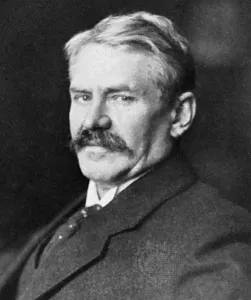
Ernst Troeltsch
Human Design Chart
Biography
Troeltsch studied Protestant (Lutheran) theology at the universities of Erlangen, Göttingen, and Berlin, becoming in turn Privatdocent (lecturer) at Göttingen, associate professor at Bonn (1892), and professor of theology at Heidelberg (1894). He married in 1901, and an only son was born in 1913.
During 21 years at Heidelberg he published, besides his Grundprobleme der Ethik (1902; Fundamental Problems of Ethics), a large number of articles on various subjects thematically linked with the development of the Christian churches. Many of these were later integrated into his best known work, Die Soziallehren der christlichen Kirchen und Gruppen. In that work he explored the relationships between and within social and cultural groups in the context of the social ethics of the Christian churches, denominations, and sects. In 1915, realizing that his strength lay more in the philosophy of religion than in theology, he moved to a chair of philosophy at Berlin, a post he held until his death.
He died 1 February 1923, Berlin.
Ernst Troeltsch as a Manifesting Generator 5/1 in Human Design
Manifesting Generator 5/1 — Design at a Glance
Ernst Troeltsch's design featured a tendency towards hybrid dynamics: He was an Manifesting Generator with constant sacral energy but also possessed the ability to skip steps and quickly pull things into his life through active motor centers. This configuration combined the fundamental strategy of responding – waiting for internal impulses before acting – with the speed of a manifestor. Troeltsch demonstrated that when he correctly applied his strategy, which involved consistently checking whether his sacral center gave a clear "yes," he derived deep satisfaction from his work. His energy flourished in what is called the Play Mode, where variety and parallel project work were not distractions but sources of creative power. Without this inner resonance, however, frustration threatened to arise as his non-self theme when he acted too quickly or skipped important steps. The danger lay in starting several things at once without strategy and authority being aligned; then initial enthusiasm would quickly turn into exhaustion. His design challenged him to regularly check whether the paths he had started still matched his inner approval. Only by responding to life and only acting when his inner self agreed could he utilize his unique speed without overburdening himself or neglecting important developmental phases.
Emotional Authority
Ernst Troeltsch showed a fundamental disposition of emotional delay: He avoided making decisions as long as his feelings were still in flux. His design featured Emotional Authority, meaning that his defined Emotional Center always took precedence over all other defined Centers – a central mechanism that was independent of further configurations.
This authority was subject to constant mood swings. Ernst Troeltsch saw the world colored by his current emotional state; enthusiasm could turn into a negative assessment of the same thing within moments. However, his immediate feeling was only a snapshot, not a guaranteed truth value. Spontaneous decisions based on this fleeting emotion often proved negative for him, as they failed to capture the depth of the situation.
The mechanics of his inner authority required patience and time. Ernst Troeltsch let decisions ripen, often over several nights. Only when intense feelings subsided and emotional distance was gained did clarity set in. This process of "pondering" – asking himself multiple times and not reacting immediately – was essential for him to make long-term life decisions safely. Only through this waiting did he gain the calmness that aligned with his true inner truth, rather than a passing mood state.
The 5/1 Profile — Heretic / Investigator
Ernst Troeltsch's design laid a tendency towards a deep, almost magnetic knowledge base that he made available to others for problem-solving. As a 5/1 – the Hero/Researcher – he loved the process of learning and new challenges. Others often sought him out for solutions to their problems, which could quickly lead to overload if clear boundaries were not set. Similar to an expert from science who answers questions in hour-long conferences only to be drained by evening and find his inbox overflowing, he had to learn to say no sometimes. This allowed him a beneficial balance between "research" for himself (Line 1) and problem-solving for others (Line 5).
His energy was shaped by specific lines: The fifth line from Gate 30 highlighted irony and realism in life's expectations. Here he recognized the transience of goals and offered practical solutions to still move forward. Jupiter in the elevation supported trust in the process of progress, even with setbacks. Pluto in the fall represented anger and frustration over the limits of the life cycle.
The first line from Gate 34 included a random use of power as a survival mechanism. He studied the nature of power and displayed it to protect himself. Saturn elevated this line through expressing frustration through power. Pluto imprinted a generation that carried this energy as a survival mechanism. It was about intimidating others when necessary, not out of principle. The first line could be surprised by its own strength and how it used it. By setting clear boundaries, he optimally preserved his gifts and avoided exhaustion from unbridled demand.
Split Definition — Defined & Open Centers
Ernst Troeltsch's Human Design profile indicated a tendency towards clear, identity-driven communication. His defined G Center provided him with a firm sense of self-understanding and direction; this flowed into his also defined Throat Center. Thus, his voice spoke not from mere intellect or transient emotions but from a reliable inner truth about 'who he is'. He possessed the energy to carry this identity outward without being dependent on others.
As a Generator with a defined Sacral Center, he had an immense vital energy source available to him. However, this energy was only accessible when he reacted – that is, waited for an external signal before acting. His inner authority lay in his Solar Plexus: He was designed to wait for the emotional wave to gain clarity. Impulsive decisions at the peaks or depths of his feelings were avoided; instead, time was given until a deep, emotional certainty set in. This aligned with the spontaneous intuition of his defined Spleen Center, which helped him distinguish between what is healthy and harmful in the present moment, as well as the structural pressure of his Root Center, driving him forward.
At the same time, his design revealed specific vulnerabilities. His open Head and Ajna Centers meant he did not have a constant mental inspiration. He tended to engage with the questions and concepts of others, which could push him into mental confusion or the feeling that he needed to find answers that were not his own. Additionally, his Heart Center was open. Here, he lacked the consistent energy for willpower in terms of competition or promises. He was vulnerable to being pressured by external expectations and felt a need to prove his worth through performance – a mechanism that tended to exhaust him rather than strengthen him, as he did not have the constant power to keep such promises long-term. His strength lay in reacting to what is right, not initiating from an act of will.
Channels for powerful action, self-expression and emotional clarity.
Ernst Troeltsch's Human Design profile indicated a tendency towards authentic self-expression supported by inner conviction. The Channel of Investigation (34-10) connected his sacral energy with the behavior of himself, enabling him to follow his own beliefs and honor himself independently of external expectations. This configuration promoted an attitude of self-love and independence that he lived through pure reaction to his inner authority.
Parallel to this, the Channel of Awakening (10-20) linked his G Center with his Throat Center. This channel allowed him to be awake in the here and now and directly translate principles into action. His survival and confirmation resulted from accepting himself as he was, showing others a clear presence that inspired them to embrace their own identity.
The combination of these energies found expression in the Channel of Charisma (34-20). Here, the generative power of sacral energy met the urge for immediate manifestation. Ernst Troeltsch had the potential to achieve impressive feats through pure reaction and attract others with his vitality. Crucially, however, this energy flowed correctly only when guided by his inner leadership; otherwise, it threatened to manifest as chaotic obsession.
On a personality level, the Channel of Preservation (27-50) shaped his awareness for care and traditional values. This created a tension between the individual drive for self-determination and the collective need for stability and clan support. Additionally, the Channel of Recognition (30-41) in his personality drove the desire for new experiences and emotional depth, balancing his restlessness with a deep longing for meaning.
Individual Circuitry — Circuit Signature
Ernst Troeltsch's Human Design profile indicated a tendency towards solid individuality and deep protective instincts. With his split definition, two parallel but not directly connected energy flows existed: one linking the G Center to Throat, Sacral, and Spleen Centers; the other connecting Solar Plexus and Root Centers.
The Projector Circuit worked through the Channel of Investigation (Gates 10–34), which linked Identity and Sacral Centers. This promoted bold personalities with strong convictions that strengthened individuality but often struggled to express these inner certainties verbally, as his Throat Center was missing here.
In the Meaning-making Circuit, the Channel of Recognition (Gates 30–41) connected Solar Plexus and Root Centers. This configuration directed attention towards emotions and experiences from the past. Troeltsch reflected on past events in waves to grasp their meaning and share emotional insights with the collective.
The Protector Circuit utilized the Channel of Preservation (Gates 27–50) to connect Sacral and Spleen Centers, giving him primordial energies for protecting family and genetic heritage. Themes like preservation, care, and necessities for survival characterized this area.
The Integration Circuit included Channels of Awakening (Gates 20–10) and Charisma (Gates 34–20). They linked Throat, Sacral, and Identity Centers into a whole. Through reacting to life, he channeled this through proper behavior and intuitive knowledge and acted in the present moment, emphasizing his highest individuality.
Left Angle Cross of Industry 1
Ernst Troeltschs Human Design legt eine Tendenz zur dauerhaften, strukturierten Anstrengung fest. Seine innere Ausrichtung wurde von der Notwendigkeit geprägt, Ziele nicht durch spontane Impulse zu verfolgen, sondern durch konsequente, wiederkehrende Handlungen. Diese Konfiguration, das linke Kreuz des Fleißes 1, beschreibt eine Lebensaufgabe, die auf Disziplin und systematischer Bearbeitung von Aufgaben beruht. Es handelt sich um einen Mechanismus, der Geduld und Ausdauer erfordert, da Ergebnisse nicht sofort sichtbar werden, sondern aus der Summe vieler kleiner, sorgfältiger Schritte entstehen. Ernst Troeltsch zeigte sich als jemand, der seine Energie in klare, definierbare Prozesse kanalisieren musste, um wirksam zu sein. Ohne diese strukturierte Herangehensweise drohte Frustration, da das Design keine schnelle Befriedigung versprach, sondern den Wert der langfristigen Arbeit betonte. Die Mechanik dieses Kreuzes fordert eine Haltung des unermüdlichen Fleißes, bei der die Qualität der Ausführung im Vordergrund steht. Ernst Troeltsch lebte diese Anforderung, indem er sich auf das Wesentliche konzentrierte und Ablenkungen vermied, um seine Ziele Schritt für Schritt zu erreichen. Diese Ausrichtung prägte sein Handeln nachhaltig und schuf eine Basis für verlässliche, wenn auch oft mühsame, Fortschritte in seinen Vorhaben.
Saturn Return · Uranus Opposition · Chiron Return · 2nd Saturn Return — Life Cycles
Ernst Troeltschs Design zeigte eine klare Struktur, die sich an den Saturn-Returns orientierte. 1892, im Alter von 27 Jahren, wurde er ordentlicher Professor für Systematische Theologie an der Universität Bonn. Dies markierte seinen ersten Saturn-Return: ein Zyklus, in dem innere Reife und äußere Verantwortung zusammentrafen, oft begleitet von einer Festigung des sozialen Status.
Der zweite große Abschnitt begann mit dem Chiron-Return um 1913. Mit 48 Jahren wurde Ernst Troeltsch Vater eines Sohnes. Dieser Zeitraum stellt im Human Design keinen Heilungsprozess dar, sondern eine Phase der Blüte: Das Inkarnationskreuz entfaltet sich hier vollends, sofern Strategie und Autorität beachtet wurden. Die Gründung einer Familie passte in diese Dynamik der Sinnfindung und Verankerung.
1923, mit 58 Jahren, starb Ernst Troeltsch in Berlin. Dies fiel exakt auf seinen zweiten Saturn-Return. Dieser Zyklus bringt oft eine endgültige Abrechnung oder den Abschluss eines Lebensabschnitts. Der Tod an diesem Punkt unterstreicht die enge Verbindung zwischen seiner biologischen Uhr und den zyklischen Energien seines Designs, die zu dieser Zeit ihren Höhepunkt und zugleich ihr Ende fanden.
Manifesting Generator · Emotional Authority — Synthesis
Ernst Troeltsch lebte einen Prozess stetiger Vertiefung und Erweiterung seines Wissens. Als Profile 5/1 suchte er aktiv nach Lösungen und verband diese mit der Fähigkeit, Prinzipien zu erkennen und anzuwenden (Channel of Awakening). Die definierte sakrale Energie ermöglichte es ihm, sich intensiv auf Themen einzulassen, während die Verbindung zum Throat Center (definiert) eine Stimme verlieh, um Erkenntnisse auszudrücken und zu transformieren. Dieses Zusammenspiel aus tiefgreifendem Verständnis und kommunikativer Kraft prägte sein Wirken und führte zu einer stetigen Erweiterung seines Wissensschatzes, den er anderen zur Verfügung stellte – ein Prozess, der ihn jedoch auch an seine Grenzen bringen konnte.
Trotz des Antriebs, Wissen zu vertiefen und zu teilen, war Troeltsch durch die emotionale Autorität geprägt von einem inneren Auf und Ab. Die schnelle Energie eines Manifesting Generator (Type) stand im Spannungsverhältnis zur Notwendigkeit, Entscheidungen reifen zu lassen und Gefühle mehrfach zu überprüfen. Dies führte vermutlich zu einer inneren Dynamik zwischen dem Wunsch nach schnellem Fortschritt und der Verpflichtung, gründlich zu prüfen, bevor er handelte – ein Paradox, das seine Arbeitsweise und sein Denken gleichermaßen beeinflusste.
5 Defined Channels
Incarnation Cross - Left Angle Cross of Industry 1
Solar Return
The Solar Return shows the moment when the sun returns to its exact birth position - your personal solar year.
Life Cycles
Discover the life cycles with a detailed triple view (birth chart, cycle chart, composite).
Human Design Profile
- Strategy
- To respond - wait for something to respond to
- Authority
- Emotional Authority
- Profile
- 5/1 - Heretic / Investigator
- Definition
- Split Definition
- Incarnation Cross
- Left Angle Cross of Industry 1
- Date of Birth
- 17.02.1865 01:30
- Place of Birth
- Haunstetten, GER
Frequently Asked Questions
What was Ernst Troeltsch's Human Design type?
What Profile did Ernst Troeltsch have in Human Design?
Which Authority guided Ernst Troeltsch's decisions?
What incarnation cross determined the life path of Ernst Troeltsch?
When was Ernst Troeltsch born?
Discover your own Human Design
Are you also a Manifesting Generator? Find out in a personal reading how to unfold your multi-talents and direct your energy wisely.
More Personalities
Back to overviewAlain-Fournier
Aldair

Alizée

Angeli

Arletty
Artus