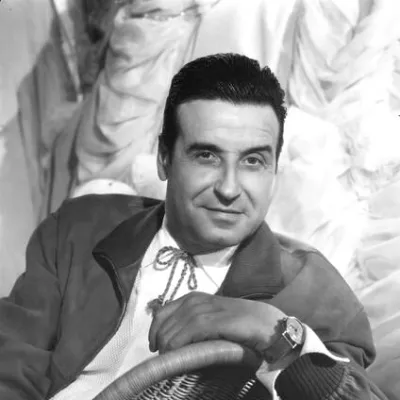
Ettore Bernabei
Human Design Chart
Biography
The Human Design of Ettore Bernabei: Projector 1/3
Projector 1/3 — Design at a Glance
Ettore Bernabei appeared as someone with a focused, dense aura – comparable to a bright flashlight that directs itself precisely towards weaknesses in his environment. His design indicated the ability to recognize system errors and inefficient processes immediately. However, this sharp perception could quickly be felt as unpleasant or confrontational if it was expressed directly.
The mechanics of his Projector type explain this: The undefined Sacral means no constant energy source but rather cyclical phases of high activity that must be balanced with rest periods to avoid burnout. The optimal strategy did not lie in direct criticism, which often provoked resistance, but rather in shining as a harmonious example. When Ettore Bernabei used his magnetic pull and waited for an honest invitation instead of giving unsolicited advice, his leadership was accepted.
This path of patient expectation and subtle influence led to the reward of his design: Success. Deviations from this strategy – such as ignoring the need to wait on invitation or not respecting his own energy cycles – led to the non-self theme of Bitterness. His influence was thus most effective when he held back and allowed others the space to actively ask for leadership.
Emotional Authority
Ettore Bernabei's design indicated a tendency towards temporary emotional uncertainty at crucial decision points. He appeared as someone who did not accept spontaneous reactions as reliable truth but rather saw them as mere snapshots that had yet to reveal the full picture. This stance results from his emotional authority: The defined Solar Plexus Center steers the decision-making process and always takes precedence over other defined centers, regardless of further configurations in the chart.
The mechanics describe a permanent emotional wave with constant ups and downs of feelings; the world is colored by the current mood; enthusiasm can quickly turn into rejection. Since immediate feeling is only a first impression, quick, spontaneous decisions from this state could be misleading or even harmful. Ettore Bernabei therefore needed time to go through these waves. By sleeping on decisions and exercising patience, intense emotions subsided. Only when emotional distance was gained did true clarity and calm set in. This process of pondering and repeatedly questioning served to base long-term life decisions not on transient moods but on a deep, comprehensive understanding that only becomes accessible after the emotional flood has receded.
The 1/3 Profile — Investigator / Martyr
Ettore Bernabei revealed himself through a tension between a profound need for foundational knowledge and an insatiable urge to practically test things. His design suggested that his judgment was only trustworthy when an insight had been both theoretically studied and tested against reality. This dynamic stemmed from his Profile 1/3, the Researcher and Experimenter.
Line 1 drove him to engage intensively with fundamentals, often leading to a fear of inadequate preparation. Simultaneously, Line 3 demanded learning through trial and error. It was characteristic of Ettore Bernabei that he did not rely solely on book knowledge but tested his theories in life. This created a unique authority: When he deemed something good, he had previously experienced and validated it himself.
A central aspect of this design was the acceptance of fate as anchored in Line 3. Mistakes or setbacks were seen not as failure but as necessary lessons. Through this resignation in the sense of surrender to life's flow, he learned to take life as it came – without premature judgment. This ability to develop an integrated perspective from his own experiences and communal perception (Line 1) shaped how he dealt with knowledge: It had to be honest, shared, and proven in practice.
Split Definition — Defined & Open Centers
Ettore Bernabei was characterized by intense inner dynamics arising from a constant mental pressure and deep emotional waves. His design featured four defined centers: Head, Ajna, Heart, and Solar Plexus. This endowed him with a consistent source of willpower (Heart) as well as the ability to form concepts (Ajna) and ask questions (Head). At the same time, he had to learn not to make emotional decisions impulsively but rather wait for the emotional wave to gain clarity (Solar Plexus).
These defined areas were in tension with five open centers: Throat, G, Sacral, Spleen, and Root. The open Throat Center lacked constant energy for direct manifestation or continuous speaking; he tended to feel pressured to demand attention rather than wait for invitations. The open G Center indicated a situational identity: Ettore Bernabei did not have a fixed life direction but adapted to the environment in search of the right place and people to feel comfortable.
The open Sacral Center made him vulnerable to overload through borrowed energy from others; he could not rely on constant vital power and had to learn to set boundaries and rest rather than push himself to exhaustion. Additionally, his Spleen Center was open, making him sensitive to health and well-being in the environment but also prone to fears and spontaneous, unconsidered decisions out of uncertainty. The open Root Center absorbed external stress not generated by himself but taken from outside, which could lead to inner unrest if he did not recognize this pressure as foreign.
The challenge lay in not impulsively forcing the rich mental and emotional energy of defined centers into open areas but using them as inspiration for others while waiting for the right timing and correct environment.
Channels for community spirit and abstract pattern recognition.
Ettore Bernabei sought his place in communities through carefully negotiated, emotional contracts. His design tended to build bridges for collective benefit by waiting for the right personal invitation. Channel of Community 37-40 connects Solar Plexus and Heart: Gate 37 seeks recognition as a whole, while Gate 40 brings willpower but needs breaks. A 'good deal' could not be closed spontaneously; it required emotional clarity and time to be sustainable for both sides. Ettore understood the need to correctly integrate into an organization often through direct contact rather than impersonal calls.
Simultaneously, Channel of Abstraction 64-47 acted as situational mental pressure, not a stable mindset. This Juxta-channel connects Head and Ajna: Gate 64 brings confusion through kaleidoscopic mental images, while Gate 47 seeks understanding. The mind constantly plays with possibilities, which could lead to inner noise until an inspiring story or perspective emerged over time. This mental energy was unsuitable for solving personal problems but served to view experiences from various angles and eventually find clarity.
Additionally, Gates like 14 (Power and Direction), 30 (Recognizing Feelings), and 29 (Persistence) shaped his profile. Gate 8 promoted the individual contribution to a group, while design gates such as 63 (Doubt), 21 (Control of Material Things), 6 (Friction/Development), and 55 (Emotional Awareness) added further layers. Thus, Ettore Bernabei was someone navigating between the stable social architect and the potentially confusing mental observer, with emotional intelligence at the center of his interactions.
Tribal Circuitry — Circuit Signature
Ettore Bernabeis design showed a tendency towards reflecting on past emotions and sharing these insights. His Human Design displays a Shared Definition: two separate, parallel existing power fields that do not directly merge.
One field connected Heart and Solar Plexus (Ego Circuit). This created wavelike energy between will and emotion, characterized by mutual support in the collective ('Today I give, tomorrow you give'). Since there was no direct connection to constant life force, this dynamic required necessary rest periods for regeneration.
The second field connected Head and Ajna (Sensing Circuit) through Channel of Abstraction. Here it was not about cool logic but intuitive perception of past experiences. This energy ran cyclically – with beginning, middle, and end – serving to draw meaning from history. The resulting felt insights were meant to be passed on to others for shared learning.
Both systems worked alongside each other: one side emotionally nurturing resources in a social context, the other abstractly finding meaning from past experiences visually. Ettore Bernabei showed himself as someone carrying these separate streams – giving and taking as well as reflecting and sharing – parallel without them merging into a single continuous flow.
Right Angle Cross of Contagion 2
Ettore Bernabei revealed himself as someone whose internal landscape was strongly shaped by the presence and emotional output of those around him. His design indicated a tendency towards deeply absorbing the energies and vibrations of others, often unconsciously. He functioned somewhat like a resonant body: The atmosphere around him directly influenced his inner state.
This configuration is referred to in Human Design as the right cross of infection. It describes a high sensitivity to the "field" of the environment. Ettore Bernabei not only perceived but internalized the states of those around him. This was less an active projection of his own energy and more a passive process of being infected by others' emotions and vibrations. He absorbed their energies, which granted him quick adaptability on one hand. On the other hand, this mechanism carried the risk of identity blurring as his voice could easily fade under the noise of absorbed energies. His vulnerability was inseparable from this potent absorption capacity. He often mirrored what prevailed in his environment without consciously controlling it. This passive intake significantly shaped his interactions and inner experience, as he was constantly influenced by the energies around him.
Saturn Return · Uranus Opposition · Chiron Return · 2nd Saturn Return — Life Cycles
Ettore Bernabei showed himself at the age of 40 in 1961 during a phase of radical realignment. He left the newspaper business and joined RAI as General Director – a clear break with his previous professional identity towards television. This change marked the point of the Uranus opposition in life cycles. During this period, the existing structure of life is often felt to be too confining or outdated, leading to a necessary and sometimes abrupt cut-off. It's not about gradual optimization but rather a fundamental directional shift that breaks old bonds to make way for a new, often unexpected reality. For Ettore Bernabei, this meant transitioning from the world of print media into the emerging era of broadcasting. The mechanics of this configuration demand flexibility and readiness to give up established patterns when they no longer serve inner development. His move to RAI was thus not merely a career step but the concrete effect of this cyclical turning point that required and enabled a complete reorientation.
Projector · Emotional Authority — Synthesis
Ettore Bernabei seems to have been marked throughout his life by a deep drive for understanding, manifesting in the ability to recognize patterns and inspire others. This mental acuity (Head and Ajna Centers) combined with an emotional depth (emotional authority), making him sensitive to the energies of his environment – a combination that enabled him to approach issues both analytically and intuitively. He was an observer who recognized flaws in the system and saw potential for guiding others onto new paths, yet always mindful of waiting for the right moment (Projector Type).
This interplay of mental clarity and emotional sensitivity harbors a central paradox. Ettore Bernabei was destined to recognize truth and share it, but simultaneously needed an invitation to effectively communicate his insights. He could get lost in analysis (Gate 63) while his heart propelled him towards building connections and sharing resources (Channel 37-40). This tension between the need for inner clarity and dependence on external validation shaped his path.
2 Defined Channels
Incarnation Cross - Right Angle Cross of Contagion 2
Solar Return
The Solar Return shows the moment when the sun returns to its exact birth position - your personal solar year.
Life Cycles
Discover the life cycles with a detailed triple view (birth chart, cycle chart, composite).
Human Design Profile
- Type
- Projector
- Strategy
- Wait for the respectful invitation
- Authority
- Emotional Authority
- Profile
- 1/3 - Investigator / Martyr
- Definition
- Split Definition
- Incarnation Cross
- Right Angle Cross of Contagion 2
- Date of Birth
- 16.05.1921 01:30
- Place of Birth
- Florence, Italy
Frequently Asked Questions
What is Ettore Bernabei's Human Design type?
What Profile does Ettore Bernabei have?
What authority does Ettore Bernabei possess?
What incarnation cross is assigned to Ettore Bernabei?
When was Ettore Bernabei born?
Discover your own Human Design
Are you also a Projector? Find out in a personal reading how to unfold your leadership qualities and recognize the right invitations.
More Personalities
Back to overviewSissy Spacek

Alain-Fournier

Anémone

Ann-Margret

Bourvil
Christian-Jaque