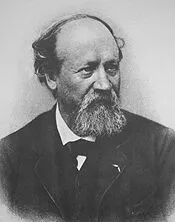
Eugène Boudin
Human Design Chart
Biography
Human Design Analysis: Eugène Boudin as Manifesting Generator 5/2
Manifesting Generator 5/2 — Design at a Glance
Eugène Boudin's design features a hybrid nature: the speed of a manifestor combined with the constant energy flow of a generator. This allowed him to skip steps and achieve results quickly. As a manifesting generator, he had a defined Sacral Center, which carried the same advice for pure generators: not to initiate but to react to impulses.
However, his speed entailed risks. Eugène Boudin tended to skip important steps or pursue multiple things simultaneously by reacting to various impulses. Without inner confirmation through his authority – the Sacral Center – this creative drive could quickly turn into frustration, his non-self theme. To achieve deep satisfaction and sustained creativity, it was essential for him to start only when his internal "yes" was clearly felt. Ongoing projects required regular checks of this approval.
Under these conditions, Eugène Boudin benefited from variety and parallel project work. The pressure to finish one thing before starting the next was inhibiting. Instead, a "play mode" ignited his true power. His life's task was to channel this dynamic energy through reacting to life rather than fighting against the natural flow or blocking himself with hasty actions.
Sacral Authority
Eugène Boudin demonstrated a decision-making approach that relied on physical resonance rather than cognitive analysis. As a Generator, his strategy was identical to his inner authority: the Sacral Authority. This mechanism simplified his process since he did not need to switch between strategy and decision-making instance. His responses came as direct reactions to external stimuli in the form of physical signals – an "inner voice," which expressed itself through grunts or clear sounds like "Mhm" or "Hmm."
When this sacral motor engaged, a vital energy emerged in Eugène Boudin, accompanied by great enthusiasm. He lived to perform tasks with joy and satisfaction, completely free from purposefulness. This inexhaustible power became effective as soon as he listened to his physical signals.
Moreover, the Spleen Center acted as a supportive instance. Since it was activated and possibly directly connected to the Sacral Center, it allowed Eugène Boudin particularly quick and spontaneous reactions. He had immediate access to his instinctive well-being, which he could rely on with confidence. This configuration shaped a lifestyle in which spontaneous, physically confirmed impulses guided the way, while the open Emotional Center provided the prerequisite for this sacral clarity. Eugène Boudin utilized this physiological intelligence to use his energy efficiently and joyfully.
The 5/2 Profile — Heretic / Hermit
Eugène Boudin's design laid a fundamental tension: the desire for visible recognition against the deep need to retreat. He showed himself as someone who initially hid his gifts, worked in an inner "cave," and prepared there for the role of the hero. This Profile 5/2 carried a specific contradiction: Line 5 demanded assertiveness and mystical quality at new beginnings, while Line 2 dictated independence and selective withdrawal.
The mechanics described a dilemma of depth. Eugène Boudin often projected uncertainty about his own ability to complete processes outwardly, even though he worked within himself. The Earth as a symbol for grounding warned against failures in hasty starts; Neptune gave every attempt a special aura. As long as he waited passively for "discovery" by others, bitterness and frustration threatened because the hero role did not function in isolation as a "lone wolf."
Development required active emergence from the protective space. He had to check whether his expectations of himself or others were unrealistically high. Only through conscious entry into the public sphere, combined with clearly formulated insights and strict boundaries for necessary alone time, could he avoid bitterness. Line 2 sought change and resistance against trends, which favoured an ascetic withdrawal when things changed. His path lay in overcoming this selective distance without sacrificing his inner integrity to allow the evolutionary review of norms demanded by Line 5.
Single Definition — Defined & Open Centers
Eugène Boudins design inclined towards a reliable expression driven by an inner engine. His defined throat acted as a pivot point for communication and action, transmuting energy from the sacral center. This did not mean impulsive talking but rather a consistent way of expressing himself once he responded to life's offer. The defined sacral center was his motor: it generated constant vital energy available only through correct reaction – a yes or no tone from the gut indicating whether there was strength for a task. Initiating steps without such an answer led to exhaustion; reacting correctly provided him with persistent endurance.
Additionally, the defined spleen center offered spontaneous intuition in the present moment for health and well-being. This non-verbal warning or confirmation applied only to the current moment and never repeated itself. The defined root center created necessary pressure for movement and survival, propelling him forward if he guided this stress through his strategy.
In contrast to this firm foundation stood open centers head, ajna, g, heart, and solar plexus. They lacked their own energy for ideas, identity, will or emotions but reflected the environment. Eugène Boudin tended to absorb mental confusion or doubt without identifying it as his own. His open g center meant no fixed identity; he adapted and did not actively seek direction but waited to be guided into the right context by others. The open heart center lacked consistent willpower; he had to prove nothing or keep promises to be valuable. His open solar plexus absorbed foreign emotions like a barometer. He often avoided confrontation out of fear of rejection, later understanding these feelings were not his own. Through letting go of conditioned patterns and trusting his sacral reaction, he could easily speak his truth without being overwhelmed by others' emotional or mental radiation.
Channels for intuitive clarity, ambition and growth cycles.
Eugène Boudin showed a fundamental intuitive self-awareness that involved articulating truths of existence spontaneously and clearly in the present moment. This did not manifest as abstract theory but as direct reinforcement of inner survival intelligence within his environment.
This ability stemmed from channel Flash of Insight 57-20, connecting the intuitive insight of the spleen center with the Now Gate in the throat center. Thus, Eugène Boudin had the gift to communicate deep instinctive knowledge – rooted in ancient primal instincts – immediately and without delay. His expression 'I know that I am living now' was not a philosophical statement but an immediate perception helping others awaken their own inner clarity. This connection allowed him to think in the moment and penetrate to the core of things faster than others through spontaneous verbal outbursts.
In addition to this intuitive presence, channel Transformation 54-32 propelled him. It connected the ambition of the root center with the instinct for continuity in the spleen. Here it was about improving one's position through consistent effort and talent to be recognized by the tribe. Eugène Boudin sought ways to move beyond his social stratum, motivated by awareness of the fragility of existence. His ambition was closely tied to the need to be seen and secure stability and continuity for his environment through loyalty and hard work.
Channel Maturation 53-42 added a cyclical aspect. It connected the Gate of Beginnings in the root center with the Gate of Growth in the sacral center. For Eugène Boudin, this meant that every experience had to be fully traversed and reflected upon to gain wisdom. He did not seek quick goals but rather depth revealed only at the end of a cycle. Through sharing these reflected experiences, he could begin new cycles building on ancient knowledge.
Additionally, gates like 60 (acceptance of limitations as a path to transcendence), 62 (logical pattern recognition and detail work) and 58 (pressure and refinement through experiments) shaped his inner landscape. They promoted an attitude that overcame melancholy through creative structuring and transformed pressure into precise, cheerful life processes.
Individual Circuitry — Circuit Signature
Eugène Boudins design inclined towards impulsive, innovative insights which he connected with a deep emotional processing of the past. His knowledge circuit linked throat and spleen center via channel 20-57 (Flash of Insight). This marked him as someone who had new, unique ideas and expressed them directly verbally or creatively – a pulsating energy of the present moment.
Parallel to this, his meaning-making circuit worked through channel 42-53 (Maturation) between sacral and root center. Here it was about cyclical, wave-like emotional processing of experiences from the past. Eugène Boudin reflected on events, found meaning in them and shared these insights with the collective to learn together. This emotional wave was descending and required time for condensation.
Moreover, his ego circuit showed through channel 32-54 (Transformation) between spleen and root center. This circuit focused on cooperation and the joint creation of resources without constant sacral energy. It was about mutual support and transformation in a group where pauses were necessary for regeneration as there was no continuous life force present.
As a person with simple definition, these centers – throat, spleen, root, sacral – formed one single, coherent energetic unit. Eugène Boudin lived from the interplay of innovative expression, emotional maturation and cooperative transformation as an integrated whole.
Left Angle Cross of Cycles 1
Eugène Boudins Human-Design legte eine Tendenz zu zyklischen Mustern fest, die sich in wiederkehrenden Phasen von Aufbau und Auflösung zeigten. Diese Konfiguration, als das linke Kreuz der Zyklen 1 bekannt, beschrieb eine Lebensdynamik, bei der Erfahrungen nicht linear verliefen, sondern sich in Spiralen vertieften. Eugène Boudin zeigte sich dabei oft gefordert, aus vergangenen Situationen zu lernen und diese Erkenntnisse in neuen Kontexten anzuwenden. Die Mechanik dieses Kreuzes betonte die Bedeutung von Rhythmus und Wiederholung als Mittel zur inneren Entwicklung. Statt nach endgültigen Lösungen zu streben, orientierte sich Eugène Boudin an der Akzeptanz natürlicher Kreisläufe. Dies prägte seine Art, mit Herausforderungen umzugehen: Er suchte nicht nach schnellen Fixes, sondern nutzte die Zeit, um Muster zu erkennen und sich daran anzupassen. Die Energie dieses Designs förderte eine Haltung der Geduld und des Vertrauens in den Prozess selbst. Eugène Boudin lebte diese Dynamik durch das Bewusstsein dafür, dass jedes Ende auch einen neuen Anfang birgt. Seine Erfahrungswelt war somit geprägt von einer tiefen Verbundenheit mit dem Fluss der Zeit und den sich ständig wandelnden Bedingungen seines Umfelds. Dies erlaubte ihm, Veränderungen nicht als Bedrohung, sondern als notwendige Schritte in einem größeren Ganzen zu begreifen.
Saturn Return · Uranus Opposition · Chiron Return · 2nd Saturn Return — Life Cycles
Eugène Boudins Human-Design zeigte klare Verdichtungspunkte an denen innere Reife nach außen trat. Dies zeigte sich 1851: Im Alter von 27 Jahren erhielt er ein Stipendium der Stadt Le Havre für das Studium in Paris. Dieser Zeitpunkt markierte seinen ersten Saturn-Return. In dieser Phase verdichteten oft jahrelange Vorarbeiten zu tragfähigen Ergebnissen, die eine neue berufliche Basis ermöglichten. Für Boudin bedeutete dies den konkreten Schritt ins Zentrum seiner künstlerischen Entwicklung.
Ein zweiter wesentlicher Wendepunkt ereignete sich 8 Jahre später im Jahr 1874, als er auf der ersten Impressionisten-Ausstellung im Pariser Studio des Fotografen Nadar ausstellte. Mit 50 Jahren befand er sich in seinem Chiron-Return. Dieser Zyklus ist kein Heilungsprozess alter Wunden, sondern eine Phase der Erfüllung und Blüte. Hier entfaltet sich das eigene Inkarnationskreuz zunehmend im Leben, sofern die Person gemäß ihrer Strategie und Autorität gelebt hat. Sinn und Zweck werden erfahrbar. Boudins Teilnahme an dieser wegweisenden Ausstellung war ein Beleg dafür, dass seine Lebensaufgabe nun ihre volle Entfaltung fand. Die Mechanik dieses Returns unterstreicht, wie sich innere Klarheit in sichtbare Anerkennung übersetzen kann, wenn der Weg konsequent gegangen wurde.
Manifesting Generator · Sacral Authority — Synthesis
Eugène Boudins Human-Design offenbart einen zentralen roten Faden der zyklischen Reifung durch Erfahrung und dessen Ausdruck. Die Kombination aus definiertem Sacral Center, dem Kanal der Reifung (53/42) und einem offenen Solarplexus deutet auf eine Person hin, die Energie aus dem Erleben von Zyklen schöpft – vom Beginn eines Projekts bis zur Reflexion über dessen Abschluss. Diese Fähigkeit, Erfahrungen zu verarbeiten und in Weisheit umzuwandeln, wird durch das definierte Throat Center verstärkt und kann kommuniziert werden. Die Offenheit für Emotionen anderer ermöglicht ein tiefes Verständnis des kollektiven Erfahrungsschatzes, während die sakrale Autorität sicherstellt, dass die eigenen Schritte auf authentische Weise unternommen werden.
Ein zentrales Paradox liegt in der Spannung zwischen dem Bedürfnis nach zyklischer Vollendung und der Tendenz zur schnellen Reaktion, die für einen Manifestierenden Generator typisch ist. Während das Sacral Center eine konstante Energiequelle bietet, die tiefe Befriedigung durch vollständige Zyklen verspricht, besteht die Gefahr, dass Impulse übersprungen werden und Projekte unvollendet bleiben. Diese Diskrepanz zwischen dem inneren Rhythmus der Reifung und der äußeren Dynamik des Handelns erfordert eine bewusste Ausrichtung auf die eigene Autorität, um Frustration zu vermeiden und das volle Potenzial der kreativen Energie auszuschöpfen.
3 Defined Channels
Incarnation Cross - Left Angle Cross of Cycles 1
Solar Return
The Solar Return shows the moment when the sun returns to its exact birth position - your personal solar year.
Life Cycles
Discover the life cycles with a detailed triple view (birth chart, cycle chart, composite).
Human Design Profile
- Strategy
- To respond - wait for something to respond to
- Authority
- Sacral Authority
- Profile
- 5/2 - Heretic / Hermit
- Definition
- Single Definition
- Incarnation Cross
- Left Angle Cross of Cycles 1
- Date of Birth
- 12.07.1824 05:00
- Place of Birth
- Honfleur, France
Frequently Asked Questions
What was Eugène Boudin's Human Design type?
What Profile did Eugène Boudin have in Human Design?
What Authority did Eugène Boudin have?
What incarnation cross did Eugéne Boudin have?
When was Eugéne Boudin born?
Discover your own Human Design
Are you also a Manifesting Generator? Find out in a personal reading how to unfold your multi-talents and direct your energy wisely.
More Personalities
Back to overviewAldair

Alizée

Angeli

Arletty

Artus
Baekhyun