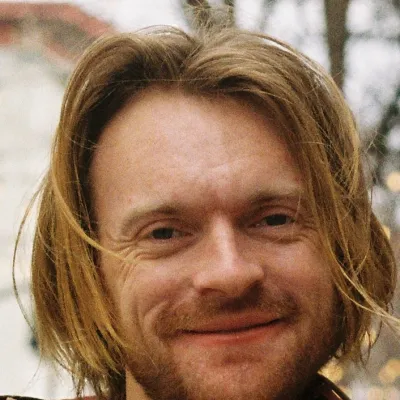
Finneas O'Connell
Human Design Chart
Biography
For his work with Eilish, he has won 11 Grammy Awards among 21 total nominations, including nominations for the Big Four categories. He made history as the youngest act to win the Producer of the Year, Non-Classical category. He has won Record of the Year twice in a row, Album of the Year, Song of the Year thrice (tied with Eilish for the all-time record), Best Pop Vocal Album, and Best Engineered Album, Non-Classical as a producer on Eilish's albums and songs. He was also nominated for Best New Artist for his solo work. Their song "No Time to Die" from the film of the same name earned him an Academy Award, a Golden Globe and another Grammy. Two years later, for their song "What Was I Made For?", they won the Grammy Award for Song of the Year, along with the Academy Award for Best Original Song and the Golden Globe for Best Original Song. They became the youngest two-time Academy Awards winners ever.
In addition to frequently working with Eilish, he has also worked with other high-profile artists, including Drake, Kid Cudi, Nicki Minaj, Selena Gomez, Camila Cabello, Demi Lovato, Halsey, Justin Bieber, Karol G, Girl in Red, Rosalía, Tove Lo, Ringo Starr, and Tate McRae, and contributed to several film scores. O'Connell has released several singles as a solo artist, and his debut EP, Blood Harmony, was released in October 2019. The EP includes "Let's Fall in Love for the Night", his most successful song to date, peaking at number 17 on the US Billboard Alternative Songs chart. His debut studio album Optimist was released through Interscope Records in October 2021. He released his second album, For Cryin' Out Loud!, in 2024.
Human Design Analysis: Finneas O'Connell as Generator 1/3
Generator 1/3 — Design at a Glance
Finneas O’Connell appears as someone whose drive is deeply rooted in his physical resonance. His Generator design suggests immense endurance and high energy potential, comparable to a strong workhorse that only runs effectively when fueled by its task. The central dynamics of his system do not lie in proactive initiative but rather in reacting to external signals.
His strategy was to wait for impulses from life and then act only when his Sacral Center – the energetic power center in the abdominal area – gives a clear “yes”. This inner confirmation is the key to unlocking his abilities. When he acts in harmony with these intuitive responses, he is rewarded with a sense of deep fulfillment and can materialize his energy efficiently.
However, this system carries two specific risks: On one hand, frustration or energy loss if he acts against his internal signal or initiates things without responding to them. On the other hand, there’s the risk of burnout if he holds himself back from his heart project despite still having abundant energy and wanting to continue working on it. His path to satisfaction therefore leads through trusting this sacral reaction – acting “from the gut” – rather than being guided by external expectations or constraints. Only in this way can he fully unfold his potential without falling into the trap of exhaustion or resistance.
Emotional Authority
Finneas O’Connell displays a fundamental stance characterized by the defined Solar Plexus Center as an emotional authority. This configuration means that his inner truth does not lie in immediate reaction but rather in the rhythm of his feelings. He is subject to an emotional wave, a permanent up and down that colors perception of the world through current mood. What appears inspiring at one moment can seem negative the next; this first impression is merely a snapshot, not yet final clarity.
Quick, spontaneous decisions based on such emotion often have negative consequences as they are based on passing waves. The mechanics of his authority require patience: The more time he takes to let a decision mature, the deeper the understanding becomes. This involves consciously sleeping on important questions and allowing intense feelings to subside. Only when emotional distance is gained does calmness set in. This process is particularly crucial for long-term decisions with significant influence on life trajectory. Emotional authority always takes precedence over other defined centers; it dictates the strategy of waiting for clarity, regardless of any other energetic patterns in his design.
The 1/3 Profile — Investigator / Martyr
Finneas O’Connell emerges as someone who not only gathers insights theoretically but validates them through active experimentation and learning from mistakes. His Researcher and Experimenter profile (Profile 1/3) shapes an approach where planning and practical implementation are closely intertwined. Line 1 brings the necessity of withdrawal to gain clarity; unreflective courage is avoided here as it can lead without prior purpose to mere repetition of errors. Only after this inner process is a well-founded communication possible.
Simultaneously, Line 3 in Gate 24 drives the impulse towards experimentation. This energy stands for trial and error, where regressions or setbacks are understood not as failure but as necessary steps toward overcoming old patterns. By consciously raising his standards, Finneas O’Connell can create new conceptual frameworks from these experiences. Crucial is the ability to expose false knowledge and gain attention through rational handling of information. When he evaluates something positively, he has both theoretically examined it and practically tested it thoroughly. His judgment thus rests on self-earned experience that earns trust by bridging the gap between abstract theory and lived reality.
Triple Split Definition — Defined & Open Centers
Finneas O’Connell revealed himself through a persistent inner pressure to question and understand connections. His defined Head and Ajna centers created constant mental activity that did not serve as energy for direct implementation but rather acted as an inspiration source for others. This thought process required patience, as ideas needed time to mature before they could be effective.
His design featured reliable expression through the defined Throat center along with a clear identity in the G Center. This allowed him to communicate his concepts and personal direction consistently without depleting the energy of others.
As a Generator with a defined Sacral center, Finneas O’Connell possessed an enormous vitality source that was only activated through reactions to external requests. Initiatives from the mind quickly led to resistance and exhaustion; true satisfaction arose only when he waited for life to respond. His decisions were also guided by the emotional authority of his defined Solar Plexus center, where it was important to wait for the emotional wave to clear before acting impulsively in highs or lows.
At the same time, he was vulnerable to conditioning through open centers. The open Heart Center tended to constantly seek validation and make promises that could not be kept, leading to a cycle of self-doubt. Additionally, the open Spleen Center often sought security from others to calm existential fears rather than trusting spontaneous impulses which could easily lead to unhealthy dependencies. The challenge lay in recognizing these external pressures and instead following his own sacral response as well as emotional clarity.
Channels for intimacy, reflection, principles and mental abstraction.
Finneas O’Connell exhibited a fundamental stance marked by a deep need for emotional intimacy and the drive to reflect experiences with patience. His design suggested that he sought relationships not as superficial contacts but as spaces for merging, waiting until his emotional wave brought clarity. This tendency was reinforced by Channel of Union 59-6, which connects sacral sexuality with emotional friction and understands intimacy as a core force. Simultaneously, he collected life stories like a listener to sort them later in peace – a mechanism of the Lost Son channel 13-33, lying between Gate of Listener (13) and Gate of Retreat (33). Here, it was not about immediate action but looking beneath the surface before sharing insights.
His inner compass also aligned with tribal values: The Channel of Synthesis 19-49 connected the pressure for belonging (Gate 19) with high principles (Gate 49), making him sensitive to loyalty and fair exchange. Parallel to this, he underwent a constant mental process of understanding. The Channel of Abstraction 64-47 drove him to filter every experience through a kaleidoscope of images (Gate 64 of Confusion) and seek an underlying story (Gate 47 of Understanding). This mind was never meant as the ultimate authority but served to develop new perspectives over time from apparent confusion. Additionally, Gates like Gate 24 (Return) and Gate 44 (Transformation) promoted renewal and vigilance at a cellular level while Gate 27 (Care) brought caring warmth into his interactions. His design thus described a person who found unique synthesis of intimacy and wisdom through patient waiting, emotional depth, and sorting memories.
Collective Circuitry — Circuit Signature
Finneas O’Connell was marked by three separate yet parallel energy fields. One field connected Head and Ajna centers as well as Throat and Identity center. This created a tendency towards abstraction and storytelling past events: emotions were processed in visual waves to draw meaning from history and share insights with others.
A second independent field linked Solar Plexus and Root Center through the Channel of Synthesis. Here, it was not about individual identity but tribal dynamics – creating resources together through cooperation and mutual support. Without a connection to the Sacral center, this energy relied on pauses for rest to regenerate vitality for the community.
The third field connected Sacral and Solar Plexus centers via the Channel of Union. This brought primal instincts of protection, sustenance, and preservation – energies meant to secure the continuation of one’s genetics and family.
This triple definition did not mean a continuous connection between all centers. Instead, three distinct energy fields existed: one for emotional meaning-making and communication, one for tribal cooperation, and one for instinctive protection and sustenance. Finneas O’Connell navigated among these separate focuses – reflecting past, communal creation, and biological preservation – as parallel, non-fusing aspects of his nature.
Right Angle Cross of the Four Ways 2
Finneas O’Connell reveals himself as deeply connected to life itself through an often unspoken bond. His design bears the signature of the right cross of the four paths two, indicating a profound commitment to existence. This configuration does not describe superficial joy but rather a fundamental trust in the flow of things and a readiness to surrender to life without needing to control it.
For Finneas O’Connell, this was less a conscious choice than an inner attitude: acknowledging that life itself is the highest value. This cross emphasizes the beauty of the moment and the importance of simply being there. It’s about a quiet resonance with existence that allowed him to express himself authentically in his own way without the pressure to prove anything. The energy of this design promoted natural ease and deep appreciation for what is, rather than constantly striving for what could be. Finneas O’Connell lived this connection to life through inner stillness and an open acceptance of experiences.
Saturn Return — Life Cycles
Finneas O’Connell showed himself in 2024 at the age of 27 during a moment of condensation: his second album “For Cryin‘ Out Loud!” was released. For his design, this marks the first Saturn Return, a cycle where years of groundwork and inner structure often coalesce into a solid public result.
This astrological turning point signals not just growth but the readiness for a maturity test. What had previously been experimental or developed in secrecy now enters a phase of stability and responsibility. The Saturn Return demands that the individual establish their identity and expression on a solid foundation. It is a process of laying groundwork, where illusions are dismantled to make room for sustainable structures.
For Finneas O’Connell, this configuration means his artistic output is no longer perceived merely as fleeting impulses but as an anchored voice. The release of the album is visible proof that inner work has found an outer form promising durability. It’s about transforming potential into reality, from idea to work. This cycle lays the groundwork for the coming years and defines what future creation can build upon. The energy of this period is serious and constructive; it demands clarity about one's position and readiness to stand by it.
Generator · Emotional Authority — Synthesis
A central red thread in this design is the dynamic connection between energy and emotional process. Sacral energy (Generator type) forms a strong basis for endurance and creative power, but is steered onto a cyclical path by emotional authority. This combination requires time for decision-making to gain clarity from the initial wave of emotion – a process that fuels the constant questioning and understanding of the defined Head Center. The line 1/3 in Profile strengthens this cycle of deep learning and practical application, where the readiness to experiment (line 3) is tempered by the need for thorough preparation (line 1).
The central paradox lies in the tension between a desire for deep emotional validation and the urge for immediate sacral reaction. The pairing channel points to an intense, connecting energy that is modulated through the emotional wave. This creates a field of tension between the desire for intimacy and the necessity not to make decisions in spontaneous moments. His second album (27 years) could be a documented event where this dynamic comes into play: the energy for creative work is there but must mature through the emotional process.
4 Defined Channels
Incarnation Cross - Right Angle Cross of the Four Ways 2
Solar Return
The Solar Return shows the moment when the sun returns to its exact birth position - your personal solar year.
Life Cycles
Discover the life cycles with a detailed triple view (birth chart, cycle chart, composite).
Human Design Profile
- Type
- Generator
- Strategy
- To respond - wait for something to respond to
- Authority
- Emotional Authority
- Profile
- 1/3 - Investigator / Martyr
- Definition
- Triple Split
- Incarnation Cross
- Right Angle Cross of the Four Ways 2
- Date of Birth
- 30.07.1997 23:21
- Place of Birth
- Los Angeles Cedars Sinai Hospital, CA, United States
Frequently Asked Questions
What is Finneas O'Connell's Human Design type?
What Profile does Finneas O'Connell have in Human Design?
What Authority guides Finneas O'Connell?
Which incarnation cross is assigned to Finneas O'Connell?
When was Finneas O'Connell born?
Discover your own Human Design
Are you also a Generator? Find out in a personal reading how to use your sacral energy correctly and discover deep satisfaction.
More Personalities
Back to overviewSissy Spacek
Aaliyah

Alexia

Anémone
Angèle

Ann-Margret