
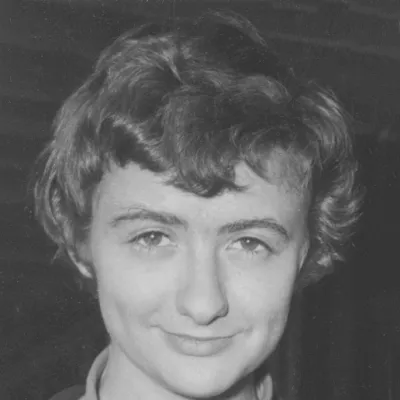
Françoise Sagan
Human Design Chart
Biography
The youngest of three kids, she was born Françoise Quoirez: Sagan was her pen name. Her dad worked for General Electric and then ran a factory for an American company in Argentina. She was an impulsive, indulged child who took to writing as a kid. She moved to Paris in her teens and took to all-night bars, cinema, and whiskey; keeping a bottle hidden in her room.
Her first book, "Bonjour Tristesse," won the 1954 Prix des Critiques and sold more than five hundred thousand copies in its first year. Within months of the publication, Sagan joined Brigitte Bardot, Maurice Chevalier, and General de Gaulle as a representative of the spirit of the French to the rest of the world. She became friends with Francois Truffaut and Claude Chabrol, for whom she wrote the 1963 film "Landru."
Reviewers slowly lost interest in her work and journalists began to focus on the increasingly scandalous saga of her life. A daringly fast driver, Sagan accidentally drove into a ditch in 1957 and survived a subsequent three-day coma. Then came the heavy drinking and the drugs. She had become increasingly dependent on a type of morphine that was prescribed to alleviate pain. During the 1960s she aligned herself with the left politically. Her intellectual grasp of economics was never good and by the '70s and '80s her fortune declined along in pace with her reputation. The people she wrote about, once considered the "jet set," were now considered "Euro-trash." In 1990 she received a six-month suspended sentence and a ten-thousand-franc fine for possession of cocaine.
Human Design Analysis: Françoise Sagan as Generator 1/4
Generator 1/4 — Design at a Glance
Françoise Sagans Human Design shows a tendency towards immense sacral endurance and energy capacity. She did not come across as someone who proactively initiated actions but rather reacted to internal impulses – she acted „from the gut“. As a Generator, Françoise Sagan had plenty of energy, comparable to a strong workhorse that only works effectively when it actually has energy for its task.
Her design highlighted two critical pitfalls. First, the risk of wasting energy on activities without an inner “yes,” which could lead to burnout. Second, the blocked heart project if she was forced to stop despite having full power – as if someone were telling her: „It’s already too late.“
The central mechanics of her design strictly distinguished between productive reaction and frustrating initiation. The energy of her sacral center was primarily freed when it could react to impulses. Not initiating but reacting was the motto. Her most successful strategy involved waiting for signals from life, then responding with action once the sacral center said “Yes! Let’s get started!”
If Françoise Sagan lived in harmony with this reactive principle, no one could stop her; she would be rewarded with a deep sense of fulfillment. However, if she did not live according to her design – for example, by constantly initiating herself – she likely faced persistent frustration and a lack of energy sooner or later. Her path towards materializing things was therefore strictly reactive rather than proactive.
Sacral Authority
Françoise Sagan appeared as a Generator whose inner authority directly merged with her strategy. This fundamentally simplified her decision-making process: She did not need complex deliberation but reacted to external stimuli through immediate physical signals. Her “gut feeling” manifested in sounds like grunts or soft mhm – a physiological compass signaling valid responses.
This sacral authority is exclusive to Generators and defines their core essence. When Françoise Sagans sacral center responded to a stimulus, she felt an energetic surge: vitality, enthusiasm, and seemingly inexhaustible energy entered the scene. She lived to perform tasks with joy and satisfaction without them needing to be externally purpose-driven.
Additionally, her spleen center acted as a supportive instance, enabling quick, spontaneous reactions and direct access to her instinctive perception and physical well-being. She could reliably guide herself from this intuitive sharpness. Her design inclined towards efficient and authentic action through the combination of sacral confirmation and spleen-supported speed, with inner responses always taking precedence over rational considerations.
The 1/4 Profile — Investigator / Opportunist
Françoise Sagan’s configuration was marked by a profound tension between individual research drive and longing for a familiar community. Her design suggested that she thoroughly researched things driven by a desire for deep knowledge to share with others afterward. This dynamic arose from the connection of Line 1, emphasizing duty and existentiality, and Line 4, focusing on network and community.
It was characteristic of Françoise Sagan that sharing this knowledge within a group of familiar people mattered greatly to her. At the same time, this configuration led to a significant fear of being exposed before loved ones if she did not know enough, which would cause her great heartache. Therefore, she needed a loving environment with deep trust for her abilities to shine.
In such safe spaces, Françoise Sagan could likely become an authority in her heart themes through her profound knowledge and networking skills. Line 4 ensured that she could influence others while Line 1 made sure she maintained harmonious relationships without interference. This interplay of thorough individual research and network-based validation shaped how she developed and shared knowledge.
Single Definition — Defined & Open Centers
Françoise Sagans design points to a tendency towards constant vitality driven by her defined Sacral Center. This center acted as the motor that generated daily energy and was only available upon affirmative response. Her authority lay in the Spleen, dictating intuitive, momentary survival decisions. Supported by a defined Root Center, which provided existential pressure for thriving, Françoise Sagans open Head, Ajna, Throat, G, Heart, and Solar Plexus Centers reflected environmental impulses rather than constant inner truth.
The mechanics of reaction were central: energy was only available upon affirmative sacral response. The intuition of the Spleen had to be obeyed in the present moment, not rationalized. Open centers required detachment from foreign emotions and ideas. Thus, Françoise Sagan tended to get caught up in mental confusion or seek identity due to her open G Center lacking a fixed direction. Her open Heart Center pulled her into the cycle of proving her worth, while her open Solar Plexus absorbed foreign emotions.
Françoise Sagan showed herself as someone who reacted to these inner signals rather than initiating them. Her strength lay in letting life come to her and reacting accordingly. The open centers made her vulnerable to conditioning, yet her defined centers offered the stability to filter out such influences. She learned that her worth did not lie in proving but in responding to what was correct. This configuration described a life task of maintaining intuitive clarity and disengaging from foreign expectations.
Channels & Gates
Françoise Sagan revealed herself as someone where a strong inner drive for change collided with the deep responsibility to preserve values. This tension shaped her essence: she carried within her the power of evolutionary change, yet was dependent on nourishing and protecting what already existed.
The Channel of Mutation 60-3 connected her Root Center to her Sacral Center, generating an unpredictable, melancholic energy aimed at individual evolution. Gate 60, the Gate of Limitation, served as a fulcrum for all possibilities, while Gate 3, the Gate of Order, attempted to realize new values. This channel brought internal tension, especially in phases where no impulses were felt; this silence was often experienced as melancholy. The key lay in accepting limitation and patiently waiting for the next mutation rather than arguing it away.
Simultaneously, the Channel of Preservation 27-50 connected her Sacral Center to her Spleen Center. Through Gate 27, the Gate of Care, and Gate 50, the Gate of Values, a selfless dedication to the clan emerged. This configuration promoted the ability to nourish others and preserve traditional structures. It naturally attracted trust and invited responsibility—whether through care for the weak or defense of common laws.
Françoise Sagan lived in balance between these two forces: the driving, sometimes chaotic energy of mutation that demanded innovation and the stabilizing, caring stance of preservation that ensured continuity. While the melancholy of change moved her internally, awareness of values and care helped translate this energy into sustainable structures without neglecting her own substance.
Circuit Signature
Françoise Sagan revealed herself through a tension between the urge to follow her unique path and express new identity, alongside an instinctive need for protection and preservation. Her design was simply defined, suggesting a coherent, continuous flow of energy.
The Knowledge Circuit connected her Sacral Center with her Root Center via the Channel of Mutation (3-60). This connection fostered the ability to integrate deviations from the known and initiate change. It was about transforming new knowledge and expressing unique individuality. The energy of these channels supported initiating transformation through authentic impulses from the Sacral Center, rooted in the Root Center.
Parallel to this, the Archer Circuit connected her Sacral with her Spleen Center (Channel 27-50: Preservation). This channel emphasized primal energies of survival protection, care, and preservation of genetic heritage. It was about instinctive defense and nurturing what is felt as valuable or familial. The connection between life force (Sacral) and the tactile, scent-based instinct center (Spleen) created a foundation for nourishment and protection.
Both circuits shared the Sacral Center as their common driving source. While the Knowledge Circuit aimed at external transformation and individual affirmation, the Archer Circuit focused on inner security and preservation of what already exists. This configuration shaped Françoise Sagans experience world through simultaneous presence of innovative change and protective instinct, both fueled by the same life energy.
Right Angle Cross of the Vessel of Love 2
Françoise Sagans Human-Design chart bears the signature of the right Love Vessel Cross 2. This configuration establishes a specific, often unconscious life dynamic whose precise operational mechanics are not further specified in the available data. The presence of this cross indicated a deeper structural imprint that went beyond simple Gate or Channel combinations and functioned as an integral pattern within her chart. Without additional descriptive details about the functionality or impact of this particular cross, its concrete manifestation remained abstract. It was a fixed architectural feature of her Human-Design system serving as a background factor for her entire existence without providing further explanations here regarding its specific effects or associated challenges and potentials. The mere mention of the name of this cross confirmed only its presence in the system but did not detail its precise function within Françoise Sagans life.
Saturn Return · Uranus Opposition · Chiron Return · 2nd Saturn Return — Life Cycles
Françoise Sagans Human-Design chart unfolded through four structural turning points that rhythmically structured her life. These planetary cycles marked no arbitrary dates, but fixed milestones for inner transformation and outer structuring. The first Saturn Return cycle laid the groundwork for a sustainable life architecture. It demanded engagement with responsibility and consolidation of earlier impulses into stable structures.
The Uranus Opposition followed as a phase of necessary detachment. Here, there was pressure to break old bonds or patterns to make room for new freedoms. This cycle often destabilized but was essential for individual liberation from no longer serviceable conditions.
The Chiron Return represented the peak of unfolding. During this period, her incarnation cross became increasingly experiential. If Françoise Sagan had followed her strategy and authority, a phase of bloom would have emerged where the meaning and purpose of existence became clearer. This was not healing in a medical sense but rather the completion of an inner task.
The second Saturn Return cycle concluded this development. It brought about a reconsolidation at a higher level. The insights and structures previously gained were now deepened and integrated into a more mature understanding. These four phases together formed the chronological framework within which Françoise Sagans unique configuration concretely impacted and shaped her everyday life.
Generator · Sacral Authority — Synthesis
Françoise Sagan lived deeply rooted in her sacral energy (Sacral Center defined, Generator Type). This power source influenced her life and created an unstoppable dynamic that was evident in a constant flow of activity. Her profile as a researcher and networker (1/4) amplified this drive through the desire for deep understanding combined with the need to share knowledge and integrate it into relationships – a process always accompanied by a certain vulnerability. The Channel of Mutation (3-60) indicates a natural ability to create new things and continuously develop, where acceptance of limitations is a central aspect of her creative processes.
At the same time, her chart revealed a paradox between the drive for innovation (Knowledge Circuit) and the melancholy associated with this process. The pulsating energy of the Knowledge Circuit propelled her to constantly explore new paths, yet Gate 60 indicated that every change also meant saying goodbye to old things – an interplay between creative power and deep sensitivity that shaped her life.
2 Defined Channels
Incarnation Cross - Right Angle Cross of the Vessel of Love 2
Solar Return
The Solar Return shows the moment when the sun returns to its exact birth position - your personal solar year.
Life Cycles
Discover the life cycles with a detailed triple view (birth chart, cycle chart, composite).
Human Design Profile
- Type
- Generator
- Strategy
- To respond - wait for something to respond to
- Authority
- Sacral Authority
- Profile
- 1/4 - Investigator / Opportunist
- Definition
- Single Definition
- Incarnation Cross
- Right Angle Cross of the Vessel of Love 2
- Date of Birth
- 21.06.1935 11:00
- Place of Birth
- Cajarc, France
Frequently Asked Questions
What is Francoise Sagan's Human Design type?
What Profile did Françoise Sagan have in Human Design?
Which authority guided Françoise Sagan in her decisions?
What incarnation cross did Françoise Sagan have?
When was Françoise Sagan born?
Discover your own Human Design
Are you also a Generator? Find out in a personal reading how to use your sacral energy correctly and discover deep satisfaction.
More Personalities
Back to overviewAaliyah

Alain-Fournier

Alexia

Angèle

Angeli

Anne-Marie
