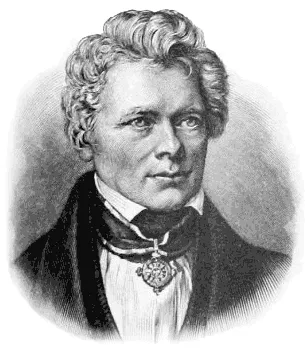
Friedrich Wilhelm Joseph Schelling
Human Design Chart
Biography
Standard histories of philosophy make him the midpoint in the development of German idealism, situating him between Johann Gottlieb Fichte, his mentor in his early years, and Georg Wilhelm Friedrich Hegel, his one-time university roommate, early friend, and later rival. Interpreting Schelling's philosophy is regarded as difficult because of its evolving nature.
Schelling died on 20 August 1854 at age 79 in Bad Ragaz, Switzerland.
What does Projector 6/2 mean for Friedrich Wilhelm Joseph Schelling?
Projector 6/2 — Design at a Glance
Friedrich Wilhelm Joseph Schelling was someone with a dense, focused aura that directly addressed his environment. His design tended to immediately identify flaws in other people's systems – comparable to a bright flashlight shining on dark spots. This ability to bring 'light into the darkness' for others and illuminate their path was central to his impact.
As a projector, he did not have a constant, intrinsic source of life energy through an undefined sacral center. Instead, he experienced phases of high activity followed by necessary rest periods for recovery and to avoid burning out. His intense perception could sometimes be perceived as unpleasant by others, especially when he addressed problems directly. It was more elegant, however, when he shone through his own harmony; then people sought him out for advice because his radiant example was attractive.
The best strategy for him was to wait for respectful and honest invitations from others rather than taking the initiative himself. If he lived by this principle, he was rewarded with success. Ignoring this dynamic led sooner or later to the emergence of his non-self theme of bitterness. His life path was thus characterized by the tension between his sharp diagnostic ability and the need for respect for his own energy balance as well as the necessity of being invited before exercising his leadership role.
No Inner Authority
Friedrich Wilhelm Joseph Schelling did not have an internal, physical authority – a rare trait that fundamentally shaped his decision-making process. As a mental projector, he did not have defined centers below the throat center. His orientation therefore did not arise from internal impulses but through interaction with other people. In these dialogues, latent potentials in his open centers were activated, allowing him to view and express issues from multiple perspectives. This high resonance ability helped him find the right environment and conversation partners.
However, evaluating this complex information required time and withdrawal. Only in solitude could Schelling see through the red thread, separate what was meaningful from what wasn't, and structure his specific knowledge. Filtering out a coherent path from a mass of impressions formed his central capital for success. A key factor for him was staying in a familiar environment to exchange about decision-making processes with the right people. Through this deep interaction, he developed over time a fine sense of what truly belonged to him and which path to take.
The 6/2 Profile — Role Model / Hermit
Friedrich Wilhelm Joseph Schelling showed a development line marked by early experimentation. In his youth, before Saturn's return, his configuration worked as a 3-line. This meant that trial and error were the driving principles; after mistakes came often a withdrawal for reorientation. This phase served the accumulation of diverse life experiences through direct confrontation with reality.
Around thirty years later, the sixth line of his design was activated. This shift led him metaphorically into a 'cave' – an intense period of distance and reflection. Here he looked back on his earlier experiments. This time was not a passive pause but a process of healing and deep self-knowledge. The mechanics of his line described a transition from diminishment to superiority. Through this inner work, he integrated lower forces with higher qualities, enhancing the overall quality of his thinking.
When he finally emerged from this introspective phase, he appeared as a wise person. Others sought him out for his life wisdom. His ability for deep self-reflection became an example. The transfer of this gained superiority positioned him for the next generation as a trendsetter. His path demonstrated how qualitative integration goes beyond mere quantitative success and true wisdom arises.
Single Definition — Defined & Open Centers
Friedrich Wilhelm Joseph Schelling appeared as someone who was constantly under mental pressure to ask questions and understand connections. His defined Head and Ajna centers created a trustworthy, continuous mental function; he always thought, processed data, and formulated concepts. This definition between head and ajna generated inspiration but lacked the energy for direct implementation. Schelling used his mind as an external authority for others, conditioned the mental field in his aura, and stimulated thinking without having to act himself.
His open centers shaped his vulnerabilities. His open Throat center led him not to control what or when he spoke; he tended to ask how he could get attention instead of waiting for a natural invitation to speak. His open G Center meant a lack of stable identity; he adapted to the environment and collected directions through external initiation rather than asserting them himself. The open Heart Center left him without consistent willpower; he tended to prove his worth or make promises he couldn't keep, ending in spirals of self-doubt.
His open Sacral center made him vulnerable to excessive energy intake from others, leading to exhaustion as he had no personal limits on availability. His open Solar Plexus absorbed and amplified foreign emotions; he tended to avoid confrontation to not be rejected and identified with emotional waves that weren't his own. The open Spleen Center brought a fundamental survival fear; he sought security in others, risked unhealthy dependencies, and made no spontaneous decisions. Finally, his open Root center absorbed external stress; he often futilely tried to relieve this pressure through hyperactivity rather than recognizing it as not his own.
Channels for doubt, inner truth and abstract comprehension.
Friedrich Wilhelm Joseph Schelling appeared as a spirit marked by a complex trinity of mental processes. His design included the Logic Channel 63-4, connecting head and ajna. This created a doubting mind that permanently filtered patterns to test consistency. Here skepticism was essential; only verifiable, functional answers were considered logically true. Unstable patterns generated pressure demanding solutions, lacking an ungrounded space of belief.
Parallelly, the Awareness Channel 61-24 acted. It connected the inspiration of Gate 61 with the rationalizing of Gate 24. This allowed sudden insights, a Satori breaking old cycles. Knowledge didn't arise through logical deduction but as spontaneous inner truth mutating at its own pace. Schelling was destined to inspire others with unique insights beyond pure logic thinking.
Thirdly, the Abstraction Channel 64-47 shaped his thinking. It connected Gate of Confusion (64) with that of Understanding (47). This led every experience through a kaleidoscope of mental images. The mind sought stories and perspectives to understand the past. Though often leading to temporary confusion, patience condensed points into clear, inspiring pictures he could share.
Additionally, prioritized gates contributed to dynamics: Gate 41 propelled evolutionary development and change through crises. Gate 31 enabled power transmission and leadership. Gate 44 promoted awareness and transformation through resource-conscious interaction. This combination created a mind oscillating between skeptical scrutiny, intuitive inspiration, and abstract meaning-making, always seeking what was truly worth knowing.
Collective Circuitry — Circuit Signature
Friedrich Wilhelm Joseph Schelling appeared as someone whose energetic forces flowed in one continuous stream due to his simple definition. With only the Head and Ajna centers connected, he had a clear, focused thinking structure without internal fragmentation or separate energy islands. This unity shaped his mental stance: thought and intuition worked as one.
This flow powered three specific circuits all based on this head-ajna connection. The Knowledge Circuit activated the Awareness Channel (Gates 24–61) in him. This promoted innovative flashes of insight and a drive for new knowledge, with energy pulsing creatively. Parallel to it, the Understanding Circuit worked through the Logic Channel (Gates 63–4). Here rational analysis took precedence; he used mind and structure to improve things and share logical insights free from conditioning. This energy was focused and future-oriented.
Moreover, the Meaning-Finding Circuit shaped his essence through the Abstraction Channel (Gates 64–47). Unlike the cool logic of the Understanding Circuit, this dealt with emotions and experiences from the past. Energy flowed in wave-like cycles, prompting him to reflect on past events and grasp their meaning to learn collectively with others. All three aspects—creative innovation, rational structuring, and emotional reflection of the past—were not isolated but experienced as a coherent whole through Schelling's direct connection between head and ajna centers.
Left Angle Cross of the Alpha 2
Friedrich Wilhelm Joseph Schelling exhibited a fundamental disposition marked by the left cross of Alpha 2. This configuration indicated a tendency towards deep, often painful confrontation with his own identity and the meaning of existence. It was not about superficial reflection but rather an intense process of self-discovery where internal conflicts served as driving forces.
The left cross of Alpha 2 describes a life task in which growth occurred through personal crises and emotional lows. Friedrich Wilhelm Joseph Schelling lived this dynamic by confronting challenges instead of avoiding them. The energy of this design pushed him to integrate his wounds and develop a new, more stable form of self-awareness from them. This did not happen linearly but in waves of insight followed by relapse, characterizing his journey.
The mechanics of this cross mean that true strength arises only through confrontation with one's own vulnerability. Friedrich Wilhelm Joseph Schelling used these internal tensions as raw material for understanding himself and the world around him. His experience was marked by a drive to reconcile seemingly irreconcilable aspects of his nature—the desire for wholeness despite an awareness of fractures. This shaped how he approached life: with a mix of vulnerable openness and the determination to transform pain into meaning.
Saturn Return · Uranus Opposition · Chiron Return · 2nd Saturn Return — Life Cycles
Friedrich Wilhelm Joseph Schelling showed himself to be a figure whose intellectual development was characterized by clear cyclic condensations. His design indicated a tendency to bundle long-term preparatory work into stable results during specific life phases. This became apparent in 1802 at the age of 27: With his first Saturn return, he merged his philosophy with Plato's theory of ideas and published "Dialogue Bruno" as well as "Lectures on the Method of Academic Study". This cycle often marked the point where years of reflection condensed into a stable professional foundation.
Later came a phase of fulfillment and bloom. The Chiron return around age 50 is in Human Design a fulfillment cycle, during which one's incarnation cross unfolds and meaning becomes tangible – not as healing of wounds but as maturation of purpose. For Schelling this was effective in 1827: At the age of 52 he was appointed ordinary professor at the newly established University of Munich. This positioning reflected the inner orientation that reached its full significance during this period.
The second Saturn return around ages 56 to 58 further confirmed this structure. It stands for renewed consolidation and recognition of the worked substance. In 1832, at age 57, Schelling became an external member of the Prussian Academy of Sciences. This event underscored the enduring relevance of his thinking within the established system. The sequence of these cycles shows a life that did not develop randomly but in accordance with the rhythmic provisions of his design towards institutional recognition and substantive depth.
Projector · No Inner Authority — Synthesis
Friedrich Wilhelm Joseph Schelling lived as a Projector, whose energy was aligned with recognizing and bringing out the potential in others. This ability to spot errors in the system (Channel 63-4) went hand in hand with a constant mental pressure to question things and understand them – an inspiration that he passed on to others (defined Head Center). His Profile as an Role Model suggests that he first gathered many experiences before developing wisdom in later years, which he then made available to others. The repeated professional successes (documented events at Saturn and Chiron Returns) reflect this process: a lifetime of learning leading to eventual recognition as an authority.
Central for Schelling was the tension between his ability to recognize patterns and analyze logically (Channel 63-4), and the lack of inner authority. He sought answers through exchanges with others (Authority: no inner authority), which enabled him to transform knowledge (Knowledge Circuit) but also required a constant resonance with his environment. This openness and need for external validation created a paradox: he was both a sharp observer and dependent on the perception of others to gain clarity.
3 Defined Channels
Incarnation Cross - Left Angle Cross of the Alpha 2
Solar Return
The Solar Return shows the moment when the sun returns to its exact birth position - your personal solar year.
Life Cycles
Discover the life cycles with a detailed triple view (birth chart, cycle chart, composite).
Human Design Profile
- Type
- Projector
- Strategy
- Wait for the respectful invitation
- Authority
- No inner authority - learn more
- Profile
- 6/2 - Role Model / Hermit
- Definition
- Single Definition
- Incarnation Cross
- Left Angle Cross of the Alpha 2
- Date of Birth
- 27.01.1775 03:15
- Place of Birth
- Leonberg, GER
Frequently Asked Questions
What was Friedrich Wilhelm Joseph Schelling's Human Design type?
Which Profile did Friedrich Wilhelm Joseph Schelling have?
What Authority determined Friedrich Wilhelm Joseph Schelling?
What incarnation cross did Friedrich Wilhelm Joseph Schelling have?
When was Friedrich Wilhelm Joseph Schelling born?
Discover your own Human Design
Are you also a Projector? Find out in a personal reading how to unfold your leadership qualities and recognize the right invitations.
More Personalities
Back to overviewSissy Spacek

Alain-Fournier

Anémone

Angeli

Ann-Margret

Bourvil