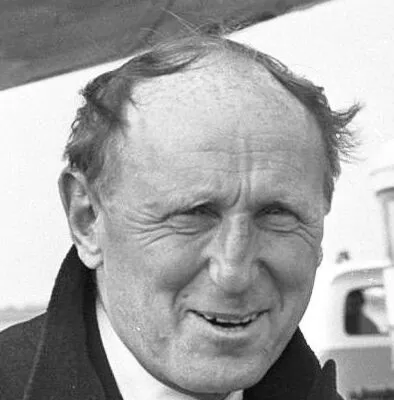
Photo: Wikimedia Commons
Georg Trakl
Human Design Chart
Biography
In 1905 Trakl left high school and began apprenticeship with a chemist. He studied pharmaceuticals in Vienna, entering the university in September 1908. In 1910 he was conscripted into the Austrian Army Medical Corps for a year. He worked as a pharmacist but was drinking excessively and could never keep a job. Remaining an outsider, he was an alcoholic and chloroform user. When young, he had had an incestuous relationship with his sister, who committed suicide in 1914.
Trakl himself was a suicide, dying of a cocaine overdose that paralyzed his heart on the evening of the 3 November 1914, Krakow, Poland.
Georg Trakl as a Projector 2/4 in Human Design
Projector 2/4 — Design at a Glance
Georg Trakls design points towards a tendency for focused perception. As a projector, he did not have an intrinsic source of life energy through his undefined Sacral Center. Instead, his aura acted like a bright beam of light directed toward weaknesses in his environment. This allowed him to immediately identify systematic flaws or problems in others.
However, this ability also carried potential conflict. When Trakl addressed these deficiencies directly, it often felt like an intense glare to those around him, causing rejection. His optimal strategy was to attract through harmony and wait for sincere invitations before sharing his insights.
Since projectors experience their energy in phases, Trakl had to alternate between periods of high activity and necessary rest phases to avoid burnout. The conventional work environment often did not accommodate this need for regeneration. Living in alignment with this mechanism rewarded him with success; deviating from it led sooner or later to his non-self theme: bitterness. His design thus determined a path of selective leadership through recognition and invitation, rather than constant initiative.
Self-Projected Authority
Georg Trakls design points towards extreme openness paired with the danger of being distracted or overwhelmed by external motoric energies. As a projector with rare authority in Self, his inner truth was anchored in his identity. This configuration required him not to lose himself externally and constantly chase energy but to maintain his own center.
Decision-making happened for him through two paths. First, through self-dialogues or dialogues with others when invited. Crucial was listening to his own expression: spontaneous, unreflected speech revealed his true essence and made his uniqueness recognizable to others. Second, he followed physical feelings that drew him geographically or thematically in a certain direction – whether towards something or away from it.
By staying loyal to this inner guidance, he could become a guide for others; there lay his specific success potential. The greatest challenge always consisted of distinguishing between the voice of Self and reason. Only through this clear separation did he avoid falling into the trap of losing himself in his own openness. His design marked him as someone who acted through authentic expression and intuitive orientation, rather than active action or chasing validation.
The 2/4 Profile — Hermit / Opportunist
Georg Trakls design points towards a pendulum rhythm between extreme isolation and the need for close community. As Profile 2/4, he constantly oscillated between two poles: Line 2, which demanded withdrawal into himself to create clarity, and Line 4, which sought exchange with familiar people. This configuration required clear communication of his needs – when he wanted company and when he needed solitude. During his
Single Definition — Defined & Open Centers
Georg Trakl's Human Design profile points towards a tendency for clear, identity-strong communication that is however flanked by intense inner fragility. His defined G Center gave him a firm sense of self-identity and direction in life; he knew who he was and could convey this internal truth to others. This stable identity flowed into his defined Throat Center, making his voice and actions spring directly from the core of personal orientation. He did not speak out of the mind or mere emotions but articulated a reliable yet limited truth of his Higher Self.
This stable center stood in sharp contrast to his open mental centers. His open Head and Ajna Centers made him vulnerable to mental pressure situations, doubts, and taking on foreign inspirations. He tended to get caught up in thought whirlpools or take questions from others as personal problems, leading to confusion since he lacked a constant inner source for clarifying these mental impulses. Furthermore, his open Heart Center made him susceptible to conditioning in the realm of willpower and promises; he often sought external validation of his worth instead of trusting his own authority.
Also, the open centers Solar Plexus, Sacral, Spleen, and Root strongly shaped his experience. The open Solar Plexus absorbed foreign emotions, making him appear emotionally unstable as he oscillated between his own feelings and those of his environment. The undefined Sacral Center led to inconsistent energy; he took on others' life force, easily overexerted himself, and did not always know when enough was enough. The open Spleen brought a deep survival anxiety that made him cling to uncertain situations to simulate a sense of well-being. Finally, the open Root Center amplified external stress and adrenaline, pushing him into cycles of frenzy and exhaustion since he could not recognize his environment's pressure as his own.
Channels for inspiring presence and creative expression.
Georg Trakl's Human Design profile points towards an inclination to act through mere presence and authentic living rather than verbal explanations. This was primarily seen in the Channel of Inspiration 1-8, connecting the G Center with the Throat Center. Gate 1 offered the individual entrance for mutative perspectives while Gate 8 expressed these as a contribution to the group. Trakl was designed to attract attention by embodying his unique identity – an example of how creativity and leadership work together in the Knowledge Circuit. This effect relied on inner authority; it did not require social adaptability but demanded patience with timing and recognition for lived individuality.
Besides this public outlet, other gates shaped his internal landscape. Gate 13 promoted meaning-making through reflection within the context of time and strengthened collective memory. Gate 7 projected patterns into the future and showed a need for leadership tested through experiments. Simultaneously, Gate 2 offered receptivity as a foundation for evolutionary directions, where external changes were molded into new paths. On a personality level, Gate 35 stood for change through interaction; true satisfaction here emerged later from the meaning of experience. In his design, Gate 62 anchored logic and precision by clarifying facts and translating patterns into formulas – a process that required patience. Finally, Hexagram 20 (Gate 20) placed him in the present moment, enabling access to the authentic self and fostering awakening to his unique identity through correct action in the moment. This configuration described someone who not only sought beauty and truth but also embodied them as living examples.
Individual Circuitry — Circuit Signature
Georg Trakl's Human Design profile points towards impulsive, inspired forms of expression. His Knowledge Circuit connected his Throat Center with his Identity Center – two separate poles energetically coupled through the Channel of Inspiration (Gates 8 and 1). This configuration generated a pulsating energy aimed at immediately capturing new insights or creative impulses in words. The inspiration from the Identity Center flowed directly into the Throat Center, promoting spontaneous, acoustic expressions. It was a simple definition: this connection formed a continuous flow within his structure without involving other centers directly. The energy of this circuit served to affirm his individuality through the expression of something new or changed. Georg Trakl thus showed himself as someone whose identity was deeply intertwined with moments of inspired speaking or writing. The emotional wave and melancholy often accompanying this configuration shaped how he transformed knowledge into the world. Since no other centers were active in the Knowledge Circuit, this inspired form of expression remained isolated from other energetic streams like logical thinking or physical joy of action. This created a focused but potentially lonely dynamic of creative expression.
Right Angle Cross of the Sphinx 1
Georg Trakls Human Design profile indicated a tendency towards a deep, often unspoken connection between the material everyday life and spiritual or archetypal truths. This configuration, known as the right cross of the Sphinx, shaped his inner attitude through an effort to recognize hidden connections that point beyond visible reality. It was not mere abstraction but rather a drive to anchor the essence of life in concrete experiences while simultaneously grasping their deeper meaning. The tension between earth and spirit served as a constant internal impetus, driving him to seek synthesis between physical existence and metaphysical understanding. The mechanics of this cross promoted a form of thinking that was both rooted and transcendent, placing Georg Trakl often in a state of reflection where he tried to connect the seemingly separate areas of his life into a coherent whole. This inner dynamic influenced how he perceived and processed the world by helping him recognize patterns hidden from others.
Projector · Self-Projected Authority — Synthesis
He was an observer whose strength lay in recognizing the potential and flaws of others (Projector with defined Throat Center). His ability to discern patterns – fueled by the knowledge circuit and the channel of inspiration (Gate 1/8) – led him to subtly influence his environment. He lived out a need for authenticity and creative contribution, yet always within an internal tension between the desire for expression and the necessity to wait for others' reactions. The profile as a natural talent/networker amplified this shift between withdrawal into internal processes (Line 2) and the need for exchange with a chosen community (Line 4).
A central paradox shaped his essence: He possessed the ability, through his observational skills and self-expression, to give transformative impulses, yet he was simultaneously dependent on an invitation to effectively unleash this energy. Inner authority required him to heed internal signals and spontaneous expressions, while openness made him vulnerable to external influences. This interplay between inner truth and outer echo created a fragile balance in which he constantly sought harmony and recognition.
1 Defined Channel
Incarnation Cross - Right Angle Cross of the Sphinx 1
Solar Return
The Solar Return shows the moment when the sun returns to its exact birth position - your personal solar year.
Life Cycles
Discover the life cycles with a detailed triple view (birth chart, cycle chart, composite).
Human Design Profile
- Type
- Projector
- Strategy
- Wait for the respectful invitation
- Authority
- Self-Projected Authority
- Profile
- 2/4 - Hermit / Opportunist
- Definition
- Single Definition
- Incarnation Cross
- Right Angle Cross of the Sphinx 1
- Date of Birth
- 03.02.1887 18:30
- Place of Birth
- Salzburg, AUS
Frequently Asked Questions
Which Human Design Type was Georg Trakl?
Which incarnation cross characterized Georg Trakl?
When was Georg Trakl born?
Discover your own Human Design
Are you also a Projector? Find out in a personal reading how to unfold your leadership qualities and recognize the right invitations.
More Personalities
Back to overviewSissy Spacek
Alain-Fournier
Anémone
Angeli
Ann-Margret

Bourvil