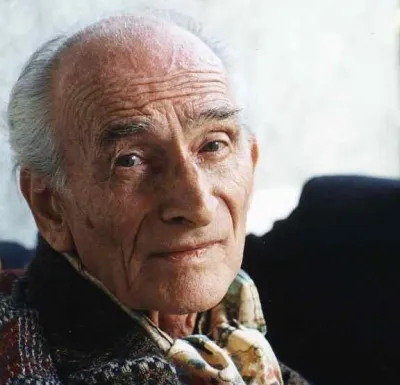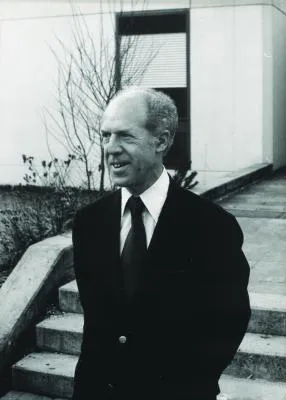
Gérard Debreu
Human Design Chart
Biography
Debreu’s classic monograph, Theory of Value: An Axiomatic Analysis of Economic Equilibrium, was published in 1959. In it Debreu provided the mathematical underpinnings for the phenomenon of equilibrium in supply and demand that was first articulated by Adam Smith in 1776. Debreu also developed methods by which to analyze the factors that influence equilibrium.
The recipient of numerous awards, Debreu was made an officer of the French Legion of Honour in 1976 and was elected a member of the National Academy of Sciences in 1977.
He died 31 December 2004, Paris.
Human Design Analysis: Gérard Debreu as Manifesting Generator 3/5
Manifesting Generator 3/5 — Design at a Glance
Gérard Debreu revealed himself as someone who possessed a hybrid energy structure: He had the constant power of a Generator combined with the ability to skip steps and quickly draw results into his life. This design set a tendency towards high speed and parallel engagement with multiple projects.
As an Manifesting Generator, he primarily responded to inner impulses from his defined sacral center. The strategy was to not initiate himself but to respond to life. Only when this response elicited a clear "yes" did he put his energy into action. This approach allowed him to fall into a productive play-mode, where variety and parallel work served as a source of deep satisfaction rather than a source of stress.
The danger in this design lay in the speed itself. If Gérard Debreu acted too quickly, he would skip necessary intermediate steps, leading him to have to return later and make up for them. This could cause frustration as he then worked against the natural flow of his energy. Similarly, he tended to take on various impulses simultaneously. Without the constant check-in through his inner authority – that is, the question of whether the project was still fun – this creative drive could quickly turn into overwhelm. His success thus depended on channeling his speed through conscious reaction to the Sacral, thereby using his unique ability to efficiently and with inner satisfaction tackle complex tasks.
Emotional Authority
Gérard Debreu showed himself to be someone who did not make decisions in the heat of the moment but subjected them to a necessary period of maturation. His design featured emotional authority, meaning that his defined Emotional Center served as the inner decision-making authority – independent of all other defined Centers in his chart. This configuration subjected him to a constant wave of emotional ups and downs. The world always appeared to him colored by his current mood: a topic could be totally inspiring in one moment, only to appear in a negative light the next.
For Gérard Debreu, however, the immediate feeling was only a snapshot, a first impression that did not necessarily reflect the truth. Quick, spontaneous decisions based on such an emotion could have had negative consequences. Instead, his system required patience. He took the time to let decisions mature, often by sleeping on them multiple times. Only when the intense feelings subsided and he gained emotional distance did the necessary clarity and calmness set in. This process was essential for him, especially for long-term decisions that could have a significant impact on his life course. Only through this waiting and hesitation could he reach the deeper, more comprehensive understanding that his authority demanded.
The 3/5 Profile — Martyr / Heretic
Gérard Debreu revealed himself as someone who gained knowledge not from dogmas but from his own, often painful, practice. His Human Design profile 3/5, the Experimenter and Hero, set a foundational attitude: he initially believed in nothing that had not been personally tested. Line 3 drove him to proceed through trial and error, willing to sacrifice himself for this transformative process. This phase of learning from failures was indispensable for later taking on the role of Line 5.
As a Hero and Saviour, he presented his rich treasure of practical experiences to others who wanted to learn from his results. This attractiveness was based on the ability to solve problems with self-acquired knowledge. Line 5 demanded objectivity and impartiality, especially in crisis situations. Gérard Debreu had to learn to lead without emotional influence to be successful on a material level. His path was marked by the necessity of proving himself through his own experiments, which could cost him painful defeats but ultimately granted him the authority to act as a competent advisor and problem solver.
Triple Split Definition — Defined & Open Centers
Gérard Debreu was someone who constantly operated under mental pressure, asking questions and understanding connections. This trait stemmed from his definition between Head and Ajna Centers, which created a specific, trustworthy form of conceptual thinking. He was not easily influenced from the outside in his conception, but processed data and creativity in the same way consistently. His design tended to generate inspiration without being able to directly implement it into action, as there was no energy source connected to these centers. Instead, he influenced others through the radiating of questions that prompted them to think.
His defined Throat Center served as a pivot point to translate these mental processes, as well as other internal impulses, into communication and action. He reliably spoke out what his mind conceptualized or what other defined centers in him triggered. This was complemented by his defined Heart Center, which gave him a firm willpower. He controlled his resources and work rhythm himself, kept promises, and sought recognition for his contribution. His energy source lay in his defined Sacral Center; he had a constant vital energy that could only be effectively used in reaction to external stimuli. Initiating actions without prior questioning often led to frustration, as the sacral energy was then not available.
Despite this inner stability, his G Center was open. Gérard Debreu did not have a fixed identity or direction. He tended to blend with his environment and reflect identities of others. This made him vulnerable in relationships and places; if he felt out of place, he would transfer this imbalance to the people there. He relied on others to initiate him to find the right direction and love, rather than actively seeking it himself. His open G Center challenged him not to grasp for a fixed 'I' definition, but to accept guidance from his environment to flourish in the right settings.
Channels for maturation, success, care, community and abstraction.
Gérard Debreu's design tended towards strategic control and mastery of material structures. The Channel of the Line of Money 21-45 connected his will with the voice of authority. This created a strong need to take responsibility and maintain his independence to act effectively. He sought ways to steer resources through his will without being controlled himself.
This willful stance was complemented by the Channel of the Community 37-40, which required emotional clarity in relationships and agreements. For him, it was important that connections and 'businesses' were carefully thought through and formulated over time before being sealed. Spontaneity was not the focus here; rather, it was about finding the right place in a community and making fair agreements that benefited all involved.
Parallel to this, the Channel of Abstraction 47-64 urged his mind to filter experiences through a kaleidoscope of mental images. He sought stories and perspectives that made sense and was aware that the mind could not be an internal authority for his own life. This mental activity served to understand complex connections and develop new perspectives.
The Channel of Maturation 42-53 challenged him to fully experience and reflect on experiences before starting new cycles. Each experience had to reach a satisfying conclusion to gain wisdom. Finally, the Channel of Preservation 27-50 provided a basis of care and the protection of traditional values. He understood that provision and support, whether for the tribe or projects, had to rest on a solid foundation of integrity and mutual respect to be sustainable.
Tribal Circuitry — Circuit Signature
Gérard Debreu's design tended towards emotional reflection and resource-oriented cooperation. With Triple Definition, there existed three separate energetic systems that did not flow directly into each other but worked parallel.
The Meaning-Finding Circuit connected two isolated segments: Head with Ajna Center as well as Sacral with Root Center. Here, a wave-like process of understanding based on past experiences was evident. Abstraction and maturation allowed emotional waves to be navigated to gain insights that could be shared.
The Ego Circuit connected Throat, Heart, and Solar Plexus Centers into a cohesive flow. This promoted cooperation and the joint creation of resources. Through the Line of Money and the Community Channel, a rhythm of giving and taking emerged based on mutual support. Since there was no connection to the Sacral Center, pauses were necessary to regenerate energy for these social interactions.
The Protector Circuit connected Sacral and Spleen Centers. Through the Preservation Channel, a primal, instinctive energy manifested here, serving the protection and preservation of genetics. This manifested in themes like care, defense, and the nurturing of one's family or closest environment.
These three systems - emotional meaning-making, social resource-building, and instinctive protection - shaped Gérard Debreu's experiential world as coexisting but not directly connected forces.
Right Angle Cross of Tension 2
Gérard Debreu's Human Design showed a tendency towards internal tension, which manifested as a driving force for precise, logical structures. This configuration, the right cross of tension, linked the energy of pure intuition with the necessity to pour it into clear, understandable forms. It was not about vague feelings but a sharp, almost physical tension that could only be resolved through intellectual clarity and strict definition. Gérard Debreu lived this dynamic by translating abstract concepts into exact, mathematically grounded models. The tension arose from the urge to make the invisible – the underlying truths of a system – visible and tangible. Without this structural discipline, the intuitive insight would have been lost; with it, it became a robust tool. This mechanism shaped his work style: a constant back-and-forth between sudden leaps of insight and painstaking, detailed elaboration. The inner unrest found its peace only in the perfect, contradiction-free form. Thus, raw, tension-charged intuition turned into an orderly, analytical achievement that not only described complex connections but proved them in their logical necessity. Gérard Debreu showed himself to be someone who did not see this tension as an obstacle but as a necessary motor for the highest intellectual precision.
Saturn Return · Uranus Opposition · Chiron Return · 2nd Saturn Return — Life Cycles
Gérard Debreu's Human Design showed a tendency towards structural anchoring and later fundamental expansion. His path followed the classical cycles of maturity and expansion. In 1950, at the age of 29, he worked as a research associate at the University of Chicago. This marked his first Saturn Return, a time when years of groundwork often condense into a solid, institutional result and lay the foundation for long-term stability.
The phase of consolidation led to an expansive movement. In 1962, at the age of 41, he took up the professorship for economics and mathematics at the University of California, Berkeley. This fell during the Uranus Opposition, a period often characterized by deep upheavals and the taking of new, higher positions when old structures no longer fit.
The second Saturn Return confirmed this development. In 1977, at the age of 56, Gérard Debreu was elected to the National Academy of Sciences. This cycle condenses life achievements into a final recognition and solidification of status. The sequence shows how his design led to a high, recognized position through phase-by-phase anchoring and strategic expansion, without external circumstances disrupting the inner rhythm of development.
Manifesting Generator · Emotional Authority — Synthesis
Gérard Debreu was a Manifesting Generator, whose life was marked by deep, sacral energy (Sacral Center) and a constant drive for inspiration (defined Head Center). This combination led to a dynamic lifestyle in which he seized opportunities quickly to gather experiences (3/5 Profile) and then used these as a foundation for understanding complex systems. The defined Find Purpose Circuit suggests that he learned from past experiences and embedded them in a larger context – a cycle of experiencing, reflecting, and sharing, which manifested in professional successes (Saturn Returns, Uranus Opposition).
A central paradox in his design lay in the tension between the Manifestor component, which tended to skip steps, and the Generator authority, which was based on reaction and maturation of decisions (emotional authority). He could take initiatives and push things forward quickly, yet at the same time, his emotional center required time to fully grasp the consequences. This dynamic may have led to an internal field of tension between the desire for rapid progress and the necessity to thoroughly think through decisions, which was reflected in the Money Line as responsibility for the survival of the tribe.
5 Defined Channels
Incarnation Cross - Right Angle Cross of Tension 2
Solar Return
The Solar Return shows the moment when the sun returns to its exact birth position - your personal solar year.
Life Cycles
Discover the life cycles with a detailed triple view (birth chart, cycle chart, composite).
Human Design Profile
- Strategy
- To respond - wait for something to respond to
- Authority
- Emotional Authority
- Profile
- 3/5 - Martyr / Heretic
- Definition
- Triple Split
- Incarnation Cross
- Right Angle Cross of Tension 2
- Date of Birth
- 04.07.1921 04:00
- Place of Birth
- Calais, France
Frequently Asked Questions
What was Gérard Debreu's Human Design type?
What Profile did Gérard Debreu have in his Human Design?
Which Authority guided Gérard Debreu in his decisions?
What incarnation cross characterized Gérard Debreu?
When was Gérard Debreu born?
Discover your own Human Design
Are you also a Manifesting Generator? Find out in a personal reading how to unfold your multi-talents and direct your energy wisely.
More Personalities
Back to overviewAldair

Alizée

Angeli
Arletty
Artus

Balthus