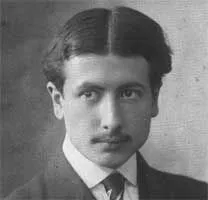
Photo: Wikimedia Commons
Günter Wallraff
Human Design Chart
Biography
Human Design Analysis: Günter Wallraff as Generator 5/1
Generator 5/1 — Design at a Glance
Güter Wallraff's Human Design suggests a tendency towards extreme endurance, comparable to that of a workhorse. As a Generator, he had abundant sacral energy, making him strong and resilient – provided this power was used for tasks he found intrinsically enjoyable. His system did not function through initiated action but rather through reaction: the energy became free only when life sent a signal and his gut feeling responded with a resounding “Yes!”.
This mechanism contained two central pitfalls. If Wallraff was prevented from working on his heart project or forced to do things that did not bring him joy, there was the risk of energy waste leading up to burnout. Conversely, ignoring the inner urge to continue working despite still being full of power led to frustration and a lack of energy. The successful strategy involved reacting to impulses from the environment and then responding with concrete actions.
Living by this principle – that is, reacting instead of initiating – rewarded him with a deep sense of fulfillment and satisfaction. Deviating behavior, especially constant initiation without an internal signal, resulted in persistent frustration. His strength thus lay not in pushing plans forward but in powerfully responding to what was presented.
Emotional Authority
Güter Wallraff's Human Design suggests emotional wave movements that significantly shaped his perception and decision-making. His inner authority is Emotional Authority, carried by the defined Emotional Center. In Human Design mechanics: if this center is defined, it always takes charge in decisions regardless of other defined centers in the chart.
This configuration means that Güter Wallraff was subject to constant fluctuations in his feelings – moments of intense enthusiasm alternated with phases of rejection or negativity. His current mood invariably colored his view of the world, yet this emotional snapshot did not necessarily reflect the deeper truth. Quick, spontaneous reactions from such an emotional state could thus be misleading and have negative consequences.
Güter Wallraff's strategy involved taking time to deliberate. Instead of acting immediately, decisions needed to ripen often through multiple nights' reflection. This process required patience: over time, intense feelings subsided, emotional distance emerged, and clarity set in. Only then was the inner process complete and a well-founded decision possible. This mechanism primarily concerned long-term turning points that significantly influenced his life course. By waiting, he gained calmness and could distinguish true impulses from transient moods.
The 5/1 Profile — Heretic / Investigator
Güter Wallraff's Human Design suggests a tendency towards the role of an expert who uses deep knowledge to offer solutions to others. As a 5/1 (Hero/Researcher), he was someone who valued the process of learning and mastering new challenges. His almost magnetic quality drew people seeking answers to their problems to him. This aligns with the mechanism of Line 5, which shares knowledge while Line 1 stands for the necessary depth and security through study. Without clear boundaries, however, there was a risk of being exhausted by this demand, similar to a scientist overwhelmed by questions. The configuration thus required balance: time for his own research (Line 1) and targeted help for others (Line 5). Gate 39 supported this process through the analysis of obstacles; it helped sort out negative relationships and find the right awareness. This process of “freedom” and provocation served mental clarity. Long-term isolation was counterproductive, as psychological stability rooted in exchange and relationships. Güter Wallraff had to learn to say no to optimally utilize his gifts and not be overwhelmed by the projections of others. His strength lay in penetrating complex connections and conveying these insights so they were available for societal problem-solving without sacrificing his own substance.
Split Definition — Defined & Open Centers
Günter Wallraff revealed himself as someone with an indefatigable, mechanical vitality. His defined Sacral Center generated a constant energy source that propelled him to be active and use his strength in reaction to external stimuli - not through initiatives of the mind. This sacral endurance combined with his defined Ajna Center: His thinking was steady and specific; he developed concepts in a trustworthy, recurring manner and could clearly articulate these ideas through his also defined Throat Center. His voice served as a channel for these mental structures.
At the same time, a defined Solar Plexus shaped his emotional depth. He was designed to wait for the wave of his feelings before acting; this emotional clarity developed over time and lent weight and reflection to his decisions. The defined Root Pressure provided the necessary adrenalized undercurrent to sustain and propel this life impulse.
However, this firm inner core stood in contrast to his open centers. His open Head Center made him vulnerable to mental pressure and the questions of others; he tended to immerse himself into the confusion or inspiration of his surroundings rather than generating consistent impulses from the head. His open G Center meant that his identity and direction were not set: He adapted, took on the energy around him, and found his place only through external initiation - at the right place, he met the right people. Additionally, his open Heart Center conditioned him to constantly prove himself or make promises he could not keep due to a lack of consistent energy for willpower. Finally, his open Spleen reflected the fears and well-being of his environment; he had to learn to avoid spontaneous decisions as his instinct was easily disturbed by foreign frequencies.
Channel 17-62: Acceptance — Channels & Gates
Günter Wallraff's design inclined towards intense, often provocative interaction aimed at revealing the true spirit and integrity of individuals or systems. This attitude stemmed from the mechanics of the Channel of Emotions Freeing 39-55, which connects Gate of Provocation (39) with Gate of Spirit (55). This tribal channel sets a pulsating emotional wave in motion that oscillates between joy and melancholy to reinforce perception and release mutative forces. Wallraff used this energy to tease out the spirit of others through his own mood and provocation, thereby identifying who was right for him or which structures were resilient.
Parallel to this, his design showed a strong ability for logical organization and articulation of details, driven by the Channel of Accepting 17-62. Here, Gate of Opinions (17) in Ajna Center connects with Gate of Details (62) in Throat Center, facilitating the process of mentally organizing visual patterns and translating them into speech. This allowed him to structure complex observations so they could be communicated clearly - a gift that required waiting for the right timing and receptivity of listeners to avoid resistance.
Another aspect was his drive towards intimacy and merging, marked by the Channel of Pairing 59-6. This connects Gate of Sexuality (59) in Sacral Center with Gate of Friction (6) in Solar Plexus. It created an electromagnetic connection that made relationships personal and penetrating. Wallraff's design enabled him to quickly enter the aura of others, but this required patience: Only by waiting for the emotional wave could he clarify whether a deep, fruitful connection was forming or if the intensity was misunderstood. This combination of provocative revelation, logical structuring, and intimate penetration shaped his way of interacting with his environment.
Collective Circuitry — Circuit Signature
Günter Wallraff's design showed a clear distinction between two independent energetic streams. The first group connected Solar Plexus, Sacral, and Root Centers. Here the Knowledge Circuit operated through the Channel 'Emotions Freeing', which channeled emotional waves from Solar Plexus directly into the instinctive energy of Root Center. This created a pulsating, acoustic power for transformation. Parallel to this stood the Archer Circuit with the Channel 'Pairing', connecting Sacral and Solar Plexus Centers. This connection emphasized primal themes like protection, nourishment, and genetic preservation driven by the life force of Sacral.
The second, completely separate group included Ajna and Throat Centers. Here flowed the Understanding Circuit through the Channel 'Accepting'. It connected the logical center (Ajna) with the expression center (Throat), allowing rational insights to be visually focused and communicated free from emotional coloring. As this is a Split Definition, these two systems existed side by side: on one hand, an emotional, instinctive drive for change and protection; on the other, a cool, strategic ability to articulate logic. Neither of these groups was directly connected to each other; they formed separate, parallel operating energy fields in Günter Wallraff's design.
Left Angle Cross of Upheaval 2
Güter Wallraff's design points towards a tendency for radical change that does not appear as a gentle transition but rather as a compelling break with the existing order. This configuration, the left cross of revolution 2, describes an energy seeking to dismantle old structures and replace them with something new. It is not about small adjustments but fundamental changes in how things are organized or perceived.
The mechanics of this cross manifest in a strong motivation to expose inadequacies or outdated elements and replace them with a clearer, often harsher reality. Güter Wallraff demonstrated the use of this force to break through societal facades. The energy drives one to challenge the status quo when it is recognized as false or harmful. It is a process of destroying illusions to make way for a more authentic order.
This orientation means that change often comes about through confrontation and direct engagement with problems. Güter Wallraff's path was marked by the necessity of bringing about deep ruptures, not out of destructive intent but to enable necessary renewal. The design supports finally ending old patterns and paving new paths, which may be painful but ultimately lead to truth.
Saturn Return · Uranus Opposition · Chiron Return · 2nd Saturn Return — Life Cycles
Güter Wallraff's design points towards cyclical phases of consolidation and resistance that were clearly visible in life stations. In 1970, at the age of 28, a radio interview with Saarländischer Rundfunk led to a career-relevant step. This marked his first Saturn return, a time when years of groundwork often condenses into sustainable results and strengthens one's position.
Decades later in 1984, at the age of 42, a crisis occurred: The Federal Constitutional Court criticized the word-for-word depiction of an editorial meeting. This corresponded to the Uranus opposition, a phase where established structures are questioned and boundaries tested, often leading to conflicts with authorities.
In 2002, at the age of 60, another radio interview with Saarländischer Rundfunk was a career-defining event. This fell during his second Saturn return, bringing renewed affirmation and deepening of one's role. The sequence of these events highlighted the mechanics of his design: Phases of consolidation through Saturn alternated with challenging tests from Uranus, making his life mission experientially clear in public confrontations and recognitions.
Generator · Emotional Authority — Synthesis
A central red thread runs through the design: a profound connection between sacral energy (Generator type, Channel of Union) and emotional process (Emotional Authority). This combination generates strong inner power that requires time to gain clarity. The ability to generate knowledge and make it available to others (5\/1 Profile, defined Ajna), is fueled by this energy but only finds its form through emotional maturation. The repeated occurrence of career events in connection with radio interviews, flanked by crisis phases (Cross of Revolution, Uranus opposition), points towards a continuous cycle of creative unfolding and necessary confrontation with the consequences of one's expressive power.
The design reveals a central paradox between the need for deep emotional validation and the drive to disseminate knowledge (Knowledge Circuit). Emotional authority requires time for decisions while the profile as Hero\/Researcher implies a magnetic attraction to seekers of knowledge – an ongoing conflict between inner rhythm and outer expectation. This contradiction is amplified by sacral energy, which offers immense endurance but can be prone to 'waste' if not applied in heart projects.
3 Defined Channels
Incarnation Cross - Left Angle Cross of Upheaval 2
Solar Return
The Solar Return shows the moment when the sun returns to its exact birth position - your personal solar year.
Life Cycles
Discover the life cycles with a detailed triple view (birth chart, cycle chart, composite).
Human Design Profile
- Type
- Generator
- Strategy
- To respond - wait for something to respond to
- Authority
- Emotional Authority
- Profile
- 5/1 - Heretic / Investigator
- Definition
- Split Definition
- Incarnation Cross
- Left Angle Cross of Upheaval 2
- Date of Birth
- 01.10.1942 14:15
- Place of Birth
- Burscheid, France
Frequently Asked Questions
What is Günter Wallraff's Human Design type?
What Profiles does Günter Wallraff have in Human Design?
What Authority guides Günter Wallraff's decisions?
Which incarnation cross is active for Guenter Wallraff?
When was Guenter Wallraff born?
Discover your own Human Design
Are you also a Generator? Find out in a personal reading how to use your sacral energy correctly and discover deep satisfaction.
More Personalities
Back to overviewAaliyah

Alain-Fournier
Alexia

Angèle

Angeli
Anne-Marie