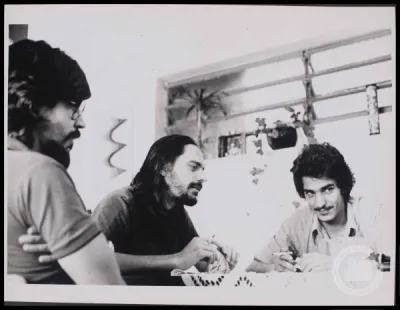
Photo: Wikimedia Commons
Henri Rousseau
Human Design Chart
Biography
Rousseau was known as "Le Douanier Rousseau," referring to a job he held with the Paris Customs Office from 1871-1893, although he never actually rose to the rank of "Douanier" (Customs officer). Prior to this, he had served in the army, and had claimed to have seen service in Mexico, though the story seems to be largely imaginary.
He took up painting as a hobby, then took early retirement from the customs office in 1893 so he could devote himself to his art. Though he tried to follow traditional artists, it was the innocence and charm of his work that won him the admiration of the avant-garde: in 1908, Picasso gave a banquet in his honor.
He never lost faith in his own abilities, despite great poverty. On 9 January 1909, he was sentenced to a fine and two years imprisonment for bank fraud, but the sentence was dismissed because of his age.
He was married twice. His first wife, Clemence Bailard, bore him seven children, none of whom lived. After her death, he married a widow Josephine-Rosalie Nourry, in 1899. She died in 1903.
Henri Rousseau died on 4 September 1910 in Paris from blood poisoning. He was 66.
The Human Design of Henri Rousseau: Manifesting Generator 6/3
Manifesting Generator 6/3 — Design at a Glance
Henri Rousseau revealed himself as someone who possessed a hybrid energy: the constant power of a Generator paired with the lightning-fast impact capability of a Manifestor. His design indicated that he did not just react to impulses but transformed these reactions at a speed that allowed him to skip steps and quickly pull things into his life. This quickness was a double-edged sword. When Henri Rousseau moved too fast or pursued multiple projects simultaneously without his inner authority fully "on board," his creative enthusiasm often turned into frustration – the specific non-self theme of his type. He then frequently had to backtrack and make up for missing steps. The mechanics of his design required him to first react to life and only proceed when his Sacral Center gave a clear “yes.” When this strategy was followed, he could draw deep satisfaction from his work. Then working on various projects simultaneously was no longer an obstacle but a source of fun and variety. In this correct state, Henri Rousseau fell into a "play mode," where his unique combination of endurance and explosiveness became a productive, satisfying way of life rather than hindering him through haste or fragmentation.
Emotional Authority
Henri Rousseau exhibited an inner orientation characterized by rhythmic emotional waves rather than immediate clarity. His design featured Emotional Authority, meaning his defined Emotional Center was the sole authority for decisions – independent of other defined areas in his chart. This configuration marked him with a perception that was always colored by his current mood: at one moment he could be totally enthused, and in the next, view the same situation negatively. However, his immediate feeling was only a fleeting snapshot, not yet his deeper truth. Quick, spontaneous judgments made from this emotional heat often proved misleading. The mechanism of his authority required patience and time. By letting decisions sleep and reviewing them multiple times, intense feelings subsided. Only when this wave calmed did he gain emotional distance. Then clarity and calmness set in to complete the process. This necessity to wait for the emotional wave to subside was particularly relevant for long-term directional settings that significantly influenced his life course. Henri Rousseau had to learn to take his time and not follow the first impulse to recognize his true inner truth.
The 6/3 Profile — Role Model / Martyr
Henri Rousseau lived his first third of life as an experimenter, driven by a curiosity that led him into numerous self-experiments. His design as Profile 6/3 determined that this phase of trying and failing would dominate until he was around thirty years old. During this time, he did not seek conventional standards but rather an extraordinary form of living far from everyday norms.
After his first Saturn return, this dynamic changed fundamentally. The early innocence and adaptability of Line 3 at Gate 55 gave way to a deeper wisdom. Henri Rousseau used his accumulated, often unusual experiences to become a humorous role model. Responsibility became natural for him while the inner restlessness remained—a sign of his old soul that always sought the perfect, unique path.
The mechanics of the sixth line at Gate 8 demanded authenticity without hypocrisy from him. He learned to recognize the right timing, both in relation to his internal rhythm and within social structures. His individual contributions should bring mutations to the collective based on an honest stance that was only reached after "coming down from the roof." Failure was not a personal defeat but part of the developmental trajectory. Henri Rousseau thus showed himself as someone who combined his adventurous spirit with the foresight of a mentor to guide others toward an authentic existence.
Single Definition — Defined & Open Centers
Henri Rousseau's design inclined towards a constant, vital expression of strength that was filtered through emotional depth and existential pressure. His defined Sacral Center generated continuous energy which he could utilize upon reacting to external stimuli – not through initiatives from the mind. This power flowed into his defined Throat Center, serving as a pivot point to translate internal impulses into clear communication and action; thus, his voice spoke from a reliable source.
Simultaneously, his defined Solar Plexus shaped the emotional wave he had to wait out before making decisions. Emotional clarity emerged only after navigating this wave movement, not in an impulsive moment. The defined Root Center provided constant physical pressure and stress that propelled him forward – energy which without strategic direction could have led to obsession or projection onto others.
In contrast, his undefined centers revealed specific vulnerabilities. His open Head and Ajna Centers meant mental inspiration was not consistent; Henri Rousseau tended to be distracted by doubts or foreign questions rather than trusting his own inner authority. His open G Center lacked a firm identity; he often adapted to the environment and sought direction through others, making him susceptible to “borrowed” identities. The open Heart Center drove him to prove his worth through promises or competition – a trap of non-self that ended in frustration due to lacking consistent willpower. Finally, his open Spleen Center was vulnerable to survival fears and impulsive decisions often not serving his long-term well-being. His challenge lay in recognizing these conditioned patterns and instead trusting his sacral response as well as emotional clarity.
Channels for change, emotional release and maturation.
Henri Rousseau's life was marked by a restless search for new emotional experiences, stemming from the Channel of Transience 36-35 connecting Solar Plexus to Throat Center. Through Gate 36, he often perceived inexperience as inadequacy, driving him to provoke crises or set things in motion just to explore the depth of his feelings. Gate 35 demanded constant change with the attitude: “I’ve been there, what’s new?” This made him unstable when expectations were not met, yet by embracing his emotional wave he gained wisdom which he shared as advice.
Parallelly, Channel 39-55 for Emotional Release between Root and Solar Plexus Centers set a pulsating wave of moods swinging from ecstatic joy to melancholic uncertainty. Henri Rousseau learned not to rationalize these moods but to live authentically. His provocation through Gate 39 helped him sense the spirit of others; he knew when to be alone to nourish his inner muse and emotional creativity rather than forcing himself into relationships or activities for which he lacked the right mood.
Channel 42-53 for Maturation between Root and Sacral Centers structured this process. It required each experience to be fully traversed and reflected upon before a new cycle began. Henri Rousseau had to learn to enter new situations without rigid expectations to avoid frustration. Only then could he share the wisdom of completed cycles and build on them.
Additionally, Gates like Gate 8 (Contribution) and Gate 14 (Power) contributed to his identity formation while Gate 59 embodied a genetic strategy of bonding without personal preferences. In his design, Gates 37 (Friendship/Community) and 45 (Tribe Hierarchy) emphasized his connection to organic structures and collective energy.
Collective Circuitry — Circuit Signature
Henri Rousseau's design inclined towards emotional pulsation and cyclical reflection. As a simply defined type, he exhibited a continuous energetic flow between Throat, Solar Plexus, Root, and Sacral Centers. This connection shaped how he expressed internal states and processed experiences.
The Knowledge Circuit worked through him via the Channel “Emotion Release,” connecting Solar Plexus to Root Center. This generated pulsating energy translating emotional waves into immediate impulses. New insights or inner excitement manifested as acoustic, creative bursts reinforcing his true path and initiating change.
Parallelly, the Meaning-Finding Circuit operated with two separate segments. The first connected Throat to Solar Plexus through Channel “Transience.” Here, the descending emotional wave was processed visually reflecting past experiences shared with others. The second segment linked Sacral to Root Center via Channel “Maturation,” fostering cyclical learning from the past using felt insights to grow collectively with the community. Both circuits together formed a life task: uncovering hidden connections, emotionally processing them and sharing this knowledge.
Left Angle Cross of Uncertainty 1
Henri Rousseau's design indicated a tendency towards internal conflict and the pursuit of clarity. He was someone standing between conflicting impulses without clearly mapping out a path forward. This configuration corresponds to the left cross of uncertainty 1, a structure that arises from the absence of certain connections in the energy diagram. It is not a deficiency but rather a specific life task: dealing with uncertainty as an ever-present companion.
Those who carry this cross configuration often find that external security alone does not suffice for inner peace. The mechanics describe a process where the individual must learn to live with open questions without immediately resolving them. Henri Rousseau lived in a tension field between the desire for definitive answers and the reality of unclear situations, which shaped his way of making decisions or engaging with goals – always accompanied by a certain fluctuation in confidence about one's own path.
Uncertainty was not an obstacle but rather the space where his true development took place. By not fleeing from this ambivalence, he could recognize deeper patterns. His design challenged him to view the gaps between different life areas not as errors but as necessary parts of his experiential world. Thus, out of potential confusion came a source for resilience and a better understanding that everything does not always have to be clear.
Saturn Return · Uranus Opposition · Chiron Return · 2nd Saturn Return — Life Cycles
Henri Rousseau's design indicated a tendency towards structural anchoring that condensed in central phases of life. In 1869, at the age of 25, he married Clémence Boitard. This event coincided with his first Saturn return, a cycle often condensing years of internal preparation into a solid external result and thereby laying the groundwork for future stability.
Later, another crucial turning point became apparent: in 1893, at the age of 49, Henri Rousseau entered early retirement. This marked the beginning of his Chiron return cycle. In Human Design mechanics, this phase is not a stage of healing old wounds but rather an achievement cycle – a 'bloom' where one's incarnation cross unfolds. If one has lived according to strategy and authority beforehand, personal meaning and purpose become increasingly tangible. Thus, retirement was not only the end of his career but also the mechanism that created space for this deeper life task to manifest in everyday life. The transition from structural binding through marriage to individual unfolding of purpose characterized his path.
Manifesting Generator · Emotional Authority — Synthesis
Henri Rousseau was a Manifesting Generator whose life was marked by an internal dynamic between quick action and emotional maturity. The connection of sacral energy (defined Sacral Center) with the ability to skip steps (Manifestor aspect) points to someone who followed impulses and sought new experiences quickly. This drive for change manifested in constant movement, driven by the need to experience adventures and question conventions (Channel 36-35). The profile as a role model and experimenter reinforced this character trait, suggesting a lifelong search for extraordinary forms of expression.
A central paradox in his design lay in the interplay between emotional authority and the manifesting impulse. Although he relied on his inner emotional wave (emotional center) to make decisions, the speed with which he initiated things could lead to important steps being overlooked. This tension between the need for mature deliberation and a tendency towards quick action created a pattern of exploration, crises, and transformation – a search for authenticity within the knowledge circuit that constantly redefined him.
3 Defined Channels
Incarnation Cross - Left Angle Cross of Uncertainty 1
Solar Return
The Solar Return shows the moment when the sun returns to its exact birth position - your personal solar year.
Life Cycles
Discover the life cycles with a detailed triple view (birth chart, cycle chart, composite).
Human Design Profile
- Strategy
- To respond - wait for something to respond to
- Authority
- Emotional Authority
- Profile
- 6/3 - Role Model / Martyr
- Definition
- Single Definition
- Incarnation Cross
- Left Angle Cross of Uncertainty 1
- Date of Birth
- 21.05.1844 01:00
- Place of Birth
- Laval, France
Frequently Asked Questions
What was Henri Rousseau's Human Design type?
What Profile did Henri Rousseau have in Human Design?
What Authority did Henri Rousseau have?
What incarnation cross did Henri Rousseau have?
When was Henri Rousseau born?
Discover your own Human Design
Are you also a Manifesting Generator? Find out in a personal reading how to unfold your multi-talents and direct your energy wisely.
More Personalities
Back to overviewAaliyah

Aldair
Alexia
Alizée
Angèle

Angeli