
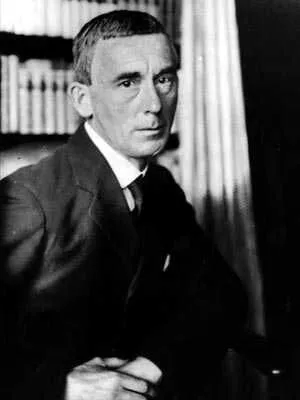
Hugo Ball
Human Design Chart
Biography
In 1916, Hugo Ball created the Dada Manifesto, making a political statement about his views on the terrible state of society and acknowledging his dislike for philosophies in the past claiming to possess the ultimate Truth. The same year as the Manifesto, in 1916, Ball wrote his poem "Karawane," which is a German poem consisting of nonsensical words. The meaning however resides in its meaninglessness, reflecting the chief principle behind Dadaism. Some of his other best known works include the poem collection 7 schizophrene Sonette, the drama Die Nase des Michelangelo, a memoir of the Zürich period Flight Out of Time: A Dada Diary, and a biography of Hermann Hesse, entitled Hermann Hesse. Sein Leben und sein Werk (1927).
As co-founder of the Cabaret Voltaire in Zürich, he led the Dada movement in Zürich, and is one of the people credited with naming the movement "Dada", by allegedly choosing the word at random from a dictionary. He was married to Emmy Hennings, another member of Dada.
The Human Design of Hugo Ball: Generator 5/1
Generator 5/1 — Design at a Glance
Hugo Ball's Human Design emphasized great endurance, which only became effective when he responded to external impulses. As a Generator, he had abundant sacral energy—comparable to the strength of a workhorse—but this energy could not be unleashed through self-initiative. The mechanics of his chart demanded the principle of 'Reacting instead of Initiating.' His energy was released only when his inner self answered a signal from life and gave a clear 'Yes'.
This foundation significantly determined his endurance and materialization power. When Hugo Ball followed this reactive principle by acting from his gut after being approached by life, it led to deep satisfaction and a sense of fulfillment. Deviations from this, such as trying to initiate things or letting himself be held back by his heart project while energy was still available, resulted in frustration or burnout. His success did not depend on constant pushing forward but rather on recognizing the right life impulses and responding with action. Only in harmony with this strategy could no one stop him; otherwise, he encountered a lack of energy. Thus, his strength lay in correctly applying this reactive principle, which channeled his enormous capacity.
Sacral Authority
Hugo Ball showed decision-making based not on cognitive analysis but on an inner, bodily resonance. His design saw him as a Generator whose strategy was to wait for external stimuli rather than act self-initiated. This waiting stance was inseparable from his sacral authority—the only constellation where strategy and internal guidance are identical.
His responses came from the gut: spontaneous bursts of energy or intuitive sounds like grunts or hums. When his Sacral Center resonated with an impulse, he felt vital and energized; without this resonance, there was no energy. This mechanism allowed him to perform tasks with great enthusiasm and without obsessive purposefulness.
Additionally, his defined Spleen Center acted as a supporting authority. Through the connection to the Sacral Center, he gained direct access to his physical well-being and rapid, instinctive perception. This shaped his ability for spontaneous reaction. He could make decisions before rational thinking intervened, guided by a reliable bodily feeling. This configuration created a lifestyle of immediate presence: Hugo Ball did not act from abstract planning but followed the direct signal of his body on what approached him in the moment and made him alive.
The 5/1 Profile — Heretic / Investigator
Hugo Ball's design set up a fundamental tension between the magnetic need to offer solutions as a hero and the introverted necessity for deep, isolated research. His Profile 5/1 generated an attraction to others seeking answers, often leading to exhaustion if clear boundaries were not established. Line 5 gave him the characteristic that people desperately wanted to know what knowledge he had to offer. Others frequently sought solutions to their problems from him.
This dynamic resembled a master in conferences who answered questions for hours only to return exhausted and find an overflowing inbox at night. The danger lay in overloading through constant answering of others' questions. To maintain the balance between private knowledge accumulation (Line 1) and public problem-solving (Line 5), it was crucial for Hugo Ball to also say 'No.' Only then could he optimally utilize his gifts without being influenced by emotional openness or societal power dynamics. His mental attitude only harmoniously manifested when he respected the timing of practical solutions and maintained patterns for concentration to avoid frustration through creating new forms.
Split Definition — Defined & Open Centers
Hugo Ball's Human Design profile set a tendency towards constant mental tension coupled with immense reactive vitality. His defined Head and Ajna centers created a persistent internal pressure to question and understand. This state was not a choice but a mechanical given: He always thought his mind processed data and concepts continuously. The challenge lay in not translating this mental pressure into hasty actions, as the Head and Ajna centers lacked their own energy for implementation. Instead, this pressure served as inspiration; it formed questions that were available to others without Ball having to answer them immediately.
At the same time, he had a defined Sacral center, a massive source of constant vitality and fertility. This energy was only available when reacting to external impulses. His strategy was waiting: He could not initiate but had to wait until life asked him for a clear yes or no from his gut before responding. Only then did his full power become available; mental decisions that overlaid this sacral response led to frustration and exhaustion. A defined Root center also provided the necessary survival pressure and stress to move forward in the world and existentially survive.
These defined forces contrasted with his open centers: Throat, G, Heart, Solar Plexus, and Spleen were undefined. This made him situationally dependent on his environment. His open Throat center tended towards standing under pressure to force attention through speaking, although his communication was spontaneous and externally directed. The open G center meant no fixed identity; he adapted to others and sought the right direction through the environment rather than asserting it himself. In the open Heart center, constant willpower was missing, making him vulnerable to trying to prove his worth through promises, which often failed. His open Solar Plexus absorbed foreign emotions, so he had to distinguish between his own feelings and those of his surroundings to avoid appearing emotionally unstable. Finally, his open Spleen center was vulnerable to survival fears and unhealthy dependencies on people with defined Spleens due to the lack of spontaneous intuition for health. These opennesses required patience and trust in his inner authority rather than being driven by conditioning.
Channels for doubt, focus and mental imagery.
Hugo Ball's Human Design profile set a basic attitude that combined logical skepticism with calm detail concentration and an exploratory mind. This combination served pattern recognition and meaning-making in the collective, but was not an authority for his personal life decisions.
The Logic Channel 63-4 connects the Head Center to the Ajna Center through the Gate of Doubt (63) and the Gate of Formulation (4). This created a doubting mind that needed proof. Doubt here was essential, as logic could be formally correct but content-wise wrong. This channel permanently filtered patterns for their consistency; once a pattern became unstable, mental pressure arose until an answer to a question was sought. There was little room for unfounded belief: A statement only held true if it proved itself as a consistent, verifiable pattern.
Parallel, the Concentration Channel 52-9 worked between Root and Sacral Centers through the Gate of Non-action (52) and the Gate of Focusing (9). This format energy required silence to precisely assess details and facts. The passive urge for calm kept distractions at bay so that attention could focus on a pattern to challenge, correct, or perfect it. Without this concentrated alignment, powerful energy quickly dissipated during multitasking.
The Abstraction Channel 64-47 connected the Head Center with the Ajna Center through the Gate of Confusion (64) and the Gate of Understanding (47). It fostered an active, experience-based mind that filtered every experience through mental images to find meaning. This mind played with possibilities independent of rules until something mysterious became clear. It was unsuitable for solving personal problems or understanding one's life but served to reveal inspiring stories or new perspectives for others.
Additionally, Gates like 55 (emotional awakening), 59 (genetic strategy of pairing), 16 (collective experimenting), 11 (visual memory), and 61 (inner truth as an acoustic process) were at work. These energies underscored the collective orientation: The mind served the collective, not personal life guidance.
Collective Circuitry — Circuit Signature
Hugo Ball's Human Design profile set a tendency towards inner duality: a tension field between cool, future-oriented logic and emotional, past-related meaning-making. Both poles aimed to share insights with the collective. His Understanding Circuit connected his Head Center with his Ajna Center as well as his Sacral Center with his Root Center – two separate segments since no direct connection existed between these groups. This fostered an 'emotionless ratio,' creating structures for the future through logic and focus. Parallel, the Meaning-Making Circuit also linked his Head and Ajna Centers. Here, wave-like emotions from the past dominated; the goal was to reflect on the meaning behind events and share these felt insights. Both circuits were visually marked and shared the energy of the Head-Ajna flow, generating focused structuring on one hand and abstract reflection on the other. The Shared Definition meant that these forces existed side by side without directly flowing into each other. Hugo Ball thus appeared as someone who linked rational future designs with cyclical, often inexplicable emotional waves from the past, always driven by the need to convey both logical strategies and profound emotional learning experiences to others.
Left Angle Cross of Spirit 1
Hugo Ball's Human Design configuration emphasized a spiritual orientation and inner resonance as fundamental life force. This setup, the left cross of Spirit 1, defined his basic stance less through external actions than through the quality of his internal connection. It was a deep, often silent impulse that shaped his perception and experience.
This mechanism describes a life task where the spiritual dimension does not manifest as an abstract idea but rather as a concrete, tangible power in everyday life. The inner resonance served as a compass guiding decisions and reactions without necessarily culminating in visible actions. For Hugo Ball, this meant that his energy flowed from this central, spiritual source.
Since no specific event was provided in the raw content, the description remains confined to this structural level. It is not about biographical details or works but solely about how this design shaped his inner world. The emphasis was always on the authenticity of this internal voice. Hugo Ball thus appeared as someone whose actions and being were carried by this deeply rooted spiritual orientation, independent of external circumstances or others' expectations.
Saturn Return · Uranus Opposition — Life Cycles
Hugo Ball's Human Design featured a radical, non-repetitive structure of life and death cycles. This cyclical dynamics shaped his life path through unique events that did not allow for repetition.
In 1915, at the age of 29, he emigrated with Emmy Hennings to Switzerland. This marked his first Saturn Return, a cycle often condensing years of groundwork into sustainable results and solidifying fundamental life decisions. The emigration was more than just a move; it was a structural anchoring.
The end of this cycle came in 1927 when Hugo Ball died at the age of 41 from stomach cancer in Switzerland. This timing fell on his Uranus Opposition, an aspect signaling sudden, unexpected changes or abrupt endings to life phases. His death was not a gradual conclusion but a radical period ending, underscoring the uniqueness of his path.
The mechanism shows: The Saturn Return created the foundation (the emigration), while the Uranus Opposition marked the abrupt end. Between these poles lay a life defined by these specific non-repetitive events. Hugo Ball's design indicated that his existence precisely occurred between this anchoring and this sudden ending, leaving no room for conventional repetition patterns. The facts clearly illustrate this structure: 1915 marking the start of a new phase, 1927 an unexpected end.
Generator · Sacral Authority — Synthesis
Hugo Ball was a Generator whose life was marked by a deep tension between the need to react and the ability to focus on internal patterns. His Sacral Center provided energy for continuous action, yet this was channeled through persistent mental pressure from Head and Ajna Centers – constant questioning and seeking understanding. This combination led him to respond intensely to external stimuli while his mind continuously tried to grasp and form underlying structures. The energy of Channel 52-9 intensified this process by creating a focus on details and the ability to concentrate as long as there was energy available.
A central paradox in his design lay in the interplay between open emotional expression and the need to recognize logical patterns. While his Solar Plexus Center made him sensitive to others' emotions, Channel 63-4 allowed him to view these experiences through a filter of skepticism and analysis. This led to an ongoing search for truth and meaning but simultaneously hindered him from fully living in the moment or making gut decisions. The recurring cycles of Saturn and Uranus reflected this inner dynamics – phases of intense activity followed by periods of reflection and upheaval.
3 Defined Channels
Incarnation Cross - Left Angle Cross of Spirit 1
Solar Return
The Solar Return shows the moment when the sun returns to its exact birth position - your personal solar year.
Life Cycles
Discover the life cycles with a detailed triple view (birth chart, cycle chart, composite).
Human Design Profile
- Type
- Generator
- Strategy
- To respond - wait for something to respond to
- Authority
- Sacral Authority
- Profile
- 5/1 - Heretic / Investigator
- Definition
- Split Definition
- Incarnation Cross
- Left Angle Cross of Spirit 1
- Date of Birth
- 22.02.1886 14:30
- Place of Birth
- Pirmasens, Germany
Frequently Asked Questions
What was Hugo Ball's Human Design type?
What Profiles did Hugo Ball have?
What Authority did Hugo Ball have?
What incarnation cross did Hugo Ball have?
When was Hugo Ball born?
Discover your own Human Design
Are you also a Generator? Find out in a personal reading how to use your sacral energy correctly and discover deep satisfaction.
More Personalities
Back to overviewAaliyah

Alain-Fournier

Alexia

Angèle

Angeli

Anne-Marie
