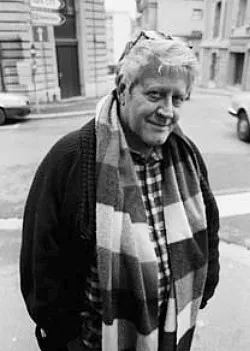
Hugo Pratt
Human Design Chart
Biography
Pratt spent his childhood in Ethiopia before moving to Argentina for 14 years. His first marriage was on 12 March 1953, ending in divorce on 30 January 1973.
Pratt died on 20 August 1995 in Pully, Switzerland.
What does Manifesting Generator 2/4 mean for Hugo Pratt?
Manifesting Generator 2/4 — Design at a Glance
Hugo Pratt revealed himself as someone who combined constant energy with an unusual ability: to bring things into life in the blink of an eye. His design as a Manifesting Generator created a hybrid nature that united sacral endurance with manifestor dynamism, allowing him to skip steps and push projects forward rapidly while harboring a central tension field.
The danger lay in the speed itself. Without reacting to inner impulses, he tended to miss important stages or overload himself through parallel activities. Such behavior quickly led to frustration, his specific non-self theme. The solution did not lie in slow progress but in the strategy of responding: He had to wait for a 'yes' from his sacral center before acting.
Regularly reviewing his projects was crucial to ensure that inner approval persisted. When this condition was met, his speed transformed into a source of deep satisfaction. Instead of limiting himself to one thing, he thrived in the 'play mode', promoting variety and parallel work. This playful approach optimally utilized his hybrid energy by establishing multitasking not as a burden but as a source of creative power and fulfillment.
Emotional Authority
Hugo Pratt's design inclined him towards hesitant decision-making, following emotional authority. This inner guidance rests in the defined Solar Plexus Center and always takes precedence over all other defined centers in his system. His perception was marked by constant waves of feelings: Sometimes he saw a situation as highly attractive, only to find it completely unbearable moments later. These mood swings did not mean that the initial impulse hit the truth. Quick reactions to these momentary emotions were prone to error in his design and often led to regret later on.
The mechanics of his authority required patience. He needed time for intense initial feelings to subside and emotional distance from the situation to be gained. Only after this process of 'dressing up' – often through multiple nights of reconsidering a decision – did clarity set in. The initial excitement or rejection was only a snapshot; the deeper truth revealed itself when the emotional wave subsided, and calmness took hold. This cycle of rise and fall of emotions served to distinguish spontaneous impulses from grounded insights. For long-term direction setting, this period of gaining distance was crucial to ensure that the choice made did not solely rest on transient mood but on the stable inner truth of his system.
The 2/4 Profile — Hermit / Opportunist
Hugo Pratt's design inclined him towards a rhythmic alternation between deep withdrawal and close social contact. He revealed himself as someone who had to balance tension: The need for isolated purification stood in contrast to the urge to be integrated into the familiar network. This dynamic corresponded to Profile 2/4, the natural talent and networker.
Line 2 demanded an unyielding retreat for purging unclear emotions and internal clarification. In this phase of isolation, he sought protection from social uncertainties to find calm. Saturn represented discipline and a desire for purity here, while Mercury communication impulses often created dilemmas. Only when this inner order was established did he re-emerge.
Then Line 4 activated the network. It gathered through friendliness secret information and experiences, functioning almost like a double agent using confidential knowledge. This external fixation allowed him to make contacts and investigate situations. The strength of his design lay in synthesis: Knowledge collected within the network was evaluated and transformed in solitude. Crucial was clear communication of this interplay – 'I need space' versus 'I want company'. Only thus could he process social material and develop brilliant ideas without being overwhelmed by boredom or external pressure.
Split Definition — Defined & Open Centers
Hugo Pratts Human Design shows a tendency towards reliable expression and clear inner direction. His defined Throat Center, G Center, and Sacral Motor form the stable energy foundation: He had constant vital force and a firm compass for identity and life purpose. This structure allowed him to articulate himself authentically and sustainably contribute energy if he responded to his internal resonance.
At the same time, his defined Solar Plexus and Root Center add emotional depth and existential pressure. This results in an intense, wave-like experiential world. As a person with emotional authority, he was dependent on waiting out the waves of his feelings before making decisions; impulsivity led to chaos here, while patience created clarity. The constant pressure from the Root Center drove him forward but had to be guided by strategy to prevent obsessive action or projection onto others.
The open Head, Ajna, Heart, and Spleen Centers marked areas of situational openness. Here, there was a lack of consistent mental conception or willpower; instead, he reflected external inspirations and egos. He tended to wonder if he had to find answers that were not his own, or tried to prove his worth through promises – a trap of the open Heart. The open Spleen Center also made him vulnerable to survival fears and spontaneous decisions out of uncertainty rather than trusting intuitive certainty.
The key to his design lay in relying on the sacral response and emotional clarity instead of willpower or spontaneous intuition. The tension between the strong need for authentic expression (defined) and the necessity not to internalize mental and social expectations (open) shaped his dynamics. By waiting until the emotional wave subsided and reacting to what provided energy, he could express his truth with ease and honesty without being overwhelmed by the confusion of his open centers.
Channels for self-love, emotional depth, change and maturation.
Hugo Pratt showed himself as someone who combined inner strength with emotional depth. The Channel of Exploration 34-10 gave him constant self-love and the ability to respond to external stimuli from the Sacral Center. This created a basis for authentic behavior that was not forced.
At the same time, the Channel of Openness 22-12 shaped his social impact. His emotional articulation depended on the wave movement of the Solar Plexus; only at the right timing did it feel authentic and connecting. This dynamic stood in tension with the restless search for new experiences through the Channel of Transience 36-35, which drove him to use crises as guides.
The Channel of Maturation 42-53 rounded out this profile by requiring a cyclical process of completion and reflection. Each experience had to be completed before wisdom could be drawn from it. Additional nuances were provided by Gates like Gate 11 for visual assessment or Gate 9 for detailed focus in the Sacral Center.
Pratts design required patience: The energy was only strengthening if it waited on stimuli and unfolded within an emotional rhythm. Impulsive action would have destroyed the power of this configuration. Instead, waiting for clarity fostered a deep, individual radiance that could touch others without overwhelming them.
Individual Circuitry — Circuit Signature
Hugo Pratt showed himself as someone whose identity was defined by his unique path and emotional transformation. His design set a tendency towards pulsating, acoustic creativity driven by the connection between Solar Plexus and Throat Center in the Knowledge Circuit. Here, emotional waves culminated in transformative communication, supported by the Channel of Openness (Gates 12-22). Parallel existed the inner strength of the Centering Circuit: The Channel of Exploration (Gates 10-34) directly connected Identity and Sacral Centers. This created bold, grounded personalities with strong convictions that often remained without external expression due to no connection to the Throat Center. This power colored the entire chart individualistically.
The Shared Definition meant these energetic systems did not flow directly into each other but worked as separate, parallel existing forces. One group connected Identity, Sacral, and Root Centers; the other Throat and Solar Plexus Centers. The Sense-Finding Circuit added reflection: Channels of Transience (35-36) and Maturation (42-53) allowed emotional processing of past experiences and learning together with the collective from them. This cyclical energy reconnected Throat and Solar Plexus Centers as well as Sacral and Root Centers as separate segments. So Hugo Pratt sought meaning behind events to pass on insights while his inner confidence acted independently of this expression process.
Right Angle Cross of Eden 2
Hugo Pratt's design featured the 'Right Cross of Eden 2'. This configuration marks a specific archetypal task, but in the given raw content, it is not further elaborated on. There are no concrete character traits or behaviors that can be directly derived from this mechanism. Therefore, the description of this aspect remains general and focuses solely on the presence of the structure in the chart. The 'Right Cross of Eden 2' symbolically represents a specific life task or challenge whose exact manifestation is not specified here. Without further mechanical details, no specific emphasis or character trait can be derived from it. Mentioning the name of this configuration is sufficient to document its existence in Hugo Pratt's design without providing deeper insights into its effects. This corresponds to the given data status where the description is null and no specific facts are available. Thus, the chapter remains thematically empty, which reflects the reality of the raw content. No assumptions are made or external information added to fill this gap. The integrity of the analysis is maintained by reproducing only what is explicitly contained in the raw content.
Saturn Return · Uranus Opposition · Chiron Return · 2nd Saturn Return — Life Cycles
Hugo Pratt's life followed a clear rhythmic structure that condensed into three decisive astrological turning points. These cycles did not mark arbitrary events but structural phases of maturation and reorientation.
The first Saturn return around the age of 26 served as a test for his own identity in social contexts. For Hugo Pratt, this moment crystallized in 1953 with his marriage to Gucky Wogerer. This decision anchored him in a stable relationship, a typical expression of the first Saturn cycle, which often leads to the formation of enduring, long-term bonds.
Twenty years later, at age 40, the Uranus opposition hit his design. This cycle frequently demands breaking free from established patterns and the courage for individual autonomy. In 1967, this was evident in the publication of 'A South Sea Ballad' in Sgt. Kirk magazine. It was a moment of creative emancipation where his voice sounded independent and unique, far from earlier conventions.
The second Saturn return around age 58 brought another deepening of structure. In 1984, Hugo Pratt moved to Grandvaux near Lausanne. This step signaled no escape but the conscious choice of a new stable framework for the next phase of life. The three cycles linked relationship, artistic freedom, and spatial stability into a coherent arc of life.
Manifesting Generator · Emotional Authority — Synthesis
Hugo Pratt lived a life marked by profound inner dynamics. Through the combination of manifesting generator energy and emotional authority, his personality leaned towards both swift action and careful deliberation. The defined sacral motor (Channel 34-10) continuously provided energy for the expression of individual beliefs and behaviors, while access to the Throat Center enabled a strong expressive power. This interplay led to an ability to quickly set ideas into the world, yet simultaneously required phases of withdrawal (Line 2) to gain inner clarity and let emotional decisions mature – a constant shift between action and contemplation.
Pratt was characterized by a central tension between the need for individual exploration and the desire for community (Profile 2/4). The energy of the Knowledge Circuit reinforced him in venturing new paths and expressing his unique identity, which showed in verifiable moments of creative success. At the same time, he needed validation and exchange with others to make this inner strength fruitful. The cycles of Saturn returns and Uranus opposition reflected this rhythm: phases of intense personal development alternated with times of social recognition and change.
4 Defined Channels
Incarnation Cross - Right Angle Cross of Eden 2
Solar Return
The Solar Return shows the moment when the sun returns to its exact birth position - your personal solar year.
Life Cycles
Discover the life cycles with a detailed triple view (birth chart, cycle chart, composite).
Human Design Profile
- Strategy
- To respond - wait for something to respond to
- Authority
- Emotional Authority
- Profile
- 2/4 - Hermit / Opportunist
- Definition
- Split Definition
- Incarnation Cross
- Right Angle Cross of Eden 2
- Date of Birth
- 15.06.1927 19:00
- Place of Birth
- Rimini, Italy
Frequently Asked Questions
What was Hugo Pratt's Human Design type?
What Profile did Hugo Pratt have in Human Design?
Which Authority guided Hugo Pratt?
What incarnation cross did Hugo Pratt have?
When was Hugo Pratt born?
Discover your own Human Design
Are you also a Manifesting Generator? Find out in a personal reading how to unfold your multi-talents and direct your energy wisely.
More Personalities
Back to overviewAlain-Fournier
Aldair

Alizée

Angeli

Arletty
Artus