

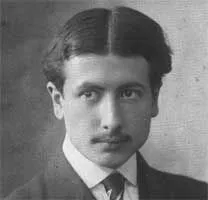
Photo: Wikimedia Commons
Ivan Turgenev
Human Design Chart
Biography
His first major publication, a short story collection titled A Sportsman's Sketches (1852), was a milestone of Russian realism. His novel Fathers and Sons (1862) is regarded as one of the major works of 19th-century fiction.
The Human Design of Ivan Turgenev: Generator 4/6
Generator 4/6 — Design at a Glance
Ivan Turgenev's design pointed towards great endurance and inner strength. As a Generator, he had plenty of sacral energy, which made him extremely strong and resilient – provided that he used this power for tasks driven by his intrinsic motivation. His life force was most free when reacting to impulses from his environment rather than initiating independently. Therefore, the motto of his design was: don't start, but respond.
This mechanism, however, held two specific pitfalls for him. First, he tended to waste energy and burn out if he kept doing things that he didn't really want to do over a long period. Second, his endurance suffered when trying to hold back from his heart project, even though his inner self still wanted to keep working with power. If Ivan Turgenev followed his strategy – waiting until the sacral center gave a clear 'yes' and then reacting through action – nothing could stop him. In harmony with his design, he was rewarded with deep feelings of fulfillment. Living contrary to this logic and constantly trying to initiate led to persistent frustration as well as a noticeable lack of energy. His strength lay in responding instinctively to life signals.
Sacral Authority
Ivan Turgenev's design pointed towards direct physical reactions. As a Generator, he had sacral authority, which simplified his decision-making process: strategy and inner guidance merged into one. This mechanism only worked because his emotional center was open; thus, emotional clarity did not serve as his primary orientation. Instead, the truth showed itself in a 'gut feeling' or an energy surge in response to external stimuli.
His design challenged him to pay attention to physical signals such as grunts, hums, or affirming 'mm-hm'. When his sacral motor kicked in, he felt vital and alive. He had access to seemingly inexhaustible energy and tackled his work with great enthusiasm. His design was geared towards living through tasks joyfully and fully immersed without the need for purposeful direction.
Moreover, his activated spleen center acted as a supportive authority to the sacral center, enabling him particularly quick and spontaneous reactions. He had an immediate connection to his physical well-being and instinctive perception, which he could rely on to guide himself. This configuration shaped a lifestyle based on the instant intuitive 'yes' or 'no' of the body, independent of subsequent rational or emotional analysis.
The 4/6 Profile — Opportunist / Role Model
Ivan Turgenev's design pointed towards experimental behavior in the first three decades of life before his focus changed. As someone with Profile 4/6, he acted similarly to a 4/3er before Saturn returned: He enjoyed trying out many things, especially in the realm of relationships and friendships. This early phase served for exploring various roles and testing social bonds.
With the activation of the sixth line, however, an internal conflict emerged. Ivan Turgenev experienced the contradiction between a deep desire to belong to a community – shaped by the fourth heart line – and the simultaneous urge to withdraw to ponder life's meaning. This tension between heart and head characterized his later years.
In his later years, he was expected to meet high standards as an exemplary role model. His task involved stepping forward through cooperation with others. Yet, the great heart of the fourth line remained cautious; it opened only partially to avoid being hurt by false people. The mystical potential of his sixth line lay in recognizing that everyone has their own role and leadership means distributing power justly and delegating rather than exercising it himself.
Single Definition — Defined & Open Centers
Ivan Turgenev's Human Design profile indicated a tendency towards deep persistence and instinctive orientation. His defined Sacral Center generated constant vital energy that he utilized through reactions to external impulses, finding satisfaction in doing so. This power was linked with his defined Spleen Center, which provided him with reliable body awareness and intuitive judgments in the present moment. Additionally, his defined Root Center ensured a steady internal pressure that propelled him forward and fostered existential awareness.
These stable energy sources contrasted with his open centers. His open Head and Ajna Centers made him mentally flexible but vulnerable to loops of doubt and the adoption of others' intellectual themes. He tended to get entangled in questions that were not his own, rather than trusting his inner authority. The open G Center meant he lacked a fixed identity, instead adopting it from his environment; often seeking direction and love through adaptation to others. His open Heart Center made him sensitive to the pressure of proving his worth, which could lead to cycles of promise and disappointment. Finally, his open Solar Plexus absorbed the emotions of his surroundings, amplifying foreign moods and sometimes feeling emotionally overwhelmed rather than clearly recognizing his own feelings.
Channels for caring values and meaningful life struggle.
Ivan Turgenev's Human Design profile indicated a tendency towards deep care and stubborn determination in advocating for individual values. This configuration created tension between the need for harmonious support and the drive to fight against obstacles.
The Channel of Preservation 27-50 connected his Sacral Center with the Spleen. Through the Gate of Care (27) and the Gate of Values (50), an aura was formed that automatically attracted trust. People sought support from him as he instinctively knew how to preserve tribal values and nourish others. His energy served to take responsibility – whether through raising offspring or protecting shared infrastructure. Crucial here was 'enlightened selfishness': Only when he correctly cared for himself could he effectively serve others. He learned to wait for the sacral reaction to ensure his energy was truly available before giving it out.
Simultaneously, the Channel of Life Struggle 38-28 connected his Root Center with the Spleen. The Gate of Fighter (38) pushed him to defend his individual integrity against external distractions, while the Gate of Player (28) helped him recognize which struggles made sense. This channel endowed him with stubborn determination to follow his own path, even if it meant sacrificing security. He found meaning in resisting others' expectations and fighting for what he felt was truly right. This adrenalized energy required regular movement to reduce internal stress and gain clarity.
Additionally, Gates like 1 (Uniqueness), 2 (Receptivity) and 7 (Leadership) shaped his perspective on mutation and hierarchy. Gate 13 promoted reflection on collective experiences while Gate 5 determined the fundamental rhythm of his life processes. These elements together formed a person who was both caring and combative, always seeking the right timing for their expression and responsibility.
Individual Circuitry — Circuit Signature
Ivan Turgenev's Human Design profile indicated a tendency towards instinctive alertness and protection of the existing order. His energy flowed in one continuous line through the Spleen Center, Root Center, and Sacral Center. This simple definition created a clear, unbroken stream of impulses based on quick reactions and physical endurance.
The Knowledge Circuit connected his Spleen with his Root Center via the Channel of Life Struggle (Gates 28–38). This generated pulsating power aimed at asserting one's identity through concrete effort. It was not abstract theory but about overcoming challenges to find one's true path and bring about change.
Parallel to this, the Archer Circuit linked his Sacral Center with his Spleen Center. The Channel of Preservation (Gates 27–50) brought together the timeless life force of the sacrum with the instinctive perceptions of the spleen. This connection served ancient protection, preservation, and care for what was felt as familial or genetically relevant. It ensured that Turgenev nurtured and defended resources, where emotional waves carried a deep, probing character of protective instincts. Both circuits worked in harmony with his simple definition as an interconnected system of instinct, endurance, and protective action ability.
Right Angle Cross of the Sphinx 4
Ivan Turgenev's design revealed a tendency towards inner stability and constancy. He was someone who in his life set great store by continuity and reliability, less driven by sudden upheavals or radical innovations. This fundamental attitude resulted from the configuration of the right cross of the Sphinx 4. In Human Design mechanics, this pattern represents an energy that is strengthened through repetition and confirmation of its own structure. It is a design that does not seek security through expansion but rather through persistence in the known and tried-and-true. Ivan Turgenev possessed an inner architecture that helped him maintain a solid core during uncertain times. His strength lay in his ability to be little swayed from his path, nurturing a deep connection with his own values and routines. This did not mean rigidity in the negative sense but rather a conscious choice for durability. The right cross of the Sphinx 4 acts like an anchor that keeps the individual centered as the outside world changes. For Ivan Turgenev, this was a mechanism of protection and self-confirmation. He drew strength from the experience that his fundamental stances held firm. This configuration promoted a way of life in which loyalty to oneself and one's own history took precedence, allowing him to appear with calm authority that did not need to be loud to be effective.
Saturn Return · Uranus Opposition · Chiron Return · 2nd Saturn Return — Life Cycles
Ivan Turgenev's design was marked by clear phases of condensation and expansion that correlated with his astrological cycles. At the age of 26 in 1844, he published the novella Andrej Kolossow. This marked the first Saturn return, a time when years of inner preparation often coalesce into a tangible external result and initial structural stability becomes visible.
Later, at 38 years old in 1856, the publication of Faust appeared. This fell during the Uranus opposition cycle, a phase typically characterized by sudden changes, new perspectives or breaking old patterns, often triggering professional upheavals or innovative impulses.
At age 52 in 1870, Turgenev organized the international chess tournament in Baden-Baden. This corresponded to his Chiron return, a fulfillment cycle between the ages of 49 and 51 (here slightly displaced observed or as transition), during which one's incarnation cross unfolds. If the person follows their strategy, the meaning of their design becomes experiential; here Turgenev was in a role of organization and connection, an expression of his mature life task.
Generator · Sacral Authority — Synthesis
Ivan Turgenev lived deeply rooted in his Sacral Center (Generator type, defined Sacral), whose energy propelled him and gave him enormous endurance. This power source, however, was inseparable from the necessity to find tasks that found his inner approval – otherwise exhaustion threatened. His profile as a networker/role model (4/6) suggests that throughout his life he oscillated between the desire for belonging and the need for independent reflection. This dynamic reflected in the search for authenticity, marked by the connection of heart matters (line 4) and intellectual distance (line 6).
A central paradox shaped Turgenev's path: He needed both the stimulation and confirmation from others (sacral channel 27-50, knowledge circuit), to ignite his energy as well as space for introspective processes to generate and transform new knowledge. The documented events – publications and organization of a chess tournament – show that he succeeded when he could direct his strength into creative undertakings. At the same time, the right cross of the Sphinx indicates that part of his life task was to find balance between individual expression and collective responsibility.
2 Defined Channels
Incarnation Cross - Right Angle Cross of the Sphinx 4
Solar Return
The Solar Return shows the moment when the sun returns to its exact birth position - your personal solar year.
Life Cycles
Discover the life cycles with a detailed triple view (birth chart, cycle chart, composite).
Human Design Profile
- Type
- Generator
- Strategy
- To respond - wait for something to respond to
- Authority
- Sacral Authority
- Profile
- 4/6 - Opportunist / Role Model
- Definition
- Single Definition
- Incarnation Cross
- Right Angle Cross of the Sphinx 4
- Date of Birth
- 09.11.1818 12:00
- Place of Birth
- Orel, Russia
Frequently Asked Questions
What was Ivan Turgenev's Human Design type?
What Profile did Ivan Turgenev have?
Which Authority guided Ivan Turgenev?
What incarnation cross did Ivan Turgenev have?
When was Ivan Turgenev born?
Discover your own Human Design
Are you also a Generator? Find out in a personal reading how to use your sacral energy correctly and discover deep satisfaction.
More Personalities
Back to overviewAaliyah

Alain-Fournier
Alexia

Angèle

Angeli
Anne-Marie
