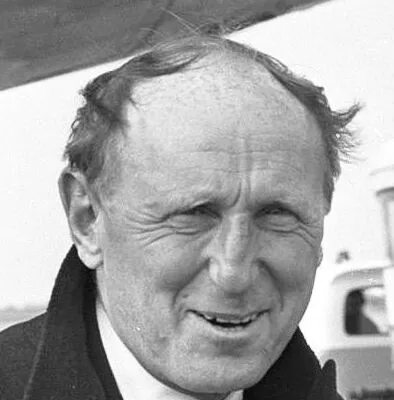
J. J. Benítez
Human Design Chart
Biography
Human Design Analysis: J. J. Benítez as Projector 3/5
Projector 3/5 — Design at a Glance
J.J. Benítez's Human Design shows a tendency towards focused perception: His aura acted like a bright flashlight that immediately recognized system errors in his environment. This Projector-type mechanism does not describe a diffuse radiation but a precise beam that reveals the 'Dark' in others. Direct confrontation with these insights often led to resistance; it felt like being shot in the face with light. Instead, the more effective strategy was restraint: By shining harmoniously himself - for example through visible, functioning relationships or structures - he became an attraction point. Others sought him out and asked for advice rather than feeling attacked. This dynamic requires patience and waiting for a respectful invitation before sharing knowledge.
Additionally, his undefined Sacral Center defined a specific energy rhythm. Without constant intrinsic life force, phases of high activity alternated with necessary rest periods. A continuous work pressure stood in opposition to this natural rhythm and threatened to burn him out. Acknowledging this rhythm was crucial for his sustainability. When J.J. Benítez followed this mechanism - through patient shining rather than direct correction and respectful pauses - he was rewarded successfully. Deviations from it, such as ignoring the invitation or overtaxing his energy capacity, sooner or later led to bitterness as an expression of his non-self. His design therefore did not require constant action but strategic presence and recovery.
No Inner Authority
J.J. Benítez showed himself to be someone whose decision-making was not steered by inner physical authority. His design lacked defined centers below the Throat Center or any definitions at all, making him one of the rare Mental Projectors or Reflectors. This configuration means he had no internal instance that provided immediate certainty. Instead, his orientation occurred through external exchange and cyclical observation. As a Mental Projektor, J.J. Benítez activated dormant potentials in his open centers only through energetic dialogue with other people. This process allowed him to view facts from multiple perspectives. The actual clarification, however, required time and solitude. He had to filter the collected information to recognize the red thread and develop his specific intelligence. As a Reflector, his rhythm would have been determined by the 28-day lunar cycle, showing him reliable conditioning patterns. In both cases, avoiding pressure was crucial. J.J. Benítez needed an environment where he felt comfortable and could exchange trustfully to develop over time a sense of what truly belonged to him. His success capital lay in filtering out the essential from complex information and structuring it meaningfully without being pushed by external expectations.
The 3/5 Profile — Martyr / Heretic
J.J. Benítez's design was characterized by an attitude based on personal experimentation: he initially believed little in preordained truths and had to experience things himself to understand them. This Line 3 of the experimenter learns through trial and error; it often requires support from others, as the collective learning process without assistance can lead to failures. Only after these personal experiences, which also included failures, did J.J. Benítez turn outward. The Line 5, the Hero's Line, motivated him to make his self-learned knowledge available to others. He acted as a problem solver in crisis situations, driven by selflessness and altruism.
This configuration created a specific dynamic: J.J. Benítez presented a rich treasure of practical life experiences, making him attractive to others who wanted to learn from his stories. The tension lay in the fact that he needed support during his own learning process while also wanting to be perceived as a strong rescuer. This role of heroic adventure or cool storyteller flattered his ego but harbored vulnerability: If he failed publicly with an experiment, this was visible to all. His focus always lay on authenticity through lived experience rather than theoretical knowledge. He shared his insights further without clinging to them, thus enabling personal development and offering practical solutions to others in distress.
Single Definition — Defined & Open Centers
J. J. Benítez was characterized by a constant, unstoppable thought process. His defined Head and Ajna Centers created a persistent mental pressure towards inspiration and concept formation. This mind was always active, asking questions and seeking answers, yet without a direct energy source for implementation. The challenge lay in using this pressure as a source of ideas rather than falling into worry or hasty actions from the intellect.
In contrast, his Throat, G, Heart, Sacral, Solar Plexus, Spleen, and Root Centers were open. This meant that communication, identity, willpower, vitality, emotions, intuition, and stress processing were not constant but environment-dependent. J. J. Benítez tended to question whether he was noticed or who he really was when conditioned by his surroundings. He absorbed the emotions and stress of his environment, making him vulnerable to exhaustion and emotional waves that weren't his own. His open Heart Center led him often to feel pressured to prove his worth despite lacking consistent willpower.
The mechanics of his design required a strict distinction between self-generated and absorbed material. Instead of making spontaneous decisions from the open Spleen or Root Centers, he had to rely on strategy and inner authority. His mental clarity was a gift for others, yet his open nature demanded patience until the environment provided the right energy for communication and action. Thus, his constant mind became the engine of inspiration while his open rest of the design learned to resonate with the world rather than fight against it.
Channels for logical doubt and abstract comprehension.
J. J. Benítez was marked by a spirit characterized by permanent mental activity and healthy skepticism. His design inclined him towards filtering experiences through a kaleidoscope of possible interpretations, always searching for an underlying story or logic.
This dynamic was primarily shaped by the Channel of Abstraction 64-47. It connects Gate Confusion (64) with Gate Understanding (47). This channel creates a constant pressure to mentally scrutinize every life experience – even dreams – and examine them for patterns. As this process plays out all conceivable possibilities without fixed rules, it can lead to feelings of inner unrest or 'mental confusion'. The mind seeks an inspiring perspective but is not designed to logically solve personal problems. The Sun in Gate 64 (Line 3) amplified this aspect of searching and the quest for meaning.
Simultaneously, the Channel of Logic 63-4 acted as a counterbalance. It connects Gate Doubt (63) with Gate Formulating (4). This channel demands that logic be practically verifiable; unfounded belief is rejected. Doubt is essential here to ensure patterns are consistent and reliable. Only when an answer consistently works does it qualify as logical.
The combination of these two channels resulted in a mind searching for an 'inspiring story' through experience and skeptical examination, one that could be shared. The challenge lay in managing the inner unrest of Channel 64-47 and recognizing that this active mind cannot serve as an internal authority for personal life. Instead, this mental configuration served to offer new perspectives or stories to the collective once clarity emerged from the chaos of possibilities. The mind was a tool for pattern recognition for others, not self-healing.
Collective Circuitry — Circuit Signature
J. J. Benítez exhibited a fundamental approach that involved grasping intuitive patterns and large connections from past experiences and conveying these as abstract insights. This was not cold logic but an emotional, cyclical perception aimed at giving meaning to the past.
His design included the Channel of Abstraction (64-47) in the Meaning Circuit. This channel connects the Head Center with the Ajna Center. The energy is cyclical and serves to establish meaning: it reflects on the past, finds its significance, and shares these felt insights with the collective for shared learning. With the Sun in Gate 64, intuitive pattern recognition formed the absolute focus of this energy.
Parallel to this, J. J. Benítez possessed the Channel of Logic (63-4) in the Understanding Circuit. Here too, Head Center and Ajna Center were connected. This circuit focuses on logical, rational insights that are free from conditioning and directed towards the future. Unlike the Meaning Circuit, it deals with 'emotionless ratio', structure, and strategy to improve things.
Both circuits in J. J. Benítez linked the Head Center with the Ajna Center. As he had a Simple Definition, these centers formed a continuous energetic flow. The energy from both areas – the emotional meaning-making of the past and the rational logic for the future – thus directly influenced each other and shaped his way of processing and sharing information.
Right Angle Cross of Consciousness 3
J. J. Benítez revealed himself through an inner logic based on strategic orientation. His design suggested that decisions were not arbitrary but arose from a deep, often unconscious structure. This architecture of self-discovery significantly shaped his life perspective.
In Human Design, this is described by the right cross of consciousness 3. It marks a specific interaction between what is consciously perceived and the unconscious patterns in the background. The unconscious provides the foundation while consciousness filters these information into action-guiding strategies. For J. J. Benítez, this meant that his inner world possessed a clear, though complex order. The underlying mechanism ensures that consciousness and unconsciousness do not conflict but work together to create a coherent view of reality.
This configuration influences how someone handles information and sets priorities. It is less about spontaneous impulses than a deliberate orientation. J. J. Benítez’s design indicates that his strength lay in using this inner structure to gain clarity in uncertain situations. The strategy was to trust his own internal logic, which rested on a solid yet not always obvious foundation. This created a stable platform for his self-expression and interaction with the outside world.
Saturn Return · Uranus Opposition · Chiron Return · 2nd Saturn Return — Life Cycles
J. J. Benítez showed himself in midlife as someone seeking structural clarity internally and ready to integrate previous experiences into a coherent whole. This process of self-assurance and consolidation is characteristic of the first Saturn return, which begins around age 29. During this phase, years of groundwork and internal development often coalesce into a solid foundation that confirms or redefines one's life mission.
In 1975, at the age of 29, J. J. Benítez wrote about the Shroud of Turin. This event not only marked a professional milestone but also reflected precisely the mechanism of the Saturn return: The engagement with this topic was the moment when his intellectual and spiritual interests condensed into a tangible result. It was a confirmation of his direction, a step towards structural anchoring of his work. The Saturn return acted here as a catalyst that translated diffuse impulses into concrete reality and showed the individual where they truly stand. For J. J. Benítez, this was the point at which theoretical search for answers culminated in a publication that would shape his further development.
Projector · No Inner Authority — Synthesis
A central red thread runs through the design: the ability to recognize patterns and convey these insights. This manifests in the combination of defined Head and Ajna Centers (Understanding Circuit), the Profile of the Explorer/Hero, as well as Gates 35 and 61. It is a life oriented towards generating knowledge through personal experience and making it accessible to others – an act of bringing
2 Defined Channels
Incarnation Cross - Right Angle Cross of Consciousness 3
Solar Return
The Solar Return shows the moment when the sun returns to its exact birth position - your personal solar year.
Life Cycles
Discover the life cycles with a detailed triple view (birth chart, cycle chart, composite).
Human Design Profile
- Type
- Projector
- Strategy
- Wait for the respectful invitation
- Authority
- No inner authority - learn more
- Profile
- 3/5 - Martyr / Heretic
- Definition
- Single Definition
- Incarnation Cross
- Right Angle Cross of Consciousness 3
- Date of Birth
- 07.09.1946 02:30
- Place of Birth
- Pamplona, Spain
Frequently Asked Questions
What is J. J. Benítez's Human Design type?
What are J. J. Benítez's Profiles?
What authority does J. J. Benítez have?
What incarnation cross does J. J. Benítez have?
When was J. J. Benítez born?
Discover your own Human Design
Are you also a Projector? Find out in a personal reading how to unfold your leadership qualities and recognize the right invitations.
More Personalities
Back to overviewSissy Spacek

Alain-Fournier

Anémone

Angeli

Ann-Margret

Bourvil