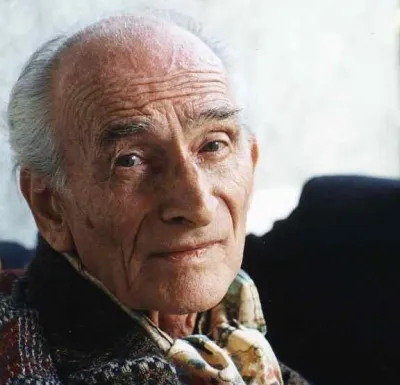
Jacques Rogge
Human Design Chart
Biography
Rogge’s father and grandfather were both involved in professional sports. His grandfather was a turn-of-the-century cyclist, and his father was a track and field athlete as well as a rower. Sailing was his father’s choice of a recreational activity, and, as a result, Rogge began sailing when he was only three or four years old. After completing his early education, he attended the Université Libre in Brussels and the University of Ghent, earning a Doctor of Medicine and specializing in sports medicine and orthopedic surgery. He sailed his way to a world championship, and then went on to sail in three Olympics, 1968 in Mexico, 1972 in Munich and 1976 in Montreal. Although at one point he was ranked between eighth and 12th in the world, his best finish was 14th place, achieved during the Munich Games. Additionally he played rugby for the Belgian National Team for approximately ten years.
Rogge became President of the European Olympic Games in 1989, a position he held until his appointment to the IOC. His commitment to the integrity of the Games was strong, and he planned to fight any sort of corruption in order to defend the values of the sport itself.
Rogge was married to Anne Bovyn; they had two children. He died on 29 August 2021 at the age of 79.
Jacques Rogge as a Manifesting Generator 5/1 in Human Design
Manifesting Generator 5/1 — Design at a Glance
Jacques Rogge revealed himself as a person with a hybrid energy configuration: He possessed the constant, sacral life force of a Generator combined with the ability to act swiftly and skip steps. This design marked him as someone who did not simply react but rather drew things into his life with remarkable speed.
The mechanics of his type, the Manifesting Generator, meant that he should wait for inner impulses – the strategy of responding – yet once activated, he unleashed immense forward momentum. This quickness was a double-edged sword: It allowed him to pursue multiple projects simultaneously and fall into a productive play mode when his inner authority consented. However, the tendency to move too quickly or skip important steps carried the risk that he would later have to backtrack to complete missing steps, which could cause frustration as his non-self theme lay precisely in overloading himself through haste and multitasking.
Jacques Rogge lived with this dynamic: His satisfaction depended on whether he experienced the variety of his many parallel interests as an enriching game or if the chaos of simultaneous handling without clear inner confirmation led to exhaustion. His design challenged him to regularly check if his energy was still truly saying "yes" so that he could sustainably and satisfyingly apply his creative power rather than burning it out through hasty action.
Emotional Authority
Jacques Rogge was influenced by an emotional wave that constantly set his perception of the world into fluctuations. His inner authority was Emotional Authority, carried by the defined Emotional Center. In this design, this authority always took precedence over all other defined centers; it significantly determined his decision-making process.
His feelings showed a permanent up and down pattern. What excited him in one moment could appear negative in the next. These mood colors were only snapshots, not an ultimate truth. Quick, spontaneous decisions based on current emotions therefore risked negative consequences, as first impressions were often misleading.
Jacques Rogge needed time to gain clarity. He let decisions mature, slept on them multiple times and consciously delayed action. This process required patience. Only when the intense feelings subsided and emotional distance was established did calmness set in. Then his inner process was complete. This strategy was particularly important for long-term decisions that would sustainably influence his life path. By enduring indecision, he reached deep, comprehensive insight rather than being led by passing moods.
The 5/1 Profile — Heretic / Investigator
Jacques Rogge was marked by his Profile 5/1: a configuration that inclined him to delve deeply into knowledge and offer this wisdom to others for solving their problems. As a "Hero" (Line 5), he had almost magnetic charisma; people actively sought out his insights, often leading them to consult with him. However, this dynamic could be taxing if clear boundaries were not set – similar to how a scientist might feel exhausted after hours of conferences and find their inbox full of new inquiries.
His design featured Line 1 for "Empathy" (Gate 13) and listening. It allowed him to engage indiscriminately with others and absorb secrets or stories from various sources. This formed the foundation for his exchange with the world, but it was also a potential source of overwhelm as he felt the energy and motives of others. The challenge lay in developing this empathy without being consumed by the expectations of others.
At the same time, Line 5 demanded courage to "confess" past mistakes or lack of knowledge. This process of justification was irrational, as it relied on outdated terminology, yet it was crucial for his effectiveness during crises among strangers. Jacques Rogge had to learn to say No in order to maintain a balance between his own research work (Line 1) and problem-solving for others (Line 5). Only then could he optimally utilise his gifts without depleting himself.
Single Definition — Defined & Open Centers
Jacques Rogge was someone who exhibited a reliable inner direction and profound emotional clarity. His design featured defined centers in the G Center, Solar Plexus, Sacral, and Throat Center. This configuration gave him a stable self-identity and the ability to make decisions not impulsively but after carefully waiting for an emotional wave to pass. With his energy source being sacral, he responded to questions by effectively deploying his vital force rather than dragging it down through initiatives. The connection to the throat allowed him to communicate these inner processes clearly and authentically.
At the same time, his design revealed specific vulnerabilities through open centers: Head, Ajna, Heart, Spleen, and Root were undefined. This made him susceptible to external mental pressure and the temptation to prove himself through promises or competitive thinking—a classic non-self pattern of an open heart. He tended to absorb doubts and questions from his environment rather than accepting them as his own truth. Additionally, he was vulnerable to stress from the environment (open Root Center) and had to learn to avoid spontaneous decisions since his open Spleen Center did not offer a reliable intuitive authority. Instead, it served to feel the health and well-being of others, making him sensitive to unhealthy dynamics when he didn't trust his inner emotional authority. His path involved using the stillness of his emotional clarity to discern through the noise of an open mind and external pressure without measuring or proving himself against them.
Channels for intimacy, logical leadership and emotional change.
Jacques Rogge's design revealed someone who combined deep emotional engagement with logical leadership. The Channel of Union 59-6 linked his sacral energy with the Solar Plexus, steering intimacy and emotional waves towards pleasure and pain. This required patience: he had to wait for clarity to emerge in order to nurture relationships or partnerships healthily and avoid confusion through spontaneous reactions. His availability for closeness enabled him to quickly build trust, where the emotional wave determined the timing of each release.
Simultaneously, the Channel of the Alpha Animal 7-31 shaped his style of leadership. As a connection between G Center and Throat Center, it relied on logical patterns and collective trust. He could only lead effectively when invited by the majority; his influence was based on understanding existing patterns and guiding society, not absolute authority. His role was to show the way from an influential position, where his voice acted as a collective leader so long as it served the community's well-being.
The Channel of Transience 36-35 also drove him towards seeking new experiences. This emotional manifesting channel resisted restrictive patterns and used crises or changes to stay in motion. Through the Gate of Crisis and the Gate of Change, he learned wisdom from life itself by fully immersing himself in every experience. This restless desire for depth helped him gain emotional clarity and inspire others through his heroic stories, making use of the moment.
Additionally, Gates like 44 (Awareness) and 13 (Collective Memory), which promoted transformation through proper interaction and continuity in the sense of humanity, influenced his personality further. He was also affected by Gate 34 (Power) and Gate 15 (Collective Rhythm), underlining his ability to integrate and organize. Overall, he lived a balance between emotional depth, logical leadership, and experience-based wisdom.
Collective Circuitry — Circuit Signature
Jacques Rogge's design inclined towards structured communication and emotional reflection. As someone with simple definition, his energetic flows could run in a connected circuit: The connection of Solar Plexus, Sacral, Throat Center, and Identity Center allowed for an integrated expression.
The Understanding Circuit linked his Throat to the Identity Center through the Channel 'The Alpha Animal'. This promoted the ability to articulate logical strategies for improving the future clearly, free from disruptive emotions. Parallel to this, the Meaning-Finding Circuit worked through the Channel 'Transience' between Throat and Solar Plexus Centers. Here it was about sharing emotional waves from the past to learn together. A third aspect was the Archer Circuit, which linked the Sacral with the Solar Plexus Center via the Channel 'Union'. This connection underscored primordial energies of protection and care for family, where life force and emotional instincts merged.
Since all these centers lay in a single group, they formed a coherent whole at Jacques Rogge. His energy did not flow in isolated blocks but connected rational future visions with emotional past reflection and instinctive protective needs into a harmonious whole that was evident in his interactions.
Left Angle Cross of Incarnation 1
Jacques Rogge's Human Design shows a tendency towards deep inner reflection and the pursuit of spiritual significance. He was someone who did not just superficially experience life but sought to understand the underlying meaning of his existence. This attitude stems from the influence of the left side of Incarnation 1 in his Human Design chart.
This specific energetic pattern often gives a person an inner calm and the ability to withdraw from external distractions to align with themselves. It is not about actively improving the world publicly but rather about the personal journey towards self-awareness. Jacques Rogge carried this energy as a quiet strength that guided him to observe and process his own experiences and feelings closely.
The mechanics of this cross support an inner transformation process through meditation and contemplative thinking. For Jacques Rogge, this meant that his path to wisdom led through deepening into the core of himself. He sought answers to fundamental questions about life not through external actions but through a thorough engagement with his own soul and the universal truths he discovered along the way. This inner work shaped how he saw the world and moved within it.
Saturn Return · Uranus Opposition · Chiron Return · 2nd Saturn Return — Life Cycles
Jacques Rogge structured his professional career in clear, cyclical phases. His design cast shadows on three decisive turning points that correlated with planetary return cycles. In 1968, at age 26, he participated in the Olympic Summer Games in Mexico. This marked his first Saturn Return, a phase where years of groundwork often condenses into a solid result and lays the foundation for future responsibility.
Another instance of this mechanism occurred in 1991 when he became an IOC member and president of the Belgian National Olympic Committee at age 49. Jacques Rogge was experiencing his Chiron Return, which signaled not healing old wounds but blooming: His incarnation cross unfolded increasingly, making sense and purpose tangible if he had lived according to his strategy beforehand.
The third peak happened in 2001 when, at age 59 during his second Saturn Return, Jacques Rogge was elected the eighth president of the IOC. This cycle confirmed the structuring and anchoring of previously attained positions. The sequence of these events illustrated how the mechanical cycles of his design accompanied concrete career-defining steps: from the first major sporting test to inner alignment leading to the highest official recognition in his role.
Manifesting Generator · Emotional Authority — Synthesis
Jacques Rogge was a Manifesting Generator whose life was marked by a profound interaction between quick initiation and emotional maturity. The connection of a sacral center with the throat center (Design view) gave him the ability to seize opportunities immediately, while his emotional authority urged him not to make hasty decisions but to let them mature over time. This interplay of swift action and emotional deliberation formed a red thread through his work, especially in the context of his career – evidenced by taking on challenges (Profile Role) and perceiving problems of others (5/1 Profile).
A central paradox in Jacques Rogge's design lay in the tension between the need for rapid progress that came with his manifesting aspect and the necessity of emotional clarity. The defined channel of pairing points to a strong connection to intimacy and relationships, which was modulated by the emotional wave. This could potentially lead to internal conflicts between the desire for immediate gratification and the realization that true fulfillment requires time and reflection – a tension field visible in different phases of his career (Cycles).
3 Defined Channels
Incarnation Cross - Left Angle Cross of Incarnation 1
Solar Return
The Solar Return shows the moment when the sun returns to its exact birth position - your personal solar year.
Life Cycles
Discover the life cycles with a detailed triple view (birth chart, cycle chart, composite).
Human Design Profile
- Strategy
- To respond - wait for something to respond to
- Authority
- Emotional Authority
- Profile
- 5/1 - Heretic / Investigator
- Definition
- Single Definition
- Incarnation Cross
- Left Angle Cross of Incarnation 1
- Date of Birth
- 02.05.1942 16:45
- Place of Birth
- Gent, BEL
Frequently Asked Questions
What was Jacques Rogge's Human Design type?
Which Profile did Jacques Rogge have?
What kind of authority did Jacques Rogge have?
What incarnation cross did Jacques Rogge have?
When was Jacques Rogge born?
Discover your own Human Design
Are you also a Manifesting Generator? Find out in a personal reading how to unfold your multi-talents and direct your energy wisely.
More Personalities
Back to overviewAldair

Alizée

Angeli

Arletty
Artus
Balthus