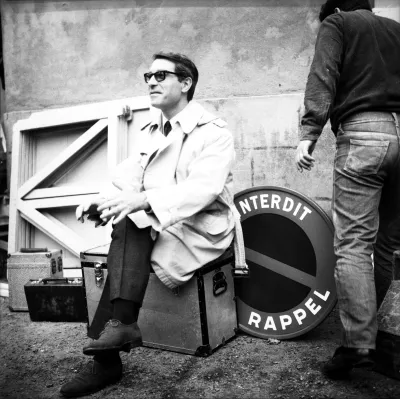
Jean Poiret
Human Design Chart
Biography
Jean Poiret as a Reflector 6/2 in Human Design
Reflector 6/2 — Design at a Glance
Jean Poiret's Human Design indicated a tendency towards extreme adaptability without possessing a constant, internal structure. As a Reflector, he lacked defined centers, meaning he did not have stable personal energies guiding his actions continuously. Instead, he acted like a mirror of his surroundings: he absorbed the energy of other people and nature, including seasons and astronomical constellations, particularly intensely and reflected it.
This configuration required a specific lifestyle. His ideal strategy was to wait at least a month, a full moon cycle, before making important decisions. Through this pause, he could clearly perceive the changing influences and move in environments that truly suited him. Living according to this rhythm showed a stance of free observation, detached from strong attachment. As a reward, he experienced a feeling of joyful surprise.
If his actions deviated from this design, however, deep, lasting disappointment would arise. This affected both his self-image and his perception of the world state. His chart thus did not describe a fixed character core but a dynamic receptivity that only through respect for natural cycles and patient waiting led to clarity and satisfaction.
No Inner Authority
Jean Poiret did not have internal, physical authority. This configuration is extremely rare and characterizes either mental projectors or reflectors. His design indicated that he did not make decisions through a fixed internal instance but through a complex process of information intake and processing.
As a mental projector, he lacked defined centers below the throat. His decision-making occurred through exchanges with many different people. In these dialogues, energetic interactions activated dormant potentials in his open centers. This allowed him to view issues from numerous perspectives and express them differently. His high resonance helped him find the right environment and conversation partners.
Evaluating these diverse impulses required time and withdrawal. Alone, he could discern the thread, filter the essential from a mass of information, and structure it meaningfully. This ability to develop specific intelligence and create order formed his capital of success. A key for him was being in an environment where he felt comfortable. There, in a trusting exchange with the right people, his sense of what was right for him deepened.
The 6/2 Profile — Role Model / Hermit
Jean Poiret's design was characterized by a clear division of his life path. In his youth, before the age of 30, he primarily acted as an experimenter. His actions followed the principle of trial and error; he gathered diverse personal experiences, but withdrew upon failure to learn. This phase was marked by the necessity of repeatedly breaking rules to receive punishment, which demanded the development of self-control and patience. He did not seek ready-made answers but wanted to shape his life independently.
Around 30 years of age, his orientation fundamentally changed. Jean Poiret metaphorically withdrew to look back on his earlier experiments with great clarity. This period of intense reflection served healing and deep self-knowledge. From this phase, he emerged as a wise person whose insights attracted others. His configuration as a role model and natural talent enabled him to contribute in often unusual ways. Although his individual service for group goals was not always recognized and could lead to crises, his selflessness in service to the collective preserved the integrity of his individuality. He became a source from which others could learn the ability for deep introspection and wisdom.
No Definition — Defined & Open Centers
Jean Poiret's design was characterized by the absence of any defined centers – a so-called "Open Body" design. This laid the foundation for a fundamental openness to external influences without a fixed, unchanging internal structure. His open Head Center made him vulnerable to mental pressure and the temptation to answer questions that were not his own, while his open Ajna Center granted him intellectual flexibility but also made him prone to appearing unsure or pretending to understand concepts to be accepted.
His open G Center meant that Jean Poiret did not have a fixed identity or life direction but rather adopted these through interaction with his environment. He relied on others to initiate him to find the right place and direction. His open Heart Center freed him from the need to prove willpower or keep promises, which made him vulnerable to the pressure of having to prove his worth through performance.
His open Sacral Center led to him not having a constant energy source but rather amplifying the energy of others, which could lead to exhaustion if he did not listen to his inner authority. His open Solar Plexus absorbed emotions from the environment, making him a sensitive barometer for the emotional climate but also prone to personalizing others' feelings. His open Spleen Center made him vulnerable to fears and the temptation to cling to uncertain situations, while his open Root Center caused him to absorb external stress and often feel under pressure, even though it did not originate from him. This configuration required deep trust in his own strategy to avoid falling into the conditioning traps of his environment.
Channels & Gates
Jean Poiret's design was characterized by an intense engagement with power, principles, and the formulation of new structures. His inner cross connected four specific energies that shaped his essence.
Gate 49, the Gate of Revolution and Sacrifice, determined his emotional wave. It required obedience to deep principles, especially in the family and tribal context. This energy regulated the ability to distinguish between food and territory and ensured that resources were redistributed to strengthen the collective. A defined Solar Plexus enabled him to achieve the necessary clarity.
At the same time, Gate 8, the Gate of Contribution and Leadership, drove him to individually advocate for group goals and make a unique contribution. The expression of his identity was central here; through reinforcement, he could act as a creative role model and experience attention and support by bringing his uniqueness to life.
Gate 14 steered the adept handling of power and wealth. As one of the gates of the individual process with a pulsating nature, it propelled the Sphinx Cross and provided direction. This energy guides a directional finding that, however, requires the influence of Gate 2. It involved the accumulation and preservation of power with grace and self-control, a skill that needed to be learned.
Finally, Gate 4, the Gate of Formulation, formulated logical processes for future security. It answered doubts and developed formulas to clarify suspicious patterns. This enabled Jean Poiret to succeed despite ignorance and remain free from retaliation by correctly understanding and applying protective formulas. This combination created a person who navigated between emotional dedication, individual leadership, powerful control, and logical security.
Circuit Signature
Jean Poiret's design was characterized by the absence of any defined centers. This meant that he did not have any firmly established energetic patterns that automatically guided his behavior or perception. Instead, he was a pure mirror being, whose inner state was completely shaped by the environment and the people around him. Without his own defined energy centers, he could not maintain his own stable opinions or identities but always reflected the energies of others. This configuration led him to often experience himself as empty or undefined, as he lacked the internal structure that gives others a stable foundation. His task was to consciously use this reflection to show others their own energies and patterns. Since there were no defined centers, there were also no separate groups or isolated energy fields in his design. Every contact with other people triggered a reaction that did not come from him but from the other person. This made him an extremely sensitive receiver, but he had no own source to rely on. His life was marked by constant adaptation and the lack of inner stability. Without defined circuits or streams, he remained free from specific energetic drives, which made him a pure channel for the energies of his environment. This total openness was both his greatest strength and his greatest challenge, as he could only recognize himself through the reflection of others.
Left Angle Cross of Revolution 2
Jean Poiret's Design bore the signature of the Left Authority of Revolution 2. This marked him as someone deeply rooted in material reality yet possessing a strong urge to break through it with radical, often shocking impulses. His focus was on questioning established structures and forging new, often provocative paths that challenged the status quo.
In Human Design, this cross describes an energy aimed at change and renewal. It connects the practical, earth-bound nature with a revolutionary force that does not just think theoretically but strives for concrete, tangible changes in physical life. Jean Poiret embodied this dynamic by engaging with themes unconventional for his time and expanding the boundaries of acceptability. His way of seeing the world was marked by a need to bring hidden things to light and present them in a way that compelled others to think and act. This configuration fostered an attitude that questioned traditional norms and instead sought authentic, individual forms of expression. Jean Poiret used this energy to create waves in his environment and open up new perspectives that often met resistance but ultimately contributed to a deeper transformation. His path was characterized by a constant struggle between the necessity of stability and the drive for revolutionary change.
Saturn Return · Uranus Opposition · Chiron Return · 2nd Saturn Return — Life Cycles
Jean Poiret's design was characterized by a dynamic, often impulsive presence that compelled him to put his visions directly into the world without hesitation. This energy demanded action and created a strong influence on his surroundings, which also brought conflicts when others were not prepared for his initiatives.
This configuration became particularly evident in 1973, when Jean Poiret was 47 years old. During this period, he staged "A Cage Full of Fools." This event fell during his Chiron Return, a cycle understood in Human Design as a time of bloom and fulfillment. In this phase of life, one's incarnation cross unfolds increasingly if the person has followed their strategy and authority. The purpose and meaning of the design become experiential, not as a healing of old wounds, but as a confirmation of one's path. Jean Poiret's directorial work in this year was an expression of this inner alignment: the ability to pursue a clear vision and present it with emphasis found its concrete form here. It was a moment when his natural inclination to set things in motion was connected with a deeper sense of purpose. His design suggested that he was especially effective in such phases when he channeled and targeted his energy to translate his creative impulses into tangible results.
Reflector · No Inner Authority — Synthesis
Jean Poiret lived as a Reflector a life deeply influenced by the energies of his environment. Without defined centers, he perceived the world as a mirror, an open vessel for the influences of nature and the people around him. This ability to reflect the energy of others was linked to a natural wisdom that only unfolded after intense experiences and a period of withdrawal. He did not seek constant, enduring personal energies but found orientation in harmony with cycles and in interaction with his environment – a strategy that brought him a sense of joyful surprise when he encountered people and environments that suited him.
A central paradox in his design lay in the tension between the openness of his design and the need for principles (Gate 49). While he as an undefined type absorbed and reflected the energy of others, he was simultaneously challenged to adhere to principles, especially in the context of community and family. This dynamic led to an inner search for clarity and discernment to filter the flood of information and make an individual contribution (Gate 8). The ability to recognize upheavals and defend principles shaped his path, marked by experiments and a later phase of reflection and wisdom.
Incarnation Cross - Left Angle Cross of Revolution 2
Solar Return
The Solar Return shows the moment when the sun returns to its exact birth position - your personal solar year.
Life Cycles
Discover the life cycles with a detailed triple view (birth chart, cycle chart, composite).
Human Design Profile
- Type
- Reflector
- Strategy
- Wait a lunar cycle (approx. 28 days)
- Authority
- No inner authority - learn more
- Profile
- 6/2 - Role Model / Hermit
- Definition
- No Definition
- Incarnation Cross
- Left Angle Cross of Revolution 2
- Date of Birth
- 17.08.1926 15:20
- Place of Birth
- Paris, France
Frequently Asked Questions
What was Jean Poiret's Human Design type?
What Profile did Jean Poiret have in his Human Design?
What Authority guided Jean Poiret's decisions?
Which incarnation cross characterized Jean Poiret?
When was Jean Poiret born?
Discover your own Human Design
Are you also a Reflector? Find out in a personal reading how to find the right environment and understand your unique mirror effect.
More Personalities
Back to overviewSissy Spacek

Anémone

Ann-Margret

Arletty

Arno

Artus