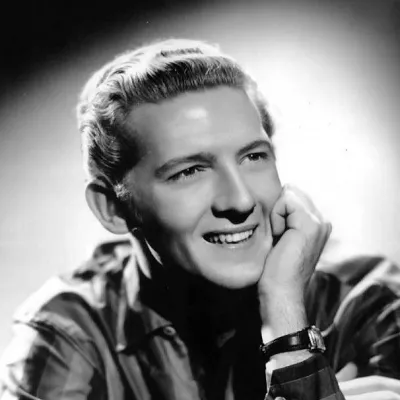
Jerry Lee Lewis
Human Design Chart
Biography
A dynamic vocalist and pianist of rock 'n roll since the '50s, he was self-taught on the piano. He projected arrogant self-confidence on stage and used his whole body in his performance. He started playing piano by ear at age eight and was a pro from the time he was 14. In the early '60s, he mainly did pop and rhythm and blues and changed to county western in 1968. Lewis played over 250 engagements a year until 1981 when he was hospitalized with stomach problems. After 1986 he did mostly club work.
Lewis was inducted into the Rock and Roll Hall of Fame in 1986 and his pioneering contribution to the genre was recognized by the Rockabilly Hall of Fame. He was also a member of the inaugural class inducted into the Memphis Music Hall of Fame. He was inducted into the Country Music Hall of Fame in 2022. In 1989, his life was chronicled in the movie Great Balls of Fire, starring Dennis Quaid.
Lewis married seven times, divorced four times and was widowed twice. He had six children. He went through a period of bad publicity when he married his 13-year-old cousin, Myra Gale Brown, his third wife, whom he divorced in 1970. He took his sixth wife, Kerrie, in 1984 and they had a son, Jerry Lee Lewis III, born in 1987. On 15 June 2005, their divorce was finalized in Hernando, Mississippi. Lewis married his seventh wife Judith Lewis (née Brown, Myra Gale Brown's brother's former wife) on 9 March 2012.
On 28 February 2019, Lewis had a minor stroke in Memphis. He fully recovered after several canceled appearances.
What does Generator 3/5 mean for Jerry Lee Lewis?
Generator 3/5 — Design at a Glance
Jerry Lee Lewis was a Generator. His design possessed immense, sacral energy that endowed him with extreme endurance. He seemed like a workhorse: strong and resilient as long as he had energy for his tasks. This power, however, was not unleashed through self-initiative but rather through reaction. The motto of his system was: do not initiate, but respond to signals from life.
His most successful strategy was to wait for impulses and then act when his inner self gave a clear “yes”. Living in harmony with this mechanism, his design rewarded him with deep satisfaction and a sense of fulfillment. No one could stop him when he reacted from his gut.
Two stumbling blocks, however, defined his dynamics. First: if he continuously did things that did not bring him joy, he wasted his energy. This led to burnout, despite his high potential. Second: if he was prevented from pursuing his heart’s project, even though he was still full of power, internal resistance arose. If he constantly initiated himself instead of reacting, he would eventually face persistent frustration and a lack of energy. His success thus depended strictly on whether he channeled this sacral energy through reaction or blocked it through false initiative.
Emotional Authority
Jerry Lee Lewis was governed by an emotional wave that shaped his entire experience through constant ups and downs of feelings. His inner authority resided in his defined Emotional Center. This meant that he always perceived the world through the lens of his current mood: in one moment totally excited about something, only to see the same thing completely negatively in the next. His immediate feeling was, however, just a snapshot, a first impression that did not necessarily represent his truth. Spontaneous decisions made directly from this emotional heat often had negative consequences.
The mechanics of his emotional authority required patience. The more time he took to let a decision mature, the deeper and more comprehensive he could understand the situation. This required consciously sleeping on decisions and allowing intense feelings to subside. Only when he gained emotional distance did clarity and calm set in. This process was especially crucial for long-term decisions that significantly influenced his life path. Jerry Lee Lewis thus had to take his time and ask himself multiple times before acting to ensure that he was not basing his actions on a fleeting emotional high.
The 3/5 Profile — Martyr / Heretic
Jerry Lee Lewis emerged as someone who learned through his own, often chaotic experimentation, later fascinating others with this practical wisdom. His 3/5 Profile, that of the experimenter and hero, set this dynamic: The Line 3 of the Adventurer compels one to test everything personally and learn from mistakes before believing. This accumulated experiential knowledge was then passed on to others through the Line 5, the Hero Line, which carries the reputation and public perception. The allure of this profile lay in others wanting to learn from his life experiences, which gave him the role of the cool storyteller and rebel.
This process, however, came with risks. Line 3 brings a fanatical zeal aimed at breaking old structures and correcting material issues. When Jerry Lee Lewis experimented in front of an audience and failed, it hit Line 5 particularly hard, as this line carries the reputation and public perception. Line 5 also demands precision and focus; in moments of inaction, he could clearly communicate his position, but failures threatened to misinterpret the explanation of his actions. His design thus created a cycle of personal experimentation, public failure or success, and the often painful but compelling transfer of these experiences to his surroundings.
Triple Split Definition — Defined & Open Centers
Jerry Lee Lewis was characterized by a powerful, independent mental structure and an unwavering willpower. His defined Ajna Center gave him a consistent, specific way of thinking that protected him from external mental influences and allowed him to develop concepts with inner certainty. This clear cognitive foundation flowed directly into his defined Throat Center, enabling him to express what he thought consistently and reliably. His communication was thus not just a reaction but an expression of a set inner truth.
Parallel to this, he had a defined Heart Center, which gave him a natural authority over his resources and ego. He lived from the need to determine his own life, keep promises, and be recognized for his accomplishments. This willpower worked together with his defined Sacral Energy, which provided him with immense vital energy. As a Generator, he reacted to life rather than initiating it, and found satisfaction in using his energy for things that elicited an affirming response from the gut.
His open Head Center, however, made him vulnerable to mental pressure and confusion if he did not trust his inner authority. He tended to engage with questions that were not his own or be distracted by the inspiration of others, which could lead to an internal monologue of uncertainty. Similarly, his open G Center meant that he did not have a fixed, unchanging identity or direction. Instead, he reflected the environment and sought the right place and people to feel at ease. Rather than forcing a rigid identity, he learned to be initiated by the environment, allowing him to rediscover himself in various roles and contexts without defining himself too narrowly.
Channels for focus, logic, values, care and community.
Jerry Lee Lewis showed himself to be someone who exercised an intense, almost monolithic concentration on his affairs. This attitude stemmed from the Channel of Concentration 52-9, connecting the Root and Sacral Centers. He had a passive urge to stay quiet and keep distractions at bay, to evaluate details and facts with undivided attention. This format energy shaped his entire design: He searched for patterns to correct and perfect them, and often felt restless when nothing was worthy of his focused energy.
His way of processing information was determined by the Channel of Accepting 17-62. His mind permanently organized details into a mental system, translating visual patterns from the Ajna Center into words in the Throat Center. He spoke to precisely explain his opinions and what he understood or did not. This was a continuous internal process of logically integrating new data into his worldview.
At the same time, he exercised sharp judgment, driven by the Channel of Judgment 58-18. This channel connected the lively energy of the Root with the correcting function of the Spleen. He had an insatiable urge to question and improve patterns, driven by an impulse to "be better and more." His criticism served to make life in the collective more cheerful by correcting what was out of balance.
In interpersonal relations, he sought connection through the Channel of Community 37-40. He waited for the right invitation to become part of an organization and understood the necessity of good agreements. His emotional clarity and willpower secured these bonds, building bridges between individuals to find an honorable place in the group.
Additionally, the Channel of Preservation 27-50, linking care with traditional values, came into play. He attracted the trust of others to support and nourish them, whether through raising the next generation or defending common laws. His ability to take responsibility was based on the insight that he first had to care for himself correctly to effectively serve others.
Collective Circuitry — Circuit Signature
Jerry Lee Lewis was marked by three separate, parallel energetic streams that did not flow into one another. The Understanding Circuit connected his Ajna Center with his Throat Center, as well as his Sacral, Root, and Spleen Centers. This fostered a capacity to clearly articulate logical strategies and rational insights, free from emotional coloring, coupled with an instinctive, focused alignment on what is essential. Parallel to this, the Ego Circuit, which linked his Heart and Solar Plexus Centers, was at play. Here, the focus was on the relationship between giving and taking, as well as mutual support within a community, where emotional waves shaped interactions, yet were not sustained by the constant life force of the Sacral Center. The third stream, the Hunter Circuit, connected the Sacral and Spleen Centers. This conveyed primal energies of protection, preservation, and care for one’s genetics and family. Since Jerry Lee Lewis had a Triple Definition, these areas—rational clarity and focus, interpersonal support, and instinctive protection—existed as independent forces alongside each other, without directly mixing or forming a single cohesive flow.
Right Angle Cross of Service 3
Jerry Lee Lewis was marked by the right cross of Service 3, a configuration that describes a profound, often unconscious dedication to the well-being of others or to a higher cause. This design element fosters a tendency toward selfless support, where personal identity often recedes behind the act of service. The energy of this cross configuration does not manifest as an external mandate but as an inner compass guiding actions toward care and support. It promotes a sense of connection through active service, without necessarily seeking recognition. The mechanics of this cross interweave various energy fields into a coherent pattern of helping that characterized Jerry Lee Lewis's interactions. Here, personal fame was not the forefront, but the effectiveness of support for the environment. This orientation created a lifestyle where giving was prioritized, often at the expense of personal needs, as the design exerted a strong attraction to situations where help was needed. Thus, the right cross of Service 3 shaped a personality defined by its readiness to support, where the source of this motivation was deeply rooted in the energetic structure of the design.
Saturn Return · Uranus Opposition · Chiron Return · 2nd Saturn Return — Life Cycles
Jerry Lee Lewis exhibited a fundamental stance where external recognition and internal validation condensed into specific life phases. His design pointed to cycles where long-term developments matured into visible results.
In 1972, at the age of 37, “Chantilly Lace” reached number one on the charts. For his design, this was a typical moment of the Uranus opposition, often leading to unexpected impulses resulting in sudden, public success. The mechanics here describe how tense energy transformed into a concrete triumph.
In 1984, at 49 years old, Jerry Lee Lewis married Kerrie. This fell during the Chiron Return, a fulfillment cycle. During this phase, the individual's incarnation cross unfolds increasingly if the person follows their strategy and authority. Meaning and purpose become tangible, not as healing of old wounds but as the flowering of one's essence. The relationship marked a point where his life's mission deepened.
In 1989, at the age of 54, his life was filmed under the title “Great Balls of Fire!”. This corresponded to the second Saturn return. At this point, years of groundwork condensed into a solid, public result. The film was no coincidence but the logical consequence of a life path now making its structure and influence visible. These events show how Jerry Lee Lewis’s design connected external milestones with internal development cycles.
Generator · Emotional Authority — Synthesis
He was a Generator, whose life was marked by a strong drive to work and be active (Sacral Energy). This potential was channeled through emotional authority, requiring careful maturation of decisions to avoid impulsive actions. The profile as an experimenter and hero (3/5) suggests that he learned through personal experiences and was eager to share this knowledge with others – a dynamic interaction between personal exploration and the desire to help others. The defined mental center created a consistent mindset, reinforced by the channel of concentration (9/52), focusing on details and the ability to concentrate on the essentials.
A central paradox lay in the combination of sacral energy and emotional wave. He possessed the endurance to materialize things but needed time to process underlying emotions before acting effectively. This led to a tension between the need for immediate activity and the necessity to let decisions mature. The cycles showed successes enabled by experimentation and learning (experimenter), but also personal turning points requiring adaptation.
5 Defined Channels
Incarnation Cross - Right Angle Cross of Service 3
Solar Return
The Solar Return shows the moment when the sun returns to its exact birth position - your personal solar year.
Life Cycles
Discover the life cycles with a detailed triple view (birth chart, cycle chart, composite).
Human Design Profile
- Type
- Generator
- Strategy
- To respond - wait for something to respond to
- Authority
- Emotional Authority
- Profile
- 3/5 - Martyr / Heretic
- Definition
- Triple Split
- Incarnation Cross
- Right Angle Cross of Service 3
- Date of Birth
- 29.09.1935 15:00
- Place of Birth
- Ferriday, LA, United States
Frequently Asked Questions
What was Jerry Lee Lewis's Human Design type?
What profile did Jerry Lee Lewis have?
What authority did Jerry Lee Lewis have?
What incarnation cross did Jerry Lee Lewis have?
When was Jerry Lee Lewis born?
Discover your own Human Design
Are you also a Generator? Find out in a personal reading how to use your sacral energy correctly and discover deep satisfaction.
More Personalities
Back to overviewAaliyah

Alexia

Alizée

Angèle

Anne-Marie

Arcángel