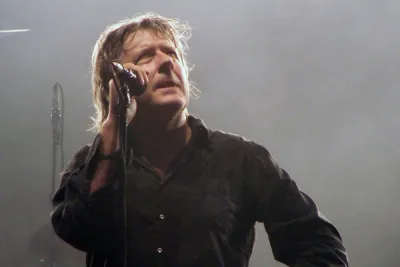
Kurt Beck
Human Design Chart
Biography
On 28 September 2012 he announced his resignation from the post of minister-president. He was succeeded by social minister Malu Dreyer.
Following Peter Struck's death in 2012, Kurt Beck together with Dieter Schulte took chair of the Friedrich Ebert Foundation.
The Human Design of Kurt Beck: Generator 4/6
Generator 4/6 — Design at a Glance
Kurt Beck revealed himself as someone who channeled his immense stamina not through constant initiating but through consistent responding to inner impulses. His design indicated a tendency towards great physical and mental resilience – comparable to that of a workhorse – which only had lasting effects when he was guided by his 'heart project'.
As a Generator, Kurt Beck possessed abundant sacral energy, which primarily became free when he responded to signals from his environment rather than taking the first step himself. The strategy involved waiting and then acting once an internal signal gave a clear 'yes'. If he acted against this impulse or initiated things without such confirmation, he risked frustration and energy loss.
This pattern shaped his work style: As long as he tackled tasks based on intrinsic joy, hardly anyone could stop him. However, if he was prevented from working on what truly mattered to him or forced himself into activities without inner consent, the risk of burnout quickly emerged. The deep satisfaction and fulfillment promised by his design did not stem solely from mere activity but rather from where he exclusively applied his energy, sensing true resonance. This balance between responding and endurance was key to his effectiveness.
Sacral Authority
Kurt Beck demonstrated a decision-making approach that didn't rely on intellectual analysis but on direct physical resonance. His Generator design established that his inner authority and strategy were identical: waiting for the impulse. This fundamentally simplified his decision-making process, as he did not need external validations but could trust in his own system.
His sacral authority manifested through a 'gut feeling' or sudden surge of energy in response to external stimuli. Crucial was his ability to perceive subtle physical signals – such as grunting, humming, or a clear 'mmh'. These sounds marked the moment when his sacral motor kicked in. Feeling this resonance led to a state of vital liveliness; energy became available and work could be completed with great enthusiasm. His design promoted a lifestyle that did not adhere rigidly to purpose but was characterized by immersion in activities. A prerequisite for this clear signal was an open emotional center, meaning he wasn't driven by emotional waves but responded to stable physical impulses. Thus, he could correctly apply his life energy by distinguishing when true resonance occurred and when it was merely a reaction.
The 4/6 Profile — Opportunist / Role Model
Kurt Beck's design indicated a tendency towards a bifurcated life dynamic. In the first three decades, he acted experimentally, driven by Line 4 of Profile 4/6 (Networker/Roles Model). This phase was marked by absorbing foreign energies and emotional entanglements in relationships. Line 4 functioned as an exhaustion zone: Kurt Beck attracted people who told him stories, leading to high emotional strain. There was a risk of burnout because he struggled to fend off these influxing energies or halt the process.
With Saturn's return, the focus shifted to Line 6. Here, an internal conflict between Heart (Line 4) with its need for belonging and Head (Line 6), seeking distance, objectivity, and higher purpose became apparent. Kurt Beck had to learn to objectively evaluate creative impulses and distinguish true creativity from mere trends. Wisdom in this design means that mutations require time to prove their worth. He was expected to act as a role model while his heart always needed to remain cautious about opening up to the wrong people and getting hurt. Line 6 demanded the ability to allow time for the maturation of this wisdom and process subjective disappointments when assessments were not confirmed.
Single Definition — Defined & Open Centers
Kurt Beck was driven by a constant, vital energy source. His defined Sacral Center generated a daily supply of life force that manifested as a real buzz or restlessness. This energy was only reliably available to him when he responded to life – waiting for questions to be brought to him before answering with a clear yes or no tone. Initiating steps without prior inquiry severed this connection to the power and often led to frustration. Complementarily, his defined Spleen Center provided intuitive, momentary survival judgments in the here and now, while his also defined Root Center generated constant pressure for forward movement and material prosperity.
In stark contrast, Head, Ajna, Throat, G, Heart, and Solar Plexus were open. These centers did not have their own consistent energy in these areas. Kurt Beck was thus situational dependent on his environment for mental clarity, identity, willpower, and emotional stability. His open Head and Ajna Centers absorbed inspirations and concepts from the environment but could easily fall into doubt and confusion when trying to find answers that didn't come from his inner authority. The open G Center meant that his identity and direction crystallized only in the right context; at the wrong place, he felt lost or adapted.
The open Heart Center made him vulnerable to the pressure of proving his worth through promises, which often failed without the necessary consistent energy. Instead, it was important to let go of this urge and not compete. His open Solar Plexus absorbed and amplified others' emotions, sometimes making him feel emotionally out of control or unstable, though these feelings were often just reflected waves from the environment. The mechanics of his design therefore required letting go of mental, emotional, and identity questions and trusting in the Sacral Center as the only reliable compass for energy and satisfaction.
Channels for evolutionary change, care and traditional values.
Kurt Beck was an individual catalyst for evolutionary change who released his energy not through constant action but by accepting limitation and waiting for the right pulse. This attitude is rooted in Channel 60-3, which connects Root Center with Sacral Center. Through Gate 60 (Limitation) and Gate 3 (Order), a pulsing on/off energy emerges that produces melancholy as a sign of stillness. The change happens suddenly, like music, in the gaps between pulses; arguing against these moods is counterproductive. Patience with inner fluctuations allows new mutations to take hold while the pressure from Root Center creates internal tension until the sacral reaction occurs.
Parallel to this, Kurt Beck functioned as a natural provider whose aura automatically attracted trust and took responsibility for community or infrastructure – but only after sacral confirmation. This describes Channel 27-50, which links Sacral Center with Spleen Center through Gate 27 (Care) and Gate 50 (Values). While Gate 27 represents selfless interest in nurturing others, Gate 50 defines traditional values and laws that maintain order. This configuration requires 'enlightened selfishness': Taking proper care of oneself first is the prerequisite for effectively helping others. Only those who are healthy and strong can nourish and guide others. People with this channel tend to charge up a lot but must learn that provision is only legitimized through requests from others and their own inner confirmation.
Additionally, Gates like 13 (Continuity/Memory), 1 (Uniqueness), and 7 (Leadership/Hierarchy) worked to promote meaning-making and cooperation. Gate 28 emphasized listening in the now for risk decisions, while Gate 54 connected worldly success as a basis for spiritual development. These elements underscored the necessity of respecting inner processes before taking on external responsibility.
Individual Circuitry — Circuit Signature
Kurt Beck exhibited a fundamental disposition that manifested in two separate, parallel power fields: the driving energy of change and the deep instincts of protection. Given his design has a Simple Definition, these areas do not blend into one another but exist as independent pillars of his nature.
In the Knowledge Circuit, he showed Mutation (Channel 3-60). This connection between Sacral and Root Center pushed him to go on his unique path and bring deviations from the existing into the world. It was not just about knowledge but forming new identity through this mutative force and initiating transformation. The energy was pulsing and urged expressing the new, independent of external expectations.
Parallel to this, the Protector Circuit worked through Channel 27-50 (Conservation). This linked his Sacral Center directly with Spleen Center. Here lay the primal power of preserving and nurturing. It was about protecting family, maintaining genetics, and care. This energy was timeless and instinctive, focused on survival and tending to what is sacred.
While one part of his design urged creating new through mutation, the other ensured preserving old and nourishing it. Kurt Beck thus carried both the power of a pioneer and that of a protector – two different but equally important tasks he lived out from his respective defined centers without them merging energetically.
Right Angle Cross of the Sphinx 1
Kurt Becks Human-Design reveals a tendency towards a mysterious, constant presence. He did not make his mark through loud self-promotion but rather through the silent weight of his presence. This archetypal energy of the Sphinx is characterized by strength in silence and the protection of knowledge. It grants a gravitational, mysterious aura that attracts others without immediately revealing everything.
In Human-Design terminology, this configuration is known as the right cross of the Sphinx 1. It does not describe an active search for answers but rather the stance of one who already carries deep wisdom within them and doesn't readily give it away. The impulse lies in making the invisible visible – yet on their own terms and at their own pace. Kurt Beck showed himself to be someone who protected his essence through restraint. This was not about distancing, but preserving an inner depth. The mechanics of this cross emphasize that true authority often comes from the shadows. Those carrying this energy do not need to explain everything to achieve impact. Silence becomes a tool of power and protection. Kurt Beck used this structure to exert a stabilizing force. His presence was an anchor that commanded respect through its impenetrability. This is not about negative secrecy but the dignity of the unshared. This stance allows one to maintain a calm center in turbulent times. Kurt Beck embodied this sphinx-like stability through his consistent behavior and considered manner.
Saturn Return · Uranus Opposition · Chiron Return · 2nd Saturn Return — Life Cycles
Kurt Becks Human-Design points towards structural anchoring and taking responsibility within established systems. This orientation was evident during his Chiron return period, a cycle often marking the flowering of one's life purpose and sense of direction. In 2000, at age 51, Beck became President of the Bundesrat – a moment reflecting this inner maturity and institutional positioning.
Later came another phase of consolidation: the second Saturn return. This cycle marks a turning point where years of work often lead to new, sustainable positions or require redefining existing roles. For Kurt Beck, this was in 2006 at age 57 when he took over as acting party chairman and was nominated for the regular position. This event underscores the mechanical dynamics of his configuration: the ability to stabilize during phases of transition or uncertainty and take on leadership roles within established structures. His career development followed a pattern where external offices and internal maturation processes were closely intertwined, with Saturn phases particularly marked by assuming mandates aimed at ensuring stability and continuity.
Generator · Sacral Authority — Synthesis
The central red thread in this design is a dynamic interaction between the deep need for authentic expression and the ability to respond to the energy of the moment. The sacral authority coupled with a Generator type emphasizes the importance of reaction over initiation – a life guided by the body's
2 Defined Channels
Incarnation Cross - Right Angle Cross of the Sphinx 1
Solar Return
The Solar Return shows the moment when the sun returns to its exact birth position - your personal solar year.
Life Cycles
Discover the life cycles with a detailed triple view (birth chart, cycle chart, composite).
Human Design Profile
- Type
- Generator
- Strategy
- To respond - wait for something to respond to
- Authority
- Sacral Authority
- Profile
- 4/6 - Opportunist / Role Model
- Definition
- Single Definition
- Incarnation Cross
- Right Angle Cross of the Sphinx 1
- Date of Birth
- 05.02.1949 21:00
- Place of Birth
- Bad Bergzabern, Germany
Frequently Asked Questions
What is Kurt Beck's Human Design type?
What Profiles does Kurt Beck have in Human Design?
Which Authority guides Kurt Beck's decisions?
Which incarnation cross is active for Kurt Beck?
When was Kurt Beck born?
Discover your own Human Design
Are you also a Generator? Find out in a personal reading how to use your sacral energy correctly and discover deep satisfaction.
More Personalities
Back to overviewAaliyah

Alexia

Angèle

Anne-Marie

Arcángel

Arno