
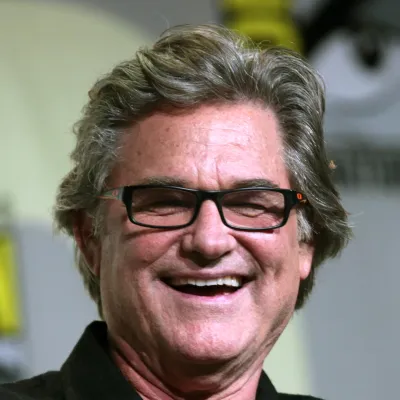
Kurt Russell
Human Design Chart
Biography
He and Goldie Hawn have been a committed couple since 1983, living off and on with her two kids, his son from his past marriage, Boston, and their own son Wyatt, born 10 July 1986. His previous marriage was to Season Hubley; they were married from 1979 to 1983.
What does Manifesting Generator 4/6 mean for Kurt Russell?
Manifesting Generator 4/6 — Design at a Glance
Kurt Russell revealed himself as someone who quickly drew things into his life. His Design as a Manifesting Generator grants him this ability: He is a hybrid of Generator and Manifestor. With his defined Sacral Center, he had constant energy but the strategy required responding to impulses rather than initiating them. At the same time, his Manifestor qualities allowed skipping steps. This speed brought two challenges: Sometimes he was too fast and needed to make up for missing steps, which could cause frustration – the Not Self theme of this type. Additionally, he tended to do several things at once by responding to various impulses. If strategy and inner authority did not align, his creative drive quickly turned into frustration. For deep satisfaction, it was crucial that the Sacral Center gave a clear “yes” at each step. Only then could he work on different projects simultaneously without getting blocked. The advice to finish one thing before starting another did not suit him. Instead, he found strength in play mode and variety as long as he listened to his inner feedback.
Emotional Authority
Kurt Russell's Design laid out a tendency towards emotional wave movement: He showed himself as someone who always perceived the world through the filter of his current mood. In one moment full of enthusiasm for an endeavor, in the next disappointed or negatively affected by the same thing. These fluctuations were not whims but expressions of his inner authority – Emotional Authority.
With his defined Solar Plexus Center, he was subject to a permanent emotional wave. His feeling at the moment was only a snapshot, a first impression, not yet necessarily his truth. Quick, spontaneous decisions based on this immediate emotion could have negative repercussions as they were based on fleeting impulses.
The mechanics of his Design required patience. The more time he took to let a decision mature, the deeper and more comprehensive he could perceive the situation. This demanded conscious hesitation, multiple nights to think over important questions. Over time, intense feelings subsided, emotional distance grew, and only then did clarity and calmness set in. This process was essential for long-term decisions with significant influence on his life course. Through this waiting period, he went through a necessary maturation process before acting.
The 4/6 Profile — Opportunist / Role Model
Kurt Russell revealed himself as someone who had a strong inclination towards experimentation in youth, particularly in the realm of interpersonal relationships. This early behavior matched Profile 4/6: In the first three decades, Line Six still acts like a third line, leading to an intense, almost playful search for experiences. He used a specific ability to build networks through kindness and gather confidential information – a trait of the fourth line from Gate 36. This line allowed him to fit into circles and recognize hidden connections, often with a certain fixation on what was happening behind the scenes.
With increasing age, however, his focus shifted fundamentally. Line Six from Gate 11 became active and brought new awareness for cycles and impermanence. Kurt Russell now faced the classic challenge of this profile: The inner conflict between the need to belong to the community (Line Four) and the desire for detached wisdom as well as observing the big picture from above (Line Six). While he learned through direct experience earlier, later developed the ability to observe the collective flow from a distance. He became an example figure that not only participated but also reflected – a person who had learned to navigate between the narrow heart and the wide head without losing their adaptability to changing life phases.
Split Definition — Defined & Open Centers
Kurt Russell's Human Design profile suggests a tendency towards a consistent and clear expression that flows directly from his inner energy source. His defined Throat Center served as a focal point for communication and action; it not only conveyed thoughts of the mind but also transmuted information from throughout the body into a reliable voice. This stability in expression was fueled by his defined Sacral Center, which acted as an engine providing a vast reservoir of vital energy. For him, it was essential to respond to questions or offers rather than initiate actions himself to properly harness this power.
Simultaneously, his defined Solar Plexus shaped the emotional depth of his decisions. As an inner authority, this center required patience: He had to wait out waves of feelings and moods until emotional clarity emerged before acting. This process protected him from impulsive reactions in emotional highs or lows. His defined Root Center also provided a steady internal pressure that propelled him forward in the material world and helped him cope with existential stress.
In contrast, his attraction to external identities was evident through his open G Center. Without a fixed personal identity, he tended to blend into his environment or be initiated by others, allowing him to adopt various roles and directions – a characteristic often seen in actors. His open Head and Ajna Centers also meant that mental inspiration was not constant; he could easily get caught up in the thoughts of others or try to find answers that were not his concern. This required conscious distance from mental noise to maintain his own authority.
Channels for maturation, emotional openness and expression.
Kurt Russell exhibited a fundamental disposition heavily influenced by emotional waves: His social engagement and creative expression strength were not constant traits but fluctuated with ebbs and flows. This resulted from the Openness Channel 22-12, connecting the Solar Plexus Center with the Throat Center. Gate 22 brought passion and romance while Gate 12 added necessary caution and restraint. This combination created a kind of filter: Kurt Russell interacted socially only when he felt compelled to do so. In these moments, his voice and timing could deeply touch others and even transform them; forced action led instead to misunderstandings or harshness. His authority lay in the Solar Plexus, making patience and waiting for the right mood crucial for his success.
Parallel to this, he went through a process of learning by experience driven by the Maturity Channel 42-53 between Root and Sacral Centers. This channel emphasized the necessity of completing cycles – from beginning through middle to end – to gain wisdom from them. Each new experience built upon the previous one; premature termination would have required repetition. Kurt Russell thus learned best by immersing himself in experiences without rigid expectations and reflecting on them later.
Additionally, other gates shaped his profile: Gate 11 promoted visual memories and collective ideas for situational assessment; Gate 36 introduced cyclical crises as a developmental driver; Gate 6 regulated emotional waves within the context of fertility. In his design, Gates 54 (linking worldly success with spirituality), 58 (experimental joy and stress relief), and 41 (evolutionary change through feeling) also played roles. Gate 55 contributed to emotional awareness while Gate 52 allowed pauses for concentration and pattern correction.
Collective Circuitry — Circuit Signature
Kurt Russell's design points towards an inclination toward emotional authenticity, paired with a deep, rhythmic endurance. These separate energetic poles shaped his experiential world as two parallel, not directly connected streams.
In the Knowledge Circuit, Channel 12-22 (Openness) linked the Throat Center to the Solar Plexus. This created a direct line for expressing feelings and intuition. Kurt Russell was someone who immediately translated inner emotional waves into words or actions – impulsively but truthfully. The energy here is pulsing and acoustic; it serves to make one's individuality visible through spontaneous openness without prior logical filtering.
Parallelly, the Meaning Circuit featured Channel 42-53 (Maturity). It connected the Sacral Center with the Root Center. This generated a cyclical, enduring power for tackling challenges and maturing through experience. The energy here is visual and collapsing in its dynamics: It drives one to overcome obstacles by learning from the past and sharing these lessons with the collective.
Crucial is the separation of these systems: The emotional spontaneity of the Throat did not flow directly into the enduring power of the Root. Kurt Russell had to integrate these two separate forces – the impulsive expression and maturing endurance – in life rather than experiencing them as a single automatic stream.
Right Angle Cross of Eden 1
Kurt Russell's Human Design suggests a tendency towards a profound, almost fateful connection with life. The right cross of Eden 1 does not describe an easy path but rather an intense engagement with the most fundamental questions of existence and meaning. This configuration brings the individual into direct dialogue with the essence of being, often accompanied by a strong sense of responsibility or the urge to experience and embody something essential.
This structure does not automatically mean happiness in everyday terms, but rather a density of the experiential world. Kurt Russell was someone whose inner landscape was marked by this energetic imprint: a constant back-and-forth between earthly daily life and a higher, almost spiritual dimension of existence. The right cross of Eden 1 acts like an internal compass that urges not just to survive but to understand life in its full, often painful truth. It is an energy that demands depth and often brings with it a certain isolation or uniqueness in experience, as this perspective is rarely shared. The challenge lies in using this intense inner world not as a burden but as a source of unique quality of life.
Saturn Return · Uranus Opposition · Chiron Return · 2nd Saturn Return — Life Cycles
Kurt Russell showed a tendency to solidify personal bonds during his late twenties. In 1979, at the age of 28, he married actress Season Hubley. For his design, this marks the first Saturn return, a cycle where years of inner preparation often condense into a tangible external result. In Human Design, this phase represents the anchoring of structures and commitments that form the foundation for future life stages. The marriage was not an impulsive act but rather the visible expression of a mature decision based on prior development. This mechanism underscores how Saturn returns serve to translate inner clarity into concrete, long-term connections. Kurt Russell's step into marriage thus demonstrates the typical effect of this astronomical event: the transformation of potential energy into stable reality, where emotional and practical aspects of partnership are elevated to a new level. This consolidation served as a basis for his further development by allowing him to unfold with greater security in other areas of life. The focus was on creating stability and continuity, which is characteristic of Saturn's energy that promotes order and constancy.
Manifesting Generator · Emotional Authority — Synthesis
A central red thread in this design is the dynamic connection between inner perception and external expression. The defined Sacral Center (sacral energy) provides a constant reactive force, while the Manifestor aspects through the Throat Center (communication and manifestation) open up the ability for quick initiation. This combination results in an entity that waits on internal impulses but then can implement them with unusual speed – a continuous interplay between receiving and expressing, between the flow of life energy and the desire to direct it (Channel 22-12). The profile as networker/role model also points towards development where experimenting with connections and seeking meaning in exchange with others plays central roles.
The central paradox lies in the tension between emotional depth and the drive for quick action. Emotional authority requires time for maturation and clear decisions, while the Manifestor component (quickly pulling things into life) tends to overlap steps. This creates an internal field of tension between the need for thorough reflection (Heart against Head, Profile 4/6) and the ability to react quickly to opportunities – a dynamic that can lead both to creative productivity and potential setbacks.
2 Defined Channels
Incarnation Cross - Right Angle Cross of Eden 1
Solar Return
The Solar Return shows the moment when the sun returns to its exact birth position - your personal solar year.
Life Cycles
Discover the life cycles with a detailed triple view (birth chart, cycle chart, composite).
Human Design Profile
- Strategy
- To respond - wait for something to respond to
- Authority
- Emotional Authority
- Profile
- 4/6 - Opportunist / Role Model
- Definition
- Split Definition
- Incarnation Cross
- Right Angle Cross of Eden 1
- Date of Birth
- 17.03.1951 10:42
- Place of Birth
- Springfield, MA, United States
Frequently Asked Questions
What is Kurt Russell's Human Design type?
Which Profile does Kurt Russell exhibit in Human Design?
What authority does Kurt Russell have in his Human Design?
What is Kurt Russell's incarnation cross?
When was Kurt Russell born?
Discover your own Human Design
Are you also a Manifesting Generator? Find out in a personal reading how to unfold your multi-talents and direct your energy wisely.
More Personalities
Back to overviewSissy Spacek

Aldair

Alizée

Anémone

Angeli
Ann-Margret
