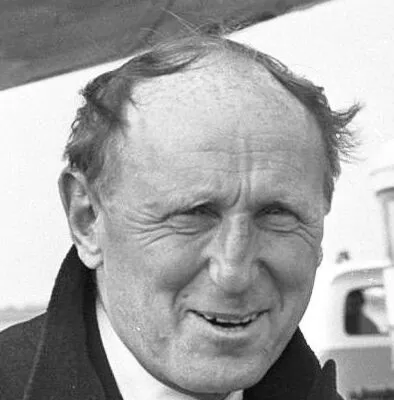
Photo: Wikimedia Commons
Louis Pasteur Vallery-Radot
Human Design Chart
Biography
He died on 9 October 1970 in Paris, aged 84.
What does Projector 4/6 mean for Louis Pasteur Vallery-Radot?
Projector 4/6 — Design at a Glance
Louis Pasteur Vallery-Radot appeared as someone who had an intense and focused gaze on his surroundings. His design as a projector tended to immediately recognize structural weaknesses or errors in other people's systems. This perception was akin to a bright flashlight that pointed directly into dark corners, bringing light into the darkness. However, this direct confrontation with problems in others could quickly be perceived as unpleasant if he articulated his observations uninvited.
The mechanics of his design described an aura that was precise but also penetrating. Instead of immediately correcting issues, Louis Pasteur Vallery-Radot was most effective by radiating harmony himself; others were drawn to this emanation and sought out his advice voluntarily. His strategy involved waiting for a sincere invitation from his environment before bringing in his leadership skills. Since he lacked an intrinsic energy source as a projector, he lived through phases of high activity followed by necessary rest periods to prevent burnout. Living according to this rhythm and the strategy of invitation rewarded him with success. Ignoring these limits or acting uninvited led sooner or later to feelings of bitterness as an expression of his non-self. His path consisted in shining patiently until others were ready to find their way to him.
No Inner Authority
Louis Pasteur Vallery-Radot's design lacked inner, physical authority – a rare configuration. As a mental projector, he did not have center activation below the throat center. His decision-making process did not occur through internal commands but rather through exchanges with others. Through energetic interactions in his open centers, dormant potentials were activated that provided him with information. This allowed him to view and express issues from many perspectives.
Evaluating these diverse impulses was a complex process requiring time and withdrawal. Only in the stillness could he discern the red thread, distinguish what made sense and belonged to him. Thus, he developed his specific intelligence: filtering out the essential from a mass of information, organizing it meaningfully, and structuring it. This filtering ability formed his capital for success as a projector. A key aspect for him was choosing an environment where he felt comfortable. There, he encountered people with whom he could trustfully exchange about decision-making processes. Over time, this deep exchange deepened his sense of what was right or wrong for him.
The 4/6 Profile — Opportunist / Role Model
In the first three decades of his life, Louis Pasteur Vallery-Radot showed himself as someone who learned through intensive experimentation with relationships and friendships. His Profile 4/6 acted here similarly to a Line 3: he sought connection to the network to find his identity. This shaped his early years, in which he relied on interactions to gain influence and gather knowledge – a typical characteristic of the fourth line that acts as
Single Definition — Defined & Open Centers
Louis Pasteur Vallery-Radot emerged as someone who was constantly under mental pressure to question and understand connections. His defined Head and Ajna centers created a trustworthy, specific form of conceptual thinking that lacked direct energy for implementation. This internal state often led to confusion or doubt until clarity arrived; attempting to realize these thoughts through sheer willpower would have resulted in frustration. Instead, he served as an inspiration source for others by formulating concepts that were picked up by people with defined execution power.
His defined Throat center allowed him to reliably and consistently communicate what his mind conceptualized. It acted as a pivot point to express these mental contents in the world. Yet, his identity and direction remained flexible: His open G Center meant he did not have a fixed, unchanging personality but rather blended with his environment and was initiated by it. He did not actively seek out a role but waited for the right place or people to show him who he was in that context.
This openness extended to his Heart Center: Louis Pasteur Vallery-Radot lacked consistent willpower and tended to prove his worth through promises or competition – a trap of non-self. Similarly, his Sacral Center was open; he had no constant energy flow for hard work and risked exhaustion if he took on the vital energy of others without setting limits. His open Solar Plexus absorbed emotional moods from the environment, making him vulnerable to foreign whims, while his open Spleen Center triggered intuitive fears that he could not use as his own authority. Finally, his open Root Center amplified external stress that he did not generate himself but merely passed on. His wisdom lay in not personalizing these open fields but using them as a mirror for the environment.
Channels for doubt, insight and mental abstraction.
Louis Pasteur Vallery-Radot's design inclined him towards analytical skepticism coupled with the drive to translate complex experiences into understandable narratives. His mind worked non-linearly, exploring patterns to test consistency. This was evident in the Channel of Logic 63-4, which represented his doubting mind. Here he constantly filtered information; only what proved itself as a consistent, verifiable pattern was deemed true by him. Unfounded belief found no place – an answer had to work to be logical. This healthy skepticism served the collective by enabling predictions based on current data rather than solving future questions.
Parallel to this, the Channel of Structuring 23-43 shaped his expression. He received spontaneous insights (Gate 43) and processed these through assimilation (Gate 23) to communicate them clearly. His thinking often felt ahead, yet he learned to let go of control and trust his mind. When he explained his innovative perspectives at the right time, it promoted efficiency and change in his environment; missing the timing led to rejection.
The Channel of Abstraction 64-47 drove him to filter every experience through a kaleidoscope of mental images. He sought stories that made sense, often accompanied by temporary confusion (Gate 64). Patience was essential: Only when the space between points condensed did an inspiring sequence or new perspective emerge that he could share. His mind was ill-suited for steering his own life but excelled at understanding the consequences of living and sharing these insights as 'aha' moments.
Additionally, Gates like Gate 17 (Succession, logical teaching) and Gate 49 (Transformation, principles) influenced his stance through a pursuit of order and reacting to emotional waves. He acted as a bridge between old structure and new mutation, with his authentic self (Gate 20) rooted in the here and now.
Collective Circuitry — Circuit Signature
Louis Pasteur Vallery-Radot's design inclined him towards structured, logical knowledge transmission. His defined centers – Head, Ajna, and Throat center – formed a cohesive flow as he offered a simple definition. This allowed him to directly translate thoughts into words.
The Understanding Circuit connected his Head with the Ajna Center via the Channel of Logic (Gates 63-4). This connection promoted focused, rational strategies and the ability to share insights free from conditioning. Parallel to this, the Meaning-Finding Circuit also operated between Head and Ajna Center through the Channel of Abstraction (Gates 64-47). Here it was less about cool future vision than emotional reflection on past experiences. Both circuits utilized the same energetic path from Head to Ajna, implying intensive processing of ideas: once through logical structuring for the future, once through abstract meaning-finding from the past.
Additionally, the Knowledge Circuit connected his Ajna with the Throat center via the Channel of Structuring (Gates 43-23). This allowed Louis Pasteur Vallery-Radot to express his unique identity aspects and new insights acoustically and pulsatingly. The energy flowed from the thought origin in the Head through processing in the Ajna directly into expression at the Throat center. This configuration marked him as someone who carried complex internal processes – whether logically or emotionally colored – clearly and structurally outward to initiate change.
Right Angle Cross of Explanation 2
Louis Pasteur Vallery-Radot's Human Design profile featured the right cross of the Declaration. This configuration shaped a lifestyle focused on clarity and uncovering connections. In Human-Design terms, this cross marks a specific path: to explain things in order to reduce misunderstandings or ambiguities in the world.
The mechanics behind this structure lie in connecting different information channels. It promoted a natural ability to present complex matters in ways that others could understand. This was not merely about accumulating knowledge but actively translating and conveying it. Louis Pasteur Vallery-Radot acted as someone who closed gaps in perception.
His focus lay on presenting things as they truly were, free from distortions or unnecessary complexity. His inclination towards explanation served to bring order into chaos and provide others with a clear foundation for their own understanding. It was an impulse aimed at shedding light on the unknown and thus laying the groundwork for informed decisions or insights. The energy of this design flowed through the desire to make truth accessible, thereby contributing to overall clarity.
Saturn Return · Uranus Opposition · Chiron Return · 2nd Saturn Return — Life Cycles
Louis Pasteur Vallery-Radot's Human Design profile indicated a tendency towards structural anchoring and increasing authority in later life stages. This configuration led to his professional influence intensifying with age and institutional recognition following suit.
In 1936, at the age of 50, he was elected as a member of the Académie Nationale de Médecine. This occurred during his Chiron Return period (approximately ages 49–51). In Human-Design mechanics, this cycle does not mark healing old wounds but rather a phase of blooming and fulfilling one's incarnation purpose. Those who follow their strategy here experience how their life sense unfolds concretely in everyday life and becomes visible. His election to the Academy was proof that his inner alignment now found external validation.
Later, in 1944 at age 58, he was appointed General Secretary for Health Affairs. This coincided with his second Saturn Return (approximately ages 57–60). This cycle often demands a redefinition of one's role within existing structures and leads to deeper, more responsible positioning. The assumption of this high office demonstrated the result of an inner maturation phase where personal competence merged with institutional responsibility. Both events illustrate how Louis Pasteur Vallery-Radot's design led through cyclic deepening to stable leadership and recognized expertise.
Projector · No Inner Authority — Synthesis
Louis Pasteur Vallery-Radot lived as a Projector, characterized by his defined connection between Head Center and Ajna Center (Channel 63/4), experiencing persistent mental pressure to question and understand patterns. This ability to identify flaws in the system was central to his essence but required a cautious approach to avoid unnecessary resistance. His Profile as a 4/6 Networker suggests early experimentation followed by later searches for belonging, while simultaneously maintaining a deep need for independent thought and reflection—a tension between heart and mind that shaped his life.
This design reveals a paradox: he was a Projector without inner authority who relied on external resonance to gain clarity. At the same time, he possessed a defined mental circuit of knowledge driving him to generate and express new insights. Professional recognition in later life stages (ages 50 & 58) shows that his ability to initiate transformation through questioning and inspiration was not only an internal drive but also acknowledged by the outside world—despite or precisely because of his unconventional way of thinking.
3 Defined Channels
Incarnation Cross - Right Angle Cross of Explanation 2
Solar Return
The Solar Return shows the moment when the sun returns to its exact birth position - your personal solar year.
Life Cycles
Discover the life cycles with a detailed triple view (birth chart, cycle chart, composite).
Human Design Profile
- Type
- Projector
- Strategy
- Wait for the respectful invitation
- Authority
- No inner authority - learn more
- Profile
- 4/6 - Opportunist / Role Model
- Definition
- Single Definition
- Incarnation Cross
- Right Angle Cross of Explanation 2
- Date of Birth
- 13.05.1886 06:30
- Place of Birth
- Paris, France
Frequently Asked Questions
What is the Human Design type of Louis Pasteur Vallery-Radot?
What Profile did Louis Pasteur Vallery-Radot have?
What Authority did Louis Pasteur Vallery-Radot have?
What incarnation cross did Louis Pasteur Vallery-Radot have?
When was Louis Pasteur Vallery-Radot born?
Discover your own Human Design
Are you also a Projector? Find out in a personal reading how to unfold your leadership qualities and recognize the right invitations.
More Personalities
Back to overviewSissy Spacek
Alain-Fournier
Anémone
Angeli
Ann-Margret
Bourvil