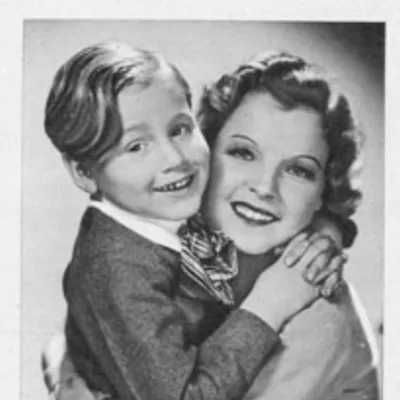
Magda Schneider
Human Design Chart
Biography
Magda died on July 30, 1996 in Berchtesgaden, Germany, age 87.
What does Projector 1/4 mean for Magda Schneider?
Projector 1/4 — Design at a Glance
Magda Schneider's design showed a tendency towards focused perception. As a projector, she did not have a constant intrinsic life energy source due to an undefined Sacral Center. Instead, her aura acted like a bright flashlight that targeted weaknesses in her environment specifically. She immediately recognized where systems or relationships were bumpy. Directly addressing these flaws would often provoke resistance, similar to shining light directly into someone's face. Her most effective strategy was to wait for honest invitations and attract through her own harmony rather than instructing. This pattern required strict pauses for regeneration since her energy level fluctuated and continuous operation wasn't possible without them. Without these rest phases, she risked overloading herself. Living according to this structure rewarded her with success; ignoring the necessity of invitation and waiting led sooner or later to her non-self theme: bitterness. Her design thus defined a life path that depended on targeted guidance and recognition from the environment rather than self-initiated, unbridled action.
Emotional Authority
Magda Schneider exhibited a decision-making stance characterized by emotional wave movements. Her design carried Emotional Authority, meaning the defined Solar Plexus Center determined her inner leadership. This configuration was subject to constant ups and downs of emotions; perception of the world was always colored by current mood. In one moment she could be enthusiastic about something, in the next negatively evaluate the same situation. However, this first impression was only a snapshot, not necessarily her deeper truth. Quick, spontaneous decisions from such an emotional state risked negative consequences.
For Magda Schneider, timing was crucial. She had to let decisions mature, often through multiple nights of reflection. This process required patience and allowing hesitation. Over time, intense feelings subsided, emotional distance gained strength and clarity as well as calmness set in. Only then had she gone through the decision-making process. This mechanism was particularly important for long-term choice options with significant influence on her life course. Emotional Authority always took precedence over other defined centers regardless of further configurations in her chart. She needed to learn not to follow the first wave but wait for the depth and breadth of her emotional truth before acting.
The 1/4 Profile — Investigator / Opportunist
Magda Schneider's design showed a tendency towards seeking deep knowledge within familiar circles and sharing it there. As Researcher/Networker (Profile 1/4), she combined the desire for thorough insight with the need for a community of trusted individuals. This configuration also created fear of being exposed to her loved ones if her knowledge was not yet deemed sufficient. Such situations would have caused great heartache; thus, a loving environment with deep trust was crucial for her to bring out her abilities and become an authority in her areas of expertise.
Her design included elements of Line 4 of Gate 30, often referred to as the 'Burnout' line. This transpersonal line manifested through fixation on opportunities and the drive to be influential within a network. For projectors, this was especially risky: they tended to get caught up in the desire for repetition of energy-rich feelings. While analytical thinking enabled positive results, striving for these intense emotions could also lead to an emotional breakdown. Honesty was central; she had to share her knowledge and find acceptance for it to work together towards group goals. Uncertainty about this acceptance shaped her experience within the community.
Single Definition — Defined & Open Centers
Magda Schneider's Human Design profile indicated a tendency towards deep, time-sensitive emotional processing. Her defined Solar Plexus Center acted as an internal authority: she needed time to ride the waves of her emotions until clarity emerged. Spontaneous decisions made at the peaks or troughs of these waves often led to regret later on; calm and patience were essential for her emotional integrity. This process gave her a seductive aura that attracted others, while she herself benefited from waiting for clarity in negotiations or relationships.
At the same time, she had a defined Root Center, which provided a constant inner pressure. This energy drove her to master existential challenges and move forward in the world. The stress of this center nourished her emotional awareness as long as it was guided by her strategy. Without this alignment, this pressure tended towards obsession or projecting excessive expectations onto others.
In contrast, several open centers revealed themselves as fields of conditioning and reflection. Her open Head Center made her vulnerable to mental confusion; she had a tendency to get entangled in other people's questions or seek inspiration to relieve mental stress rather than trust her inner authority. The open Ajna Center allowed her to be flexible with concepts but also fell into the trap of interpreting answers as her own truth or compensating for uncertainty through imposed security.
Her open G Center meant a lack of firm identity; she relied on external initiation to receive direction and love. She adapted to her environment, making her vulnerable to borrowed identities but also open to new perspectives. The open Heart Center drove her to want to prove her worth, often through promises she could not keep, leading into cycles of self-doubt. Finally, her open Sacral Center reflected the energy of her surroundings, which could lead to exhaustion if boundaries were neglected and foreign vitality was taken on as her own.
Channels for mystical synthesis and basic needs.
Magda Schneider's design indicated a tendency towards emotional loyalty and protection of one's 'tribe'. She needed deep-rooted principles to define belonging – who belonged and who did not was determined by emotional waves of acceptance or rejection. This aligned with Channel Synthesis 19-49, connecting the Root Center with the Solar Plexus Center. It served as an emotional glue for family and bonds based on the code 'Love, Honor, and Obedience'. For Magda Schneider, balance between feasibility and fairness within her close community was central; she sought a partner or environment that protected her resources and respected her territory.
Alongside this tribal frequency, other energies were at play: Gate 8 urged individual contribution and leadership through the reinforcement of uniqueness. Gate 14 handled power with grace and self-control to find direction. In the emotional realm, Gate 30 steered towards recognizing feelings and a longing for positive experiences while often accepting illusions of freedom as limitations. The Sacral Center was marked by Gate 29, requiring persistence and an accurate 'yes' to challenges; only then could she reap the inevitable reward for her actions.
In the Root Center, Gate 58 supported the perfection of life processes through experiments and pattern correction, coupled with cheerfulness under pressure. Gate 54 linked worldly success with mystical insight, where a partner often contributed as a 'buddy' to spiritual development. Finally, Gate 39 activated the Solar Plexus Center through provocation and analysis to generate adrenaline for mutations. This configuration marked Magda Schneider as someone who sought support in emotional bonds but also possessed the strength to skillfully use power and perfect patterns to stabilize her own identity and environment.
Tribal Circuitry — Circuit Signature
Magda Schneider's design indicated a tendency towards emotional synthesis. She processed internal feelings and transformed them into concrete action impulses, giving her direct access to reality. This connection was established through the Ego Circuit, which in Magda Schneider specifically linked the Solar Plexus Center with the Root Center.
Although the name 'Ego' suggests individual self-assertion, this circuit belongs to the Tribe Group and focuses on cooperation as well as the joint creation of resources. Since there was no connection to the Sacral Center, constant life force was lacking; sufficient rest periods were therefore necessary to generate energy for the tribe. Magda Schneider's active Channel 49-19 (Synthesis) allowed her to integrate emotional waves and translate them into understandable messages. This promoted a good balance between giving and taking – mutual support was at the forefront. Without the constant pressure of a permanent energy source, she could manage her resources conservatively, which gave her design a conservative and traditional character. The emotional ratchet slowed down the reaction so that decisions matured on a deeper, felt level before being translated into action through root energy.
Right Angle Cross of Contagion 2
Magda Schneiders Design legte eine Tendenz zu einer tiefen, oft unbewussten Verbindung mit kollektiven Schicksalen fest. Sie zeigte sich als jemand, dessen innerer Kompass stark von den energiereichen Strömungen ihrer Umgebung geprägt war, was sie anfällig für die Übertragung fremder emotionaler Lasten machte. Diese Konfiguration beschreibt eine spezifische Empfänglichkeit: Die Fähigkeit, nicht nur eigene Erfahrungen zu verarbeiten, sondern auch die unbewussten Muster und Traumata anderer aufzunehmen und in sich zu spiegeln. Es handelte sich dabei um keine bewusste Wahl, sondern um eine automatische, mechanische Reaktion ihres Systems auf äußere Reize. Diese Dynamik prägte ihre innere Welt maßgeblich, indem sie dazu führte, dass sie oft mehr trug als ihr eigenes Leben eigentlich erforderte. Die Energie dieser Konfiguration wirkte wie ein Filter, der zwischen dem Eigenen und Fremden kaum unterschied, wodurch Magda Schneider in Situationen geriet, in denen sie die Lasten ihrer Mitmenschen oder des gesellschaftlichen Umfelds als eigene Realität erlebte. Dies schuf eine permanente Spannung zwischen dem Bedürfnis nach individueller Klarheit und der unwillkürlichen Identifikation mit dem Kollektiven. Ihr Design offenbart somit eine Lebensaufgabe, diese übertragenen Energien zu erkennen und von den eigenen zu trennen, um nicht in fremden Schicksalen aufzugehen.
Saturn Return · Uranus Opposition · Chiron Return · 2nd Saturn Return — Life Cycles
Magda Schneiders Design legte eine Tendenz zu tiefgreifenden Strukturierungen und Verpflichtungen fest, die sich in ihren Beziehungen und beruflichen Meilensteinen verdichteten. Diese Konfiguration zeigte sich als jemand, der Lebensphasen durch klare Verträge und Rollen definierte, wobei externe Ereignisse oft als Katalysatoren für innere Reife dienten.
1937, im Alter von 28 Jahren, heiratete sie Wolf Albach-Retty. Dies fiel mit ihrem ersten Saturn-Return zusammen, einem Zyklus, in dem sich jahrelange Vorarbeit und jugendliche Experimente oft zu einer tragfähigen, gesellschaftlich anerkannten Struktur verdichten. Die Ehe markierte hier den Übergang von der Suche zur festen Bindung.
1948, im Alter von 39 Jahren, kam ihr Film “Ein Mann gehört ins Haus” in die Kinos. Dieser Erfolg korrespondierte mit der Uranus-Opposition, einer Phase, die oft unerwartete Brüche oder neue Freiheiten einfordert und alte Muster aufbricht. Der berufliche Triumph zeigte sich hier als Reaktion auf den Druck zur Veränderung, indem sie ihre Rolle neu definierte.
1968, im Alter von 59 Jahren, starb ihr Ehemann Hans Herbert Blatzheim. Dies ereignete sich während ihres zweiten Saturn-Return, einer Zeit der endgültigen Bestandsaufnahme und Loslösung von früheren Verpflichtungen. Der Verlust prägte diese Phase als schmerzhafte, aber notwendige Konfrontation mit Vergänglichkeit und Eigenständigkeit, die das Fundament ihres späteren Lebens neu ordnete.
Projector · Emotional Authority — Synthesis
Magda Schneider was a Projector who developed a unique dynamic through the connection of emotional authority and the Profile of Researcher/Networker. Her design points to a deep ability to recognize patterns (projection) and share these insights within a community. The emotional wave required time for decision-making, while Line 1 in her profile indicated a need for thorough research and building solid knowledge. This led to a life dedicated to the complexity of relationships (Saturn Return with marriage) and reaching others through her work - visible at age 39 with a professional success.
A central paradox lay in the tension between her desire for recognition within a community (Line 4) and her natural ability to expose flaws (Projector). This combination led to a subtle yet powerful form of influence, which had to be paced by emotional fluctuations and waiting for the right moment. The ego circuit emphasized this need for cooperation and give-and-take, while a later event (Saturn Return with loss) showed how crises tested her deep connection to her network.
1 Defined Channel
Incarnation Cross - Right Angle Cross of Contagion 2
Solar Return
The Solar Return shows the moment when the sun returns to its exact birth position - your personal solar year.
Life Cycles
Discover the life cycles with a detailed triple view (birth chart, cycle chart, composite).
Human Design Profile
- Type
- Projector
- Strategy
- Wait for the respectful invitation
- Authority
- Emotional Authority
- Profile
- 1/4 - Investigator / Opportunist
- Definition
- Single Definition
- Incarnation Cross
- Right Angle Cross of Contagion 2
- Date of Birth
- 17.05.1909 00:30
- Place of Birth
- Augsburg, GER
Frequently Asked Questions
What was Magda Schneider's Human Design type?
Which profile did Magda Schneider have?
What authority did Magda Schneider have?
What incarnation cross was assigned to Magda Schneider?
When was Magda Schneider born?
Discover your own Human Design
Are you also a Projector? Find out in a personal reading how to unfold your leadership qualities and recognize the right invitations.
More Personalities
Back to overviewSissy Spacek
Alain-Fournier

Anémone
Ann-Margret
Arletty

Arno