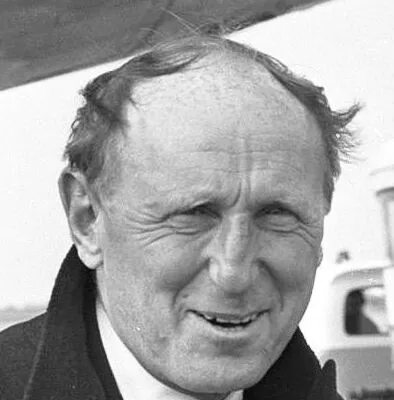
Mahiedine Mekhissi
Human Design Chart
Biography
He has gained notoriety for pushing the event's mascot after winning the 3000 m steeplechase finals at the 2010 and 2012 European Championships. Mekhissi-Benabbad is the European record holder for the 3000 m steeplechase, set in 2013, and also holds the world best in the 2000 m steeplechase, set in 2010.
Mahiedine Mekhissi — Projector with Profile 3/5
Projector 3/5 — Design at a Glance
Mahiedine Mekhissi's design shows a tendency towards a focusing aura that immediately recognizes system errors. His energy acts like a bright flashlight, directing itself to areas where others are still in the dark. This ability allows him to quickly identify flaws in a system. However, directly addressing these shortcomings often leads to defensive reactions from others, similar to shining a bright light into someone's face.
Mahiedine Mekhissi's effective strategy therefore did not involve active intervention or criticism. Instead, his approach was characterized by his own harmony and radiance. By setting an example of harmony himself, he naturally attracted others who came to him seeking insights because of his luminous presence. His core strategy involved waiting for a genuine invitation from others before offering his knowledge or guidance.
Furthermore, the undefined Sacral Center shaped his energy flow. Mahiedine Mekhissi did not have a constant internal source of life energy. Instead, he experienced cycles of high activity and rapid productivity followed by necessary rest phases. These pauses were essential to prevent burnout as the conventional system often failed to accommodate this need. Living according to this design rewarded him with success. Deviations from it tended to lead to feelings of bitterness as an expression of his non-self.
Authority
Mahiedine Mekhissi's design shows a tendency towards external resonance: decisions do not arise from internal, bodily authority but through exchanges with others and temporal distancing. This configuration is rare; it marks either mental projectors or reflectors who lack defined centers below the Throat Center or any at all.
For Mahiedine Mekhissi, this meant that information processing was a complex process requiring solitude. In conversations with various people, dormant potentials were activated through energetic interactions in his open centers. This allowed him to view issues from multiple perspectives and express them differently. His high resonance capability helped him find the right environment and suitable conversation partners for this trusting exchange.
However, evaluating the collected information happened alone. Mahiedine Mekhissi needed time to recognize patterns, filter out the essential from a mass of data, and structure it meaningfully. Through this distancing, he developed his specific intelligence and clearly distinguished what made sense and belonged to him. Finding an environment where he felt comfortable was crucial for this process as it created space for deeper exchanges and strengthened his intuition about what was right.
The 3/5 Profile — Martyr / Heretic
Mahiedine Mekhissi emerged as someone who acquired knowledge not from books but through personal experimentation. His design shows a tendency towards skepticism towards given truths and instead testing everything himself. This attitude stems from the Profile 3/5: The Line 3 of the experimenter primarily learns from their own mistakes and errors. Mahiedine Mekhissi thus accumulated a rich treasure trove of practical experiences, which he later offered as a 'Hero' (Line 5) to help others solve their problems.
This configuration created a specific tension: self-acquired knowledge was attractive to others because it was concrete and proven. Yet, the public visibility of this role could be painful when experiments failed in full view of everyone. Here, the adaptability of Line 3 came into play. It marks the transition from decline to upswing through trial and error. Mahiedine Mekhissi did not use crises as an end but as a reason for rebuilding. The ability to joyfully accept changes helped him develop philosophical and humanitarian ideas from setbacks. These were only accepted if they served the general public. By retreating when necessary, he protected his integrity while his practical knowledge continued to serve as a resource for others.
Single Definition — Defined & Open Centers
Mahiedine Mekhissi revealed himself through a constant, independent mental structure and the ability to translate thoughts directly into speech. His design combined a defined Ajna Center with a defined Throat Center. The Ajna Center provided a consistent, trustworthy conceptual framework; his mind was always active and processed data independently of external influences. The connection to the throat allowed him to express these mental processes immediately. Thus, his voice became a direct expression of his thought world, giving him a clear yet stubborn form of self-expression.
However, this configuration carried the risk of impulsively verbalizing every emerging thought or getting stuck in incomplete mental loops. The challenge lay in not speaking out of a need for control or to cope with insecurity but rather incorporating strategy and authority.
At the same time, Mahiedine Mekhissi was exposed to several open centers that made him susceptible to conditioning. His open Head Center tended to suffer under mental pressure when he tried to answer questions that were not his own or got entangled in doubts. The open G Center meant a lack of firm identity; he relied on interaction and the right place to find direction rather than defining it himself. Additionally, his open Heart Center was vulnerable to needing to prove his worth through promises or competitive behavior, often ending in cycles of self-doubt. These open areas required him not to identify with adopted pressures of inspiration, identity, or willpower but to trust his own inner guidance.
Channels & Gates
Mahiedine Mekhissi's design leaned towards spontaneous, mutative insights that he translated into clear, efficiency-enhancing perspectives. This configuration was evident through the Channel of Structuring 43-23, connecting the Ajna Center with the Throat Center. Here, Gate 43 received inspired knowledge as sudden breakthroughs while Gate 23 assimilated and expressed these insights. The process required letting go of control over mental flow; only by waiting for the right timing—guided by strategy and inner authority—was this unique knowledge accepted rather than rejected as foreign. The challenge was to explain innovative thinking simply so it could change the collective perspective.
Additionally, other gates shaped his dynamics: Gate 36 brought cyclical crisis movements that released emotional energy and made space for new experiences. Gate 6 functioned as a motor for further development through friction and regulated biological limits in the emotional wave cycle. Gate 11 promoted a harmonious assessment of the situation before acting based on visual memories and collective ideas. Gate 12 in the Throat Center connected emotional mood with creative expression and individual mutation, often in poetic form. Finally, Gate 8 stood for contributing to the group through the activation of his own identity, where encouragement was needed to act as a creative role model. These elements together formed a person whose thinking often led ahead but who had to learn patience until insights were ripe enough to take root and instigate lasting change in the collective.
Circuit Signature
Mahiedine Mekhissi's design leaned towards structured communication. He revealed himself as someone who translated inner thoughts into clear, tangible forms. This attitude results from the Knowledge Circuit, which in him was not marked by innovative flashes of insight or emotional waves but solely through Channel 43-23 (Structuring). This channel directly connected the Ajna Center with the Throat Center.
While the general circuit often describes creative mutations or inspired impulses, Mahiedine Mekhissi possessed only the energy of structure and organization. The Ajna Center processed information logically and systematically; these were then carried out into the world acoustically and pulsatingly through the Throat Center. It was less about revolutionary new creations than about clearly ordering and expressing existing connections. Thus, this energy acted as a tool for clarity: complex content was structured before being spoken.
As Mahiedine Mekhissi had a Simple Definition, this connection between thinking (Ajna) and the ability to express oneself (Throat) was his only defined energetic flow. All other centers remained undefined or belonged to separate groups without direct linkage. This created a focused channel for transmitting knowledge based on logic and form rather than emotional intuition or spontaneous creativity. His way of bringing new things into the world was thus primarily about precise formulation and orderly construction of his messages.
Right Angle Cross of Eden 1
Mahiedine Mekhissi's Human Design reveals a tendency towards a deep, often unspoken search for inner truth. His life path was marked by the 'right cross of Eden 1', a pattern that strongly aligns identity and development with spiritual dimensions. This does not necessarily mean a retreat from everyday life but rather an attempt to see through illusions in daily living and find a more authentic existence. The energetic alignment of this cross demands a consistent engagement with what is truly real, instead of getting lost in superficial structures or societal expectations. It's about overcoming deceptions—both in one's self-image as well as in the perception of the outside world. Mahiedine Mekhissi was shown through this configuration to be someone whose actions and decisions were guided by a fundamental drive for clarity and spiritual integrity. The challenge lay in anchoring this profound inner truth in practical life without drifting into dogmatic or abstract realms. The right cross of Eden 1 sets a high standard for authenticity; it leaves little room for self-deception or playing roles that do not align with one's essence. Thus, the existential stance is one of constant scrutiny and cleansing of motives and perceptions to come closer to a higher, personal truth.
Saturn Return · Uranus Opposition — Life Cycles
In his 28th year, Mahiedine Mekhissi emerged as someone who found a stable, adult identity through harsh confrontation with reality. The first Saturn return marks this transition: illusions are dismantled, the personal foundation is strengthened by experience and often necessary corrections. This process forces one to take responsibility and lays the groundwork for future endeavors.
In 2013, precisely during this phase of self-discovery, Mahiedine Mekhissi won the gold medal in the 1500-meter race at the European Indoor Championships in Göteborg. This success was no coincidence but rather a visible result of the inner maturation process triggered by the Saturn return. The medal symbolized confirmation of his capability after dismantling youthful uncertainties and fully embracing responsibility for his potential. The event underscores how this astrological mechanism serves to solidify personal foundations—not through avoidance of challenges, but through direct confrontation with them. Mahiedine Mekhissi used this moment to secure his position in the field and firmly establish himself as a top athlete. Saturn energy helped him overcome fleeting doubts and adopt a clear, adult stance that prepared him for further successes.
Projector — Synthesis
A central red thread runs through the design: the ability to recognize patterns and shed light on darkness. As a Projector with defined mental center (Ajna) and Channel of Structuring (43/23), there lies an aptitude in processing complex information, gaining insights, and expressing them precisely. The Profile as Explorer/Hero (3/5) amplifies this impulse by emphasizing the testing of strategies—only to make this knowledge accessible to others later on. The lack of inner authority requires exchange with the environment, which enhances resonance capability and offers new perspectives to activate potential in others.
The design reveals a paradox between the need for recognition and potential rejection by others. The Projector 'projects' their perception onto their surroundings, quickly finding faults in the system—yet direct confrontation can provoke resistance. Simultaneously, the 3/5 Profile seeks the stage to share experiences and be seen as a hero. This tension between the desire for influence and sensitivity towards others' reactions shapes a dynamic interaction with the world. A notable event illustrates this expression of ability: success through performance (2013).
1 Defined Channel
Incarnation Cross - Right Angle Cross of Eden 1
Solar Return
The Solar Return shows the moment when the sun returns to its exact birth position - your personal solar year.
Life Cycles
Discover the life cycles with a detailed triple view (birth chart, cycle chart, composite).
Human Design Profile
- Type
- Projector
- Strategy
- Wait for the respectful invitation
- Authority
- No inner authority - learn more
- Profile
- 3/5 - Martyr / Heretic
- Definition
- Single Definition
- Incarnation Cross
- Right Angle Cross of Eden 1
- Date of Birth
- 15.03.1985 14:05
- Place of Birth
- Reims, France
Frequently Asked Questions
What is Mahiedine Mekhissi's Human Design type?
What Profiles does Mahiedine Mekhissi have?
What authority does Mahiedine Mekhissi have?
What incarnation cross does Mahiedine Mekhissi have?
When was Mahiedine Mekhissi born?
Discover your own Human Design
Are you also a Projector? Find out in a personal reading how to unfold your leadership qualities and recognize the right invitations.
More Personalities
Back to overviewSissy Spacek

Alain-Fournier

Aldair

Anémone

Ann-Margret

Bourvil