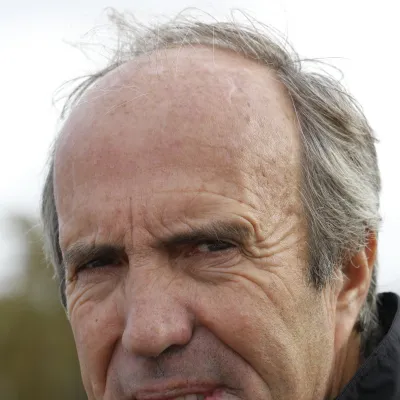
Marc Pajot
Human Design Chart
Biography
What does Generator 6/2 mean for Marc Pajot?
Generator 6/2 — Design at a Glance
Marc Pajot's design indicates a tendency towards great endurance and high energy levels, comparable to the strength of a workhorse. This configuration describes a Generator type whose strength lies in generating energy not through constant external initiation but by responding from within to signals of life. The mechanics of his design show that his full capacity only becomes effective when he reacts rather than initiating himself.
This approach is crucial for his well-being: When Marc Pajot responds to impulses from his environment and his sacral center – as an inner compass for "yes" or "no" – gives a clear confirmation, he can act with deep satisfaction. Conversely, ignoring these internal signals or forcing things that do not resonate led to energy loss and frustration. His design presented two specific pitfalls: Either he spent his energy on activities without inner joy, leading towards burnout, or he was held back from his heart project even though he still had plenty of power. The most successful strategy for him involved waiting until life sent a signal and then responding from the gut. This way, he could use his energy efficiently and be rewarded through action rather than swimming against the current.
Emotional Authority
Marc Pajots Design points to a tendency towards emotional turbulence: His inner truth does not manifest as immediate clarity but rather as a wave-like process. The defined Solar Plexus Center carries his authority and is thus subject to constant fluctuations of feelings. At one moment, he could be excited about something, only to see the same thing negatively in the next. These moods were merely snapshots, not final truths. Quick decisions made from this emotional heat often risked negative consequences as they were based on transient impulses.
The mechanics of his Emotional Authority demanded patience. He had to take time to let decisions mature. This required consciously sleeping on things and allowing intense feelings to subside. Only when an emotional distance was gained did true clarity set in. This process of calm following the wave-like movement is crucial for long-term life decisions. His authority takes precedence over all other defined centers; regardless of further configurations in the chart, it holds that the emotional wave must run its course before a valid response can be given. Marc Pajot thus reveals himself as someone who can only find his deepest intuition after the initial emotional high or low has subsided.
The 6/2 Profile — Role Model / Hermit
Marc Pajot's Human Design profile suggests a two-phase life path characterized by early experimentation and later detached wisdom. In his youth, the 6/2 line functioned as a pure third-line: His focus was on trial and error. He accumulated numerous personal experiences, withdrew after mistakes, and learned through these direct life practices.
After Saturn's return, around age thirty, the sixth line activated. Marc Pajot then showed a strong desire to withdraw—metaphorically into a "cave on a mountain." This phase served for intense reflection on his earlier experiments. It was a time of healing and deep self-awareness, during which he looked back at his life with great detachment.
From this isolation emerged his role as an inspirational figure or natural talent. When the time was ripe, he re-emerged from his retreat—now as a wise person. Others recognized this wisdom and sought him out to benefit from his insights and learn the skill of deep introspection.
The mechanics of the 6/2 line describe this transition from emotional attachment and the pursuit of justice (sixth line) to an extreme but modest individuality in one's own rhythm (second line). Marc Pajot's design thus combines the drive to promote peace and improve the world with the need to express his own emotional range and vulnerability in a personal, often perceived as bizarre, rhythm. His wisdom did not come from theoretical knowledge but from processing these extreme, individual life rhythms.
Split Definition — Defined & Open Centers
Marc Pajot's design was characterized by a strong inner identity and a clear sense of direction. His defined G Center gave him the ability to be self-assured and provide guidance to others without being dependent on their approval. This stability was supported by his also defined Sacral Center, which acted as a motor: It generated constant vital energy, but this only had lasting effects when he responded to questions rather than initiating action himself. His inner authority lay in the emotional Solar Plexus Center; here he needed to learn to trust the wave movement of his feelings and make decisions after the emotional heat had subsided. Additionally, the defined Spleen and Root Centers provided existential intuition and a stable pressure to overcome material challenges.
In contrast, his design revealed specific vulnerabilities in mental and communicative areas. His open Head Center meant that he did not have a constant source of inspiration or mental clarity; instead, he tended to be influenced by doubts or questions from others that were not his own. Similarly, the open Ajna Center showed a flexible but unstable way of thinking, which could easily fall into the trap of needing to feel secure. His open Throat Center made him vulnerable to the pressure of forcing attention through talking or acting rather than waiting for natural invitations to communicate. Finally, in the open Heart Center, there was no constant energy for willpower and promises; here there was a risk of getting caught in a cycle of self-proving and disappointment if he tried to prove his worth through performance instead of trusting his inner authority.
Channels for intimacy, intuitive elegance and emotional clarity.
Marc Pajot's design showed a tendency towards deep, time-intensive intimacy paired with an intuitive, self-determined presence. This configuration is not superficial interaction but rather a process of merging and authentic being.
Central is Channel Union 59-6, which connects sacral sexuality with the emotional wave. Here intimacy arises through patience: Marc Pajot needed time to gain clarity before diving into relationships or projects. His urge for fusion could be misunderstood as flirting, yet it was a natural availability for confidentiality and fertility. The emotional wave determined the timing; only by waiting did true connection arise.
Parallel to this, Channel Perfect Form 57-10 linked intuitive insight with self-behavior. This allowed Marc Pajot to move existentially unburdened, guided by deep impulses rather than future worries. He lived in the present, perfected his form spontaneously and radiated a beauty that touched others – not through intention but through exemplary effect. His behavior was an act of survival and self-love, independent of external recognition.
Additionally, Gate 36 (Crisis as Movement) and Gate 15 (Collective Rhythm) shaped his development: He used crises for new experiences and adapted to natural social flows. Gate 60 demanded acceptance of limitations towards transcendence while Gate 29 emphasized sacral persistence. Marc Pajot thus showed himself as someone who influenced his environment sustainably through patient intimacy and intuitive authenticity.
Tribal Circuitry — Circuit Signature
Marc Pajot's design inclined toward emotional reflection and instinctive protection. He was shown to be someone who processed past experiences in a wave-like manner, drawing meaning from them – a process that worked within the Meaning Circuit. Here Channel 'Recognition' connected Solar Plexus with Root Center. This connection generated a cyclical emotional wave: Feelings from the past were not only felt but served to gain insights and share these with others to learn together.
Parallel to this, Marc Pajot's Archer Circuit was active. Channel 'Union' linked Sacral with Solar Plexus Center. This gave him a primal energy of survival protection and care. It was about preserving the family, nurturing and defending the self – energies from mother and father that were timeless and instinctive.
A third aspect was the Integration Circuit. Through Channel 'Perfect Form', Identity and Spleen Centers were connected. This supported his highest individuality: Intuitive knowledge from the Spleen was united with the power of identity in the present to secure personal survival and manifest correct behavior.
Due to his Shared Definition, these energies did not exist as a continuous flow. The group consisting of Solar Plexus, Sacral, and Root Centers formed a cohesive area for emotional and instinctive processing. Separately from this, the second group of G and Spleen Centers worked. These two systems existed parallel alongside each other as independent forces in his design without direct energetic connection.
Left Angle Cross of the Plane 2
Marc Pajot's Human Design revealed a tendency towards a deep, almost mystical connection with life itself. He was someone who didn't just go through life but whose existence was marked by an inner rhythm that constantly placed him in service to the whole. This attitude stemmed from the mechanics of the left cross on Level 2: a configuration that makes people into living conduits for cosmic forces. Here, it's not about intellectual understanding but about a direct, physical experience of truth. Marc Pajot was destined not only to keep this experience private but also to bring it out into the world – as a witness to what lies beyond the visible. His task was to make the hidden unity of all things visible through his own being and actions. This often happened intuitively, driven by an inner necessity that went beyond personal ambition. The left cross on Level 2 demands authenticity and unwavering faith in the meaning of one's path. Marc Pajot's design challenged him to live this conviction without needing to explain it. His presence alone should have been enough to give others the opportunity to connect with this deeper level as well. It was a life lived in service to truth, through dedication and constant readiness to adapt to the flow of the universe.
Saturn Return · Uranus Opposition · Chiron Return · 2nd Saturn Return — Life Cycles
Marc Pajot's Human Design revealed a tendency towards focused endurance that proved itself in extreme physical and mental challenges. In 1982, at the age of 29, he won the single-handed transatlantic race Route du Rhum – for his Human Design, a typical moment of the first Saturn return. This cycle often marks the point where years of groundwork and internal structuring condense into a stable, solid result.
The first Saturn return acts as a mechanism of consolidation: what previously existed as potential or search now takes on clear form and social recognition. For Marc Pajot, this was not a sudden coincidence but the logical consequence of long-term alignment with his inner center. The victory was visible proof that his internal architecture stood ready to bear extreme loads and translate them into concrete achievement.
This phase confirmed his ability to remain clear-headed under pressure and consistently follow through on decisions. The design supports an attitude of patience and trust in one's own process here. Success at the Route du Rhum demonstrated how Marc Pajot channeled his energy: not by constantly changing goals, but through deep dedication to a single, demanding undertaking until completion.
Generator · Emotional Authority — Synthesis
A central red thread in this design is the profound connection between sacral energy and emotional processing. The defined Sacral (Generator type) provides immense endurance and creative power, yet this is always filtered and matured by the emotional wave of the defined Solar Plexus Center. This leads to a work style that is powerful but requires time to gain clarity – an ongoing oscillation between impulsive energy and the need to let decisions ripen in peace (Emotionality & Sacral Response). The Line 6 in Profile points towards development where early experiences are gathered to later develop wisdom and share it with others.
The central paradox lies in the tension between the desire for deep connection and intimacy (Pairing Channel) and the process of emotional maturation. The intense energy of this channel demands immediate reaction, while emotional authority requires time to gain clarity. This can lead to internal conflicts when spontaneous impulses do not align with inner truth. A documented event shows that achieving a goal (Saturn return) was associated with endurance and overcoming challenges.
3 Defined Channels
Incarnation Cross - Left Angle Cross of the Plane 2
Solar Return
The Solar Return shows the moment when the sun returns to its exact birth position - your personal solar year.
Life Cycles
Discover the life cycles with a detailed triple view (birth chart, cycle chart, composite).
Human Design Profile
- Type
- Generator
- Strategy
- To respond - wait for something to respond to
- Authority
- Emotional Authority
- Profile
- 6/2 - Role Model / Hermit
- Definition
- Split Definition
- Incarnation Cross
- Left Angle Cross of the Plane 2
- Date of Birth
- 21.09.1953 05:00
- Place of Birth
- La Baule, France
Frequently Asked Questions
What is Marc Pajot's Human Design type?
What profile does Marc Pajot have in Human Design?
What authority does Marc Pajot have?
What incarnation cross is assigned to Marc Pajot?
When was Marc Pajot born?
Discover your own Human Design
Are you also a Generator? Find out in a personal reading how to use your sacral energy correctly and discover deep satisfaction.
More Personalities
Back to overviewAaliyah

Aldair

Alexia

Angèle

Anne-Marie

Arcángel