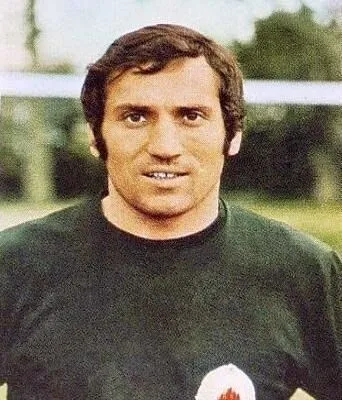
Marcel Aubour
Human Design Chart
Biography
Marcel Aubour — Manifestor with Profile 4/6
Manifestor 4/6 — Design at a Glance
Marcel Aubour's design marked him as a pioneer whose natural task was to lead the world in new directions. His inner self carried the energy of a visionary, comparable to a Roman emperor who designed the great empire but did not stand in the midst of battle himself. Instead, he initiated actions and let others take charge of implementation. However, this superior, often forward-thinking perspective brought with it a central conflict: Marcel Aubour inevitably polarized. Because his visions frequently reached further than the immediate understanding of his environment, he found himself torn between great support and vehement rejection. Misunderstandings were not an exception but a structural consequence of his design.
The key to his effectiveness lay in the strategy of informing. Before Marcel Aubour set his intentions or projects into the world, he had to clearly inform his surroundings about his plans. This was not primarily aimed at gaining approval but reducing friction losses. When he provided this information, the right supporters could find him and minimize resistance. Living by this principle rewarded his system with a deep sense of inner peace. Ignoring this necessity and acting without prior announcement resulted in persistent, deep anger. This emotional reaction signaled to him directly that he had worked against his own nature and provoked unnecessary resistance.
Emotional Authority
Marcel Aubour's design laid out a tendency towards cyclical emotional waves that marked immediate action from the momentary mood as error-prone. His inner authority resided in the defined Emotional Center – a mechanism that always claims precedence over decisions regardless of all other defined centers. This configuration generated a permanent up and down of emotions: Marcel Aubour saw the world colored by his current mood, sometimes enthusiastically, sometimes negatively surprised about the same thing. Since immediate feelings only represented a snapshot and not necessarily deeper truth, important turning points required patience. The mechanics of his design advised to take one's time and sleep on decisions multiple times. Only when intense emotions subsided and emotional distance was gained did clarity set in. This cooling-off process separated momentary mood from lasting insight. Marcel Aubour thus showed himself as someone who found calmness through waiting for the cycle distance – a strategy that stabilized long-term life decisions by minimizing the risk of reactive errors and creating space for deeper understanding.
The 4/6 Profile — Opportunist / Role Model
Marcel Aubour's design laid out a tendency towards experimental learning, especially in the first half of his life before turning 30. During this phase, his Profile Line 6 worked like a Line 3: He actively sought experiences through relationships and friendships to learn from them. This phase of testing was characteristic for his Profile 4/6 (Networker/Role Model), marked by development from experimenter to wise mentor.
With the activation of Line 6, an inner conflict came to light: between a deep need for belonging and intimacy typical for Heart Line 4 and the urge for distance as well as meaningful wisdom of Head Line 6. Marcel Aubour showed himself in this tension between heart's desire and head-guided overview. The Line 4 as transpersonal line carried the task of passing on mutations and required the right moment for communication. At the same time, Line 6 brought an attitude of freedom from expectation and justice, where experience was valued for its own sake, not as a means to an end.
The developmental challenge consisted in integrating this polarity. Marcel Aubour's design pointed towards him later emerging as a trustworthy role model through cooperation with others. His great heart of Line 4 remained vigilant to avoid opening up to false bonds and getting hurt. The wisdom of Line 6 helped him look beyond the pure process of meaning-making and adopt an unbiased stance.
Single Definition — Defined & Open Centers
Marcel Aubour's design shows a tendency towards constant mental structuring paired with the need to wait for emotional clarity before expressing. His defined Ajna Center ensures continuous, trustworthy conceptualization; he processes data in the same way every time and is hard to influence by external pressure. This mental energy flows into his defined Throat Center, which serves as a reliable channel for communication. Marcel Aubour speaks what his mind conceives – a direct connection without filters from other centers.
Simultaneously, his defined Solar Plexus acts as an emotional authority. Here the mechanics are: truth reveals itself over time. Marcel Aubour was designed to wait out the ups and downs of his emotional wave before acting or deciding. Impulsive reactions to highs or lows of this wave lead to chaos; patience until the emotion discharges guarantees clarity. These three defined centers form his constant energy base: think, feel (wait), speak.
The open centers – Head, G, Heart, Sacral, Spleen and Root – make him situationally vulnerable to conditioning. His open Head Center tends to absorb mental pressure from the environment and seek answers that are not his own. The open G Center means no fixed identity; Marcel Aubour reflects the directions of his surroundings and often seeks a 'me' he cannot generate himself. In his open Heart Center, there is no constant willpower, leading to temptation to make promises to prove worth – a path into the cycle of failure. His open Sacral Center lacks a constant energy flow; he risks overworking by borrowing energy from others. Additionally, his open Spleen Center is prone to fears and spontaneous, false decisions in the moment, while his open Root Center absorbs external stress, which can lead to hyperactivity if he does not recognize this pressure as foreign. The challenge lies in using the strength of defined centers without falling into the traps of open centers – like identity search or overworking.
Channels for curiosity, emotional openness and structured insight.
Marcel Aubour is someone who not only conveys abstract ideas but weaves them into narrative structures that emotionally touch others. His communication is less a dry fact transfer and more the weaving of stories to teach and move people. This ability roots in Channel Curiosity 11-56, linking ideas from the Ajna Center with the expressive power of the Throat Center. Here information condenses into parable-like narratives that speak to imagination and feelings – a process where Gate Inspiration (56) is always open for new impulses, bringing them through Gate Ideas (11) into understandable form.
At the same time, his way of speaking follows strict emotional timing. Channel Openness 22-12 connects the emotional wave of the Solar Plexus with the Throat Center. Marcel Aubour communicates authentically and effectively only when in the right mood. Gate Caution (12) regulates the expressive power of Gate Openness (22), so his words become catalysts for change only when inner mood and outer timing align. Speaking against this emotional flow often leads to misunderstandings or harsh reactions; at the right moment, however, he can deeply touch others through the quality of his voice.
Additionally, he possesses the gift of efficiently and simply structuring complex insights. Channel Structuring 43-23 links Gate Insight (43) with Gate Assimilation (23). This allows him to express spontaneous mental breakthroughs so clearly that they are accepted and implemented by others. His challenge lies in not forcing these innovative perspectives prematurely but waiting for the right timing, so his unique knowledge is recognized as valuable rather than rejected as foreign.
Individual Circuitry — Circuit Signature
Marcel Aubour's design shows a tension between the innate path and finding meaning through emotional reflection. The Knowledge Circuit connects his Ajna, Throat, and Solar Plexus Centers directly. This creates a flow where innovative mental sparks from the Head Center (Ajna) are steered by the emotional wave of the Solar Plexus to find acoustic and pulsating expression in the Throat Center. It's about transforming new knowledge and initiating change while reinforcing one's individuality. Parallel to this, the Meaning Circuit also connects Ajna and Throat Centers. Here reflecting past experiences is central. Energies flow cyclically and visually; felt insights from the past serve to share with the collective and learn together from them. Since both circuits use Ajna and Throat Centers, there is a double focus on expression: once as transformative innovation driven by emotional inspiration, the other time as meaningful processing of the past. This configuration marks Marcel Aubour as someone who generates new knowledge as well as translates old experiences into collective learning. The emotional wave is always the driving force, whether for creative impulses or reflecting on the past.
Right Angle Cross of Eden 2
Marcel Aubour's Human Design profile indicated a tendency towards inner stability and consistent presence. This configuration, the right cross of Eden 2, describes not an external impact through loud actions or quick changes but rather a deep, often silent power that stems from simply being there and providing support. It is an energy of constancy that gives others security without needing to do anything actively.
In Human Design, this cross represents a specific kind of authority and influence based on consistency. Marcel Aubour was someone whose value lay in his reliability. While others might have sought new paths or caused conflicts, his design provided an anchor point. This quality is not always visible up front but works persistently in the background of relationships and communities. It requires no grand gestures, only the ability to remain calm under pressure and maintain a clear line.
The mechanics behind this involve connecting various energies into a whole designed for longevity. It's about not having to reinvent everything but relying on proven structures. For Marcel Aubour, this meant that his greatest strength lay in bringing constancy into an often chaotic environment. He was less the instigator of radical breaks and more the one who restored order after such events, ensuring that what is essential remained intact. This silent endurance is a central feature of his design.
Saturn Return · Uranus Opposition · Chiron Return · 2nd Saturn Return — Life Cycles
Marcel Aubour's Human Design indicated a tendency towards structural anchoring, particularly during the first Saturn return phase. This cycle marks the transition from experimental potential to concrete lived reality and demands taking responsibility for one's foundation. It is a period when internal attitudes condense outwardly into stable structures.
In 1968, at age 28, Marcel Aubour emerged as French Vice-Champion with OGC Nice. This success was no coincidence but aligned with the mechanics of the Saturn return: years of groundwork and inner maturation condensed into a measurable result. The configuration shows how his design sought and found stability during this life phase. It's not about fleeting successes but establishing a basis upon which future developments can rest. Marcel Aubour demonstrated that he took on this structural task and proved through concrete performance that his internal potential was now active in the outside world. The Saturn return here acts as a catalyst for realizing constancy and recognition in professional or public life.
Manifestor · Emotional Authority — Synthesis
Marcel Aubour's Human Design reveals a thread of transformative openness. His undefined centers – Root, Sacral, Heart, and Spleen – make him receptive to other people's energies but do not sustain them permanently. Instead, he channels external stimuli through defined gates in the Ajna and Throat Center (Channels 23/43, 11/56), leading to a unique ability to process information and translate it into creative expressions. This is reinforced by his emotional authority, giving him time for emotional maturation before communicating insights. He acts as a catalyst for change, filtering knowledge and passing it on in the form of stories or new perspectives – always dependent on his inner readiness and the right timing.
A central paradox lies in the tension between his openness and need for authentic expression. While he absorbs other people's energies, his Throat Center is defined, making it a channel for his own carefully thought-out messages. This leads to an internal dynamic: he takes in much but must be selective about what he sends out to avoid being overwhelmed by external influences. This tension manifests in the search for the right moment and necessity of waiting for his emotional wave before communicating or acting.
3 Defined Channels
Incarnation Cross - Right Angle Cross of Eden 2
Solar Return
The Solar Return shows the moment when the sun returns to its exact birth position - your personal solar year.
Life Cycles
Discover the life cycles with a detailed triple view (birth chart, cycle chart, composite).
Human Design Profile
- Type
- Manifestor
- Strategy
- To inform others before acting
- Authority
- Emotional Authority
- Profile
- 4/6 - Opportunist / Role Model
- Definition
- Single Definition
- Incarnation Cross
- Right Angle Cross of Eden 2
- Date of Birth
- 17.06.1940 12:00
- Place of Birth
- St.Tropez, France
Frequently Asked Questions
What is Marcel Aubour's Human Design type?
What Profile does Marcel Aubour have in Human Design?
What authority determines Marcel Aubour's decisions?
What incarnation cross is active for Marcel Aubour?
When was Marcel Aubour born?
Discover your own Human Design
Are you also a Manifestor? Find out in a personal reading how to use your initiation power peacefully and dissolve resistance.
More Personalities
Back to overviewAldair

Cafu

Christian-Jaque
Joelinton

Kaká

Kesha