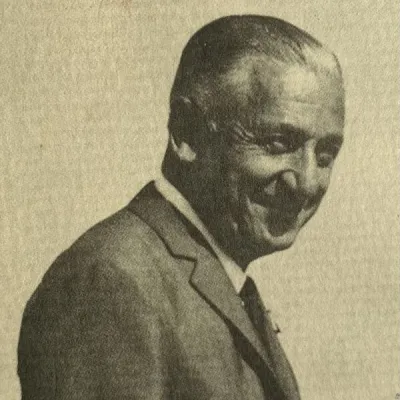
Marcel Bleustein
Human Design Chart
Biography
The youngest of an immigrant family of nine children, Marcel went to work early, selling furniture by the time he was 14. By the time he was 21, he was active in the advertising business with his own ideas of how to present product inducement. Eventually, Publicis developed agencies in 122 towns in 72 countries, ranking first in Europe, second in France and tenth in the world.
In 1958, he added another entrepreneurial venture, founding The Drugstores. His main headquarters, the Publicis building, was destroyed by arson on 28 September 1972.
When he left as president in 1988 the company had a $1.2 billion turnover and the 1998 figures show over $5 billion dollars.
Bleustein wrote The Rage to Persuade: Memoirs of a French Advertising Man, (Chelsea House, 1982). Married on 21 November 1939, he had three daughters; Marie-Françoise, who died accidentally on 31 December 1967, Elisabeth Badinter, born in 1944, and Michèle.
Bleustein died in Paris on 11 April 1996.
Human Design Analysis: Marcel Bleustein as Projector 3/5
Projector 3/5 — Design at a Glance
Marcel Bleusteins design predisposed him to an immediate fault detection tendency in other systems. His aura acted like a focused flashlight shining directly on areas around him that were still 'in the dark'. This configuration allowed him to identify weaknesses and dysfunctions in others or structures instantly.
The challenge of this mechanism lay in the intensity of this light. When Marcel addressed these faults immediately, it often felt like a blinding beam to those around him - uncomfortable and off-putting. Direct correction frequently led to defensive reactions or withdrawal from others.
Therefore, his effective strategy involved waiting for an honest invitation. Instead of instructing or intervening directly, it was crucial for Marcel to embody harmony himself. By being a functioning system, he became attractive; others came to him voluntarily seeking advice. This waiting served as a protective mechanism against rejection and ensured the success of his leadership.
If Marcel did not follow this path of patience and tried to impose his insights, he risked overexertion through direct confrontation. If he did not adhere to this strategy of waiting, sooner or later his non-self theme - bitterness - would manifest. However, by adhering to his strategy, he was rewarded with success and could use his energy sparingly without breaking down.
Self-Projected Authority
Marcel Bleusteins design predisposed him to extreme openness coupled with the risk of losing himself in external motoric energies, constantly chasing after more energy. This configuration marks the rare 'authority within oneself', exclusive for Projectors. Here, the inner truth does not lie in logic but in identity itself.
Decision-making occurred through two specific mechanisms. First, via self-dialogues or conversations when invited to do so. Crucial was listening: Marcel Bleustein had to distinguish whether his mind spoke or his true essence did. Spontaneous, unreflective expression revealed his uniqueness and served as a compass. Second, there was a physical pulling sensation guiding him geographically or thematically into specific directions - towards something or away from it.
By following this inner direction instead of getting sidetracked by distractions, he became a guide for others. His unique success potential did not lie in actively pushing through plans but in using his spontaneous identity and the physical pulling feeling as guiding principles. The challenge was always to prevent his openness from becoming a trap, channeling it through this internal listening into clear orientation. Thus, potential distraction transformed into clear direction, which he exemplified by simply following what his self spontaneously expressed or where his body pulled him.
The 3/5 Profile — Martyr / Heretic
Marcel Bleusteins design was characterized by fundamental skepticism towards pre-fabricated truths; he primarily learned through personal experimentation. As Profile 3/5, the experimenter and hero, he initially believed nothing and had to gather experiences himself. This Line 3 emphasized evaluating situations through trial and error, where inaction often proved wiser than rash action. Jupiter in Gate 29 promoted a preference for principled withdrawal to examine commitments more deeply.
This practically gained knowledge was strongly attractive to others. The Line 5 projected a heroic contribution, making Marcel Bleustein appear as an expert or rescuer. This projection flattered him but also created pressure: failing in public was particularly painful. His design required clear boundaries. Contributions should be time-limited and only occur on request, akin to a taxi driver dropping off passengers and leaving. Jupiter elevated meant withdrawing after performance to realign himself. This protective mechanism was essential as Dharma emphasized transient relationships. Marcel Bleustein thus exhibited dynamics where personal failure had to be accepted so that the external projection did not become paralyzing expectation pressure. His path involved gaining knowledge through his own mistakes, then dispensing it in measured doses before withdrawing to preserve his authority.
Single Definition — Defined & Open Centers
Marcel Bleustein's design points towards a tendency for a firm inner identity and clear, reliable communication. His defined G Center gave him a stable sense of his higher self and life direction; he knew from himself who he was and where it was going. This internal security flowed directly into his defined Throat Center, making his voice not impulsive but authentic in this identity. He could orient others through this clarity without controlling their paths.
This consistency sharply contrasted with his receptivity to external impulses. His open Head and Ajna Centers made him vulnerable to mental pressure and confusion from the environment; he tended to interpret other people's questions as urgent matters or get lost in concepts that were not his own. Similarly, his open Solar Plexus absorbed foreign emotions, making him appear emotionally unstable when personalizing these vibrations. His open Heart Center drove him to prove his worth through promises and performance, although he lacked the constant willpower for this.
Furthermore, his open Sacral Center was predisposed to an inconsistent energy flow; he risked overloading with 'borrowed' vitality from others rather than relying on his own generative power. The open Spleen and Root Centers completed this picture of sensitivity: He was vulnerable to existence anxieties and spontaneous misjudgments as well as the absorption of stress and adrenaline from the environment. Marcel Bleustein's challenge lay in not experiencing these open fields as personal deficits but using them as mirrors for the surrounding climate while relying on his reliable G-Throat voice.
Channels for reflection, memory and inner wisdom.
Marcel Bleustein's design points towards a tendency for patient observation: He collected experiences like a natural listener before putting them into words. This attitude resulted from Channel of the Lost Son 13-33, which connects the G Center with the Throat Center. Gate 13, the Listener's Gate, stored information and secrets while Gate 33, the Withdrawal Gate, created the necessary pause for reflection. Marcel Bleustein appeared as someone who went through a cyclical process of maturation – not through hasty action but by trusting the flow and communicating only after inner clarification. His strength lay in acting as a 'conscious passenger': He witnessed the magic of completion rather than being frustrated by unfulfilled expectations. The challenge of this pattern was timing; not prematurely revealing secrets or withdrawing so long that insight became isolated. Through this distancing, he gained access to a deeper truth which he could then pass on as collective wisdom. Additionally, Gates like 29 (Persistence) and 30 (Recognizing Feelings) shaped his affirmation of life and management of inner fires. Gate 14 conveyed skillful power accumulation while Gate 8 promoted the individual contribution to the group. In the emotional realm, Gate 35 brought change through interaction, and Gate 45 strengthened tribal belonging. Marcel Bleustein used this configuration to learn from the past and bring continuity into his development rather than predicting the future.
Collective Circuitry — Circuit Signature
Marcel Bleustein's design points towards a tendency for emotional reflection of the past to enable collective learning. His Perceiver Circuit directly connects the Throat and Identity Centers through Channel 'The Lost Son'. This circuit is not about cool logic or forward-looking ratio but feelings and experiences from the past. The energy is wave-like and emotionally driven, shaped by the nature of the Solar Plexus Center: Each cycle has a beginning, middle, and end.
While left chart sides often deal with future themes, this right side focuses on the past. The central theme is finding meaning behind already occurred events – experiencing the 'lost son' who finds his way back and thus the significance of his journey. These felt insights are not private but meant to be shared with the collective. Through sharing, Marcel Bleustein enables learning from the past collectively. The connection between identity and expression (throat) ensures that these emotional waves are not only processed internally but communicated outwardly. It is a process of sharing where one's own emotional history serves as a resource for others.
Right Angle Cross of Contagion 3
Marcel Bleustein's design indicated a tendency towards an immediate, almost physical presence. He did not primarily influence his environment through persuasive argumentation but rather by the mere fact of his existence in a space. His aura had the potential to change states or energies around him without active intervention or communication.
This dynamic is described in Human Design as 'The right cross of Infection 3'. The term 'infection' here does not imply negativity in terms of illness but rather refers to the mechanism of collective infection with ideas or emotional states. Marcel Bleustein possessed the ability to place others into a specific state through his own energy. It was about subtle transmission: His inner stance or energetic tone could spread like a virus in social fields and influence the mood or consciousness of those around him.
This cross focuses on the dissemination of energies within a collective context. Marcel Bleustein was destined to create waves with his presence. When he embodied a certain state – whether clarity, restlessness, or inspiration – he 'infected' his surroundings with it. The mechanics show that his influence often worked unconsciously and automatically. He did not need to explain why something was the way it was; his existence alone sufficed to shape the atmosphere. This requires no strategic planning but rather trust in one's own aura as a tool of change.
Saturn Return · Uranus Opposition · Chiron Return · 2nd Saturn Return — Life Cycles
Marcel Bleustein's design indicated a tendency towards structural consolidation, which became particularly evident during his second decade of life. His first Saturn return cycle marked the transition from youth to adulthood and the establishment of his professional identity. This mechanism acts as a catalytic factor that carries internal maturation processes outward and establishes long-term commitments.
In 1935, at the age of 29, Marcel Bleustein founded Radio-Cité. This career event exemplified the effectiveness of this cycle: Years of groundwork condensed into a sustainable result. The Saturn return cycle often demands that one translate their competencies into concrete structures. For Marcel Bleustein, it meant pouring his creative and entrepreneurial energy into a lasting project. The founding of Radio-Cité was not an isolated impulse but rather the logical conclusion of a maturation process accelerated by the Saturn influence. This cycle typically shapes the foundational lines of later life work and sets standards for responsibility and stability. Marcel Bleustein's step towards independence or establishing his own brand demonstrated how this astrologically specific time point contributed to consolidating personal authority. The energy of this cycle supports transforming visions into tangible reality and laying a stable foundation for future developments.
Projector · Self-Projected Authority — Synthesis
Marcel Bleustein's design reveals a thread of mediation and understanding. As a projector, equipped with a defined G Center and Throat Center, he was destined to recognize patterns in others and shed light on the dark – but only upon invitation. His open definition in key centers like Head, Ajna, Solar Plexus, and Root indicates that he is a sensitive mirror of his environment, absorbing and amplifying energies without being bound to them. This ability to grasp the dynamics of others, coupled with the need for recognition (Gate 8), shapes a character that communicates both intuitively and sincerely. The Profile of the Explorer/Hero (3/5) underscores this process: through personal experimentation and learning, generating knowledge he then makes available to others.
A central paradox lies in the tension between his ability to gain deep insights and share them (Channel 13-33) and the risk of being overwhelmed by external influences. The open centers make him vulnerable to conditioning while the G Center intensifies the desire for authenticity and direction. He is thus a bright signal that attracts others but simultaneously needs protection from the intensity of received signals to avoid getting trapped in cycles of strain and disappointment.
1 Defined Channel
Incarnation Cross - Right Angle Cross of Contagion 3
Solar Return
The Solar Return shows the moment when the sun returns to its exact birth position - your personal solar year.
Life Cycles
Discover the life cycles with a detailed triple view (birth chart, cycle chart, composite).
Human Design Profile
- Type
- Projector
- Strategy
- Wait for the respectful invitation
- Authority
- Self-Projected Authority
- Profile
- 3/5 - Martyr / Heretic
- Definition
- Single Definition
- Incarnation Cross
- Right Angle Cross of Contagion 3
- Date of Birth
- 21.08.1906 01:00
- Place of Birth
- Paris, France
Frequently Asked Questions
What is Marcel Bleustein's Human Design type?
What Profile does Marcel Bleustein have in Human Design?
What authority determines Marcel Bleustein's decisions?
What incarnation cross does Marcel Bleustein have?
When was Marcel Bleustein born?
Discover your own Human Design
Are you also a Projector? Find out in a personal reading how to unfold your leadership qualities and recognize the right invitations.
More Personalities
Back to overviewSissy Spacek

Alain-Fournier

Anémone

Ann-Margret

Bourvil
Christian-Jaque