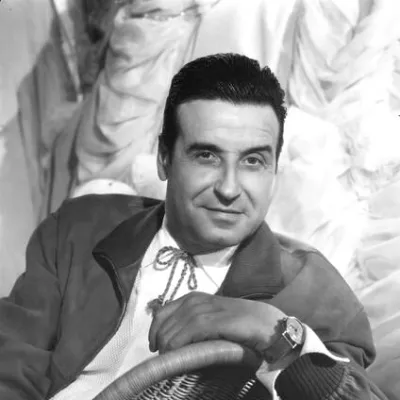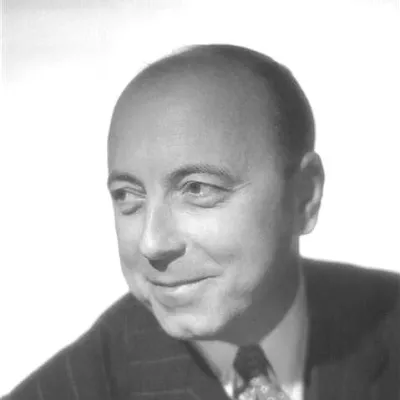
Marcel Carné
Human Design Chart
Biography
Carne died on 31 October 1996, Clamart, France
The Human Design of Marcel Carné: Projector 1/3
Projector 1/3 — Design at a Glance
Marcel Carné was someone who appeared with an intense, focused presence. His design as a Projector meant that he directed his energy like a bright flashlight onto his surroundings. This aura was so dense that it could sometimes be perceived as unpleasant by others because it immediately revealed weaknesses or errors in other people's systems. Instead of addressing these issues directly - which often led to resistance - he was most effective through harmonious self-radiation. When he himself became a shining example, others automatically came to him and sought his advice. His strategy consisted of waiting for appreciative invitations from the environment rather than taking the initiative himself. Since his Sacral Center was undefined, he did not have constant life energy. Instead, he worked in phases of high productivity followed by necessary rest periods to prevent burnout. If he lived according to this principle, he was rewarded with success. However, if he ignored his need for breaks and recognition through invitation, it led sooner or later to his non-self theme: bitterness. Therefore, his influence did not lie in constant action but rather in targeted, inviting leadership of others.
Splenic Authority
Marcel Carné showed a decision-making approach based on a fine, immediate inner impulse. His design carried authority in the Spleen Center, meaning that his internal guidance ran through the defined Spleen Center - his biological alarm system and health center. This configuration required open emotional and sacral centers, a structure only Projectors or Manifestors can have.
His intelligence lay in spontaneous recognition of what was healthy and right for him. This instinct did not appear as a long train of thought but as a single, momentary impulse. Marcel Carné had to grasp this first spark immediately; if he delayed his reaction or sought rational confirmation, the signal would fade. His decisions served directly to protect his energy and health, enabling rigorous separation from harmful influences and ensuring that he remained in suitable environments.
However, since this Spleen voice was very subtle, it required high vigilance. It could easily be drowned out by external noise or other opinions. Therefore, Marcel Carné often withdrew during important questions to find the silence where this impulse became audible. Long-term commitments were difficult for him because his knowledge always lay in the current moment and could change accordingly. His design promoted flexibility; he lived best when he made few commitments and spontaneously responded to each situation rather than following rigid plans.
The 1/3 Profile — Investigator / Martyr
Marcel Carné was someone who did not just collect knowledge theoretically but validated it through persistent experimentation and error-checking. His design as a Investigator and Experimentor (Profile 1/3) shaped an attitude that combined learning with practical application: he was both a scientist and an adventurer. Line 1 demanded that he submit to obligations and endure in the fight - he learned early on when patience was necessary and when silence should be maintained. Yet this planning security often conflicted with the energy of Line 3, which urged him simply to start and learn from failures.
This tension between the need for time to grow (Gate 29, Line 1) and the impulse for quick adaptation defined his path. While Mars as unbridled life energy drove forward, Neptune introduced uncertainty in the process; he had to accept that trauma or avoidance could be part of growth. Simultaneously, Gate 8 (Line 3) revealed the challenge of hypocrisy: to be accepted, he tended to hide his true nature. Here it was necessary to prioritize style over content and curb superficiality through discipline. His judgment was only trustworthy when he had thoroughly examined something both theoretically and practically - then he spoke of it as truly good.
Split Definition — Defined & Open Centers
Marcel Carné's Human Design profile points towards a tendency for clear, authentic expression rooted in a stable inner identity. His defined G Center gives him a reliable sense of direction and a deep feeling of self-love that allows him to appreciate others without dependency. This internal security flows directly into his defined Throat Center: His voice speaks not from fleeting moods but from this firm identity – honestly, clearly, and consistently. This is complemented by his defined Spleen Center, which gives him spontaneous, intuitive perception in the 'now'. He acts on the basis of physical intuition and existential health rather than rational considerations or long-term planning. His defined Root Center provides the necessary pressure for material prosperity and survival, but this is channeled through his intuitive Spleen authority.
At the same time, Marcel Carné shows openness in certain areas. His open Head and Ajna Centers mean that he takes mental inspirations and concepts from the environment, but lacks a consistent logical structure of his own. He tends to internalize others' questions or confusion rather than solving them as his own problems. His open Heart Center makes him vulnerable to feeling pressured to prove his worth through promises or performance – a trap since he does not have a steady willpower energy. Additionally, his open Solar Plexus absorbs the emotions of his environment, which can lead to experiencing foreign moods as personal unrest. His open Sacral Center lacks a constant energy flow; he had to learn not to work on borrowed energy from others but to rest when his own strength waned. This configuration marks him as someone who speaks his truth from the gut while remaining mentally and emotionally open to the world without carrying its burdens personally.
Channels for inner reflection and critical judgment.
Marcel Carné was characterized by a profound reflective ability paired with a sharp analytical gaze at societal patterns. His design laid the foundation for a person who does not just passively accept experiences but carefully sorts and questions them before passing them on.
This process was marked by the Channel of the Lost Son 13-33, connecting listening to secrets (Gate 13) with the need to withdraw for thought (Gate 33). Marcel Carné gathered life stories and information to digest in peace. This mechanism fostered patience; he waited for the true meaning of an experience to reveal itself rather than drawing hasty conclusions. The result was wisdom based on the continuity of remembering, allowing him to articulate complex connections only after thorough consideration.
Parallel to this, the Channel of Judgment 58-18 worked. Here, Gate 58 (the Gate of Vitality) drove a desire for improvement while Gate 18 (the Gate of Correction) ensured that only healthy and logical patterns were accepted. Marcel Carné was seen as someone who perceived imbalances in his environment and sought to correct them through precise analysis. This energy helped him distinguish between what was merely superficially attractive and what truly worked sustainably.
Additionally, Gates like the Yes Saying (29) contributed to persistence while the Gate of Skilled Power Application (14) helped him exert influence with grace. The combination of reflective listening and critical judgment shaped his way of understanding the world: not through spontaneous impulses but through a disciplined, thoughtful engagement with reality.
Collective Circuitry — Circuit Signature
Marcel Carné's design points towards a tendency for analytical precision and emotional reflection as separate, parallel forces. As someone with Split Definition, he had two isolated energy islands that did not flow directly into each other. This created an internal tension between rational structuring and emotionally charged past processing without these areas automatically integrating.
The Understanding Circuit connected his Spleen and Root Centers through the Channel of Judgment (Gates 18/58). This configuration promoted a instinctive ability to quickly recognize dangers or opportunities and translate them into secure structures through strategic planning. It was 'emotionless ratio' aimed at logically improving things and visually clarifying the future, free from conditioned patterns.
Parallel to this, the Meaning Circuit connected his Throat and Identity Centers (Channel 33/13, 'The Lost Son'). Here, sharing emotional waves was central. Marcel Carné cyclically reflected on past experiences – with beginning, middle, and end – to gain collectively learnable insights from them. This energy was inexplicable and illogical, driven by the need to articulate felt truths from the past.
Since both circuits were not connected, these abilities existed side-by-side: on one hand, the cool, future-oriented strategy of the mind; on the other, wave-like emotional processing of history. Thus, Marcel Carné showed himself as someone who provided logical clarity for what was necessary and shared deep emotional resonance from experiences without these two worlds merging into a single continuous flow.
Right Angle Cross of Contagion 3
Marcel Carné's Human Design carried the signature of the right cross of infection, a configuration that bound him to a specific and often unconscious life rhythm. This structure shaped his experiential world through recurring patterns of transmission and identification, where external influences deeply penetrated his inner system. It was not mere passivity but rather a complex mechanism of absorbing and processing foreign energies or ideas, which he often experienced as his own impulses.
This process created a unique sensitivity to the invisible between people. Marcel Carné appeared less as an active shaper in the traditional sense but more as a receiver who absorbed and transformed the vibrations of his environment. The dynamics of this cross meant that his reactions were often determined by factors outside his direct control, giving him a deep connection with collective currents. He lived in a state of constant interaction where the boundary between self and other was fluid. This configuration challenged him to question the source of his impulses and protect himself from blind imitation by learning to consciously reflect on transmitted energies rather than adopting them blindly. His path involved transforming this infection into conscious resonance.
Saturn Return · Uranus Opposition · Chiron Return · 2nd Saturn Return — Life Cycles
Marcel Carné's life followed the classical, cyclical rhythms of Human Design mechanics. His first Saturn Return marked the phase where early impulses condensed into a stable structure; here he learned to take responsibility for his own decisions and build a solid foundation in life. About ten years later came the Uranus Opposition. This cycle often brought internal tensions or external breaks as the need for freedom and change met established order. Marcel Carné had to learn during this time to break old bonds to find new expression.
With the Chiron Return, he reached his peak period. This was not a process of wound healing in the traditional sense but an achievement cycle: if he followed his strategy, his purpose now clearly and meaningfully manifested in his life. He experienced a time of maturity when his unique gifts fully unfolded. The second Saturn Return rounded off this arc. It did not mark a new beginning but rather the integration of gained wisdom. Marcel Carné consolidated his life experience and translated it into a form that was understandable to others. These four major planetary cycles shaped his path from foundation through transformation to full realization, and finally to wise summation of his work.
Projector · Splenic Authority — Synthesis
Marcel Carné lived a process of continuous deepening and exploration of experiences. The Profile as Researcher/Experimentor (1/3) fostered an attitude where theoretical insights were tested through practical application – a cyclical loop of learning, experiencing, and reflection (Channel 13-33). This need for personal experience fueled his ability to recognize patterns and perceive underlying mechanisms in the environment (Projector), with the Spleen Center providing him an instinctive compass for authenticity and boundary setting. The defined Throat, connected to the G Center, points to a voice that spoke from a deep memory of past experiences and shared these as insights.
A central paradox lay in how he communicated his observations. As a Projector, he possessed the ability to identify errors in the system, yet the Spleen authority required sensitive navigation to avoid hurting others through direct confrontation. Instead, it seemed he indirectly 'projected' information (Projector type), by allowing space for reflection and enabling others to reach deeper understanding – a tension between the need to create clarity and the necessity of preserving the integrity of the other.
2 Defined Channels
Incarnation Cross - Right Angle Cross of Contagion 3
Solar Return
The Solar Return shows the moment when the sun returns to its exact birth position - your personal solar year.
Life Cycles
Discover the life cycles with a detailed triple view (birth chart, cycle chart, composite).
Human Design Profile
- Type
- Projector
- Strategy
- Wait for the respectful invitation
- Authority
- Splenic Authority
- Profile
- 1/3 - Investigator / Martyr
- Definition
- Split Definition
- Incarnation Cross
- Right Angle Cross of Contagion 3
- Date of Birth
- 18.08.1906 17:00
- Place of Birth
- Paris, France
Frequently Asked Questions
What was Marcel Carné's Human Design type?
What Profile did Marcel Carné have?
What Authority did Marcel Carné have?
What incarnation cross was assigned to Marcel Carné?
When was Marcel Carné born?
Discover your own Human Design
Are you also a Projector? Find out in a personal reading how to unfold your leadership qualities and recognize the right invitations.
More Personalities
Back to overviewSissy Spacek

Alain-Fournier

Anémone

Ann-Margret

Bourvil
Christian-Jaque