
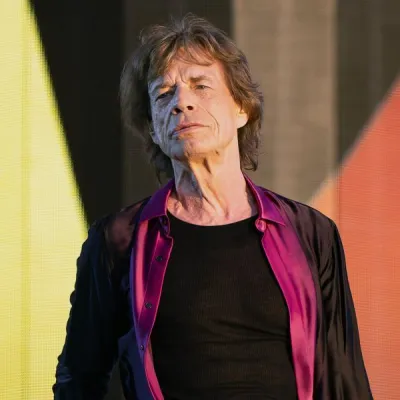
Mick Jagger
Human Design Chart
Biography
Mick Jagger — Projector with Profile 1/3
Projector 1/3 — Design at a Glance
Mick Jagger revealed himself as someone who exuded intense and focused presence. As a Projector, he did not have an intrinsic energy source but was characterized by phases of high activity that necessarily had to be followed by necessary rest periods to prevent burnout. His design tended to immediately recognize weaknesses or errors in other people's systems – comparable to a bright flashlight shining directly into the dark.
This ability to see what is 'not functioning' in others could be perceived as unpleasant or intrusive when confronted directly, similar to a light beam shining straight into someone's face. However, the more effective expression of this mechanism was to radiate harmony and brightness himself. Through this inner alignment, he became attractive to his environment; others sought contact to benefit from his clarity.
The central strategy of his design was to wait for an appreciative and sincerely meant invitation from his surroundings before bringing in leadership or advice. If this path of waiting and responding was followed, it led to recognition and success. Conversely, if he acted without invitation or did not rest sufficiently, the non-self theme 'Bitterness' appeared – a feeling of disappointment towards the environment and his own path.
Self-Projected Authority
Mick Jagger revealed himself as someone who found his inner truth through spontaneous self-expression and physical charisma rather than logical analysis. His design carried authority within – a configuration that only Projectors possess. This structure created extreme openness to external stimuli, especially motoric energies, increasing the risk of distraction. The central challenge lay in not getting lost in this vastness or constantly chasing external energy.
Decision-making occurred through two paths: self-dialogues or dialogical exchange processes, provided he was invited to do so. Crucial was distinguishing between spontaneous expression of his true essence and thoughts of the mind. What spoke without thinking revealed his uniqueness to others. Alternatively, a physical feeling acted as a compass that drew him geographically or thematically in certain directions or repelled him.
By following this inner direction faithfully, he could become a guide for others. Here lay his specific success potential: not through compulsion to act but in the authentic projection of his identity. This mechanism required him to listen to himself and use the spontaneous voice of his self as the primary source of orientation rather than being led by external expectations.
The 1/3 Profile — Investigator / Martyr
Mick Jagger revealed himself as someone who gained judgment only after intensive practical experimentation and theoretical examination. His design tended not just towards planning but actively experimenting – a characteristic trait of Profile 1/3, the Researcher and Experimenter. Here learning is central: Line 1 strives for knowledge while Line 3 demands courage to act and learn from mistakes. Mick Jagger had to integrate these two forces; if too much theory was in focus, hesitation before implementation could arise as he felt he did not know enough yet. But only through actual action trustworthy insights emerged. If he valued something well, it had already gone through this process of trial and error.
This attitude is reinforced by specific energies. Gate 31 in the Throat Center brings logical leadership and communication into play, where light (form) and darkness (spirituality) stand in a necessary interplay. The leadership quality depends on resonance with followers. Parallel to this, Gate 27, Line 3, addresses adaptation through bindings and their dissolution. It is about handling resources – often more than needed – and secret information that is necessary for practicing care. Mick Jagger's path was marked by this constant weighing between reasonable leadership in expression and adaptive learning through direct experience and enduring crises or addiction structures as indicated by Gate 27. His character developed from the necessity to transform theoretical knowledge into practical capability.
Single Definition — Defined & Open Centers
Mick Jagger's Human Design shows a tendency towards clear, reliable communication and a firmly established self-identity. His defined throat acted as a focal point for messages he could easily convey, while his defined G Center gave him a secure sense of direction and love without relying on others. This combination shaped someone who knew who they were and consistently articulated this identity.
At the same time, the design revealed high sensitivity to external fields. The open Head and Ajna Centers made him vulnerable to mental pressure and the risk of getting entangled in foreign questions or concepts instead of trusting inner clarity. His open Heart Center tended to compensate for the need to prove his worth through willpower, often leading into a cycle of promises and disappointment. Additionally, the open Sacral Center absorbed the vital energy from the environment, which could lead to exhaustion if he did not pay attention to his limits. The open Solar Plexus Center amplified foreign emotions, making him feel emotionally overwhelmed or avoid confrontation to maintain stability. Also, the open Spleen and Root Centers contributed to taking on external stress and uncertainties rather than regulating them through personal strength. These open centers challenged him to not identify with others' thoughts, emotions, or pressure but instead use his defined identity and voice as an anchor.
Channels for reflective memory and logical leadership.
Mick Jagger's design is characterized by logical leadership combined with collective resonance. The Alpha Animal Channel 7-31 connects the G Center with the Throat Center. Gate 7 provides the rational role of guidance – often described as 'the power behind the throne' – while Gate 31 represents the voice of the collective leader. This configuration required demonstrating leadership competence through understandable patterns and trends. Success occurred when the majority recognized and invited this logical direction; absolute authority was not at the forefront, but rather influence from a position that pointed the way for others.
Parallel to this, the Lost Son Channel 13-33 came into play. Here, Gate 13 as listener gathered information and secrets while Gate 33 withdrew to reflect on these experiences and allow deeper truths to emerge. This mechanism promoted patience: insights were shared only after being fully digested. It was less about predicting the future than closing past gaps and creating continuity through remembered experiences.
Additionally, specific gates shaped his expression. Gate 41 drove forward evolutionary changes and focused on emotional fluctuations in the process of transformation. Gate 27 brought caring warmth that enriched activities with altruistic quality. Gate 28 demanded decisions in the here and now, often connected to the risk of losing personal meaning or redefining it. On the personality side, Gate 45 expressed tribal energy and material willpower, while Gate 20 emphasized authentic self in the moment. Further aspects like assimilation through Gate 23, experimental mastery from Gate 16 as well as physical dedication from Gate 46 rounded out this profile by highlighting versatility and engagement.
Collective Circuitry — Circuit Signature
Mick Jagger's design leans towards strategic clarity and emotional reflection, both of which are discharged in communication. His simple definition connected the Identity Center with the Throat Center, creating a direct line between inner essence and expression.
The Understanding Circuit worked through the Alpha Animal Channel here. It promoted the ability to develop logical strategies for the future and share them free from conditioning. This energy was visual and focused on structural improvements.
Parallel to this, energies of the Meaning Circuit activated the Lost Son Channel. This reference point turned towards the past. It allowed reflecting on emotional waves from earlier experiences and grasping their meaning. These insights should also be shared to learn together from them.
Although both circuits had different time orientations – one future-oriented and rational, the other past-oriented and emotional – they converged in Mick Jagger's expression structure. The Throat Center served as a common outlet for these two streams: the cool ratio of understanding and the cyclical emotion of meaning. Both forces shaped his way of formulating content and passing it on to the collective without directly merging but rather existing as parallel aspects of his identity.
Right Angle Cross of the Unexpected 2
Mick Jagger's Human Design shows a tendency towards unpredictable turning points that often manifest as shocks or sudden realizations. This configuration corresponds to the right cross of the Unexpected, a structure that does not tolerate linear planning but reacts to spontaneous impulses. Instead of getting lost in routine, he sought out the next surprise to pull him out of lethargy.
The mechanics of this cross describe a process where the old is replaced by something completely new and unexpected. It's not about control but adaptability to the moment. Mick Jagger used this energy to break through rigid structures. When the environment stagnated, his design caused a sudden shift, an 'aha' experience or a radical change in direction.
This trait is not a flaw but a specific strategy: by allowing for the unexpected, he remains flexible and avoids the trap of self-repetition. The energy acts like a spark that falls into dry grass – quick, intense, often chaotic in appearance, yet necessary for renewal. Mick Jagger's approach was to channel this flow without suppressing it, which kept his actions unpredictable, attracting or irritating others.
Saturn Return · Uranus Opposition · Chiron Return · 2nd Saturn Return — Life Cycles
Mick Jagger gradually translated his personal structure and autonomy into concrete areas of life. This development was marked by planetary cycles that combined inner maturity with outer action capability.
In 1971, at the age of 28, Mick Jagger married Bianca Pérez-Mora Macías. This step fell during the first Saturn Return, a phase where years of groundwork often condenses into stable, binding structures. The relationship was an expression of stabilizing power that grew from inner order.
Later, in 1985 at age 42, he released his first solo album 'She's The Boss'. This occurred during the Uranus Opposition, a time when established patterns often dissolve and new, individual forms of expression emerge. The success of the album demonstrated the effectiveness of breaking away from collective expectations towards personal authenticity.
In 1993 at age 50, Mick Jagger performed in New York with songs from 'Wandering Spirit'. This marked his Chiron Return, a fulfillment cycle. During this life phase, one's incarnation cross unfolds increasingly; meaning and purpose become experiential if lived according to personal strategy. The performances were not merely career acts but the visible bloom of long-term inner alignment that now found full resonance.
Projector · Self-Projected Authority — Synthesis
A central red thread runs through his design: the ability to recognize patterns and communicate them precisely. This is evident in the Projector type, designed to see potential in others (bright flashlight), as well as in the defined Throat Center, which transmutes messages from the entire body and speaks them out. The Researcher/Experiment profile amplifies this aspect through continuous testing and verifying insights that can then be shared with logical clarity (Channel of Alpha Animal). Thus, identifying errors in the system is not only perceived but also communicated purposefully – a pattern evident in events marking career peaks and relationships.
A central paradox lies in the combination of openness and the need for verification. As a Projector with authority in self, energy is vulnerable to external influences, leading to distraction. Simultaneously, Profile 1/3 requires thorough investigation before making statements. This creates tension between intuitive 'projecting' insights and the necessity to secure them through experience. The cycles suggest that dealing with this inner dynamics in relationships and career is renegotiated repeatedly.
2 Defined Channels
Incarnation Cross - Right Angle Cross of the Unexpected 2
Solar Return
The Solar Return shows the moment when the sun returns to its exact birth position - your personal solar year.
Life Cycles
Discover the life cycles with a detailed triple view (birth chart, cycle chart, composite).
Human Design Profile
- Type
- Projector
- Strategy
- Wait for the respectful invitation
- Authority
- Self-Projected Authority
- Profile
- 1/3 - Investigator / Martyr
- Definition
- Single Definition
- Incarnation Cross
- Right Angle Cross of the Unexpected 2
- Date of Birth
- 26.07.1943 02:30
- Place of Birth
- Dartford, United Kingdom
Frequently Asked Questions
What is Mick Jagger's Human Design type?
What Profile does Mick Jagger have in Human Design?
Which authority determines Mick Jagger's decisions?
What incarnation cross is Mick Jagger associated with?
When was Mick Jagger born?
Discover your own Human Design
Are you also a Projector? Find out in a personal reading how to unfold your leadership qualities and recognize the right invitations.
More Personalities
Back to overviewSissy Spacek

Aaliyah

Alain-Fournier

Alexia

Alizée

Anémone
