
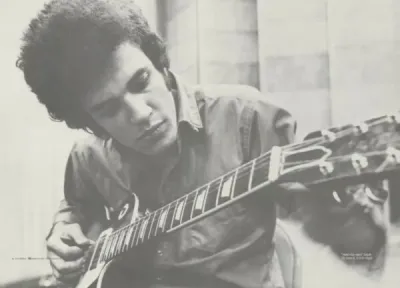
Mike Bloomfield
Human Design Chart
Biography
Human Design Analysis: Mike Bloomfield as Projector 3/5
Projector 3/5 — Design at a Glance
Mike Bloomfield's Human Design highlighted him as someone with a focusing aura that immediately recognized systemic flaws. His energy acted like a bright flashlight, illuminating the dark and guiding the way. This ability to directly identify weaknesses in systems was central to his nature.
As a Projector, Mike Bloomfield did not have a defined Sacral Center, meaning he lacked a constant intrinsic source of life energy. Instead, he experienced cycles: phases of high productivity and rapid workability alternated with necessary rest periods. Managing this cyclical energy was a crucial survival and success principle for him to prevent burnout. The conventional societal structure often expects continuous performance, which frequently contradicted his natural rhythm.
His strategy did not involve direct confrontation or criticism, which would have quickly triggered defensive reactions in others—similar to shining bright light directly into someone's face. Instead, Mike Bloomfield practiced indirect leadership through role modeling. By radiating harmony and aligning his own life, he attracted those around him naturally. People came to him on their own initiative for advice. The art lay in waiting for an honest and respectful invitation before sharing his knowledge.
If Mike Bloomfield lived according to this design, he was rewarded with success. However, if he deviated from it and tried to act against his natural rhythm or without invitation, the theme of bitterness would arise. His path was marked by the balance between his sharp perception and patience until others were ready to accept his leadership.
Self-Projected Authority
Mike Bloomfield's Human Design inclined him towards extreme openness, making him vulnerable to distraction through external motoric energies. As a Projector with rare Authority in Self, he faced the challenge of not getting lost in this vastness or constantly chasing energy. His inner truth lay in his identity, opening two paths for decision-making.
Firstly, he could gain clarity through spontaneous self-dialogues or stimulated conversations. Crucial was distinguishing between true essence and reflective thought. What Mike Bloomfield spontaneously expressed without thinking reflected his authentic self and made his uniqueness recognizable to others. Secondly, he followed physical directional impulses that drew him towards or away from something geographically or thematically. By recognizing and faithfully following this inner orientation, he became a direction-giver for his environment. This was the foundation of his specific success potential: not through personal action but through authentic presence and clear perception of direction. The constant danger lay in losing focus on his identity and getting lost in the open reception of external stimuli.
The 3/5 Profile — Martyr / Heretic
Mike Bloomfield's Human Design was characterized by a dynamic based on practical experimentation. As a Profile 3/5, he learned primarily through trial and error; theoretical knowledge alone did not suffice for him—he had to make experiences himself. This process along Line 3 created a rich treasure of life experience that he made accessible to others. Along with this, Line 5 gave him the role of rescuer or hero, solving problems and managing resources with this acquired knowledge. This combination generated strong appeal as others wanted to learn from his solutions.
The tension in his design lay between necessary failure during learning and the expectation for heroic performance. Public failure was painful but indispensable for the learning process. Furthermore, he carried responsibility for other people's resources, which meant power when successful but risked loss of reputation or fraud if unsuccessful. His leadership depended on the quality of his followership and his own discernment. Thus, Mike Bloomfield emerged as someone who gained wisdom through personal mistakes to effectively intervene in crises while always facing the pressure to prove this role to others.
Single Definition — Defined & Open Centers
Mike Bloomfield's Human Design profile established a stable foundation of reliable voice and firm inner identity. His defined Throat Center ensured clear, consistent communication, while his defined G Center provided him with a secure sense of self-love and personal direction. This configuration allowed him to appear authentic and comfort others through his presence or offer new perspectives without being dependent on external expectations.
In contrast, Head, Ajna, Heart, Sacral, Solar Plexus, Spleen, and Root Centers were open. These open centers acted as mirrors for the environment: they absorbed mental pressure, foreign emotions, or will impulses without identifying them as their own essence. Mike Bloomfield tended to get caught up in thought whirlpools of doubt or felt a need for willpower and validation – patterns that did not reflect his core but were conditioned from outside.
The challenge was not to interpret these absorbed energies as 'me'. Instead of resolving mental pressure through endless thinking or wanting to prove himself with promises, it was crucial to trust his inner authority. His open Solar Plexus absorbed the emotional climate of others; his open Heart Center often sought validation through performance. By learning to let go of these reflections and relying on the clarity of his Throat Center as well as the security of his G Center, he could easily express his truth without getting caught in cycles of overburdening or identity loss. His strength lay in staying true to his own defined direction despite being open to external influences.
Channel 31-7: The Alpha — Channels & Gates
Mike Bloomfield's design inclined towards logical, collective leadership. He was someone who worked through tested patterns and rational guidance – an 'alpha' that did not rule by absolute authority but acted as a influential force within its own pack. This stance resulted from the Alpha Channel 21-31. This channel connected his G Center with his Throat Center and integrated the logical role of self (Gate 7) with the ability for collective leadership (Gate 31). His voice exerted valuable influence, yet his leadership skills needed to be perfected and demonstrated to satisfy the community's approval.
For Mike Bloomfield, it was crucial that he was invited by the majority to take charge. He could only show the way, not walk it; his success depended on whether the electorate recognized his performance. This mechanism differed significantly from sole rule or individual exemplarism. Instead, his authority rested on an understanding of current trends and the ability to connect with people's needs.
Additionally, further configurations shaped his inner workings: Gate 41 propelled him through evolutionary development and crisis experiences, while Gate 27 embodied a genetic role of care for clan and self-preservation. Gate 28 demanded decisions in the here and now as well as taking appropriate risks according to his strategy. On a personal level, Gate 12 with its mutative creativity and emotional mood, Gate 2 as receiver of new directions, and Gate 45 expressing tribal level and willpower were at work. In his design, Gates 8 (contribution and identity), 35 (change through interaction), and 20 (awareness in the now) supported his ability to act. Deeper aspects like collective memory (Gate 13), experimental mastery (Gate 16), and physical dedication (Gate 46) rounded out his profile by fostering continuity, adaptability, and presence.
Collective Circuitry — Circuit Signature
Mike Bloomfield was someone who structured logical and visual insights to shape a better future. His design was marked by the Understanding Circuit, which aims at rational strategies for societal improvement. Since the Solar Plexus Center is not involved here, this ratio represents an emotionless, clear analysis.
For Mike Bloomfield, the connection was exclusively between his Throat and Identity Centers. This direct link occurred through the Alpha Channel (Gates 31 and 7). This channel connected his inner identity with the ability to make ideas visible and audible. It translated abstract logic into concrete visual formats.
As this was a simple definition, these two centers formed a closed, coherent flow. There were no separate or parallel energies within this circuit; power flowed directly from identity to communication. This shaped his essence through a focus on sharing rational insights free of external conditioning. The left side of his chart represented future energies, emphasizing his orientation towards strategic development. His way of working was thus clearly defined: he used his mind to create structure and carried it outward as an alpha without being distracted by emotional fluctuations.
Right Angle Cross of the Unexpected 2
Mike Bloomfield's Human Design configuration carried the structure of the right cross of Unexpected 2. This configuration shaped a life dynamic characterized by unpredictability and spontaneous turns. Instead of striving for control or following rigid plans, he exhibited an underlying attitude of flexibility. Life appeared less as a linear path to be mastered and more like a stream full of surprises that he responded to improvisationally.
The mechanics of this cross suggest that the unexpected was not seen as a disturbance but rather as the driving force of his journey. Rigid structures often proved to be obstacles, as external circumstances or internal impulses would abruptly change course. The challenge did not lie in avoiding these turns but in the ability to 'dance' with them. Acceptance rather than resistance formed the strategic foundation.
For Mike Bloomfield, this meant that improvisation and adaptability were central competencies. He lived in a reality where the sudden was normal. This openness to the unplanned allowed him to move through situations that others would see as chaotic or uncontrollable. His design promoted an attitude that integrated surprises not as threats but as necessary components of the life process. Through this flexibility, he could follow the path offered to him rather than forcing a pre-defined route.
Saturn Return — Life Cycles
Mike Bloomfield's Human Design laid a tendency towards structural consolidation and maturation, particularly evident during phases of Saturn Return. This astronomical configuration marks a time when years of groundwork often condenses into a solid result and internal stances become visible externally. For Mike Bloomfield, this process began in 1971 when he turned 28 years old. In that year, he released 'The Live Adventures' with Al Kooper, an album that reached number 18 on the charts. This success was no coincidence but aligned with the mechanics of the first Saturn Return: a phase where one's artistic identity not only solidifies internally but also gains public recognition. The chart position served as concrete evidence that Mike Bloomfield had clearly defined his musical voice at this point and shared it with the world. The Saturn Return acts like a litmus test showing whether the paths lived up to that point are viable. For Mike Bloomfield, this was confirmed through the measurable success of his live album. It represented an affirmation of his artistic substance built on earlier developments now presented in a stable form. This moment highlighted how his design understood maturation not as a loss of spontaneity but as a gain in clarity and impact. The connection between personal development and external success here showed as an organic consequence of his inner alignment.
Projector · Self-Projected Authority — Synthesis
Mike Bloomfield's life was marked by a deep ability to recognize the potential and mistakes of others (Gate 31, Throat Center) combined with an internal compass for authenticity and direction (defined G Center). This combination led him to repeatedly challenge himself (Line 3 in Profile) and provide his knowledge to others (Line 5), often subtly guiding or inspiring them. He acted as a catalyst for change by recognizing patterns and pointing out new paths – a role that depended on the willingness of others to accept and follow him (Projector Type). His open design in centers like Head, Ajna, and Sacral made him receptive to external influences, enhanced his perception but also required phases of rest and self-discovery to avoid burnout.
A central tension field in Mike Bloomfield's design lay between his ability for deep insight and the need for recognition (Gate 41, Gate 28). He was geared towards recognizing mistakes and offering solutions, yet the open design of the Solar Plexus Center made him vulnerable to emotional conditioning. This might have led to an internal conflict between the desire for authenticity and the necessity to adapt to others' expectations to succeed. The success of 'The Live Adventures…' (Saturn Return) suggests that in phases of his development he could find this balance by sharing his unique perspective and receiving recognition for his abilities.
1 Defined Channel
Incarnation Cross - Right Angle Cross of the Unexpected 2
Solar Return
The Solar Return shows the moment when the sun returns to its exact birth position - your personal solar year.
Life Cycles
Discover the life cycles with a detailed triple view (birth chart, cycle chart, composite).
Human Design Profile
- Type
- Projector
- Strategy
- Wait for the respectful invitation
- Authority
- Self-Projected Authority
- Profile
- 3/5 - Martyr / Heretic
- Definition
- Single Definition
- Incarnation Cross
- Right Angle Cross of the Unexpected 2
- Date of Birth
- 28.07.1943 10:47
- Place of Birth
- Chicago, IL, United States
Frequently Asked Questions
What was Mike Bloomfield's Human Design type?
Which Profile did Mike Bloomfield have?
What authority did Mike Bloomfield possess?
What incarnation cross did Mike Bloomfield have?
When was Mike Bloomfield born?
Discover your own Human Design
Are you also a Projector? Find out in a personal reading how to unfold your leadership qualities and recognize the right invitations.
More Personalities
Back to overviewSissy Spacek

Aaliyah

Alain-Fournier

Alexia

Alizée

Anémone
