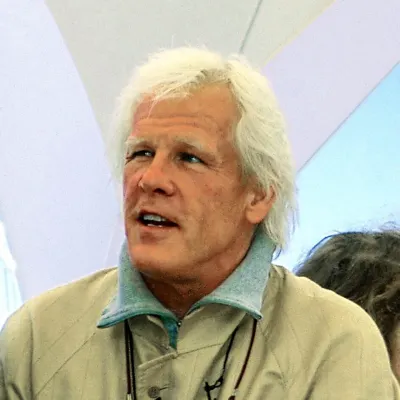
Nick Nolte
Human Design Chart
Biography
A serious athlete, Nolte attended both Benson and Westside High Schools in Omaha, Nebraska before being awarded a football scholarship to Arizona State University. Failing his classes, he dropped out and turned to studying acting at the Pasadena Playhouse and Stella Adler’s Academy in Los Angeles. In 1962, he was arrested for selling fake draft cards and was sentenced to 45 years in jail; however, his sentence was suspended. He spent the next 14 years traveling the country with various theater companies before making his feature debut in the disappointing "Return to Macon County," 1975. He was, however, soon after cast in the television miniseries, "Rich Man, Poor Man," for which he won an Emmy nomination, and then in the leading role of "The Deep," 1977.
He rapidly gained fame as a eccentric, multitalented actor who preferred offbeat roles, appearing in numerous films throughout the 1980s and 1990s; however the charismatic actor’s reputation as a hunky, forceful leading man was often overshadowed by his difficulties with women and booze. Until 1990, he was a heavy drinker; in fact, the actress, Katherine Hepburn, once accused him of falling down drunk in every gutter in town, to which Nolte replied, "I’ve got a few to go yet."
His performance in "The Prince of Tides," 1991, won him a Golden Globe for Best Dramatic Actor as well as an Oscar, and during the same year, the blond, beefy actor got rave reviews for his work in "Cape Fear." In the mid-1990s, he both starred in and executive produced films such as "The Thin Red Line," and in 2001, the Malibu Film Festival gave him a lifetime achievement award.
Nolte married three times. His first wife was Sheila Page, 1966-1970. In 1978, he made a second marriage to Sharyn Haddad.
The Human Design of Nick Nolte: Projector 1/3
Projector 1/3 — Design at a Glance
Nick Nolte's design showed a tendency towards a dense, focused aura, like a bright flashlight directed at weaknesses in the environment. He was someone who could immediately spot flaws in other people's systems. However, this ability to 'shed light on the dark' was a double-edged sword: Direct confrontation with the shortcomings of his counterpart was often perceived as unpleasant or even aggressive, as if he were shining a light directly in their face.
The mechanics of the Projector type explain this: Without a constant, intrinsic energy source from the Sacral Center, Nick Nolte had phases of high activity followed by necessary rest phases for regeneration. The constant workload of society ignored this need, increasing the risk of burnout. His optimal strategy was not constant action but waiting for a respectful, honest invitation. If he waited and attracted others with his own harmonious glow, people would come to him of their own accord to seek advice.
Living by this principle rewarded him with success. If he violated this strategy and tried to impose his insights, it would sooner or later lead to his non-self theme: bitterness. His design called on him not to lecture but to lead by his own presence, so that others would seek him out voluntarily.
No Inner Authority
Nick Nolte did not have inner, physical authority. This is a rare configuration that either marks him as a mental projector or a reflector. In both cases, there is no direct, spontaneous decision-making help from defined centers in the lower body area. His decision-making was therefore not an individual, isolated act but a complex process of resonance and filtering.
As a mental projector, he found orientation through exchanges with many different people. The energetic interactions in his open centers activated latent potentials and provided information from various perspectives. This high resonance capability helped him identify the right environment and the appropriate conversation partners. However, evaluating these diverse impressions required time and solitude. Only in retreat could he see the thread, filter out the essential, and develop his specific intelligence.
If he is considered a reflector, his orientation depended on the moon cycle. Important decisions took about 28 days, the time it takes for the moon to complete its journey through his full body graph. This period created reliable conditioning patterns that showed him what belonged to him. Urging was counterproductive here.
Regardless of the exact type, the key for Nick Nolte was to be in an environment where he felt comfortable. There, in a trusting dialogue with the right people, his sense of what was meaningful and right for him deepened. His success capital lay not in quick intuition but in the ability to structure a mass of information and recognize the essential.
The 1/3 Profile — Investigator / Martyr
Nick Nolte was someone who did not just collect knowledge theoretically but validated it through hard practice and direct experience. His design as a researcher and experimenter (Profile 1/3) established a basic attitude that linked learning and action inseparably. The first line drove him to understand the necessary foundations – to recognize the 'law of necessity' before an action could be viable. But theoretical preparation alone was not enough; the third line challenged him to act, make mistakes, and learn from them.
This process of trial and error was central to his development. He had to learn to tolerate criticism and adapt to changing circumstances without losing his own wisdom. When he made a decision or formed an opinion, it was based on a double check: theoretical analysis and practical proof. Only then could a trustworthy result be achieved. The emotional wave had to be waited out to test whether a new principle was truly viable and a real improvement. His path was marked by the necessity of proving through personal experience that something works before it could be accepted as valid.
Single Definition — Defined & Open Centers
Nick Nolte revealed himself as someone with a consistent, trustworthy mental function. His defined Ajna Center created a specific way of conceptualizing ideas that was hardly influenced from the outside. This mind served as an external authority that processed data and creativity and conditioned the mental field in his aura. Since his defined Throat was directly connected to this Ajna, he spoke reliably what his mind conceptualized. This connection allowed him to articulate his thoughts clearly and honestly, without the message being distorted by emotional waves or other impulses.
At the same time, Nick Nolte was vulnerable to numerous conditioning centers. His open Head Center meant that he did not have a consistent access to inspiration. Instead, he tended to take on mental pressure from the environment, which could lead to doubts and confusion when he tried to answer questions that were not his own. His open G Center left him without a fixed identity; he often adapted to people and places to feel belonging, rather than following his own, unchanging direction. Furthermore, his open Solar Plexus absorbed the emotions of his surroundings, leading him to amplify foreign moods and experience them as his own. His open Heart Center made him vulnerable to the pressure to prove his worth through promises and competition, although he did not have the consistent energy for it. Finally, his open Root Center took on the adrenalized stress of others, which could lead to a cycle of overactivity and exhaustion as he tried to get rid of this foreign pressure.
Channels for spontaneous insight and digested expression.
Nick Nolte revealed himself as someone whose thinking often seemed light-years ahead. His design laid a tendency to spontaneous breakthroughs, which only found value when clearly articulated at the right time. This dynamic was shaped by the Channel of Structuring 43-23. It connected the spontaneous insight of Gate 43 with the assimilating processing of Gate 23. This formed a unique, mutative perspective that promoted efficiency by translating complex connections into simple, metaphorical key words. The challenge was to let go of control and allow the mind to condense its knowledge at its own pace. If this strategy was neglected, he risked being perceived as an outsider; if the timing was right, however, the path opened for a profound change in collective understanding.
Additionally, further energies influenced him. Gate 49 brought a sensitive reaction to upheavals and the principle of sacrifice, where the emotional wave steered the discernment. Gate 4 allowed him to succeed despite ignorance by developing formulas to clarify suspicious patterns and thus avoid retaliation. Visual memories and the harmonious assessment of the situation before acting were supported by Gate 11, which provided ideas for analysis and collective improvement. Finally, Gate 24 contributed to mental mutation by promoting the process of renewal in the rhythm of the pulse and helped find the personal significance of newly acquired knowledge. Gate 31 rounded the picture by bringing the pure energetic transmission of forces and leadership to the forefront. Overall, a profile emerged that aimed at precise, well-timed communication and the ability to formulate innovative concepts in a way that could be taken up and integrated by others.
Individual Circuitry — Circuit Signature
Nick Nolte's design laid a tendency towards structured, clear communication. He revealed himself as someone who could translate inner thoughts into orderly, understandable forms. This results from his simple definition: The energetic streams in his chart are coherent and flow without internal contradictions or separate, parallel existing energy fields.
Central to this orientation is the Knowledge Circuit. In Nick Nolte, this circuit was not activated across the full range of his possibilities, but specifically through the Channel of Structuring (Gates 43 and 23). This channel connects the Ajna Center, the seat of thinking and analysis, directly with the Throat Center, the place of expression.
This connection means that Nick Nolte was enabled to take complex or abstract ideas from the mind and convey them through a structured, logical form. This is not about spontaneous inspiration or emotional waves, as other parts of this circuit describe, but about the ability to organize knowledge and express it in a way that is understandable to others. The energy pulsing and acoustically, as described in the circuit, manifested primarily in him as this clear, structured transmission of thought content. Since no further channels of this circuit were active, this form of expression remained focused on the connection between analysis and orderly speech, without being disturbed by other, possibly conflicting impulses such as pure creativity or emotional inspiration.
Right Angle Cross of Explanation 1
Nick Nolte carried the right cross of the Declaration 1 in Human Design. This specific configuration is characterized by a profound, often painful sensitivity to the truth, coupled with the drive to articulate this realization clearly and unvarnished. This is not merely a rhetorical skill but an existential burden: the knowledge of the essence of things is felt as a personal burden that must still be shared to maintain integrity.
The mechanics of this cross describe a process in which inner clarity pushes outward. Those who possess this structure tend to penetrate complex or unpleasant realities and articulate these insights in words that either liberate or challenge others. It is a pattern of authentic communication that makes no compromises with one's own perception. The energy of this configuration supports the ability to make the invisible visible by translating abstract truths into concrete, understandable statements. This, however, requires immense inner strength, as one's voice becomes the instrument of truth without slipping into criticism or judgment. The challenge always lies in maintaining this clarity without being overwhelmed by the weight of one's own knowledge.
Saturn Return · Uranus Opposition · Chiron Return · 2nd Saturn Return — Life Cycles
Nick Nolte's design exhibited a tendency towards cyclical, structural solidifications marked by external disruptions and internal maturation processes. His first Saturn Return marked the beginning of a phase where years of groundwork condensed into stable life structures. This was not a sudden change but the result of a gradual consolidation that created stability.
Simultaneously, the Uranus Opposition acted as a counterforce: it brought unexpected breaks and the necessity to break old patterns. This tension between the constructive structure of Saturn and the liberating, often chaotic energy of Uranus shaped his development. It was a dance between the desire for stability and the drive for change.
The Chiron Return, typically occurring between the 49th and 51st years of life, served as a fulfillment cycle. Here, it became evident that his own incarnation cross – if he had followed his strategy and authority – increasingly unfolded in life. Meaning and purpose were experienced, not as healing of old wounds, but as the blossoming of his life's task.
The second Saturn Return rounded off this process. It brought a further deepening of the structure, a confirmation of the previously found paths, and a final anchoring of identity. Nick Nolte thus moved through phases of building up, destruction, unfolding, and final stabilization, with each cycle bringing a specific quality to his life.
Projector · No Inner Authority — Synthesis
A central red thread in this design is the deep connection between perception and expression. The ability to recognize errors in the system (Projector Type, Channel of Structuring) is reinforced by a defined mental center that consistently forms concepts and is channeled through the Throat Center. This combination points to a natural drive to analyze the world, understand it, and then – in a unique and efficient way – communicate it. The profile as a Researcher/Experimentor underscores this process of learning through experience, where self-earned insights are seen as particularly valuable. The energy seems to revolve around gaining knowledge, transforming it, and initiating changes – a cycle that is further strengthened by the Knowledge Circuit.
The central paradox lies in the tension between the need for recognition and the way information is conveyed. As a Projector, this person projects their knowledge onto others but simultaneously finds no direct access to the emotional center. The bright light of insight (Channel of Structuring) can be felt as uncomfortable, while the exchange with others (mental authority without inner authority) is essential to validate one's own perspective. A tension field arises between the desire to share the truth and the necessity to do so in a way that is accepted by the environment.
1 Defined Channel
Incarnation Cross - Right Angle Cross of Explanation 1
Solar Return
The Solar Return shows the moment when the sun returns to its exact birth position - your personal solar year.
Life Cycles
Discover the life cycles with a detailed triple view (birth chart, cycle chart, composite).
Human Design Profile
- Type
- Projector
- Strategy
- Wait for the respectful invitation
- Authority
- No inner authority - learn more
- Profile
- 1/3 - Investigator / Martyr
- Definition
- Single Definition
- Incarnation Cross
- Right Angle Cross of Explanation 1
- Date of Birth
- 08.02.1941 10:40
- Place of Birth
- Omaha, NE, United States
Frequently Asked Questions
What is Nick Nolte's Human Design type?
What Profile does Nick Nolte have in Human Design?
What authority does Nick Nolte have?
Which incarnation cross is active for Nick Nolte?
When was Nick Nolte born?
Discover your own Human Design
Are you also a Projector? Find out in a personal reading how to unfold your leadership qualities and recognize the right invitations.
More Personalities
Back to overviewSissy Spacek

Alain-Fournier

Anémone

Ann-Margret

Arletty

Arno