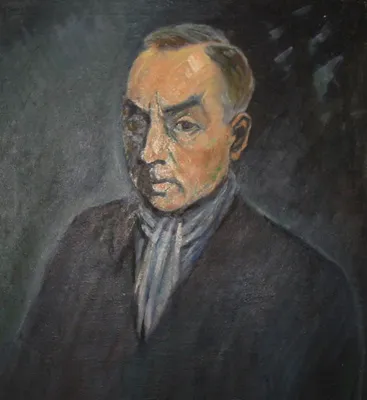
Norbert Jacques
Human Design Chart
Biography
The Human Design of Norbert Jacques: Manifestor 5/1
Manifestor 5/1 — Design at a Glance
Norbert Jacques was a man of initiative and visions. His Human Design type, the Manifestor, set him apart as a pioneer: He had the inner strength to initiate processes and move others without having to do all the work himself. Much like an emperor in ancient Rome who sent his soldiers to conquer territories while he determined the grand strategy, Norbert Jacques influenced his environment through his influence. This role, however, came with a specific pain point: He was often misunderstood. Because his thoughts and plans frequently reached further than those around him, he inevitably polarized people. Some followed him enthusiastically, others rejected or even hated him precisely because of these great dreams. To minimize this resistance and find the right followership, it was crucial for Norbert Jacques to communicate his intentions and visions early and clearly. This strategy of informing was key to his success. When he followed this pattern, his design rewarded him with a deep sense of inner peace. If he lived against this nature by acting without involving or informing others, he instead felt a persistent, deep anger within himself. His life energy was therefore geared towards leading the world into a new future, provided he prepared the ground through clear communication.
Emotional Authority
Norbert Jacques lived with an inner authority deeply rooted in his defined Emotional Center. This center fundamentally determined his decision-making: He was subject to an emotional wave that manifested as constant ups and downs of his feelings. The world appeared colored by his current mood; one moment totally enthusiastic about something, he saw the same thing completely negatively the next. His immediate feeling was merely a snapshot, a first impression that did not necessarily represent his truth yet. Therefore, quick, spontaneous decisions based on emotion could have negative consequences for him.
The mechanics of his emotional authority required patience. The more time he took to let a decision mature, the deeper and broader he could perceive the situation. This demanded sleeping over important questions multiple times. He should take his time, ponder repeatedly, and ask himself again and again. Over time, intense feelings subsided, he gained emotional distance, clarity, and calmness set in. Only then had he gone through the process. For him, this rule was absolute: Whenever the Emotional Center is activated, it functions as an inner authority, regardless of what else is defined in his design. This prioritization of emotional maturity over spontaneous reaction shaped his approach to long-term life decisions significantly.
The 5/1 Profile — Heretic / Investigator
Norbert Jacques revealed himself as someone who used his deep, individual knowledge to offer concrete solutions to others in crisis situations. His 5/1 profile – Hero and Researcher – shaped an attitude based on selflessness and the sharing of practical experience. He possessed that magnetic quality that made people seek answers from him because they recognized his problem-solving ability. This aligned with the dynamics of the 5/1 Profile: Line 1 stood for intense, personal research and self-discovery, while Line 5 carried these insights outward to help in emergencies.
This configuration brought a specific challenge with it. Without clear boundaries, there was a risk that Norbert Jacques would be exhausted by constant inquiries from others, similar to an expert stretched to their limits because everyone relies on their expertise. His design challenged him to learn to say no at times to maintain the balance between his own research work and service to others. The themes of attention and humiliation associated with these underlying mechanics were evident in how he often took subordinate roles or saw his contributions not adequately recognized, yet this drove him to continue passing on his mutations into society.
Single Definition — Defined & Open Centers
Norbert Jacques was characterized by defined Heart and Throat Centers, indicating someone who directly translated their willpower into speech and action. This configuration gave him a consistent way of expressing himself: he spoke from the 'I want' place with clarity and the commitment to keep promises. His energy wasn't just communicative but also action-oriented; he used his voice to control resources and establish his own value in the material world. At the same time, his defined Solar Plexus Center served as an internal authority. Norbert Jacques learned to wait for the emotional wave before making decisions. This patience allowed him a deep sensitivity; he used time to go through feelings and then acted from emotional clarity rather than impulsively reacting to highs or lows of his mood.
This stable inner system contrasted with his open centers. His open Head and Ajna Centers made him vulnerable to mental pressure and the confusion of others. He tended to take on questions that weren't his own, seeking external inspiration to fill mental gaps. His open G Center meant he didn't have a fixed identity but reflected in relationships and environments. He relied on others to initiate direction and love; false places or partners led him to feel lost. Additionally, his open Sacral Center absorbed the energy of his surroundings, leading him to overextend himself with borrowed power rather than respecting his own fluctuating energy flow. His open Root and Spleen Centers made him take up external stress and fears, often putting pressure on him to complete tasks or be secure in things not within his responsibility. Norbert Jacques' challenge was to separate from these external influences and instead trust his emotional clarity and willful expression.
Channels for bold action and emotional transformation.
Norbert Jacques was someone who actively mastered the material plane, driven by a strong desire to control his life rhythm. This attitude stemmed from the Money Line 21-45, connecting Heart and Throat Centers. Here, the Hunter's Gate (21), which claims control to protect one's heart, clashed with the authoritative Gate of the Collector (45), which decides over resources. For Norbert Jacques, this meant a constant balance between hard work and the need to independently determine when to act or rest.
Simultaneously, his design was marked by an insatiable search for new experiences. The Channel of Transience 35-36 connected Solar Plexus with Throat Centers. Gate of Change (35) aimed at manifesting something new while the emotional Gate of Crisis (36) used inadequacies as motivation to move forward. This created internal tension: Norbert Jacques learned through experiencing highs and lows, often only gaining emotional clarity after experience.
These dynamic forces were modified by additional gates. Gate 5 set the basic rhythm requiring habits and energy buildup while Gate 22 promoted openness and waiting for mutation. In the subconscious, Gate 47 sought to extract collective sense from past confusions. On the personality side, Gate 20 drove into the here and now connected with authentic self, while Gate 31 represented the transfer of leadership power. In his design, Gate 16 supported experimentation towards mastery, Gate 40 demanded rest as a reward for willpower strength, and Gate 8 sought an individual contribution to the collective. Together these elements formed a profile swinging between the demand for material sovereignty and emotional drive for vibrant experience.
Collective Circuitry — Circuit Signature
Norbert Jacques was marked by a unity of Heart, Throat, and Solar Plexus Centers. This simple definition combined willpower, communication, and emotion into a continuous flow. His design knew no separate energetic poles; action impulses from the heart flowed directly to voice and were accompanied by the emotional rhythm of the Solar Plexus.
This flow formed two circuits. The Meaning Circuit connected Throat and Solar Plexus via the Channel of Transience (Gates 35/36). Here it wasn't about cool logic but sharing emotional waves from the past. Norbert Jacques reflected on events to grasp their meaning and share these insights with others. Energy flowed in wave patterns: each emotional cycle had a clear start, middle, and end.
Parallelly, the Ego Circuit worked via Channel 21-45 (The Money Line), connecting Heart and Throat Centers. This area served for joint creation of resources within a group. Without connection to Sacral Center, there was no constant life force; instead, rest periods were necessary to build new energy for the tribe. It was a traditional give-and-take supported by mediation gift. Both circuits worked side-by-side: emotional exchange over transience on one hand, resource-oriented cooperation on the other – always carried by direct connection between inner will, voice, and feeling world.
Left Angle Cross of Separation 1
Norbert Jacques revealed himself as someone whose inner compass pointed towards a clear distinction and differentiation. His design included the signature of the left cross of separation, a configuration that did not strive for harmonious fusion but rather aimed to separate the self from the foreign. This energetic alignment shaped his attitude: He sought less common denominators and more decisive differences that set individuals or ideas apart.
The mechanics of this cross work with the power of distinction. It is about drawing clear lines and detaching from what does not fit one's essence. For Norbert Jacques, this meant a natural tendency towards selection and exclusion of superfluous or false elements. He lived this dynamic as an ongoing test of boundaries between inner and outer worlds. The energy of this pattern challenged him to gain clarity through separation rather than losing it in the fog of generalization. This was not an act of rejection for its own sake, but a necessary process to sharpen his identity and protect it from dilution. His life task lay in using this cutting edge of distinction to bring structure into the chaos of everyday life.
Saturn Return · Uranus Opposition · Chiron Return · 2nd Saturn Return — Life Cycles
Norbert Jacques showed a development line marked by external recognition and later existential trials. In 1922, at age 42, he received German citizenship. This step fell within the Uranus opposition phase, where one's self-understanding often changes abruptly and new identities or affiliations are sought. Official naturalization marked a turning point here, redefining his place in society less through internal continuity than through an abrupt external confirmation of his status.
Later, in 1938 at age 58, Jacques experienced with his family a fateful year: Due to his wife's Jewish faith, they separated. This corresponded to the second Saturn return cycle, which tests old structures for their viability and often reveals harsh consequences from earlier actions or societal constraints. Here, the mechanics did not appear as blooming fulfillment but as painful reality: The design showed how external circumstances collided with internal loyalties. The Saturn return forces confrontation with the limits of possibility; Jacques' divorce was a concrete expression of this test where personal bonds broke under historical pressures. His design revealed the tension between individual belonging and the harsh dictates of time.
Manifestor · Emotional Authority — Synthesis
Norbert Jacques lived a life marked by an inner tension between the urge to lead and the necessity for emotional maturity. As a Manifestor (Design View), he possessed vision and impulse to initiate things, yet his emotional authority required time to make decisions and fully grasp their consequences. This interplay was evident in his ability to inspire others with his own ideas (Profile Hero/Researcher) while simultaneously being mindful of not distributing energy recklessly. The connection between Heart and Throat Centers (Channels/Gates) pointed towards a strong self-assertion, yet always linked to the cyclical process of perception and letting go (Switch Circuit).
Jacques' life was a dance between the desire for control and acceptance of emotional waves. Experiences related to significant life events – both career and crisis – revealed a profound ability to learn from past occurrences and pass on this wisdom. The left cross of separation 1 underscored his tendency to separate from external influences to gain inner clarity and communicate authentically.
2 Defined Channels
Incarnation Cross - Left Angle Cross of Separation 1
Solar Return
The Solar Return shows the moment when the sun returns to its exact birth position - your personal solar year.
Life Cycles
Discover the life cycles with a detailed triple view (birth chart, cycle chart, composite).
Human Design Profile
- Type
- Manifestor
- Strategy
- To inform others before acting
- Authority
- Emotional Authority
- Profile
- 5/1 - Heretic / Investigator
- Definition
- Single Definition
- Incarnation Cross
- Left Angle Cross of Separation 1
- Date of Birth
- 06.06.1880 03:00
- Place of Birth
- Luxembourg, Luxembourg
Frequently Asked Questions
What was Norbert Jacques' Human Design type?
Which Profile did Norbert Jacques have in Human Design?
What Authority did Norbert Jacques have?
What incarnation cross did Norbert Jacques have?
When was Norbert Jacques born?
Discover your own Human Design
Are you also a Manifestor? Find out in a personal reading how to use your initiation power peacefully and dissolve resistance.
More Personalities
Back to overviewAlain-Fournier

Angeli

Christian-Jaque

Juninho

Kesha

Lucebert