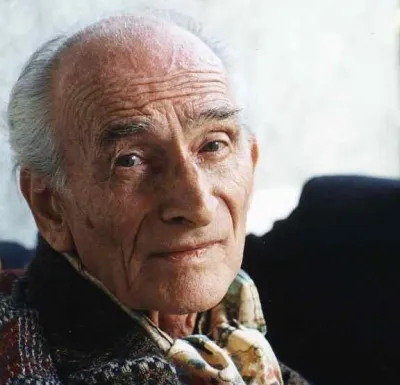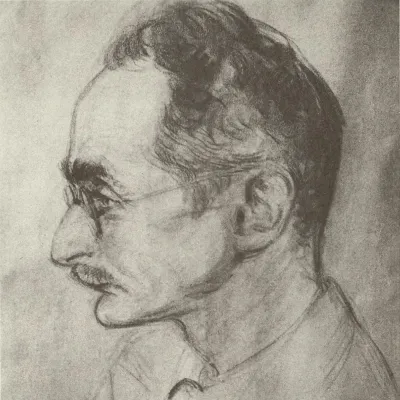
Paul Maas
Human Design Chart
Biography
He studied classical philology at the universities of Berlin and Munich, receiving his doctorate in 1903. In 1910 he obtained his habilitation and in 1920 became a full professor at Berlin. In 1930 he was appointed chair of classical philology at the University of Königsberg. In 1934 he was forced into retirement by the Nazi government, and in 1939 emigrated to Great Britain, where he taught classes at Oxford University.
He died on 15 July 1964, aged 83, in Oxford.
Human Design Analysis: Paul Maas as Manifesting Generator 3/5
Manifesting Generator 3/5 — Design at a Glance
Paul Maas was a Manifesting Generator. His design combined the constant energy source of a Generator with the ability to skip steps. He possessed sacral power but did not just react passively to impulses; instead, he could quickly draw things into his life. This hybrid nature brought specific dynamics.
While he followed the strategy of reacting – acting effectively when the Sacral Center agreed – his speed often led him to miss important stages. In such cases, he had to go back and make up for missed steps, which could cause frustration as dissatisfaction was his non-self theme. Additionally, Paul Maas tended to pursue multiple projects simultaneously. He reacted to many impulses at once. Without inner approval, he risked his creative drive turning into exhaustion.
With correct application of his nature – that is, by constantly checking internal resonance and accepting change – a play mode emerged. Then he drew deep satisfaction from his work. The pressure to finish one thing before starting another did not fit his structure. Instead, he thrived in the rhythmic parallelism of many activities as long as they were fun and energetically supported. Thus, his potential frenzy transformed into productive, contented diversity.
Sacral Authority
Paul Maas showed himself as a Generator whose decision-making was marked by sacral authority. This inner guidance is unique to this type and simplified his process since strategy and authority were identical. His reactions to external stimuli manifested physically: a gut feeling or surge of energy signaled approval. He learned to pay attention to these internal signals – whether grunting, humming, or simply saying “Hmm.” When his sacral motor kicked in, he felt vital and alive. Endless energy was at his disposal, allowing him to approach tasks with great enthusiasm. His design helped him live joyfully and fully immersed in his activities without needing a strict goal-oriented external purpose. The connection to the activated Spleen Center further supported this authority by giving him the ability to react particularly quickly and spontaneously. This gave him immediate access to his physical well-being and instinctive perception, which he could reliably use as a guide for his decisions.
The 3/5 Profile — Martyr / Heretic
Paul Maas showed himself as someone who gained knowledge not from books but through personal action. His design inclined him to initially try everything out – Line 3 of the Explorer demands this direct contact with reality. He learned from successes and failures, gathering a rich trove of practical experience that he later presented to others.
This attitude matched Profile 3/5: The Hero and Saviour. Line 5 brought the role of storyteller, who influences others through attractiveness and experience. People sought his proximity to learn from his lived insights. Yet this heroic role carried risks: failing publicly in an experiment hurt him deeply.
His energy materialized (Gate 14), where selflessness was crucial to maintaining individuality. At the same time, others projected high expectations onto him (Line 5). Paul Maas had to learn not to succumb to every ambition or obligation, otherwise overburdening himself. His path lay in discovering through trial and error whom he should dedicate his strength to rather than being driven by external projections.
Triple Split Definition — Defined & Open Centers
Paul Maas revealed himself as someone with a clear inner identity and willpower who was simultaneously exposed to constant mental pressure. His design featured defined G-, Heart-, and Sacral Centers: He possessed reliable self-love, could keep promises, and had a constant energy source for his expression. This combination endowed him with stability and perseverance.
At the same time, his open Solar Plexus and Spleen Centers shaped his vulnerability. Without his own emotional wave, he tended to absorb and personalize the feelings of those around him, which could make him uncertain. Additionally, lacking spontaneous intuitive knowledge about health, he was prone to holding onto things that did not serve him out of fear of losing security or well-being.
The connection between his defined Head and Ajna Centers generated a constant mental pressure to question and understand. Since these centers lacked direct energy for implementation, it was crucial for him not to turn this pressure into hasty actions but rather wait until others adopted the ideas. His defined Throat Center enabled him to communicate his thoughts clearly as long as he followed his inner authority and did not react before being asked. Thus, he could utilize his mental wealth without falling into frustration or emotional overload.
Channels for entrepreneurship, rhythm, focus and abstraction.
Paul Maas showed a fundamental attitude based on persistent concentration and the ability to initiate new directions through material action. His design combined logical precision with deep generative power for innovation. The Channel of Concentration 52-9 gave him a calm tension; he paused to precisely assess details and perfect patterns before acting. This ability to focus energy at one point created the necessary silence for clear decisions. Simultaneously, the Channel of the Beat 14-2 drove him to translate mutative impulses into material reality. Through Gate 14, he had resources to drive changes while Gate 2 helped connect these innovations with a clear identity and direction. He was capable of opening new perspectives for others through his own alignment by simply trusting his inner knowledge.
Additionally, the Channel of the Money Line 21-45 shaped his approach to responsibility and control. This involved balancing the will to act (Gate 21) and authority over resources (Gate 45). Paul Maas sought independence to carry out his work in his own rhythm without being overwhelmed by external structures. His mind was constantly active through the Channel of Abstraction 64-47; he filtered experiences through a kaleidoscope of mental images to uncover hidden connections and stories beneath the surface. This mental unrest served not for self-discovery but for gaining insights for the collective. This was complemented by Gates like 29 (Yes-Saying) and 30 (Feeling Recognition), which directed his life energy, as well as Gate 8, motivating him to contribute to group goals. His essence was a synthesis of focused logic, innovative power, and the search for deeper understanding through experience.
Collective Circuitry — Circuit Signature
Paul Maas revealed himself through his design as someone who possessed three separate energetic focal points. As a Triple Defined individual, these areas were not directly connected but worked parallel alongside each other. The first stream linked his Identity-, Sacral-, and Root Centers. Here, the Knowledge Circuit with Channel “The Beat” (Gates 2/14) and Understanding Circuit with “Concentration” (Gates 9/52) shaped his energy. This created a pulsating, focused life force aimed at logical structure and rhythmic expression.
A second isolated stream consisted of Heart- and Throat Centers. The Ego Circuit connected these through the Channel “The Money Line” (Gates 45/21). This allowed him to create resources through cooperation and express values directly; however, without the constant life force of the Sacral Center, pauses for regeneration were essential.
A third isolated stream separated Head- and Ajna Centers. The Purpose Circuit connected them via the Channel “Abstraction” (Gates 64/47). This promoted a cyclical, emotional reflection on the past and sharing felt insights with the collective. Since these three groups lay energetically independent from each other, Paul Maas’ identity, resource acquisition, and abstract purpose were experienced as separate, non-directly flowing forces.
Right Angle Cross of Contagion 4
Paul Maas had the right infection cross in Human Design. This configuration established a specific energetic alignment that was less about individual self-presentation or isolated intuition, but rather on a deep connection to collective consciousness and social environment. His design was programmed to function as a sensitive receptor for the moods, fears, and hopes of his time.
The mechanics of this cross describe a life task in which one consciously engages with the challenges of the community. Instead of protecting himself from the risk of negative energy or isolating himself, Paul Maas was called upon to accept these influences and transform them into something positive through his own presence. It wasn't about passive victimhood but an active, often unconscious service to the collective.
His energy acted like a mirror or filter for societal conditions. By sensing and processing collective needs, he contributed to resolving blockages in social structures. This configuration demanded authenticity and the ability to remain internally stable despite external turbulence. Paul Maas lived this dynamic by not letting himself be overwhelmed by surrounding currents but integrating them to bridge individual experience with communal progress. His presence was thus also a contribution to healing or clarifying the reality around him.
Saturn Return · Uranus Opposition · Chiron Return · 2nd Saturn Return — Life Cycles
Paul Maas's life was marked by clear phases of structure and development. His design tended towards binding commitments that often coincided with the solidification of personal foundations. This became visible in 1909 when he married Karen Ræder at age 29 – a typical moment for the first Saturn return, where long-term bonds and responsibility crystallize.
Twenty years later, during the Uranus opposition around his 40th year, a phase of change and external recognition began. This astrological configuration often marks a break with old structures in favor of new roles. For Paul Maas, this resulted in his appointment as an extraordinary professor in Berlin in 1920, a step that solidified his professional positioning.
The peak of his design was reached with the Chiron return around his 50th year. This cycle brings inner destiny to full realization and purpose. In 1930, Paul Maas followed a call to Königsberg for an ordinary professorship, marking the fulfillment of his academic career path.
The second Saturn return around his 58th year often brings a test of previously established structures. This phase of consolidation and proof was evident in Paul Maas's severe crisis in 1938: he was imprisoned for a week in Königsberg city jail, an event that highlighted the harsh boundaries and tests of this life stage.
Manifesting Generator · Sacral Authority — Synthesis
Paul Maas lived a path marked by an inner dynamic between sacral energy and mental drive. As a Manifesting Generator (MG), he had the ability to quickly initiate and realize things, fueled by constant access to the Sacral Center. This correlated with his profile as an experimenter and hero – a person who gathered knowledge through personal experimentation and made it accessible to others. The defined Head Center further strengthened this process by generating continuous pressure for inspiration and understanding. His authority lay in gut feeling, an immediate yes or no from the Sacral Center that guided him through the diversity of experiences and helped him find his way.
At the same time, his design revealed a central paradox: the speed and initiatory power of the Manifesting Generator stood in tension with the necessity not to be overwhelmed and miss important steps. This was particularly evident in cycles of his life – from marriage to career shifts and crises – which were marked by both rapid developments and phases of reflection and adaptation. The Knowledge Channel, with its focus on individuality and transformation, intensified this inner conflict between the drive for innovation and the need to anchor one's knowledge authentically and express it.
4 Defined Channels
Incarnation Cross - Right Angle Cross of Contagion 4
Solar Return
The Solar Return shows the moment when the sun returns to its exact birth position - your personal solar year.
Life Cycles
Discover the life cycles with a detailed triple view (birth chart, cycle chart, composite).
Human Design Profile
- Strategy
- To respond - wait for something to respond to
- Authority
- Sacral Authority
- Profile
- 3/5 - Martyr / Heretic
- Definition
- Triple Split
- Incarnation Cross
- Right Angle Cross of Contagion 4
- Date of Birth
- 18.11.1880 19:00
- Place of Birth
- Frankfurt am Main, Germany
Frequently Asked Questions
What was Paul Maas' Human Design type?
What Profile did Paul Maas have in Human Design?
What Authority did Paul Maas possess?
What incarnation cross was assigned to Paul Maas?
When was Paul Maas born?
Discover your own Human Design
Are you also a Manifesting Generator? Find out in a personal reading how to unfold your multi-talents and direct your energy wisely.
More Personalities
Back to overviewAldair

Alizée

Angeli

Arletty

Artus

Balthus