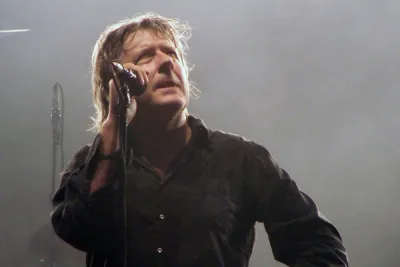
Philip Bloom
Human Design Chart
Biography
Bloom's 2011 documentary film How to Start a Revolution about Nobel Peace Prize nominee Gene Sharp premiered at the 27th annual Boston Film Festival and won Best Documentary, as well as the Mass Impact Award. It also won Best Documentary at the Raindance Film Festival.
In 2012 he was the first cameraman using the novel Panasonic Lumix DMC-GH3 of the Micro Four Thirds system creating the film Genesis.
In 2013, Bloom created a short film for the "Pro Photographer, Cheap Camera Challenge" (created by website DigitalRev TV) in which photographers and filmmakers, who are used to working with advanced and expensive gear, are given cheap, often very low quality equipment to create an original work. Bloom was instructed to create a short film using the Video Girl Barbie, a Barbie doll released in 2010 which features an embedded video camera in its chest, boasting a 1.2MP camera and 240p recorded video. In March 2014 his short film "Koh Yao Noi" won "Best Travel/ Landscape Film" at the NYC Drone Film Festial.
The Human Design of Philip Bloom: Generator 5/1
Generator 5/1 — Design at a Glance
Philip Blooms design features an immense and enduring sacral energy source – comparable to a strong workhorse. This configuration defined the path to deep satisfaction not through actively initiating projects but by responding to inner impulses. The correct use of this power lay in waiting for a signal from the environment and then acting upon it once the sacral center gave a clear “yes”.
This mechanism warns against two specific pitfalls: First, wasting energy on tasks that do not resonate internally, which can lead to burnout over time. Second, holding back from heart projects despite having the power and desire to continue working. The motto “Do not initiate but react” served as a key to avoiding frustration and energy loss.
Living in harmony with this design by responding to impulses from the gut rewarded Philip Bloom with a sense of deep fulfillment. Initiating constantly on his own, however, led him more often to persistent frustration or a lack of energy. The architecture of his design thus showed: True effectiveness and endurance only emerged through following the inner “yes” signal, not through compulsion or external expectations.
Emotional Authority
Philip Blooms design sets a tendency towards emotional detachment in important decision-making moments. He was someone who consciously ignored spontaneous impulses and instead used patience as a strategic tool: decisions were put off overnight until the emotional wave subsided and clarity emerged.
This attitude stems from his emotional authority. Whenever the emotion center is activated, it functions as an inner authority – independent of other defined centers in the chart. Every type except the Reflector can carry this authority. Philip Bloom experienced a constant up-and-down movement of feelings; the world appeared to him always colored by his current mood. A momentary high could turn into deep disinterest in the next instant. His feeling was thus only a snapshot, not a final judgment. Quick decisions made from emotion often had negative consequences.
The more time he took, the deeper and broader his understanding became. This required patience and repeatedly sleeping on questions. He consciously hesitated, asked himself multiple times, and waited. Over time, intense feelings subsided, emotional distance grew stronger, and calmness set in. Only then was the decision-making process complete. This mechanism is primarily relevant for long-term life-changing decisions as they have the greatest impact on one's life course.
The 5/1 Profile — Heretic / Investigator
Philip Blooms design sets a fundamental tension: The inner drive to withdraw for intensive research conflicts with the external perception of being a problem solver. As a 5/1 (Hero/Researcher), he was magnetic; others instinctively sought his knowledge without first asking for advice. This projection of Line 5 often led Philip Bloom to receive solutions he had not actively sought.
The mechanism explains this as typical dynamics: Line 1 requires time for the accumulation of knowledge and withdrawal, while Line 5 projects a contribution that only becomes effective upon request. Without clear boundaries, there was a risk of exhaustion – comparable to an expert who answers questions for hours and ends up drained. The solution did not lie in rejecting the contribution but in the strategy of saying “no” and providing help only temporarily and explicitly on request.
Furthermore, through Gate 55 (Line 1), the necessity of collaborating with stronger forces was shown. This meant more than just helping; it involved seeking principles that strengthen one’s own mind and enable long-term support. Only in this way could Philip Bloom maintain balance: deep research for himself and targeted, limited problem-solving for others without sacrificing his own energy.
Single Definition — Defined & Open Centers
Philip Bloom's Human Design profile suggests a tendency towards stable inner direction and consistent vitality, coupled with the need to wait for emotional clarity. His defined G Center provides him with reliable self-understanding and a sense of life mission without requiring external validation. The defined Sacral energy acts as a motor that only becomes effective through responding to invitations; spontaneous initiation would have interrupted this power. Additionally, his defined Solar Plexus shapes an emotional authority: decisions require navigating the wave of feelings to avoid impulsiveness and gain deep insights. The constant pressure from his defined Root Center drives him forward but must be channeled through these strategies to prevent obsessive stress.
At the same time, Philip Bloom is vulnerable to conditioning due to several open centers. His open Head and Ajna Centers mean he does not have a consistent mental focus; instead, he tends to engage with foreign questions or theoretical concepts rather than trusting his inner authority. In his open Heart Center, there's a lack of energy for strong commitments, leading to the risk of wanting to prove worth through performance. The open Spleen Center makes him sensitive to environmental fears and draws him into spontaneous decisions that are often not sustainable. Finally, his open Throat Center attracts attention without him actively seeking it; attempting to control communication would only lead to frustration. His mechanism lies in managing these open areas by waiting and responding from his defined power.
Channels for power, intimacy and mystical principles.
Philip Bloom's Human Design profile sets a tendency towards mutative innovation that is set through authentic reactions from the Sacral center, creating new directions. This is particularly influenced by Channel Beat 14-2: Gate 14 (Power Competence) and Gate 2 (Higher Knowledge) connect generative energy with identity. By trusting in the sacral response, a power emerges that prepares material resources for mutation and inspires others through his own honesty.
Parallel to this, Channel Pairing 59-6 shapes interpersonal experiences: Gate 59 (Sexuality) and Gate 6 (Friction) generate intense emotional waves and a drive towards merging. This configuration requires patience as the emotional wave needs time to bring clarity in intimacy; only through waiting can true fertility arise.
Additionally, other elements come into play: Gate 8 (Contribution) promotes stepping up for group goals and vibrant uniqueness. Gate 55 (Fullness) contributes to emotional awareness and genetic mutation, often through unstable mood swings. Gate 7 (Leadership) projects future patterns within hierarchies. Gate 36 (Crisis) allows the release of emotional energy through cyclical downturns. Gate 27 (Care) provides altruistic warmth and species preservation. Gate 3 (Mutation) creates order from confusion in survival struggles. Gate 5 (Rhythm) builds energy through firm habits. Gate 54 (Ambition) links worldly success with mystical insight. Gate 46 (Devotion) promotes full participation in the process and body love. Gate 13 (Integration) collects experiences for collective memory. Gate 34 (Power) supports individuality and integration but requires leadership to use energy meaningfully.
Tribal Circuitry — Circuit Signature
Philip Bloom's Human Design profile sets a tendency towards a pulsating, innovative identity closely intertwined with his life force. The Knowledge Circuit connects his Identity and Sacral Centers via Channel 'The Beat'. This creates rhythmic energy that allows him to explore new paths and initiate changes through expression – always in resonance with his inner power.
Parallel to this, the Ego Circuit shows a connection between Solar Plexus and Root Center via Channel 'Synthesis'. Here it's not about individual prominence but rather clan-oriented cooperation and resource management. This configuration fosters awareness of mutual support and wealth creation within a group, where emotional waves and instinctive reactions meet.
The Archer Circuit completes this picture by linking the Sacral with Solar Plexus Centers through Channel 'Pairing'. This emphasizes primordial energies of protection, care, and preservation of family or clan. The connection between life force and emotions serves here for survival and nourishment of the immediate environment.
Overall, these three circuits work together in Philip Bloom as a coherent system: innovative expression from identity, cooperative resource building within the collective, and instinctive protection of the near are constantly present through defined Sacral, Solar Plexus, and Root Centers. It's an energy that both creatively and fundamentally stabilizes his environment.
Left Angle Cross of Uncertainty 1
Philip Bloom's design established a fundamental disposition that did not rest on firm certainties but was rooted in deep existential uncertainty. This configuration described not superficial doubts or hesitation in everyday life, but marked the fundamental experience that one's being and life reality rested on a basis of non-knowledge. For Philip Bloom, this uncertainty was not a lack of orientation but his constant point of perception.
The left cross of Uncertainty 1 set the framework: The inner emptiness or absence of absolute certainty acted as a motor for continuous open attention. Instead of seeking rigid answers, this mechanism shaped how Philip Bloom made decisions and moved in his work. He was marked by accepting this fundamental indeterminacy that allowed him to perceive without preconceived notions. Thus, uncertainty was not an obstacle but the space where his specific way of being took place – a continuous openness towards what showed itself without having to define it beforehand.
Saturn Return · Uranus Opposition · Chiron Return — Life Cycles
In 2011, at age 40, Philip Bloom found himself at a decisive turning point: His documentary film 'How to Start a Revolution' premiered at the Boston Film Festival and won the award for best documentary as well as the Mass Impact Award. This success marked the Uranus Opposition, a time of liberation from old structures. Here, inner identity separates from external expectations, often accompanied by sudden insight into one's life path. The mechanism describes this moment as an 'enlightenment', where outdated patterns are dismantled to make way for a more authentic alignment. For Philip Bloom, this internal release condensed into a visible external triumph. The award was not only recognition of his work but also a reflection of an inner breakthrough: the separation from what he should be towards who he truly is. This phase allows one to see their path more clearly and walk it with new ease. The Uranus Opposition thus acts as a catalyst for personal freedom and clarity by dissolving constraints and releasing the person's true nature. In this case, this process was concretely manifested through the award of a film that itself addresses revolution and change – a symbolic congruence between inner state and external manifestation of his work.
Generator · Emotional Authority — Synthesis
Philip Bloom's design reveals a central red thread of deep resonant connection between creativity and authenticity. The defined sacral energy, coupled with emotional authority and the Profile of Hero/Researcher (5/1), points to a person who generates energy by responding to life impulses and invests it in profound research – only to make it available to others. This combination is reinforced in the Knowledge Circuit, which emphasizes individual identity mutation and expression. The repeated emphasis on reaction rather than initiation, waiting for emotional clarity, and gaining wisdom through experience shapes a character who interacts intensely with the world but always in alignment with their inner truth.
At the same time, a paradox reveals itself between the need for connection and the inherent instability of the emotional center. While defined root and solar plexus centers stand for stability and direction, head and Ajna centers are open – meaning a continuous intake of information and perspectives that are not necessarily coherent or stable. This tension between the drive for deep connection (through the defined centers) and the ability to constantly change and adapt (through the open centers) creates a dynamic field that both shapes his creative power as well as his potential inner dissonance.
3 Defined Channels
Incarnation Cross - Left Angle Cross of Uncertainty 1
Solar Return
The Solar Return shows the moment when the sun returns to its exact birth position - your personal solar year.
Life Cycles
Discover the life cycles with a detailed triple view (birth chart, cycle chart, composite).
Human Design Profile
- Type
- Generator
- Strategy
- To respond - wait for something to respond to
- Authority
- Emotional Authority
- Profile
- 5/1 - Heretic / Investigator
- Definition
- Single Definition
- Incarnation Cross
- Left Angle Cross of Uncertainty 1
- Date of Birth
- 20.05.1971 02:00
- Place of Birth
- London, United Kingdom
Frequently Asked Questions
What is Philip Bloom's Human Design type?
What Profile does Philip Bloom have in Human Design?
What authority does Philip Bloom have according to his chart?
Which incarnation cross is active for Philip Bloom?
When was Philip Bloom born?
Discover your own Human Design
Are you also a Generator? Find out in a personal reading how to use your sacral energy correctly and discover deep satisfaction.
More Personalities
Back to overviewAaliyah

Alexia

Angèle

Anne-Marie

Arcángel

Arno