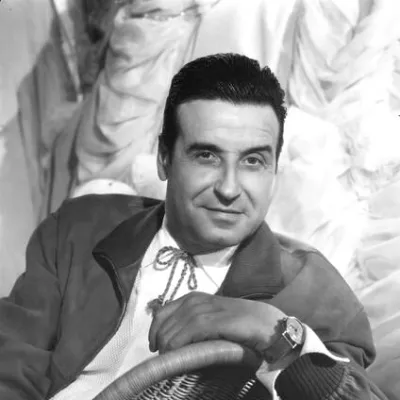
Pim Boellaard
Human Design Chart
Biography
Boellaard was a member of the Boellaard family and a son of Willem Hendrik Cornelius Boellaard (1866-1951), officer, last lieutenant general titular and deputy governor of the residence, and Margaretha Antoinette Römer (1879-1973). He married in 1929 Anna Louisa baroness van Heeckeren (1907-1991), art painter; they had a son whose wife, Maria Julie Boellaard-Stheeman (25 July 1937, Amsterdam), was the lady-in-waiting of Queen Beatrix. Boellaard himself became lifelong befrienderd with her father Prince Bernhard after WW2.
Boellaard came from a family whose male members had been general since 1790, but chose a career with an insurance company, after he had completed his studies at the Nederlandsche Handels-Hoogeschool, the later Erasmus University of Rotterdam. In his study years, Boellaard was a member of the Rotterdam Student Corps.
In 1939 he was mobilised as a reserve captain at the artillery. At the German invasion in 1940 he was involved in the counterattack against the Germans who had taken the airfield Ockenburg. After the capitulation of the Dutch armed forces on 15 May 1940, Boellaard became regional commander of the order service in the Utrecht region. The order service was a resistance organisation of reserve officers of the Dutch army.
In May 1942 Boellaard was arrested and ended up in the Scheveningen prison (Oranjehotel). Although he was questioned on 11 May, he did not talk. He was sentenced to death anyway.
When Boellaard was removed from his cell on 14 May, he thought his last hour had been beaten. However, he was cut and shaved and then taken to the Clingendael estate. Han Jordaan underwent the same treatment. At Clingendael there was an extensive interview with Himmler, who was briefly in The Hague to discuss with the Nazi top the latest details of the journeys of Jews to the extermination camps.
Human Design Analysis: Pim Boellaard as Projector 5/1
Projector 5/1 — Design at a Glance
Pim Boellaard's design showed a tendency towards focused perception. He was someone who immediately spotted system errors – like a bright flashlight that targets dark spots precisely. However, this ability to recognize the wrong in others or structures instantly was only effective when he did not criticize directly. Active correction triggered resistance; instead, his design worked through harmonious role modeling. When Pim Boellaard himself demonstrated functional patterns, others were drawn to him and sought advice. His strategy involved waiting for a respectful invitation rather than forcing himself into situations.
Since his Sacral Center was undefined, Pim Boellaard lacked a constant source of life energy. His energy flow fluctuated: phases of high efficiency alternated with necessary rest periods. This up-and-down required respect for his limits to avoid burnout. Societal structures demanding constant availability did not fit this rhythm. Living by these principles – shining rather than pushing and through accepted recovery – rewarded him with success. Ignoring these mechanics and trying to work against the flow or lead without invitation led sooner or later to bitterness as an expression of his non-self.
Emotional Authority
Pim Boellaard showed a decision-making strategy that did not rely on spontaneous impulses but on the patience to fully experience emotional waves. His design indicated that his defined Solar Plexus Center carried his inner authority. This meant he was subject to constant fluctuations in feelings and moods; the world appeared colored by his current state, sometimes enthusiastically, sometimes negatively. However, since this emotional state was only a snapshot, an immediate reaction would have been risky.
The mechanics of his emotional authority required time. Quick decisions based on current mood often proved wrong as the feeling had not matured yet. Instead, Pim Boellaard gained clarity through waiting and repeatedly pondering important questions. This process allowed intense feelings to subside, creating an emotional distance. Only then did true calm set in.
A central mechanism of his design was the absolute priority of this authority: regardless of which other centers were defined in his graph, the Solar Plexus Center always took precedence in decisions. This applied for every type except Reflectors with emotional authority. Pim Boellaard therefore lived not by logical analysis or social pressure but patiently waited until the emotional wave had passed its peak and deep insight became possible. This ability to delay inner judgment protected him from misjudgment and ensured that his long-term life decisions were based on a stable, clear foundation rather than fleeting mood.
The 5/1 Profile — Heretic / Investigator
Pim Boellaard's design indicated a tendency towards a specific internal tension: the magnetic urge to give solutions and knowledge as a hero to others, paired with a deep need for isolated research. This Profile 5/1 described him as someone who used the depth of his knowledge base to provide problem-solving for his environment. Line 5 gave him almost an attractive quality; others actively sought answers from him. Yet here lay the danger: without clear boundaries, this energy risked exploitation.
The mechanics showed in contrast between the external hero role and internal researcher stance. While he could lead communities through honesty and sharing of knowledge, he needed the protective space of Line 1 for his own accumulation of insights. The challenge was to say no so as not to end up drained in a hotel room like a scientist at conferences while questions continued to pour in. Only by setting these boundaries could he maintain balance – between serving others and necessary retreats for his own integrity and energy conservation. This was not an optional luxury but a structural necessity of his design to avoid burnout and sustainably use his gifts.
Single Definition — Defined & Open Centers
Pim Boellaard's Human Design shows a tendency towards internal, constant pressure paired with an emotional depth that required time to find clarity. His defined Root Center provided him with consistent existential adrenaline and the drive to move forward in the material world. This background stress was not a disturbance but his driving force. At the same time, he had a defined Solar Plexus Center, establishing emotional waves as his inner authority. Pim Boellaard demonstrated the need to make decisions not in moments of excitement or depression but to wait for emotional dynamics until calmness prevailed. Only then did the truth of a situation reveal itself.
This stable internal rhythm contrasted with his open centers: Head, Ajna, Throat, G, Heart, Sacral and Spleen were undefined. This openness made him sensitive to his environment. His open Head and Ajna Centers meant that mental clarity and conceptual answers were not consistently present in him; he tended to be inspired or confused by the thoughts of others rather than maintaining firm opinions of his own. The open G Center indicated that identity and life direction were situational; he often adapted to the energy of his surroundings to find where he truly belonged, instead of taking on a rigid role.
The open Heart Center led him not to be consistently willful or make promises based on egoistic ambition; he avoided the pressure to prove himself. His open Sacral Center meant that his energy levels fluctuated and he was vulnerable to being overwhelmed by the work energy of others, rather than possessing a constant generative force. Finally, the open Spleen Center revealed sensitivity towards health and intuition; he tended to feel uncertain or take on fears from the environment if he did not pay mindful attention to his well-being. The challenge lay in using the constant Root pressure and emotional Solar Plexus wave as a compass while viewing the open centers as mirrors of the world without binding himself to their transient conditioning.
Channels for mystical synthesis of instinct and emotion.
Pim Boellaard's Human Design shows a tendency towards delicate balancing of belonging and resource protection. He was someone who sought balance between feasibility and fairness within his community, marked by Channel Synthesis 19-49. This connects the Root Center with the Solar Plexus and functions as an emotional glue for the tribe. Gate 19 urged approachability while Gate 49 rejected anything not meeting the highest ideals. Loyalty was governed here by an emotional wave; it concerned who deserved support and who could sit at the table. Pim Boellaard needed time to explore the depth of his emotional waves through prolonged courtship before committing to potential partners. Family was his business, for which he was willing to do necessary work to secure basic needs like protection and territory.
Additionally, Gates of logical process (Gate 4) and skilled power handling (Gate 14) guided direction. The Gate of Contribution (8) promoted his entry into group goals. On the personality side, the Gate of evolutionary development (41) drove him from experience to experience while the Gate of concentration (52) required pauses for pattern correction. The elemental Gate of friction (6) regulated biological boundaries in the context of fertility and growth. The openness of Gate 22 supported individual processes through calm listening without intrusiveness. This configuration described a life task, uncovering hidden connections of tribal bonds and securing them through emotional scrutiny.
Tribal Circuitry — Circuit Signature
Pim Boellaard's Human Design shows a tendency towards cooperative action where the joint creation of resources is prioritized. As part of the tribe group, it was less about individual expression and more about exchange and support within a community. This manifested concretely through Channel Synthesis (49-19), connecting the Solar Plexus Center with the Root Center. This connection allowed emotional waves and intuitive impulses to be directly translated into tangible, often conservative or traditional measures. The energy did not flow constantly but followed a ratchet dynamic: phases of intense activity alternated with necessary rest pauses. Since there was no connection to the Sacral Center, regeneration of this life force was essential; without adequate recovery, the potential for communal well-being could not be sustained effectively. Thus, the mechanics emphasized a balanced relationship between giving and taking, supported by the ability to translate feelings into concrete support. Pim Boellaard lived this structure as someone who brought his strength in service of the whole but relied consciously on his own rhythm of tension and relaxation to remain effective.
Left Angle Cross of Revolution 2
Pim Boellaard's deepest layer of identity was marked by the "Left Cross of Revolution." This formed the fundamental essence of his being: an inner drive to overturn structures and traditions from a progressive, left-wing perspective. It was not a superficial political stance or a passing interest but rather the central pattern that permeated his entire nature.
In Human Design mechanics, this configuration describes a deeply rooted impulse to question existing orders and actively change them. It represents the will for revolution in the broadest sense—not necessarily violent, but always with the goal of replacing outdated systems with newer, more advanced approaches. For Pim Boellaard, this revolutionary force was at the core of his identity as a left-wing figure. It determined how he perceived the world and which changes he sought to achieve. This energy acted as a constant drive to challenge the status quo and seek better, fairer solutions. The formation of this cross anchored this revolutionary dynamism so deeply in his structure that it significantly influenced his decisions and self-understanding.
Saturn Return · Uranus Opposition · Chiron Return · 2nd Saturn Return — Life Cycles
Pim Boellaard's life journey showed a clear cyclical dynamics, marked by two significant turning points that shaped his personal development and historical context. His design indicated that important life structures condensed or were challenged during specific astrologically relevant phases.
At the age of 26 in 1929, Pim Boellaard went through his first Saturn Return. This cycle often marks the transition to full personal responsibility and the solidification of long-term commitments. Indeed, he married Anna Louisa, Baroness van Heeckeren, that same year. This union reflected the typical energy of this return: years of groundwork and character maturation culminated in a stable, binding structure that stabilized his future life.
A decade later, in 1942 at the age of 39, he experienced his Uranus Opposition. In Human Design mechanics, this phase represents sudden, often disruptive changes that break old structures and force autonomy. Pim Boellaard was arrested and taken to Scheveningen prison. This crisis was not coincidental but aligned with the energetic demand for breaking free from existing conditions through external coercion. The arrest forced him into confrontation with absolute external determination, a process considered necessary yet painful in his design as a phase of restructuring. Both events underscore how his inner architecture responded to external astrological cycles: first by binding and stabilizing, later by enforced disruption and adaptation to extreme external circumstances.
Projector · Emotional Authority — Synthesis
Pim Boellaard lived a life marked by the ability to recognize patterns and make connections. His design as a Projector, combined with emotional authority and the Profile of Hero/Researcher (5/1), points to someone who deeply analyzed situations and offered solutions—though only after a phase of inner maturation. The open configuration of many centers, particularly Root, Sacral, Ajna, and G Center, speaks to his adaptability and sensitivity to environmental energies while simultaneously lacking a constant internal source for motivation or identity. He relied on waiting for invitations and finding environments that valued his gifts.
A central paradox in Pim Boellaard’s design lies in the interplay between observational skill and emotional depth versus the openness of many centers. He was destined to recognize errors and provide guidance (Gate 4), yet at the same time, he received other people's energies unfiltered, making him susceptible to conditioning. This tension between the need for inner clarity through emotional wave and the constant intake of external influences shaped his way of life and required a deep understanding of his limits and needs.
1 Defined Channel
Incarnation Cross - Left Angle Cross of Revolution 2
Solar Return
The Solar Return shows the moment when the sun returns to its exact birth position - your personal solar year.
Life Cycles
Discover the life cycles with a detailed triple view (birth chart, cycle chart, composite).
Human Design Profile
- Type
- Projector
- Strategy
- Wait for the respectful invitation
- Authority
- Emotional Authority
- Profile
- 5/1 - Heretic / Investigator
- Definition
- Single Definition
- Incarnation Cross
- Left Angle Cross of Revolution 2
- Date of Birth
- 16.08.1903 19:30
- Place of Birth
- Delft, Netherlands
Frequently Asked Questions
What was Pim Boellaard's Human Design type?
What Profiles did Pim Boellaard have?
Which Authority guided Pim Boellaard?
What incarnation cross did Pim Boellaard have?
When was Pim Boellaard born?
Discover your own Human Design
Are you also a Projector? Find out in a personal reading how to unfold your leadership qualities and recognize the right invitations.
More Personalities
Back to overviewSissy Spacek

Alain-Fournier

Anémone

Ann-Margret

Bourvil
Christian-Jaque