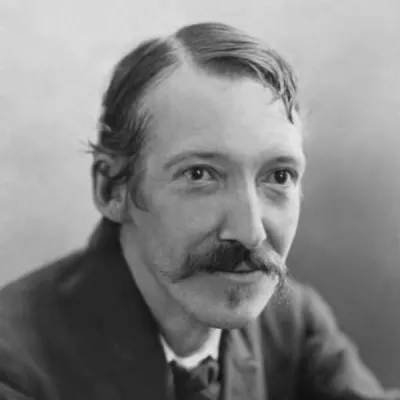
Photo: Wikimedia Commons
Robert Louis Stevenson
Human Design Chart
Biography
Born and educated in Edinburgh, Stevenson suffered from serious bronchial trouble for much of his life but continued to write prolifically and travel widely in defiance of his poor health. As a young man, he mixed in London literary circles, receiving encouragement from Sidney Colvin, Andrew Lang, Edmund Gosse, Leslie Stephen and W. E. Henley, the last of whom may have provided the model for Long John Silver in Treasure Island. In 1890 he settled in Samoa, where, alarmed at increasing European and American influence in the South Sea islands, his writing turned from romance and adventure fiction toward a darker realism. He died of a stroke in his island home in 1894 at age 44.
A celebrity in his lifetime, Stevenson's critical reputation has fluctuated since his death, although today his works are held in general acclaim. In 2018 he was ranked just behind Charles Dickens as the 26th-most-translated author in the world.
Robert Louis Stevenson as a Projector 3/5 in Human Design
Projector 3/5 — Design at a Glance
Robert Louis Stevenson appeared as a Projector with an aura that behaved like a focused flashlight. His design predisposed him to immediately recognize systemic errors and weaknesses in his environment. This ability to 'shed light into the dark' could be perceived as unpleasant by those around him when he addressed these flaws directly – comparable to a bright beam of light shining directly into someone's face, exposing their problems.
The most effective approach for him was instead to attract through his own harmony. By being a glowing example himself, other people were drawn to his magnetism and actively sought out his insights. His strategy lay in waiting for a respectful invitation before sharing his knowledge. This leveraged his natural attractiveness and prevented unnecessary conflicts or defensive reactions from others.
Since Projectors do not have a defined Sacral Center, Stevenson lacked a constant source of intrinsic life energy. He experienced phases of high activity followed by necessary rest periods to prevent burnout. Living according to this rhythm and waiting for the invitation rewarded him with success. Ignoring this mechanism and intervening directly risked the non-self theme of bitterness, which resulted from resisting his true nature.
Emotional Authority
Robert Louis Stevenson exhibited an inner decision-making structure that required patience and time. His design carried emotional authority, meaning his defined Emotional Center was the source of his inner truths. Regardless of other defined centers in his chart, this authority always took precedence for important life decisions.
This configuration led to him being swayed by emotional waves – a permanent up-and-down of feelings. The world often appeared colored through his current mood: In one moment he could be enthusiastic about something, the next see it negatively. Since this immediate feeling was only a snapshot and not necessarily the deeper truth, spontaneous impulses were misleading for him. Quick reactions from emotion could have negative consequences.
Instead, his design required that he let decisions ripen over time. The more time he took, the deeper and more comprehensive he could perceive situations. This demanded patience and multiple nights of reflection on questions. By hesitating and taking time, intense feelings gradually subsided. Only then did emotional distance set in, bringing clarity and calmness. This process of waiting for emotional clarity instead of immediate reaction was crucial for him, especially with long-term decisions that had a significant impact on his life course.
The 3/5 Profile — Martyr / Heretic
Robert Louis Stevenson showed himself as someone who learned through personal experimentation and failure to later solve problems for others using this practical knowledge. His design laid out a dynamic of self-experimentation leading to the status of problem solver for others. Line 3 (Gate 43) propelled the process of 'trial and error': belief was rejected, everything had to be practically experienced. These experiential values made him attractive and formed the basis for the role of Line 5 (Hero/Savior).
This configuration described a life task of uncovering hidden connections through personal experience and passing them on to others. The tension between necessary public failure and resulting status as hero or storyteller shaped his aura. Practical knowledge from experience made him very attractive to those who wanted to learn from his experiences. This heroic role flattered him naturally but could also be painful when he had to try things in front of everyone and fail. Line 5 tempted others to give energy to advance the mental logical process. Without external support, he did not reach a solution. Unearned reward and recognition were given when the answer was expressed through the Throat Center.
Split Definition — Defined & Open Centers
Robert Louis Stevenson's design inclined towards constant inner stability, characterized by six defined centers. His Ajna Center provided consistent mental clarity and conceptual thinking, directly connected to the Throat Center. This allowed him to reliably translate thoughts into language and action. The G Center endowed a firm identity and direction, while the Heart Center supplied willpower. The Solar Plexus served as an emotional authority, gaining clarity by waiting out the emotional wave. The Root Center provided constant pressure for forward movement. This architecture created an autonomous presence in thinking, communication, and stress management.
In contrast, Head, Sacral, and Spleen Centers were open. The open Head Center made him receptive to inspiration but vulnerable to mental confusion or the pressure to answer others' questions. He tended to get entangled in non-self-imposed mental monologues rather than trusting inner authority. The open Sacral Center meant no constant energy flow; he was sensitive to the energy of his environment and risked overexertion by borrowing
Channels & Gates
Robert Louis Stevenson's design inclined towards spontaneous, innovative insights that were assimilated through clear articulation. This was his primary energy source: Channel 43-23 connected Ajna Center with Throat Center. Gate 43 received inspired knowledge as sudden breakthroughs, while Gate 23 processed and expressed these insights. This mutative process created efficiency and new perspectives but only changed others' thinking if the expression was simple and clear. The challenge lay in timing; patience was needed until the collective recognized the gift without exercising control.
Alongside this intellectual structuring, a deep reflective capability was shown through Channel of the Lost Son 13-33. It connected G Center with Throat Center via Gate of Listener (13) and Gate of Retreat (33). Here he collected life stories and secrets, withdrew to sort them before sharing. This cyclical process of maturation brought continuity; he learned from the past rather than predicting the future and revealed truths through patient observation.
Emotionally, Channel of Synthesis 19-49 between Root and Solar Plexus Centers was active. Through Gate of Claims (19) and Gate of Principles (49), he sought belonging and checked if connections met his ideals. This was the emotional glue for tribal bonds based on loyalty and resource protection, finding balance between feasibility and fairness.
Channel of Community 37-40 connected Solar Plexus with Heart Center via Gate of Friendship (37) and Gate of Solitude (40). He built bridges in groups, sought recognition for his place within the whole, and secured connections through willpower and careful agreements.
Additionally, Gates like Gate of Formulation (4), which created logical processes for future security, as well as complex Gate 10 in G Center, supporting integration processes, were active. Gate of Fullness (55) brought emotional awareness and mood swings, while Gate of Friction (6) drove elemental further development.
Circuit Signature
Robert Louis Stevenson's design unfolded over two separate, parallel energy systems. The Knowledge Circuit connected Ajna with Throat Center through Channel of Structuring (43-23). This created a pulsating, acoustic expression form: New knowledge was not only thought but immediately translated and articulated into clear structures. The energy was individually focused on transforming ideas into tangible formats.
Simultaneously, the Ego Circuit operated as an independent system in tribal mode. Here Heart, Solar Plexus, and Root Centers were connected. Channel 'Community' (37-40) regulated giving and taking while 'Synthesis' (49-19) merged emotional intuition with will. Without a connection to Sacral Center, constant life force was lacking; instead, this timeless, conservative energy required mandatory pauses for regeneration.
Additionally, the Sense Finding Circuit (Channel 33-13), connecting Throat and Identity Centers, ensured that past experiences were reflected and shared, enriching individual expression with cyclical emotional depth.
The tension lay between the rapid, structured articulation of new knowledge in Head-Throat flow and the slower, resource-oriented cooperation in Heart-Solar Plexus-Root system. Robert Louis Stevenson navigated between individual creative structuring and collective support, where the need for rest in the tribal system formed a constant counterbalance to intellectual productivity.
Right Angle Cross of Explanation 4
Robert Louis Stevenson's Human Design profile indicated a profound and often unspoken search for meaning behind the apparent randomness of life. His inner compass was shaped by the right cross of Manifestation 4, an archetypal framework that aimed less at external measures of success or social validation than at fundamental clarity about one's existence. This configuration described a life motivated not by short-term goals but by a persistent need to understand and articulate the underlying patterns of reality. It was an energetic alignment that favored stillness and introspection, as only in solitude could the necessary insights mature. The life task involved explaining complex truths in ways accessible to others without losing their depth. This was not a quest for recognition but a natural consequence of the inner clarity arising from this specific cross configuration. Robert Louis Stevenson lived in a tension between the hidden and the expressed, with Manifestation 4 setting the overarching tone: a serious, contemplative attitude toward life that always sought to bring light into the darkness of the unknown.
Saturn Return · Uranus Opposition · Chiron Return · 2nd Saturn Return — Life Cycles
Robert Louis Stevenson's life phases were marked by significant turning points that reordered his environment and relationships. This structure arose from the major planetary cycles in his design: the Saturn Return and the Uranus Opposition.
The first Saturn Return occurred at age 29, condensing years of inner preparation into a tangible external result, often associated with the solidification of responsibility or partnership. For Stevenson, this moment crystallized in 1879 when he traveled to New York and Monterey to meet Fanny Osbourne. This encounter marked the transition from an internal search to real relationship-building, a typical feature of this cycle where the foundation for future years was laid.
Ten years later at age 40, Stevenson reached the Uranus Opposition. This cycle often demands radical liberation from old structures and the courage to start anew in order to be true to oneself. The mechanics urged changes in his life environment. In 1890, this manifested when the Stevenson family permanently moved to Samoa. This step was not just a geographical shift but the realization of an inner necessity to break free from old ties and create a new space for freedom. Both events underscore how Stevenson's design was guided by these major cycles: first, solidifying relationships, then radically changing the framework in which those relationships could thrive.
Projector · Emotional Authority — Synthesis
Robert Louis Stevenson lived as a Projector, defined by his Mental Center (Ajna), developing a persistent way of thinking and immersing himself in it. This focus on concepts and creating inner images shaped his ability to design stories and form complex ideas—he immediately identified flaws in the system (Gate 13/33). His profile as an Experimenter and Hero (Profile 3/5) further reinforced this process by gathering experiences firsthand to make them accessible to others later. Emotional authority, however, challenged him not to rush into decisions but to give them time to mature, contrasting with his need for rapid exploration.
A central paradox in Stevenson's design lay between the drive to shed light on darkness through his stories (Projector) and the necessity of withdrawal and reflection (Channel 13-33). The presence of the right cross indicated a life task of explaining. This led to tension between wanting to express insights and the inner need to process them first, further intensified by cycles—especially relationship experiences.
4 Defined Channels
Incarnation Cross - Right Angle Cross of Explanation 4
Solar Return
The Solar Return shows the moment when the sun returns to its exact birth position - your personal solar year.
Life Cycles
Discover the life cycles with a detailed triple view (birth chart, cycle chart, composite).
Human Design Profile
- Type
- Projector
- Strategy
- Wait for the respectful invitation
- Authority
- Emotional Authority
- Profile
- 3/5 - Martyr / Heretic
- Definition
- Split Definition
- Incarnation Cross
- Right Angle Cross of Explanation 4
- Date of Birth
- 13.11.1850 13:30
- Place of Birth
- Edinburgh, Scotland, United Kingdom
Frequently Asked Questions
What was Robert Louis Stevenson's Human Design type?
Which Profile did Robert Louis Stevenson have?
What kind of Authority did Robert Louis Stevenson have?
What incarnation cross did Robert Louis Stevenson have?
When was Robert Louis Stevenson born?
Discover your own Human Design
Are you also a Projector? Find out in a personal reading how to unfold your leadership qualities and recognize the right invitations.
More Personalities
Back to overviewSissy Spacek
Alain-Fournier
Anémone
Angeli
Ann-Margret
Bourvil