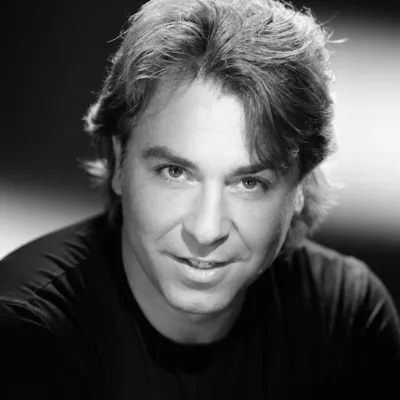
Roberto Alagna
Human Design Chart
Biography
He signed a lucrative contract with EMI in April 1993 ensuring him a series of recordings. Rave reviews and huge press coverage secured Alagna's position as the undisputed heir to Pavarotti's throne in the wake of the latter's temporary retirement.
In 1994 he was named Musical Personality of the Year by the French national press and received Covent Garden's Best Performance of the Year for "Romeo et Juliette." In April 1995 he was awarded the prestigious Laurence Olivier Award for Outstanding Achievement in Opera; in 1996 he was appointed Chevalier de l'Ordre des Arts et Lettres by the French government and in 1997 named Lyric Artist of the Year by the Victoires de la Musique Française.
His latest project are "Romeo and Juliette" at London's Royal Opera (February-March 2000) and during the fall he will take on the role of Cavaradossi in Puccini's "Tosca."
Alagna married on 21 July 1990 and was later widowed. He made a second marriage on 26 July 1996 to Romanian star soprano Angela Gheorghiu; they have one daughter.
Roberto Alagna as a Manifestor 5/1 in Human Design
Manifestor 5/1 — Design at a Glance
Roberto Alagna's design marked him as someone who naturally progresses and pulls others along with him. He appeared less like a fighter in direct combat and more like a strategic leader – comparable to a Roman emperor who envisions grand plans and sends others out into the world to realize them. This role of trailblazer, however, comes with a specific conflict: Because his perspectives often extend further than those around him, he encountered misunderstandings. His way of seeing things inevitably polarized; while some were drawn to his great goals and followed him, others rejected him precisely because of these expansive visions or even felt aversion.
To bridge this division and find the right supporters, his effectiveness lay in a clear gesture: timely and precise informing. By pre-emptively communicating what he planned and which direction he was taking, he could minimize friction. If he lived by this strategy of informing others, his inner system rewarded him with a sense of peace. Acting against this nature without bringing the environment along often resulted in deep, lasting anger. His design thus demanded not only carrying the vision but especially clear communication about it to transform resistance into support and find internal balance.
Emotional Authority
Roberto Alagna's design showed a tendency towards maturity: He made decisions not in the moment but after letting them ripen. This attitude stems from his emotional authority carried by the defined Solar Plexus Center. In Human Design mechanics, this authority is always leading for decision-making, regardless of other defined centers in the chart.
This means that Roberto Alagna was subject to a natural emotional wave characterized by constant ups and downs of feelings. His perception of the world was always colored by his current mood: At one moment he could be enthusiastic about something, only to see it negatively in the next. However, this immediate feeling was just a snapshot, not a final judgment. Quick, spontaneous decisions based on this transient emotion were therefore risky and could have negative consequences.
Instead, his inner truth required patience. By taking time and letting decisions go overnight several times, he gained emotional distance. The intense feelings subsided over time, leading to clarity and calmness. This process of 'letting things ripen' was essential to recognize the true inner truth behind the transient emotional coloring, especially in long-term life decisions.
The 5/1 Profile — Heretic / Investigator
Roberto Alagna revealed himself through a dynamic tension between private knowledge accumulation and the urge to share solutions publicly. His design as Profile 5/1 (Hero/Researcher) suggested that he did not collect knowledge for his ego but altruistically used it for problem-solving in crisis situations. This created natural authority; others instinctively sought out his 'treasures'.
This attraction stemmed from Gate 35, which represents selflessness and sharing of experience. The fifth line made him perceive the world through practical solutions during times of need. Simultaneously, Gate 22 with its attention to self-awareness and mutations was at work. It demanded humility and acceptance of a subordinate position to transfer societal changes, often without direct reward.
The critical challenge lay in boundary management. Without clear boundaries, his selflessness could lead to exhaustion through over-asking and criticism. Similar to an overloaded expert model, he risked being drained if he did not learn to say 'no'. Only then could he maintain the balance between deep research for himself (Line 1) and public performance capability while protecting his own resources with clear boundaries to sustainably make a difference.
Single Definition — Defined & Open Centers
Roberto Alagna's Human Design profile indicated a tendency towards a consistent yet limited form of expression. His defined Throat acted as a constant channel, transmuting messages from his emotional Solar Plexus and existential pressure from the Root into the world. This configuration created an inner authority based on waiting for the emotional wave: truth revealed itself to him over time, not in impulsive moments.
While his defined centers – Throat, Solar Plexus, and Root – provided a specific way of dealing with stress and emotions, he was situational and receptive through six open centers (Head, Ajna, G, Heart, Sacral, Spleen) to the environment. Without constant mental inspiration, he tended to absorb doubts from others rather than forcing his own answers. His open G Center meant no fixed identity; instead, his sense of direction crystallized only in correct relationships and places. He was not designed to consistently possess willpower or generative energy (open Heart and Sacral Centers), but had to learn not to give in to borrowed vitality and the pressure to make promises.
The mechanics of his design required patience: emotional clarity from the Solar Plexus needed to precede speech from his defined Throat. In open centers like Spleen, he was vulnerable to survival fears and spontaneous decisions often stemming from conditioning. His strength lay in using the depth of his emotional wave without being led by mental confusion or a need for external validation (open Heart). Through trusting his emotional authority, he could manifest his truth easily while his open centers allowed him to act as a mirror for others' inspiration and identity without identifying with them.
Channels for emotional urgency and authentic expression.
Roberto Alagna was marked by an insatiable drive towards constant renewal and emotional intensity. His design pushed him to leave the familiar behind ("I've been there") and relentlessly seek new experiences. This dynamic was primarily driven by the channel of Transience 36-35, connecting his Solar Plexus's emotional wave with expression through the Throat, creating a deep need to experience and express feelings immediately. Often, inexperience is felt as a lack, leading him to consciously provoke crises to force movement and change. Clarity for Roberto Alagna lay not in logical planning but in waiting for his own emotional wave before acting to avoid disappointment from unrealistic expectations.
This impulsive search for the new was balanced by the channel of Recognition 41-30. It links the existential pressure from Gate 41 – genetic longing and restlessness – with the emotional satisfaction from Gate 30. This created in Roberto Alagna a near instinctive hunger for intense, often sexually or deeply emotionally charged experiences. The leap from inexperience to experience was the central drive here. The challenge was not to feel this desire as pressure but to enjoy each experience for its own sake without wanting to hold onto it, since satisfaction is fleeting.
The Personality Gates added a structural layer to this emotional flow. Gate 62 brought logical analysis and pattern recognition, while Gate 23 promoted the need for communication and assimilation. Gate 49 ensured principled reactions to upheavals, and Gate 56 processed these impressions into narrative, abstract story structures. Thus, Roberto Alagna tried to order the chaotic flow of his emotional search through logic and explanation.
Collective Circuitry — Circuit Signature
Roberto Alagna exhibited a cyclical way of finding meaning that heavily relied on emotional reflection of past events. His design suggested he gained insights not primarily through rational analysis but by living through and reliving experiences from the past. This energy flowed in wave-like patterns – with clear phases of up and down trends – making his learning process appear more intuitive and feeling-driven than logically structured.
This process was marked by the Meaning Circuit, which connected Roberto Alagna's Throat Center, Solar Plexus Center, and Root Center through channels 'Transience' (Gates 35/36) and 'Recognition' (Gates 30/41), creating a direct link between his emotional depth, will to endurance, and ability to communicate these inner processes outward. As this is a Simple Definition, these three centers formed a cohesive energetic flow.
The central task of this configuration was to process feelings gained from the past, often inexplicable, and then share them with the collective. It was less about cool detachment than creating shared learning experiences. By speaking about his emotional wave movements, Roberto Alagna could help others learn from their common past. Thus, the energy of this circuit served as a bridge between personal emotional processing and collective exchange, where the visual and emotional quality of experience took precedence.
Left Angle Cross of Separation 1
Roberto Alagna's Human Design reveals a tendency towards an archetypal tension: the necessity to separate from old structures or bindings in order to find a deeper, more authentic connection with truth and self. This is about the process of letting go as a prerequisite for true unity. This configuration does not describe mere detachment in a negative sense but rather a necessary step of purification. Only through actively separating what no longer serves or is not genuine can space be created for real integrity. The dynamics of the left cross of separation 1 shape this attitude: it calls for recognizing and consciously resolving old patterns so that the true essence can be revealed. It's a path of differentiation where the individual learns what they are not to define more clearly what they actually are. This mechanism acts as an inner compass pointing towards authenticity. It shows that true unity is not achieved through accumulation or conformity but through the courage for self-preservation and the ability to reject foreign or false elements. Thus, a clear line between the Self and Others emerges, which in turn forms the basis for any genuine encounter.
Saturn Return · Uranus Opposition · Chiron Return · 2nd Saturn Return — Life Cycles
Around his 27th year of life, Roberto Alagna was in a phase marked by the need to transform his previous potential into a stable, recognized structure. His design suggested that this period would be less driven by spontaneous impulses and more focused on building solid professional foundations – a transition from mere ability to concrete reality.
This dynamic reflects the mechanics of the first Saturn return cycle. In this cycle, structural anchoring is paramount: it's about passing serious tests in a professional context and asserting oneself against external resistance. The inner energy focuses on discipline and creating sustainable groundwork for the future.
This process was visible with Roberto Alagna in 1990 when he made his debut at La Scala in Milan as Alfredo in La traviata. This event not only marked a career peak but also embodied precisely the mechanism described by his chart: condensing years of preparation into a solid, public result. Through this role, he established himself in one of the world's most prestigious opera houses, confirming the design tendency towards serious professional anchoring. The step from preparation to recognized presence on this stage was concrete evidence that the structural phase of the first Saturn return cycle had been effective and secured him a sustainable position in his field.
Manifestor · Emotional Authority — Synthesis
A central red thread runs through his design: the dynamic interaction between inner experience and external manifestation. Emotional authority (Solar Plexus) shapes a profound, wave-like processing of experiences that finds expression and action through connection to the Throat Center. This inner maturity is reinforced by an open Heart Center – the ability to adapt and reflect without fixed values or identity. The undefined Root, Ajna, and Sacral centers point towards a high sensitivity for the environment and its energies, enabling him to perceive patterns and act as a mirror for others.
The central paradox lies in the tension between the inner emotional process and the capacity for manifestation. While the Solar Plexus Center requires time and maturation to gain clarity, he is destined by his Manifestor type to initiate and communicate his visions. This discrepancy challenges him to wait for the inner wave before acting to be authentic and powerful – a constant balancing act between inner depth and external expression.
2 Defined Channels
Incarnation Cross - Left Angle Cross of Separation 1
Solar Return
The Solar Return shows the moment when the sun returns to its exact birth position - your personal solar year.
Life Cycles
Discover the life cycles with a detailed triple view (birth chart, cycle chart, composite).
Human Design Profile
- Type
- Manifestor
- Strategy
- To inform others before acting
- Authority
- Emotional Authority
- Profile
- 5/1 - Heretic / Investigator
- Definition
- Single Definition
- Incarnation Cross
- Left Angle Cross of Separation 1
- Date of Birth
- 07.06.1963 02:30
- Place of Birth
- Clichy sous Bois, France
Frequently Asked Questions
What is Roberto Alagna's Human Design type?
What profile does Roberto Alagna have in Human Design?
Which Authority guides Roberto Alagna's decisions?
Which incarnation cross is active for Roberto Alagna?
When was Roberto Alagna born?
Discover your own Human Design
Are you also a Manifestor? Find out in a personal reading how to use your initiation power peacefully and dissolve resistance.
More Personalities
Back to overviewAaliyah

Alexia

Alizée
Angèle

Anne-Marie

Arcángel