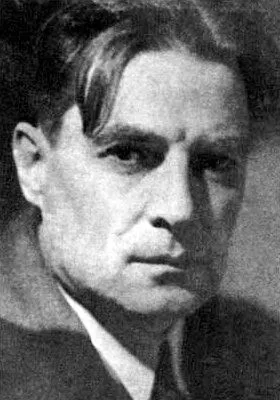
Roberto Arlt
Human Design Chart
Biography
His first novel, El juguete rabioso (1926) ("Mad Toy"), was the semi-autobiographical story of Silvio, a dropout who goes through a series of adventures trying to be "somebody."
Arlt's second novel, the popular Los siete locos (The Seven Madmen) was rough, brutal, colloquial, and surreal, a complete break from the polite, middle-class literature more typical of Argentine literature. Los lanzallamas (The Flame-Throwers) was the sequel, and these two novels together are thought by many to be his greatest work.
During his lifetime, however, Arlt was best known for his Aguafuertes ("Etchings"), the result of his contributions as a columnist - between 1928 and 1942 - to the Buenos Aires daily El Mundo.
Roberto Arlt married twice and had two children including the noted writer Mirta Arlt. Worn out and exhausted after a lifetime of hardships, he died from a stroke on 26 July 1942 at age 42 in Buenos Aires.
Roberto Arlt — Manifestor with Profile 5/1
Manifestor 5/1 — Design at a Glance
Roberto Arlt appeared as a pioneer and visionary whose design predisposed him to lead the world into a new future. His Human Design type was that of a Manifestor. This profile carried imperial energy: He had the vision for a great whole but did not wage the necessary wars or battles himself. Instead, he sent others out to implement his plans and conquer territories on his behalf.
This kind of leadership inevitably polarized opinions. As his thinking often progressed far ahead, he was misunderstood. The reactions from his environment split clearly: Some people loved his great dreams and followed him as a fanbase; others hated him precisely because of these huge visions. This dilemma of either being loved or hated formed a central pain point in his design.
To attract the right fanbase and minimize misunderstandings, his mechanics required a clear strategy: informing others. By enlightening people about his intentions at the right time and with precision, he could gather the correct circle around him. If Roberto Arlt followed this strategy of informing as well as his inner authority, his design rewarded him with an internal sense of peace. Living against this principle, however, generated a persistent deep anger in him. His path lay in minimizing resistance through precise information and effectively using his visionary power without exhausting himself in battle.
Ego Authority
Roberto Arlt revealed himself to be someone whose inner truth was rooted in willpower, expressed through spontaneous, uncensored speech. His design carried the rare 'authority in ego', a configuration that only Projectors or Manifestors with open Emotional, Sacral and Spleen centers as well as a defined Ego Center exhibit. This structure gave him great openness and associated susceptibility to being influenced, increasing the risk of distractions. His truth did not lie in thinking but rather in listening to himself while speaking: What spontaneously came from his throat was true to his essence; the mind often served other interests or the non-self in the open centers.
When Roberto Arlt did something that truly mattered to him, he had the willpower to achieve goals and keep promises. This consistent following of his own will could appear egoistic outwardly but was essential for his integrity. For him, every action needed personal reward – whether through material success or the urge to transcend limits and be first. In doing so, there was a possibility of guiding others into new directions. A central mechanism in his nature was the necessity of pausing after goal achievement. Continuous work did not yield the desired result for him but led to unhealthy exhaustion and illness. His design therefore required a rhythm of willful action and necessary regeneration to maintain his strength.
The 5/1 Profile — Heretic / Investigator
Roberto Arlt revealed himself through a magnetic aura that drew other people to him seeking solutions for their crises. As a 5/1 profile, his Human Design showed the need for deep personal knowledge combined with the role of helper in emergencies. Others sought advice from him because they valued his inner treasures as valuable. This created an ongoing danger of burnout. Without clear boundaries, he risked losing himself while carrying others' problems.
The mechanics of his Line 5 involved managing other people's resources during crises. He was capable of offering practical solutions and taking responsibility for other means. Yet this ability brought the risk of power loss or fraud when the burden became too heavy. At the same time, his Line 1 demanded protecting his own identity through mutual dependence rather than one-sided devotion. It was about acknowledging individual traits and exchanging resources fairly without falling into needy dependency.
Arlt's challenge lay in maintaining balance between the 'Explorer', who learns for himself, and the 'Hero', who serves others. Only by setting boundaries could he optimally use his gifts without becoming a victim of his own care. His design required a clear distinction between what belonged to him and what he managed for others to avoid identity loss and burnout.
Single Definition — Defined & Open Centers
Roberto Arlt had a stable core consisting of defined Throat and defined Heart centers, which gave him a consistent voice and willpower. He spoke reliably from an 'I want' position and could keep promises as well as determine his own resources. This inner structure formed the anchor in an environment marked by seven open centers: Head, Ajna, G Center, Sacral, Solar Plexus, Spleen, and Root were undefined.
This openness made him a sensitive receiver for environmental impulses. The open Head and Ajna centers led to taking mental confusion or inspiration from the environment rather than consistently generating his own concepts. He tended to be influenced by others' doubts or seek answers that weren't his own. The open G Center meant a flexible identity; he often adapted to those around him, seeking direction through external initiation rather than asserting it himself.
In terms of energy, the open Sacral center was crucial: He lacked a consistent flow and instead absorbed the vitality of his environment, which could lead to exhaustion if boundaries were ignored. The open Solar Plexus center allowed him to absorb and amplify others' emotional waves, risking experiencing foreign moods as reality. Additionally, the open Spleen center made him vulnerable to survival fears and absorbing discomfort from the environment, while the open Root center took on external stress and adrenal impact that he did not generate himself.
The tension lay in his clear willpower (Heart) and ability to express (Throat) often conflicting with the pressure to mirror mental, emotional, and energetic states of the environment. His challenge was to recognize these absorbed impulses as transient conditioning rather than personal truth while trusting his defined inner structure.
Channels for self-assured action and clear communication.
Roberto Arlt showed himself as someone who had to actively accept and master the material plane. His design established a basic attitude: carrying responsibility for the welfare of the 'tribe' while simultaneously protecting his own heart from overload. This tension shaped his lifestyle.
The Channel of the Money Line 21-45 connected the Heart Center with the Throat Center, creating authority on the material level that oscillated between serving the whole and authoritarian control. The Gate of the Hunter (21) demanded control to rest, while the Gate of the Gatherer (45) served as a final voice: 'I have or I don't.' For Roberto Arlt, success lay in achieving a measure of independence. He worked best as his own boss, setting his natural rhythm and learning to delegate to avoid stress in the Heart Center. The challenge was always to assert willpower so that personal interests were protected without exploiting others.
Additionally, other energies influenced his design. Gate 27 brought genetic warmth and care into all activities. Gate 28 demanded decisions in the here and now as well as taking risks according to strategy. Gate 19 linked resources with spirituality and a need for a safe environment. Gate 33 allowed reflection and withdrawal for strength before new cycles. In his design, Gate 26 promoted innovation through a weak ego, while Gate 35 sought change through interaction. Gate 12 in the Throat Center emphasized restraint and the influence of emotional moods on communication. This constellation created a person who had to combine material security with inner withdrawal and cautious innovation.
Tribal Circuitry — Circuit Signature
Roberto Arlt showed himself through his design as someone aligned within the Ego Circuit towards cooperation and the joint creation of resources. This circuit specifically connected his Throat Center with his Heart Center, forming the basis for his ability to mediate and communicate as well as handle material matters.
The active Channel 21-45, known as the Money Line, shaped his access to prosperity. It enabled him to accumulate resources and build material security, closely linked to his communicative expression from the Throat Center. At the same time, his actions were guided by the principle of giving and taking within the Ego Circuit. Since this circuit in Roberto Arlt did not connect to the Sacral Center, there was no constant life force ensuring uninterrupted energy supply. Instead, his design required necessary rest periods to regenerate strength for further joint ventures and supporting the tribe. His focus thus lay on rhythmic interaction where exchange and material security were paramount without a continuous, sacral driving force.
Left Angle Cross of Alignment 1
Roberto Arlt had the Human Design characteristic of the left cross. Since the specific mechanical function of this configuration is not defined in the current material, a detailed characterization or behavioral prognosis cannot be derived. The presence of this element remains a structural fact of his Human Design chart without translating into concrete psychological or practical implications. It is an established part of his energetic landscape whose expression and significance remain undefined within this context. No further information about specific orientations, internal processes, or external manifestations of the cross are available. Therefore, the description is limited to naming the configuration as a component of his design without additional interpretation or classification into a larger pattern of his personality or life path.
Saturn Return · Uranus Opposition — Life Cycles
Roberto Arlt showed himself to be someone whose creative expression took a decisive turn in his youth. His design suggested that internal tensions and unconscious patterns often condensed through external milestones. In 1926, at the age of 26, he published his first novel “El juguete rabioso”. This marked his first Saturn return, a cycle where years of groundwork and inner structuring matured into visible results. For Arlt, this was the moment when his literary identity solidified and became public.
Later, his design led to an abrupt end of this developmental line. In 1942, at the age of 42, Roberto Arlt died from a heart attack. This coincided with his Uranus opposition. In Human Design mechanics, this configuration represents unexpected breaks or sudden changes that disrupt previous life rhythms. While the first Saturn return manifested and stabilized his creative power, the Uranus opposition highlighted the fragility of the physical body against such abrupt energetic shifts. Arlt’s life illustrated the contrast between building a lasting structure in youth and the possible, unpredictable dissolution of these structures midstream. His short lifespan underscores the intensity of these cyclical forces that both shaped and abruptly ended his work.
Manifestor · Ego Authority — Synthesis
Roberto Arlt was a pioneer whose life was marked by a deep need for control and the ability to mobilize resources (Channel 21-45). This energy manifested in an ongoing search for direction and meaning, amplified by his open G Center. He moved between the desire for influence and the necessity of relying on others, giving him a unique perspective on human striving for success and recognition. His capacity to perceive emotions (open Solar Plexus) allowed him to recognize the needs of others but also made him vulnerable to their conditioning.
A central paradox in Arlt’s design lies in the interplay between defined willpower (Heart Center) and open centers that constantly exposed him to new influences. He possessed the energy to manifest things and pursue his goals, yet he was dependent on external impulses to find direction at all. This led to an internal tension between the desire for autonomy and dependence on external factors, which manifested in a constant struggle with identity and meaning.
1 Defined Channel
Incarnation Cross - Left Angle Cross of Alignment 1
Solar Return
The Solar Return shows the moment when the sun returns to its exact birth position - your personal solar year.
Life Cycles
Discover the life cycles with a detailed triple view (birth chart, cycle chart, composite).
Human Design Profile
- Type
- Manifestor
- Strategy
- To inform others before acting
- Authority
- Ego Authority
- Profile
- 5/1 - Heretic / Investigator
- Definition
- Single Definition
- Incarnation Cross
- Left Angle Cross of Alignment 1
- Date of Birth
- 26.04.1900 23:00
- Place of Birth
- Buenos Aires, Argentina
Frequently Asked Questions
What is Roberto Arlt's Human Design type?
Which Profile did Roberto Arlt have?
What was Roberto Arlt's Authority?
What incarnation cross did Roberto Arlt have?
When was Roberto Arlt born?
Discover your own Human Design
Are you also a Manifestor? Find out in a personal reading how to use your initiation power peacefully and dissolve resistance.
More Personalities
Back to overviewAlain-Fournier
Angeli

Christian-Jaque
Juninho

Kesha

Lucebert