
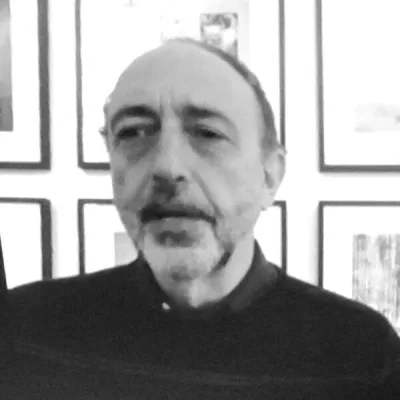
Roger Ball
Human Design Chart
Biography
Ball is both a natural musician and a mathematician. In Dundee art college in the mid-'60s he studied architecture. Before joining the Average White Band, Ball’s credits included record sessions with Johnny Nash, Family, Forever More, Stone The Crows and Maggie Bell. Through his understanding of chords and tonal textures, Ball lent class to the band and he could also throw in the unexpected.
The individual members were veterans of numerous Scottish soul and jazz groups; together Average White Band made their debut in 1973 as the opening act for Eric Clapton. Their debut album, "Show Your Hand," followed shortly thereafter but wasn’t successful. After adopting the abbreviated moniker AWB, a year later their next self-titled album topped the American pop charts with the instrumental "Pick Up the Pieces." The record's huge success was tempered by the 23 September 1974 death of band member McIntosh, who died at a Hollywood party after overdosing on heroin.
Human Design Analysis: Roger Ball as Projector 3/5
Projector 3/5 — Design at a Glance
Roger Ball's design inclined towards precise system analysis. His focusing aura acted like a bright beam that immediately revealed weaknesses in the environment. However, this ability to directly recognize errors in others' systems was only effective when it wasn't perceived as an attack.
The Projector mechanics suggest that this intense perception from outsiders is often interpreted as unpleasant or even aggressive, similar to a light beam directed straight into someone's face. To avoid this effect and instead appear as an attractive source of clarity, the strategy was crucial: waiting for a respectful invitation. Only then could Roger Ball convey his insights in such a way that they were accepted rather than triggering defense mechanisms.
Since Projectors do not have a constant Sacral Center, they lack a continuous intrinsic energy source. Instead, they work in phases of high intensity followed by necessary rest periods to avoid burnout. By living according to this rhythm and the strategy of waiting for an invitation, Roger Ball was rewarded with success. Ignoring these dynamics and acting out of his own initiative without prompting led sooner or later to his Non-Self theme: Bitterness. His design therefore required patience and restraint to use his specific gift of error detection constructively.
Self-Projected Authority
Roger Ball's design suggested a rare configuration: the authority in Self, which only Projectors carry. This structure grants extreme openness but also a high risk of being distracted by external motoric energies. The greatest danger lay in getting lost in this vastness and constantly chasing after energy instead of trusting inner truth.
His decision-making was based on two paths. First, through spontaneous speaking – whether in self-talk or invited dialogues. Crucial was distinguishing between the impulsive expression of true essence and the deliberate speech of reason. Only the unfiltered revealed his uniqueness to others. Second, a physical pull that directed him geographically or thematically into specific directions.
By following this inner compass needle, Roger Ball could not only find his own path but also act as a guide for his environment. His specific success potential lay precisely in recognizing and consistently living out this spontaneous authenticity and bodily orientation rather than being distracted by the abundance of external stimuli.
The 3/5 Profile — Martyr / Heretic
Roger Ball's design was characterized by a clear tension between his personal need for self-experimentation and the outer expectation to act as a hero with practical knowledge solving others' problems. His Profile 3/5 suggested that he initially accepted nothing at face value but had to try everything himself. This line of the Adventurer (Line 3) was a purely personal development path, requiring trial and error in the context of chaos and crises. Other people were necessary for him to make these experiences and enable forward-looking changes.
Through this process, Roger Ball accumulated a rich treasure trove of practical life experiences that he then presented to others. This aligned with the Hero role (Line 5), which allowed him to ask important questions during crisis times and thus provide practical solutions for others' doubts. His experience treasury was attractive to others because they could learn from his mistakes. This role flattered his design but became painful when he failed in front of others. The mechanics show here the necessity of overcoming immaturity and empty rituals to deliver precise answers. Roger Ball learned from his own experiments, then used this self-acquired knowledge to solve problems in his environment, making him a heroic adventurer and storyteller.
Split Definition — Defined & Open Centers
Roger Ball's design established a stable, consistent mental identity that contrasted with situational energy and emotional absorption. His defined Head and Ajna centers created a constant internal pressure to question and find answers. This mental process was his reliable source of inspiration; he thought constantly and could inspire or put others under pressure through his conceptual clarity. His defined Throat center allowed him to express these thoughts reliably, while his defined G Center provided a firm self-identity and clear sense of direction in life. He knew who he was and where he was going without needing to prove it.
At the same time, Roger Ball showed himself through open centers in Heart, Sacral, Solar Plexus, Spleen, and Root as someone not based on consistent internal energy or emotion. His open Heart center tended to feel the pressure to prove his worth or make promises – a trap he had to avoid by setting boundaries against others' willpower. The open Sacral center meant that his vital energy fluctuated; he absorbed the generative power of others and risked overloading if he didn't pause. His open Solar Plexus absorbed emotional waves from the environment, making him vulnerable to others' moods rather than having stable feelings of his own. Furthermore, his open Spleen center was marked by a deep, often unconscious fear of uncertainty that could lead him to cling to unhealthy situations just to simulate a sense of security. Finally, his open Root center took on external stress and adrenaline, which could drive him into cycles of perceived urgency and exhaustion if he didn't recognize this as foreign pressure. His challenge lay in using his mental clarity without identifying with borrowed energy, absorbed emotions, or external stress.
Channels for logical doubt and reflective memory.
Roger Ball's design was marked by a rare synthesis: a mind that rigorously scrutinized and a soul that patiently gathered. This combination shaped him into someone who not only asked questions but also listened – a spirit that passed on truths only after they had been logically sound and experientially matured.
Central to this was Channel of Logic 63-4, connecting the Head Center with the Ajna Center and creating an active, skeptical mind. This mechanism continuously filtered patterns to check their consistency. Once a pattern broke, mental pressure arose that turned into a question. For Roger Ball, this doubt was essential; it served as a filter against unfounded belief. An answer was only considered true if it could be verified through logical experimentation and practical functionality. His mind thus sought not blind trust but consistent evidence to serve the collective.
Simultaneously, Channel of the Lost Son 13-33 worked, connecting his G Center with his Throat Center and giving him the ability for deep listening and reflection. Gate 13 gathered information, secrets, and life experiences like souvenirs. Gate 33 then withdrew to sort through these data and wait for a deeper truth. This channel brought patience into the process of communication. Roger Ball had to learn to wait for the right timing before revealing his collected insights. It was not about quick predictions but the wisdom that arises from patiently observing past events.
The Personality Gates (56, 1, 23, 16, 12) added nuances: abstract storytelling, individual mutation, and collective experimentation. But at core, the design mechanics dominated: a skeptical analyst who spoke his conclusions only after thorough, experience-based reflection. This structure protected against hasty judgments and fostered communication that was both intellectually grounded and emotionally deeply rooted.
Collective Circuitry — Circuit Signature
Roger Ball's design established a tendency towards a clear separation between rational future planning and emotional past reflection. These two energetic poles existed as separate, parallel forces not directly connected to each other.
The Understanding Circuit linked his Head Center with the Ajna Center via Channel of Logic. This created an ability for cool, emotionless ratio and strategic focus on future improvements. The energy of this circuit aimed at structuring logical insights free from conditioning and sharing them with others.
Simultaneously, the Meaning Circuit worked through connecting Identity Center with Throat Center via Channel 'The Lost Son'. Here, emotional waves from the past were cyclically processed to draw collective lessons. This energy was wave-like and served to articulate felt insights about personal identity and make them accessible to the collective.
The tension between this rational, future-oriented logic on the left side of the chart and the emotional, past-focused reflection on the right shaped his expression style. Both circuits were designed to carry their respective insights – whether strategically or emotionally – outward but remained energetically independent.
Right Angle Cross of Consciousness 2
Roger Ball's Design establishes a deep, often unconscious motivation that structures his entire life pattern and individual developmental task. This imprint stems from the archetypal configuration of the right consciousness cross 2.
This structure defines the fundamental framework within which a person develops. It does not always manifest on the surface level of daily life but forms the inner foundation for decisions and attitudes. For Roger Ball, this was an overarching archetypal imprint that determined his deeper orientation. Since no specific channels or centers are mentioned in the raw content, the focus is on the general presence of this cross as a central life task.
The mechanics here describe less concrete actions than the background process driving action. It involves acknowledging this deep imprint without further mechanical details. Roger Ball's development followed a pattern prescribed by this specific cross configuration. It imprinted his inner dynamics and created the space for his consciousness to unfold. This structure is constant and forms the basis for understanding his individual journey, independent of external circumstances.
Saturn Return · Uranus Opposition · Chiron Return · 2nd Saturn Return — Life Cycles
Roger Ball's Human Design profile suggests a tendency towards structural maturation and the assumption of clear responsibility. His first Saturn return, which typically occurs around age 29, marks in Human Design mechanics the transition from experimental phases to the solidification of life’s foundation. During this period, years of groundwork coalesce into stable results; internal architecture stabilizes, and the individual begins to fulfill their role within a larger context with commitment. This phase is not merely a change but an anchoring: what previously existed as potential or idea now takes form and weight.
In 1973, at age 29, this cycle concretely came into effect for Roger Ball. The Average White Band made its debut as the opening act for Eric Clapton. This event precisely illustrates the mechanics of a Saturn return: it was not a random appearance but rather the moment when the band’s musical identity manifested in a professional structure – meaning "revealed itself" and became effective. The platform provided the necessary stability to test and solidify their own foundation. Through this concrete alignment, the project gained substance; responsibility for their sound and performance was not only assumed but anchored publicly. Thus, the Saturn return served as a catalyst that transformed potential energy into tangible, structural reality.
Projector · Self-Projected Authority — Synthesis
Roger's design reveals a thread of mediation and pattern recognition. He projects energy to uncover flaws in systems (Projector), but the way he does this is marked by his defined mental authority: constant questioning and analysis to gain clarity. This combination of shedding light into darkness and the need for logical validation runs through his essence. His ability to accumulate experiences (Line 3) and then make them available to others (Line 5) reinforces this cycle. He is an observer who recognizes patterns and conveys them in formulations or stories—a process underscored by the Logic Channel and the Lost Son Channel.
The central paradox is the tension between his need for recognition and his inner authority. He is designed to wait for invitations (Projector), yet his defined Head Center and Ajna Center create a constant mental pressure to ask questions and seek answers. This leads to ambivalence: the desire to share insights and the necessity not to get entangled in unsolicited advice. Thus, he is a mediator who constantly balances between the need for external validation and inner wisdom that tells him when to speak and when to remain silent.
2 Defined Channels
Incarnation Cross - Right Angle Cross of Consciousness 2
Solar Return
The Solar Return shows the moment when the sun returns to its exact birth position - your personal solar year.
Life Cycles
Discover the life cycles with a detailed triple view (birth chart, cycle chart, composite).
Human Design Profile
- Type
- Projector
- Strategy
- Wait for the respectful invitation
- Authority
- Self-Projected Authority
- Profile
- 3/5 - Martyr / Heretic
- Definition
- Split Definition
- Incarnation Cross
- Right Angle Cross of Consciousness 2
- Date of Birth
- 04.06.1944 16:25
- Place of Birth
- Dundee, United Kingdom
Frequently Asked Questions
What is Roger Ball's Human Design type?
What Profile does Roger Ball have in Human Design?
Which Authority guides Roger Ball?
What is Roger Ball's incarnation cross?
When was Roger Ball born?
Discover your own Human Design
Are you also a Projector? Find out in a personal reading how to unfold your leadership qualities and recognize the right invitations.
More Personalities
Back to overviewSissy Spacek

Aaliyah

Alain-Fournier

Alexia

Alizée

Anémone
