
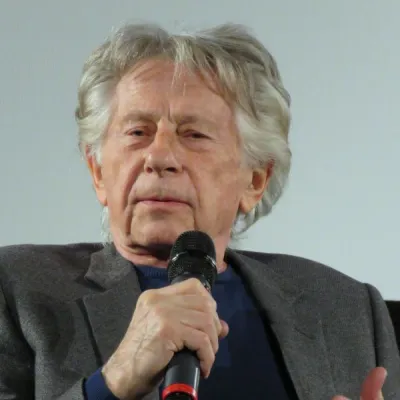
Roman Polanski
Human Design Chart
Biography
In 1977, Polanski was arrested in the United States for drugging and raping a 13-year-old girl. He pleaded guilty to the lesser charge of unlawful sex with a minor in exchange for a probation-only sentence. The night before his sentencing hearing in 1978, he learned that the judge would likely reject the proffered plea bargain, so he fled the U.S. to Europe, where he continued his career. He remains a fugitive from the U.S. justice system. Subsequently, allegations of abuse have been made by several women.
Polanski's parents moved the family from his birthplace in Paris back to Kraków in 1937. Two years later, the invasion of Poland by Nazi Germany started World War II, and the family found themselves trapped in the Kraków Ghetto. After his mother and father were taken in raids, Polanski spent his formative years in foster homes, surviving the Holocaust by adopting a false identity and concealing his half Jewish heritage. In 1969, Polanski's pregnant wife, actress Sharon Tate, was murdered, along with four friends by members of the Manson Family in an internationally notorious case.
What does Generator 1/4 mean for Roman Polanski?
Generator 1/4 — Design at a Glance
Roman Polanski revealed himself as someone with immense endurance and inner drive, but who unfolds his strength not through spontaneous initiatives, but rather in response to external impulses. His Generator design means he possesses great sacral energy – comparable to a strong workhorse – which only flows effectively when triggered from the outside. The central dynamic lies in „Reacting“: Instead of taking the first step himself, his system waits for an environmental signal. Only once the sacral center gives clear confirmation – that inner feeling of „Yes! Let’s get started!“ – can he respond with full power.
This mechanism explains his enormous productivity when resonating properly, but also warns against two specific dangers. If forced to do things without internal approval or prevented from acting on his drive despite available energy, frustration and energy depletion are likely. Conversely, ignoring this inner signal leads to burnout. When Roman Polanski acted, he was most effective in responding to invitations or impulses rather than initiating himself. In the state of correctly answering external stimuli, a Generator finds deep satisfaction and fulfillment; acting against this principle – such as through constant self-initiation – tends to result more often in feelings of exhaustion and disconnection. His strength thus lies in the enduring implementation of what he is externally prompted towards and internally agrees with.
Emotional Authority
Roman Polanski showed a decision-making stance that was not characterized by immediate clarity, but rather by a wave-like fluctuation of emotions. His design dictated that he always perceived the world through the filter of his current mood: At one moment something could totally excite him, in the next it appeared in negative light. These fluctuations originated from his defined emotional center, which also carried his inner authority.
A central mechanism of his system was the absolute priority given to this authority: Whenever the emotional center is activated, it determines the direction of decisions, regardless of whether other centers are also defined in his graph. His feeling at any moment, however, was only a snapshot, an initial impression that did not necessarily reflect deeper truth yet. Quick, spontaneous judgments from such an emotional wave could therefore have negative consequences.
His design strategy required patience and conscious hesitation. By reconsidering decisions multiple times and letting them rest overnight, he gained emotional distance over time. The initial intense feelings gradually subsided, allowing clarity and calmness to set in only then. This process was particularly important for long-term orientation, as waiting out the wave movement allowed a grounded, sustainable direction to be established.
The 1/4 Profile — Investigator / Opportunist
Roman Polanski’s design pointed towards a tendency toward deep, individual research that always had to be anchored within the context of a familiar network. As a 1/4 profile („Researcher / Networker“), an internal tension was revealed: Line 1 drove him towards thorough appropriation of knowledge and perseverance in conflicts, while line 4 promoted the need for respect and recognition within a community.
This constellation created a specific vulnerability: The fear of not knowing enough or being exposed to his trusted ones could cause significant pain. For Roman Polanski, therefore, a loving environment with deep trust was no optional luxury but a necessary prerequisite to effectively utilize his abilities. Only in this protected framework could he use his profound knowledge to influence others and be recognized as an authority in his core themes.
The mechanics of line 1 (Gate 29) emphasized the aspect of „Recruit“, taking on commitments and learning when endurance is needed – often shaped by poles of acceptance or avoidance based on earlier experiences. Simultaneously, the fourth line allowed for individual contributions and promoted others’ gifts within the network. The combination of this researching intensity and social networking defined his way of not only keeping knowledge to himself but integrating it as a connecting element in his community, provided the foundation of trust was intact.
Single Definition — Defined & Open Centers
Roman Polanski was revealed through a design rooted in a deeply ingrained, unshakable self-identity. His defined G Center gave him a clear sense of direction and mission, independent of external expectations. This inner anchoring allowed him to attract or lead others without needing their consent – a power that also carried the risk of prescribing paths for others rather than waiting for invitations.
This structural stability was fueled by immense vital energy: his defined Sacral Center served as a constant engine. Polanski had a continuous source of life force, which required him to engage in what brought him joy and for which he felt an inner “yes.” Initiating actions without prior invitation risked quickly leading to frustration and exhaustion, as sacral energy only sustained its effect when correctly activated through reaction.
At the same time, his defined Solar Plexus Center shaped emotional depth and authority. Truth revealed itself to him not in moments of impulsivity but after traversing emotional waves. This configuration demanded patience; decisions made at the heights or depths of his emotional state tended to be regretted later. Emotional clarity was his compass, one that needed time to stabilize.
In contrast, several undefined centers highlighted specific vulnerabilities. His open Head Center made him susceptible to mental pressure situations and questions from others, which could occasionally pull him into a whirlpool of confusion if he did not trust his inner authority. The open Ajna Center meant that his conceptual thinking was flexible but did not provide a constant source of personal truth; he had to learn not to solidify ideas as dogmatic beliefs.
His open Heart Center freed him from the need to prove his worth through willpower or promises – an area where he would otherwise spiral into cycles of self-doubt and overcompensating actions. Finally, his open Root Center absorbed external stress, making him vulnerable to adrenalized pressure from his environment rather than generating it himself. This combination created a profile based on inner calm and reactive energy while remaining sensitive to mental and stress-induced influences from the surroundings.
Channels for material power and deep intimacy.
Roman Polanski was revealed as someone who exerted a profound, often intense attraction through his aura, pushing new directions in art and society. His design was marked by two powerful channels that carried this dynamic. The Beat Channel 14-2 connected the Gate of Competence (14) with the Gate of Higher Knowledge (2). This configuration gave him the ability to drive mutations through material resources and innovative impulses. He could introduce new perspectives as a key custodian, trusting his sacral reaction even without knowing the exact outcome. This allowed him to encourage others in their creative direction and point the collective towards new paths beyond the status quo.
Simultaneously, the Channel of Union 59-6 connected the Gate of Sexuality (59) with the Gate of Friction (6). This tribal channel rooted in a quantitative energy of intimacy and emotional depth. Polanski had a natural urge to merge and could quickly build trust through his availability. His emotional wave determined the timing of these connections; only after waiting for clarity did it become apparent whether a relationship was fruitful or not. This intensity could be misunderstood, but it also created spaces for deep, personal experiences.
Additionally, Gates like 29 (Saying Yes) and 30 (Recognizing Feelings) underscored his persistence and quest for emotional truth. Gate 8 encouraged his contribution to the group through individual uniqueness, while gates such as 55 and 36 marked emotional awareness and cyclical crises as developmental moments. His design challenged him to be honest about his own direction and initiate others with his authentic presence rather than acting out of a hunger for external validation.
Individual Circuitry — Circuit Signature
Roman Polanski’s design inclined towards a pulsating, acoustic expression form closely linked to his identity. This was evident through the Knowledge Circuit, which in him directly connected the Identity Center to the Sacral Center. This connection generated a rhythmic “beat,” an energy of being present and creative, enabling unique individual impulses to be translated into concrete life force. It was a pulsating format-energy that allowed new paths to be taken.
Parallel to this, the Archer Circuit linked the Sacral Center with the Solar Plexus Center. Here came into play the energy of union, an ancient instinct of protection and preservation. This connection tied the vitality of the sacral with the emotional waves of the solar plexus, addressing themes like care, defense, and nurturing one’s genetics. It was about the primal energy of “mother and father,” securing survival.
As Roman Polanski had a Simple Definition, these two circuits did not flow as a single stream but existed as separate yet coexisting forces within the same defined center-cluster (Identity, Sacral, Solar Plexus). Thus, creative, pulsating identity discovery stood alongside instinctive protective emotion. Both aspects shaped his inner world: on one hand, the drive to express newness through his own beat, and on the other, the deep emotional bond with protection and union as means of preserving the self.
Right Angle Cross of Contagion 3
Roman Polanski's design indicated a tendency towards a deep, almost physical entanglement with matter. He was someone who not only observed but became part of the events – often at the cost of his own boundaries. This attitude stems from the configuration of the "Right Cross of Infection."
In Human Design, this pattern describes a specific way of perceiving and interacting with the world. It is not about illness in a medical sense, but rather the ability to unconsciously absorb and integrate energies, moods, or situations of other people. Those who carry this structure tend to make their boundaries between self and outer world more permeable than others do. This can lead to intense empathy, but also to experiencing foreign burdens as one's own.
For Roman Polanski, this meant constant exposure to the emotional and energetic states of his environment. His design challenged him to process these absorbed impulses without completely dissolving his own identity. The challenge lay in clearly distinguishing what came from outside and what truly belonged to himself. Without this distinction, there was a risk of being overwhelmed by foreign energies. Thus, his chart shows a person profoundly marked by openness towards the other – a characteristic that could be both a source of deep insights as well as potential exhaustion.
Saturn Return · Uranus Opposition · Chiron Return · 2nd Saturn Return — Life Cycles
Roman Polanski exhibited a dynamic in which external crises acted as catalysts for profound inner restructuring. His design suggested that pressure from outside was not only burdensome but necessary to unlock hidden potentials and redefine his own identity.
In 1973, at the age of 40, he experienced a Uranus opposition – an astrological indicator for sudden, often shocking breaks with the previous life order. That year, Roman Polanski was accused of raping a minor. This crisis marked a massive external interruption that destroyed his established reality and forced him to radically distance himself from the expectations of his environment or overcome them. The influence of Uranus here accelerated processes that would otherwise have taken years by violently dissolving old structures.
However, out of this strain developed a new phase of consolidation. In 1980, at age 47, Roman Polanski went through his Chiron return. From the Human Design perspective, this is not a healing process in a therapeutic sense but rather an achievement cycle where one's incarnation cross unfolds and personal purpose becomes tangible. This period coincided with clear success: Roman Polanski received the César for best film and best direction for "Tess." This demonstrated how from the previous destruction emerged a new, powerful form of expression. The Chiron return here did not confirm survival of the crisis but rather the blossoming of his own purpose beyond external circumstances.
Generator · Emotional Authority — Synthesis
A central red thread runs through the design: a deep, sacral energy (Generator type, Beat Channel) paired with an unstoppable urge to explore and disseminate knowledge (Profile Researcher/Nettworker). This combination suggests that the person repeatedly finds themselves in situations where testing their own limits is necessary – as long as this aligns with their inner compass. The emotional authority underscores the need not to rush decisions but to let them ripen through natural waves of feelings, to recognize authentic directions (defined G Center).
The design reveals a central paradox between the desire for deep connection and the need for individual freedom. The energy of the Knowledge Circuit drives towards innovation and transformation, while Line 4 in the Profile implies a longing for validation within a familiar community. This creates a tension field between wanting to forge one's own path and fearing rejection or exposure – especially when it comes to sharing new knowledge (Gate 14). The documented events show crises and successes that reflect this dynamic.
2 Defined Channels
Incarnation Cross - Right Angle Cross of Contagion 3
Solar Return
The Solar Return shows the moment when the sun returns to its exact birth position - your personal solar year.
Life Cycles
Discover the life cycles with a detailed triple view (birth chart, cycle chart, composite).
Human Design Profile
- Type
- Generator
- Strategy
- To respond - wait for something to respond to
- Authority
- Emotional Authority
- Profile
- 1/4 - Investigator / Opportunist
- Definition
- Single Definition
- Incarnation Cross
- Right Angle Cross of Contagion 3
- Date of Birth
- 18.08.1933 10:30
- Place of Birth
- Paris, United States
Frequently Asked Questions
What is Roman Polanski's Human Design type?
What Profile does Roman Polanski have in Human Design?
What authority guides Roman Polanski?
What incarnation cross does Roman Polanski have?
When was Roman Polanski born?
Discover your own Human Design
Are you also a Generator? Find out in a personal reading how to use your sacral energy correctly and discover deep satisfaction.
More Personalities
Back to overviewSissy Spacek

Aaliyah

Alexia

Anémone

Angèle

Ann-Margret
