Photo: Wikimedia Commons
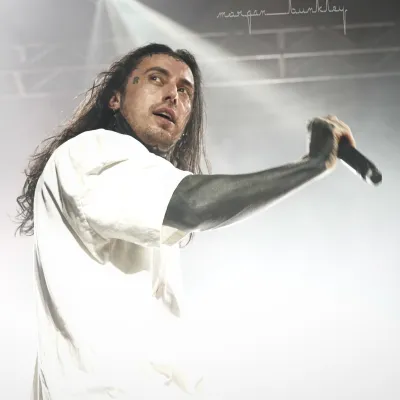
Ronnie Radke
Human Design Chart
Biography
What does Manifesting Generator 1/3 mean for Ronnie Radke?
Manifesting Generator 1/3 — Design at a Glance
Ronnie Radke's design showed a tendency towards hybrid energy: He had the constant power of a Generator, yet also the ability to skip steps and quickly pull things into his life. This configuration as a Manifesting Generator combined the need to respond to inner impulses with a pronounced speed in action.
The mechanics of this type have specific pitfalls. On the one hand, the design tended to overlook important stages, which could lead to frustration if they had to be made up later. On the other hand, there was the risk of starting multiple projects simultaneously, driven by reacting to many different impulses at once. Without the confirmation of inner authority and the sacral center, this creative enthusiasm could quickly turn negative.
The strategy was to first wait and react before acting. Only when the sacral center gave a clear
Emotional Authority
Ronnie Radke's inner decision-making system was marked by an emotional wave that permanently colored his perception of the world. His design showed a tendency to initially view situations through the lens of his current mood: In one moment, he could be enthusiastic about something, in the next, he could see the same matter negatively. This fluctuation was not a mistake but the mechanism of his defined Emotional Center, which functioned as his inner authority.
This authority was subject to a rule of absolute priority: Regardless of which other centers were defined in his chart, the emotional authority always had precedence in decisions. However, his feeling in the moment was only a snapshot, a first impression, which did not necessarily represent his truth. Quick, spontaneous judgments made directly from this emotional heat risked negative consequences, as emotional clarity had not yet been reached.
The mechanics of his design required patience and conscious hesitation. By letting decisions sleep and taking time, the intense emotions subsided. This process of gaining distance was crucial: Only when the emotional wave had ebbed did the deep clarity and calmness set in, which was necessary for well-founded, long-term life decisions. Ronnie Radke thus showed himself to be someone who found his truth not in the first impulse but in the calm after the emotional storm.
The 1/3 Profile — Investigator / Martyr
Ronnie Radke's design showed a tendency towards intense, practical research: He learned through direct experimentation and accepted failure as a necessary step. As a 1/3 Profile (Researcher/Experimentor), he combines a deep need for theoretical knowledge with the urge to test this knowledge in reality. His judgments were trustworthy, as he tested things both intellectually and physically.
This attitude was influenced by specific energetic influences. Gate 11 in Line 1 gave him the gift of serendipity – the intuitive knowledge of being in the right place at the right time. This promoted collaboration with like-minded individuals, while the fear of anonymity and the concern that his ideas would not be valued could drive him. At the same time, Gate 6 in Line 3 shaped his relationship life through loyalty and adaptability. He learned through the process of connecting and letting go, where a certain irresponsibility was accepted as part of this experimental process. The tension between the desire for intimacy and the rejection of submission to existing orders created a dynamic, often turbulent emotional landscape. Ronnie Radke used this mechanism to arrive at an authentic, self-discovered truth through trial and error, based on personal experience and not just theory.
Split Definition — Defined & Open Centers
Ronnie Radke's design points to a tendency towards constant, powerful expression driven by a deep inner direction and willpower. His defined Throat Center served as a pivot point, translating messages from the entire system into clear communication and action. This voice did not speak from arbitrary thoughts but from his established identity in the defined G Center, which gave him a reliable sense of his own mission and charm. Supported by the defined Heart Center, he had permanent willpower to fulfill promises and prove himself, shaping his aura of self-assurance.
His energy source came from the defined Sacral Center, generating enormous vital force, but this only flowed correctly in response to external impulses. Without this response, frustration threatened. The defined Solar Plexus Center added an emotional depth that required not making decisions impulsively but waiting for the emotional wave to clear before clarity emerged. His defined Spleen Center provided spontaneous, intuitive security in the present, while the defined Root Center supplied the necessary pressure to move forward in the world and master existential challenges.
In contrast to this inner firmness stood the vulnerability of his open centers. The open Head Center tended to be overwhelmed by foreign questions and mental pressure, leading him to seek inspiration that did not truly belong to him. Instead of finding answers, he risked sinking into doubts that came from outside. The open Ajna Center amplified this by a tendency to adopt concepts and opinions of others and falsely interpret them as his own truth. This created a tension field: While his core acted from will, instinct, and clear identity, his mind could be confused by conditioned thought patterns he did not generate but reflected. The challenge lay in using his inner authority rather than getting lost in the mental noise of the environment.
Channels for intuitive integrity, meaning, power and expression.
Ronnie Radke's design points to a tendency towards deepest self-acceptance and intuitive survival instinct. He showed himself as someone who perfected his uniqueness through authentic behavior rather than adapting to external expectations. This attitude came from the Channel of Inquiry 34-10, connecting the Sacral Center with the G Center. Gate 34 provided the inner strength to hold onto personal convictions, while Gate 10 initiated behavior from the deepest inner self to honor himself.
This individual note was reinforced by the Channel of Perfect Form 57-10. Here, the intuitive insight of Gate 57 in the Spleen Center combined with the self-referential behavior of Gate 10. This allowed Ronnie Radke to let go of unfounded future anxieties and move through the world existentially and unburdened. His creativity was distinct from mental reflection; it was spontaneous and served the perfection of his own form in the here and now.
Additionally, the Channel of Power 34-57 shaped his physical vitality. The generative life force of Gate 34 reinforced the existential awareness of Gate 57, keeping him permanently alert to threats. This created a strong fight-or-flight instinct that helped him navigate each moment safely by reacting spontaneously to acoustic and vibratory signals in his environment.
The Channel of Devotion 44-26 connected his instinctive awareness with his willpower. Gate 44 in the Spleen Center helped him assess others and recognize their needs before they knew them, while Gate 26 in the Heart Center supplied the energy to convincingly communicate or 'sell' these insights.
Finally, the Channel of Life Struggle 38-28 drove him to find meaning in his struggles. Gate 38 in the Root Center exerted pressure to maintain individual integrity, while Gate 28 in the Spleen Center recognized which struggles had value. This gave Ronnie Radke the stubborn determination to follow his own path and discover meaning in resistance.
The Channel of Transience 36-35 added an emotional dimension. Gate 36 in the Solar Plexus Center sought new experiences, often through crisis creation to generate movement, while Gate 35 in the Throat Center manifested these changes. This led to a restless longing for depth, driving him to explore the consequences of his feelings.
Prioritized gates like Gate 12 (Holding Back, Poetry) and Gate 6 (Friction, Further Development) underscored his ability to transform emotional moods into creative expression and grow through friction. Gates 11 (Visual Memory) and 5 (Rhythm) supported his assessment of the situation and his life rhythm.
Individual Circuitry — Circuit Signature
Ronnie Radke's design shows a clear distinction between inner, individual power and outer, emotional expressiveness. His chart consisted of two separate energetic groups that were not directly connected.
The first group connected Identity, Sacral, Spleen, Heart, and Root Centers. Here, the Centering Circuit operated through the Channel of Inquiry, directly linking identity and sacral energy. This created inner firmness and strong convictions. The Ego Circuit (Channel of Devotion) connected Heart and Spleen, suggesting cooperative resource building. The Integration Circuit (Channels of Perfect Form and Power) connected Identity, Sacral, and Spleen, combining reactive life force and intuitive knowledge in the present. The Knowledge Circuit (Channel of Life Struggle) connected Spleen and Root, emphasizing the unique path and mutations. These centers formed a closed circle of individual strength and intuition but were separate from expression.
The second group included Throat and Solar Plexus Centers, connected by the Meaning Circuit (Channel of Transience). This linked emotional waves from the past directly to expression. Since this group was separate from the first, there was no direct connection between inner convictions (Identity/Heart) and expression (Throat). Thus, Ronnie Radke showed a structure where deep, intuitive, and emotional processes existed in parallel without the inner firmness automatically translating into words or actions. Expression was emotionally and transiently marked, while inner power was stable and individual.
Right Angle Cross of Eden 4
Ronnie Radke's design is characterized by the configuration of the right cross of Eden 4. This structure sets a specific energetic alignment that manifests in how he interacts with his environment and the opportunities within it. It is a dynamic configuration often associated with a strong drive to explore new paths and transcend existing boundaries.
The right cross of Eden 4 describes a process of transformation and renewal. It involves breaking free from old patterns and venturing into uncharted territories. This energy encourages an openness towards the unknown and supports the ability to find clarity in chaotic or uncertain situations. It shapes a lifestyle that does not seek static security but rather growth through change.
For Ronnie Radke, this means that his inner compass is set towards movement and development. He naturally leans towards not settling into comfort zones but actively seeking challenges that propel him forward. This configuration helps him adapt to new circumstances and learn from experiences rather than passively enduring them. It gives him the strength to focus on the future even in difficult phases and to develop new perspectives.
Saturn Return · Uranus Opposition — Life Cycles
Ronnie Radke's design showed a tendency to build new, sustainable structures after phases of limitation or withdrawal. This became evident in 2010, at the age of 27, when he was released from prison and continued his career with Falling in Reverse. This marked his first Saturn return. In Human Design mechanics, this cycle often signals the crystallization of years of groundwork into a stable outcome. It is a moment when the life direction solidifies and a new, mature phase begins. For Ronnie Radke, this was not just a fresh start but the structural consolidation of his path. The Saturn return acts like a milestone that lays the foundation for future developments. Here, it was clear how the inner architecture of the design shapes external circumstances: from a situation of limitation emerged a clear, sustainable orientation. This mechanism underscores that such transitions are not random but part of a larger unfolding pattern. The continuation of his career was thus an expression of a capability anchored in his design to find footing after crisis phases and channel this into productive paths.
Manifesting Generator · Emotional Authority — Synthesis
A central red thread in this design is the dynamic tension between inner exploration and outer expression. The defined sacral energy (Sacral Center) in combination with the manifesting generator type implies a constant readiness to respond to impulses and initiate things quickly. This is reinforced by the channel of investigation (34/10), which emphasizes a deep necessity to perfect one's behavior and trust inner conviction. At the same time, emotional authority serves as an anchor, urging the maturation of decisions and deep insight – a process that counters the impulsive nature of the manifesting generator.
The central paradox lies in the interaction between the drive to act quickly and transform (Knowledge Circuit, Throat Center) and the necessity to emotionally digest and scrutinize decisions. The profile as researcher/experimenter (1/3) intensifies this inner conflict: the need for thorough preparation and knowledge clashes with the desire to experiment and learn from mistakes. A documented event, the success after release (2010, 27 years old), suggests that the integration of these opposing forces – quick action and emotional maturity – is the key to realizing potential.
6 Defined Channels
Incarnation Cross - Right Angle Cross of Eden 4
Solar Return
The Solar Return shows the moment when the sun returns to its exact birth position - your personal solar year.
Life Cycles
Discover the life cycles with a detailed triple view (birth chart, cycle chart, composite).
Human Design Profile
- Strategy
- To respond - wait for something to respond to
- Authority
- Emotional Authority
- Profile
- 1/3 - Investigator / Martyr
- Definition
- Split Definition
- Incarnation Cross
- Right Angle Cross of Eden 4
- Date of Birth
- 15.12.1983 08:09
- Place of Birth
- Las Vegas, NV, United States
Frequently Asked Questions
What is Ronnie Radke's Human Design type?
What profile does Ronnie Radke have in Human Design?
What authority does Ronnie Radke have?
Which incarnation cross is Ronnie Radke associated with?
When was Ronnie Radke born?
Discover your own Human Design
Are you also a Manifesting Generator? Find out in a personal reading how to unfold your multi-talents and direct your energy wisely.
More Personalities
Back to overviewAaliyah

Aldair
Alexia

Alizée

Angèle

Angeli