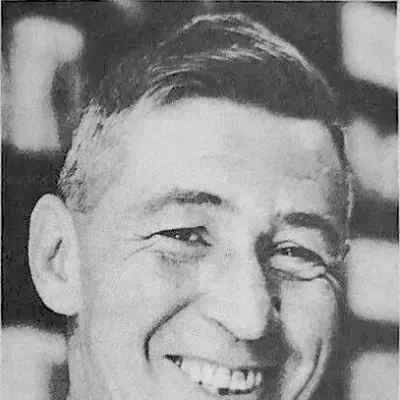
Ruth Asawa
Human Design Chart
Biography
Asawa was the fourth of seven children born to Japanese immigrants. She grew up on a truck farm. In 1942, her family was separated when they were sent to different Japanese internment camps as a result of isolation policies for Japanese-Americans mandated by the U.S. government during World War II. At Rohwer Relocation Center in Arkansas, Asawa learned drawing from illustrators interned at the camp. In 1943, she was able to leave the camp to attend Milwaukee State Teachers College, where she hoped to become a teacher but was unable to complete her studies because her Japanese ancestry prevented her from obtaining a teaching position in Wisconsin.
In 1946, Asawa joined the avant-garde artistic community at Black Mountain College in North Carolina, where she studied under the influential German-American Bauhaus painter and color theorist Josef Albers, as well as the American architect and designer Buckminster Fuller.
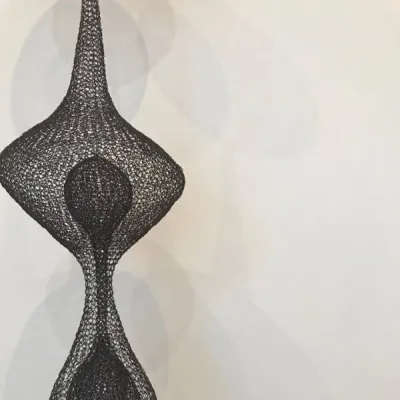
At Black Mountain College, Asawa began making looped-wire sculptures inspired by basket crocheting technique she learned in 1947 during a trip to Mexico. In 1955, she held her first exhibition in New York and by the early 1960s, she had achieved commercial and critical success and became an advocate for public art according to her belief of "art for everyone". She was the driving force behind the creation of the San Francisco School of the Arts, which was renamed the Ruth Asawa San Francisco School of the Arts in 2010.
In July 1949 she married architect Albert Lanier, whom she met in 1947 at Black Mountain College. The couple had six children. Albert Lanier died in 2008.
What does Projector 6/2 mean for Ruth Asawa?
Projector 6/2 — Design at a Glance
Ruth Asawa was characterized by a dense, focusing aura that directed her like a bright flashlight onto systemic weaknesses. Her design predisposed her to immediately recognize where processes or structures were not functioning – she instinctively saw the flaw in the system. However, this ability for quick diagnosis was only effective when it wasn't understood as direct criticism. An immediate confrontation would often trigger defense mechanisms in her environment, comparable to a light beam shining directly into someone's face. Instead, her true strength lay in an attractive presence: by embodying harmony and order herself, her radiance became visible and inviting to others. People were drawn to this quality and sought contact to benefit from her clarity. Her strategy was to wait for a respectful invitation before sharing her insights. Since her Sacral Center was undefined, Ruth Asawa lacked a constant energy source. She worked in phases of high intensity but needed mandatory rest periods to prevent exhaustion. A continuous work rhythm would have quickly burned her out. By following this natural rhythm and responding to others' invitations rather than pushing herself, she lived according to her design. This led to long-term success and recognition. Had she worked against this mechanism – for example through constant criticism or overwork – bitterness as a result of her non-self state would have emerged.
Splenic Authority
Ruth Asawa's design inclined towards immediate intuitive orientation. Her inner authority was marked by the defined Spleen Center, which distinguished her as either a Projector or Manifestor – only these types can possess this specific decision-making basis. This configuration endowed her with pronounced survival intelligence: spontaneous internal knowledge about whether a situation, environment, or person promoted her health and well-being. Her instinct and physical sensation served as reliable indicators; the first impulse in the present moment was considered the truth.
However, this Spleen voice was a very fine, unique impulse that could easily be ignored or drowned out by external influences, requiring high vigilance. Ruth Asawa demonstrated the necessity of capturing this spontaneous insight at the moment and making immediate decisions. Plans were short-term and flexible; she avoided long-term commitments to preserve her spontaneity and protect herself from harmful influences. Retreat served her for clarity when fine signals became harder to hear. Through this mechanism, she rigorously took care of herself and set boundaries, always recognized as correct in the moment.
The 6/2 Profile — Role Model / Hermit
Ruth Asawa's design inclined towards shaping the first decades of life as a phase of experimental learning through trial and error. Before the age of 30, her Line-6 energy acted like a Three: withdrawals after failures served to make necessary corrections before new paths were explored. This early period was marked by direct life experience and the integration of setbacks as learning steps, not through planned management but intuitive adaptation to circumstances.
Around the age of 30, the actual dynamics of Line-6 activated. Ruth Asawa metaphorically retreated into a 'cave on the mountain' – a phase of intense distancing and deep introspection. Here she reflected upon her earlier experiments with great breadth. This time served for healing and gaining self-knowledge, away from the immediate pressure of the outside world. The Line 6 transforms early immaturity into an elevated perspective that is often kept secret to protect its transformative power.
Later, she emerged from this isolation as a role model. Her acquired wisdom attracted others seeking deeper introspection. She conveyed not dry goals but a human-oriented quality integrating low and high forces. Others came to her to partake in her ability for deep self-reflection. Thus, her design described a path from the reckless experimentation of young years to a calm, wisdom-dispensing presence later in life that inspired others through her authentic transformation.
Split Definition — Defined & Open Centers
Ruth Asawa's design indicated a tendency towards high internal consistency and independence from external conditioning. She was someone who constantly thought and was inspired, driven by the persistent mental pressure of her defined Head and Ajna Centers. This configuration created a permanent state of questioning and understanding; her inspiration always formed questions that had not yet been answered. Since these centers did not have their own energy for direct implementation, it would have been frustrating to fight against this pressure. Instead, her mind served as a trustworthy source for concepts and theories, while her defined Throat Center was the medium through which these thoughts entered the world – not impulsively, but from the clear structure of her thinking.
Her identity and will were stable: The defined G Center gave her a fixed self-image and a clear direction, while the defined Heart Center provided willpower and the desire for control over personal resources. This structure was supported by the intuitive Spleen, which allowed spontaneous judgments in the moment, as well as the defined Root Center, which provided a firm handling of stress and pressure to move forward.
In contrast to this dense inner fortress stood her open centers: Sacral and Solar Plexus. Ruth Asawa did not have a constant level of generative life force from herself; her energy level was situational and depended on the environment. She tended to absorb and amplify the vital energy of others, which could lead to exhaustion if she neglected to set boundaries or work continuously out of her own drive. Similarly, her open Solar Plexus picked up emotional moods from the surroundings. She often wondered whether the felt emotions were truly her own, rather than recognizing them as borrowed waves. Her challenge was to distinguish these 'borrowed' energies from her stable inner structure and not fall into emotional or energetic overload.
Channels for inspiration, curiosity, clarity, devotion and change.
Ruth Asawa's design indicated a tendency towards evolutionary development driven by emotional crises and the need to experience specific situations. This internal dynamics, marked by Gate 41 of Feeling, forced constant change and focused on intense experiences as the motor of her personal evolution.
Her expression was shown through the Channel of Inspiration 1-8, which connected the G Center with the Throat Center. This channel allowed her to creatively express her unique identity and inspire others without words; she led by example. Parallel to this, the Channel of Curiosity 11-56, connecting Ajna Center with the Throat Center, made her constantly seek new ideas and stories, telling them as living parables that stimulated and taught others less through facts than imaginative connection.
Her thought process was determined by the Channel of Awareness 61-24, which connected Head Center with Ajna Center. This created an individual thinker who waited for sudden moments of knowing or enlightenment rather than logical planning; her mind was designed to transform inspiration from the unknown into rational answers when mutation occurred.
In interpersonal relationships, the Channel of Devotion 44-26, connecting Spleen Center with Heart Center, gave her instinctive awareness and the ability to intuitively assess the tribe or market to find suitable solutions and secure her own position through willpower and an intuitive sense of needs. Finally, she was driven by the Channel of Transformation 54-32, which connected Root Center with Spleen Center. This ambition, motivated by fear of tribal failure, pushed her towards constant effort and social ascent through competence and loyalty to ensure continuity.
Individual Circuitry — Circuit Signature
Ruth Asawa's design indicated a tendency toward generating entirely new knowledge that was shaped by emotional grounding and individual expression. This configuration combined the search for hidden truth with the need to convey insights in ways others could absorb. Her Human Design featured a Split Definition, meaning her energetic powers worked in separate, parallel existing blocks rather than as an uninterrupted flow.
The Knowledge Circuit formed one of these blocks. In Ruth Asawa's case, it connected Head and Ajna Centers as well as Throat and Identity Centers. This connection promoted creative flashes (Channel 24-61) and inspiration (Channel 1-8). The pulsating, acoustic format energy facilitated her unique path and transformation through a new individual identity. She could generate entirely new knowledge and express it through the correct emotions from Solar Plexus Center via Throat Center, thereby initiating change for herself and others.
Another separate block was the Meaning Circuit, which connected Ajna and Throat Centers (Channel 11-56). Here, energy revolved around emotions and experiences from the past. The cyclical, visual format energy helped her find meaning behind past events and share these felt insights with the collective to learn together.
The third block was the Ego Circuit, which connected Heart, Spleen, and Root Centers (Channels 26-44 and 32-54). This tribal circuit focused on cooperation and joint creation of resources. Through devotion (Channel 26-44) and transformation (Channel 32-54), she supported others mutually. Since there was no connection to the Sacral Center, pauses for rest were essential to generate necessary resources for the tribe. The timeless format energy underscored this traditional give-and-take dynamic.
Left Angle Cross of the Alpha 2
Ruth Asawa's design carried the signature of the left cross of Alpha 2. This configuration established a specific energetic alignment that remains undefined in the given data without further mechanical details. Since there was no assignment to specific gates or channels, it is not possible to derive a detailed behavioral profile. The design merely bore this named designation without any discernible character traits or action patterns emerging from it. It represented a pure nomenclature within the systematics that did not provide additional explanations for her life path. Ruth Asawa lived with this structure whose inner dynamics were not specified here. Without further information about the involved centers or connections, the mechanical effect of this cross remained abstract. She embodied a point on the chart that had to be considered in isolation in this context. No other aspects of the design were provided to illuminate her personality or decisions. The left cross of Alpha 2 thus stood as the sole reference point without which no narrative depth could develop. Ruth Asawa's experience of this element is therefore limited to the mere existence of this configuration, as defined in its raw content.
Projector · Splenic Authority — Synthesis
Ruth Asawa lived a life marked by a profound ability to recognize patterns and transform them into new forms. This was evident not only in her artistic practice but also in how she received and processed information (Channel 61-24). Her defined mental center (Head/Ajna/Throat) enabled her to receive inspirations and filter these through her creative vision. The ability to intuitively grasp the world while simultaneously finding a clear expression was a central aspect of her actions and shaped her unique style. The connection between instinct (Spleen Center) and willpower (Heart Center) supported this process by helping her make authentic decisions and consistently follow her inner direction.
A central tension field in Ruth Asawa's design lies between the projection capability of her type and the defined centers that signal strong internal clarity. As a projector, she was destined to recognize the potential in others (Gate 41), yet her defined mental and emotional base allowed her simultaneously to deeply understand herself and her own direction. This combination of external perception and internal stability created dynamics where she could act both as an observer who grasped subtle nuances and as a creative force that designed and implemented new perspectives.
5 Defined Channels
Incarnation Cross - Left Angle Cross of the Alpha 2
Solar Return
The Solar Return shows the moment when the sun returns to its exact birth position - your personal solar year.
Life Cycles
Discover the life cycles with a detailed triple view (birth chart, cycle chart, composite).
Human Design Profile
- Type
- Projector
- Strategy
- Wait for the respectful invitation
- Authority
- Splenic Authority
- Profile
- 6/2 - Role Model / Hermit
- Definition
- Split Definition
- Incarnation Cross
- Left Angle Cross of the Alpha 2
- Date of Birth
- 27.01.1926 16:00
- Place of Birth
- Norwalk, CA, United States
Frequently Asked Questions
Which Human Design Type was Ruth Asawa?
Which profile did Ruth Asawa have?
What authority did Ruth Asawa possess?
Which incarnation cross did Ruth Asawa have?
When was Ruth Asawa born?
Discover your own Human Design
Are you also a Projector? Find out in a personal reading how to unfold your leadership qualities and recognize the right invitations.
More Personalities
Back to overviewSissy Spacek

Alain-Fournier

Anémone

Ann-Margret

Bourvil
Hergé