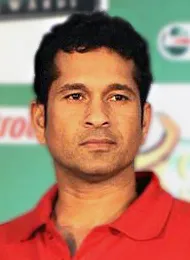
Sachin Tendulkar
Human Design Chart
Biography
He is also widely acknowledged as the greatest cricketer of all time. He took up cricket at the age of eleven, made his Test debut against Pakistan at the age of sixteen, and went on to represent Mumbai domestically and India internationally for close to twenty-four years. He is the only player to have scored one hundred international centuries, the first batsman to score a double century in a One Day International, and the only player to complete more than 30,000 runs in international cricket. In October 2013, he became the 16th player and first Indian to aggregate 50,000 runs in all recognized cricket (first-class, List A and Twenty20 combined).
In 2002, Wisden Cricketers' Almanack ranked him the second greatest Test batsman of all time, behind Don Bradman, and the second greatest ODI batsman of all time, behind Viv Richards. Later in his career, Tendulkar was a part of the Indian team that won the 2011 World Cup, his first win in six World Cup appearances for India. He had previously been named "Player of the Tournament" at the 2003 edition of the tournament, held in South Africa. In 2013, he was the only Indian cricketer included in an all-time Test World XI named to mark the 150th anniversary of Wisden Cricketers' Almanack.
Tendulkar received the Arjuna Award in 1994 for outstanding sporting achievement, the Rajiv Gandhi Khel Ratna award in 1997, India's highest sporting honour, and the Padma Shri and Padma Vibhushan awards in 1999 and 2008, respectively, India's fourth and second highest civilian awards and within a few hours of ending of his final match on 16 November 2013, the Prime Minister's Office announced the decision to award Tendulkar with the Bharat Ratna, India's highest civilian award, making him the youngest recipient to date and the first ever sportsperson to receive the award.
Sachin Tendulkar — Manifestor with Profile 3/5
Manifestor 3/5 — Design at a Glance
Sachin Tendulkar's design marked him as a pioneer and visionary with the task of leading the world into a new future. His nature was akin to that of a Roman emperor: he had the grand vision for an empire but did not personally lead the necessary wars or battles himself. Instead, he delegated execution to others, much like how an emperor would send his soldiers to conquer foreign lands on his behalf.
This superior perspective brought with it a specific conflict: Sachin Tendulkar was often misunderstood because he thought ahead of his environment. His visions inevitably polarized people; while some loved and followed him for his great dreams, others rejected or disliked him precisely because of their vast scale.
To minimize resistance and find the right following, it was crucial that he informed his surroundings timely and accurately about his intentions. This strategy of informing served to reduce misunderstandings and clear a path for those who wanted to follow him. By adhering to this strategy, he was rewarded with a sense of inner peace. Conversely, living against his design left him feeling an enduring, deep-seated anger within. His path therefore involved creating space for his vision through clear communication while leaving its execution to others.
Emotional Authority
Sachin Tendulkar's design established a clear mandate: spontaneity was counterproductive at crucial crossroads. His inner authority resided in the defined Solar Plexus Center, subjecting him to constant emotional waves. This mechanism meant that his perception of the world was always colored by current moods – ranging from exhilarating euphoria to deep negativity. An impulsive step in this state would only reflect a fleeting moment rather than the deeper truth of his situation.
Therefore, his decision-making strategy necessarily required time and distance. 'Sleeping on questions' was not a luxury but a mechanical necessity to let intense emotions subside. Only when these waves subsided and emotional distance was gained did true clarity and calmness emerge. This process of maturation allowed him to distinguish between transient excitement and lasting insight, especially crucial for long-term life decisions to avoid negative consequences from hasty actions driven by emotion. The definition of this center ensured that this emotional authority took precedence over all other impulses, regardless of further defined areas in his chart.
The 3/5 Profile — Martyr / Heretic
Sachin Tendulkar's design was characterized by a clear cycle of personal experimentation and public failure or success. As Profile 3/5, the 'Explorer/Hero', he initially believed nothing without proof and had to test everything himself; direct experience was his only measure. This line of the adventurer (Line 3) established that learning happened solely through trial and error.
The practical wisdom gained from this served to solve others' problems – the task of the Hero Line (Line 5). This wealth of experience made him attractive to his environment, triggering strong projections: others expected heroic action from him. Yet, this role was ambivalent; while flattering, it became painful when he publicly failed – a structurally built-in learning mechanism.
Gate 27 in Line 3 highlighted bindings and adaptation through constant testing. The compulsion to have more than necessary ('greed') drove this process. Simultaneously, Gate 41 in Line 5 stood for empowerment and fantasy under the pressure of projection. Limitation forced a choice of one vision while 'Venus in Fall' signaled enduring frustration over constraints. Thus, he lived with the tension between his inner compulsion to test and the outer expectation to succeed as a hero.
Triple Split Definition — Defined & Open Centers
Sachin Tendulkar's Human Design profile is characterized by a structure marked by intense internal pressure: constant mental questioning (defined Head and Ajna centers) paired with emotional depth (defined Solar Plexus). This configuration did not immediately lead to action but rather created a need for processing. Thoughts had to mature before they could be translated into communication or action through the defined Throat; impulsive speaking was avoided to maintain clarity.
Willpower and ego strength (defined Heart center) provided the necessary substance to fulfill promises and self-determinedly control resources. This worked in conjunction with the intuitive Spleen intelligence, which delivered momentary warning signals for health and survival – signals that had to be trusted without rational filters. The defined Root Center also ensured a set pressure to handle stress and advance in the material world.
At the same time, the design revealed two central areas of receptivity: the open G Center meant that identity and life direction were not internally prescribed but had to be initiated by the environment. Sachin Tendulkar was dependent on waiting for the right place and people rather than actively seeking a fixed role. A false context could lead to confusion here. Similarly, the Sacral Center was open, resulting in a lack of constant vital energy. Instead of working continuously under conditioned expectations, this required an approach of episodic engagement and respect for personal limits as well as the need for rest to avoid exhaustion.
Channels for meaning, mental clarity and ambitious transformation.
Sachin Tendulkar's Human Design profile established a deep emotional bond with the tribe, paired with an autonomous will for material self-determination. His thinking did not follow a linear plan but waited for intuitive clarity. This configuration created a person who based strategic decisions on emotional resonance and sudden insight rather than pure logic.
The Synthesis Channel 19-49 connects the Root Center to the Solar Plexus through Gate of Claims (19) and Gate of Principles (49). This channel served as an emotional glue for relationships, guided by tribal loyalty and a need for belonging. It determined who belonged to the community based on a code of love, honor, and obedience, where loyalty guaranteed the survival of the tribe.
At the same time, the Money Line Channel 21-45 connected Heart with Throat Center through Gate of Hunter (21) and Gate of Gatherer (45). This channel expressed a strong will for control over resources and independence. It manifested in the impulse “I have or I don’t,” where the desire for autonomy was central to the work rhythm, serving one’s own heart while also taking responsibility for the tribe.
Mutative thinking was shaped by the Awareness Channel 61-24 connecting Head with Ajna Center through Gate of Secrets (61) and Gate of Rationalizing (24). Knowledge arose not through logical planning but through inspiration and “satori” moments. Sachin Tendulkar could not control his thoughts arbitrarily; he had to exercise patience until the inner truth emerged on its own, anchoring his decisions beyond conscious will.
Tribal Circuitry — Circuit Signature
Sachin Tendulkar's Human Design profile shows a Triple Definition that defines three separate energetic poles: an impulsive drive for knowledge, a cooperation-oriented ego, and an emotional intuition. These poles work in parallel, not as a single flow.
The Knowledge Circuit drives the urge towards individual transformation. For Tendulkar, it connects Head and Ajna Centers (creative flashes of insight) along with Spleen and Root Centers (life struggle). This generates a pulsing impulse to take new paths and realize knowledge through courage.
At the same time, the Ego Circuit operates within the tribal group. Here Throat and Heart Centers (contractual loyalty) as well as Spleen, Root, and Solar Plexus Centers (synthesis of intuition and emotion) connect. This circuit focuses on cooperation and resource management without direct Sacral connection. It requires pauses for regeneration since there is no constant life force present.
The tension lies between the pulsing, creative drive of the Knowledge Circuit (Channels 24-61 Awareness, 28-38 Life Struggle) and the conservative, tradition-oriented necessity of the Ego Circuit for mutual support. Channel 45-21 (Money Line) in the Ego Circuit emphasizes the material basis of this cooperation. Tendulkar's design therefore requires a balance: walking one’s own path of transformation while simultaneously securing resources for the collective through pauses and partnerships. The separate groups mean that these forces do not automatically merge but must be consciously integrated.
Right Angle Cross of the Unexpected 1
Sachin Tendulkar's Human Design profile established a foundational disposition characterized by the Unexpected Right Cross 1. This configuration describes a life path that is not linear or predictable but rather marked by sudden turns and unexpected events. For Sachin Tendulkar, this meant his life was often determined by spontaneous developments he could not plan for in advance.
The Unexpected Right Cross 1 represents an energy that accepts and uses the unforeseen as a driving force. It is not about exercising control but embracing what comes along. In this context, Sachin Tendulkar showed himself to be someone who could handle surprises and even saw them as opportunities to take new paths.
This mechanism operates independently of external circumstances and shapes the inner attitude of the person. It demands flexibility and openness for the new. For Sachin Tendulkar, this means his design encouraged him not to bind himself to rigid plans but to go with the flow of life and embrace unexpected possibilities.
Saturn Return · Uranus Opposition · Chiron Return — Life Cycles
Sachin Tendulkar's Human Design profile shows a developmental line structured by three astrological turning points. The first Saturn Return marked in 2001 at age 28, a phase of testing. Here a crisis emerged: Tendulkar was questioned about ball tampering in South Africa and temporarily suspended before the suspension was lifted. This cycle condensed years of hard work under pressure.
The Uranus Opposition in 2013, at age 40, brought a decisive turning point. Tendulkar decided that his tour to the West Indies would be his last Test series. This was not an abrupt break but the result of internal maturation requiring the conclusion of a long journey.
The Chiron Return in 2019 at age 46 led to fulfillment. His induction into the ICC Cricket Hall of Fame confirmed not only success but also the blossoming of his own purpose. This cycle is not a healing process for old wounds, but an experience of meaning and completion when one lives according to their strategy. Tendulkar's path illustrates how crises and turning points in the design lead to a coherent life task that culminates in recognition.
Manifestor · Emotional Authority — Synthesis
A central red thread runs through the design: a dynamic tension between the urge to initiate something new and the necessity of developing emotional maturity. As a Manifestor, being a pioneer is prescribed (Design), yet emotional authority requires time for decisions (Authority). This interplay shapes a personality that pursues visions and inspires others (Knowledge Channel, defined Head Center) but always remains mindful of inner clarity. The profile as an Experimenter/Hero reinforces this trait: experiences are gathered to generate knowledge which is then passed on – a process that encompasses both the adventurous spirit (Line 3) and responsibility for others (Line 5).
The central paradox lies in the combination of the impulsive initiating drive of the Manifestor type with profound emotional waves. While the design tends towards immediate action, emotional authority demands a maturation period for decisions. This leads to an internal tension between the desire for rapid implementation and the necessity of fully experiencing emotions (Emotional Center). Documented crisis cycles – questioning (Saturn Return) and withdrawal from Test Cricket (Uranus Opposition) – point to a lifestyle shaped by this field of tension.
5 Defined Channels
Incarnation Cross - Right Angle Cross of the Unexpected 1
Solar Return
The Solar Return shows the moment when the sun returns to its exact birth position - your personal solar year.
Life Cycles
Discover the life cycles with a detailed triple view (birth chart, cycle chart, composite).
Human Design Profile
- Type
- Manifestor
- Strategy
- To inform others before acting
- Authority
- Emotional Authority
- Profile
- 3/5 - Martyr / Heretic
- Definition
- Triple Split
- Incarnation Cross
- Right Angle Cross of the Unexpected 1
- Date of Birth
- 24.04.1973 13:00
- Place of Birth
- Bombay, India
Frequently Asked Questions
What is Sachin Tendulkar's Human Design type?
What Profile does Sachin Tendulkar have in Human Design?
What authority guides Sachin Tendulkar?
Which incarnation cross is active for Sachin Tendulkar?
When was Sachin Tendulkar born?
Discover your own Human Design
Are you also a Manifestor? Find out in a personal reading how to use your initiation power peacefully and dissolve resistance.
More Personalities
Back to overviewAldair

Cafu
Christian-Jaque
Joelinton

Kaká

Kesha