
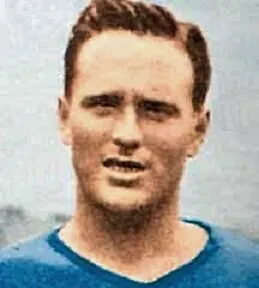
Sergio Bertoni
Human Design Chart
Biography
He died on 15 February 1995.
Sergio Bertoni as a Projector 1/3 in Human Design
Projector 1/3 — Design at a Glance
Sergio Bertoni was characterized as a Projector. His design created an aura that behaved like a bright flashlight: it focused precisely on weaknesses in systems and brought immediate light to the dark areas. This ability allowed him to recognize error structures in other people or organizations instantly.
However, the mechanics of his design indicated that direct correction often triggered resistance, comparable to a glaring beam directly into someone's eyes. Instead of being confrontational, his most effective strategy was to attract others through his own harmonious example. When he lived this inner order, he became magnetic for his environment; people came to him on their own and sought advice. The central instruction of his design therefore lay in waiting for a respectful invitation before bringing in his expertise. This fundamentally differed from the constant action of other types.
Furthermore, Sergio Bertoni did not have a defined Sacral Center, meaning he lacked a constant intrinsic life force energy. Instead, he went through phases of high activity that had to be balanced by rest periods to prevent burnout. Traditional societal systems often ignored this cyclical energy management. Living according to this structure – focusing on invitations and respecting his energy rhythms – rewarded him with success. Ignoring these principles led his design towards the trap of bitterness.
Self-Projected Authority
Sergio Bertoni's design featured a Projector Authority in Self, making him an extremely open person. This configuration is rare and carries the risk of being distracted by others' motoric energies or constantly chasing energy, leading to losing himself in his own openness. His inner truth lay in his identity. Sergio Bertoni made decisions through self-conversations or, when invited, through conversations with others. He had to learn to distinguish between spontaneous expressions of his true essence and the thoughts of the mind. Only the unreflected and spontaneous was authentic and recognizable as unique by others. A second decision-making source was a physical feeling of attraction or repulsion that guided him geographically or thematically in a direction. By recognizing and following this inner direction, Sergio Bertoni became a guide for others. There lay his specific potential for success: not in chasing energy but in fidelity to his own inner truth, which stabilized him despite constant distractions from external influences and enabled his leadership.
The 1/3 Profile — Investigator / Martyr
Sergio Bertoni's design established an identity as a researcher and experimenter. His life followed a cycle of theoretical learning and practical testing. Line 1 of his profile demanded dedication in secrecy, a deep immersion into subjects without immediate claims for recognition. This often created internal tension: the need for complete theoretical security before action clashed with the drive of Line 3 to act directly and learn through trial and error.
This dynamic shaped his development. Mistakes were not failures but necessary steps towards validating knowledge. Sergio Bertoni did not just work out insights in his head but tested them in reality. If he deemed something good, he had previously analyzed it intellectually as well as practically on a gut level. His judgment was therefore highly trustworthy, based on this dual foundation.
Line 3 also brought the risk of ego inflation when recognition arrived; it could destroy original humility. Nevertheless, the core of his design remained the search for hidden connections and their practical application. He lived the strategy of testing, learning to choose extreme strategies to be effective. His authority arose from this combination of deep analysis and lived experience.
Single Definition — Defined & Open Centers
Sergio Bertoni revealed a consistent inner identity and direction anchored in his defined G Center. This center endowed him with a deep sense of self-love and a clear purpose for his personal mission, without being dependent on others. His communication was equally reliable: The defined Throat Center acted as a stable pivot point, transmuting messages from within into the world. He did not speak impulsively or emotionally but rather from his personal truth and identity, giving him a clear, honest voice.
In contrast, his Head, Ajna, and Heart Centers were open. Without constant mental energy of his own, he tended to absorb external mental pressure, concepts, or the drive for willpower from the environment. Instead of getting lost in endless questions or needing to prove himself through promises, it was crucial for him not to identify these foreign energies as his own. His open Sacral Center also meant that he did not have a constant vital energy source; instead, he absorbed the life force of others, making him vulnerable to overexertion if he ignored boundaries.
His emotional and intuitive channels were also open: The Solar Plexus Center reflected the emotional climate, while the Spleen and Root Centers amplified fears and stress from the environment. This openness made him a sensitive barometer for his surroundings. The challenge was not to be drawn into whirlpools of doubt, emotional waves, or adrenalized pressure but to remain an unattached observer and let himself be guided by his inner authority to maintain his stable center in the G Center.
Channels for logical, secure and future-oriented leadership.
Sergio Bertoni exhibited a leadership approach based on logical argumentation and the principle of shared responsibility. His authority was not absolute but situational: It was strongest when he acted as a representative for a group and had earned their trust. This dynamic was determined by Channel 21-7, connecting his G Center with his Throat Center and linking the logical role of self-discovery (Gate 7) with the ability to lead collectively (Gate 31).
This configuration described an energy that recognized patterns in society and analyzed future trends. Sergio Bertoni could articulate these insights verbally, but his effectiveness depended on whether the collective invited him to lead. He was not a lone ruler but a leader who acted only when the majority acknowledged his competence and followed him. His influence lay in showing the way based on tested knowledge and logical certainty without taking away others' paths.
Additionally, a series of other gates shaped his inner experience. Gate 46 promoted devotion and presence in the here and now, while Gate 25 supported a mystical stance of innocence and individuation. Gate 10 contributed to integrating complex behavioral rules, and Gate 15 helped him fit into the natural rhythm of collective behavior. On a personality level, Gate 62 with its love for details and logical pattern recognition was active, while gates like 16, 23, and 56 encouraged processes of change, understanding, and mental abstraction. Finally, Gate 13 promoted reflection on time and continuity. Together these elements formed a profile that linked logical clarity with a deep connection to the collective process.
Collective Circuitry — Circuit Signature
Sergio Bertoni's design showed a tendency towards clear, rational structure. He revealed himself as someone who shared logical insights to guide society toward a better future. This approach stemmed from the Mind Circuit, which was active in him through the channel 'The Alpha Animal'. This channel directly connected his Throat Center with his Identity Center. Since both centers were in the same group, energy flowed between them continuously and without interruption.
The Mind Circuit focuses on sharing insights via logic, strategy, and focus. A central characteristic is 'emotionless ratio', as the Solar Plexus Center is not involved. This means that Sergio Bertoni's judgments and decisions were free from momentary emotional conditioning. The left side of the chart represented energies of the future. Through its simple definition, this connection was his only defined energetic flow in this area, making it a stable, predictable aspect of his personality. He used this direct line from identity to communication to convey structured, rational information. This did not happen out of emotional necessity but from the desire to initiate improvements through clear-mindedness and visual clarity. The mechanics described a person who translated complex connections into understandable, logical formats to lead others and support societal progress, always oriented towards future possibilities rather than past emotions.
Right Angle Cross of the Vessel of Love 3
Sergio Bertoni had the Right Cross of the Vessel of Love in Human Design. This configuration fundamentally shaped his identity as a container for intense emotional currents. He was chosen to experience deep devotion and interpersonal bonds not just passively but actively to receive and transmit them. His design indicated that he took on an existential role as a channel for these feelings.
The challenge of this structure lay in how one can absorb such intense energies without depleting or losing oneself in the process. It wasn't about superficial interaction, but rather the capacity to hold and guide love as a transformative force. Sergio Bertoni was marked by this mechanism: His life task consisted of sustaining this "vessel" and productively utilizing the emotional depth contained within it. This required a constant balance between absorbing others' feelings and maintaining his own center. The configuration thus determined his experience of relationships as spaces of deep resonance, where he was both receiver and transmitter without dissolving himself in the process.
Saturn Return · Uranus Opposition · Chiron Return · 2nd Saturn Return — Life Cycles
Sergio Bertoni revealed himself during the phase of his first Saturn return as someone seeking a clear orientation. His design laid the groundwork at this point for transitioning from an experimental youth to a defined, responsible adult identity. This cycle marked a critical turning point where inner values and outer reality meet, often necessitating a realignment of life's path.
Specifically, this dynamic shift became visible in 1946 when Sergio Bertoni, at the age of 31, moved to Brescia Calcio. This career move was no mere coincidence but rather a typical expression of Saturn energy: years of groundwork and associated learning experiences coalesced into a solid new position. Through this transition, a structuring took place that allowed him to define his role in the professional context more clearly and take responsibility for his future path. The Saturn return served here as a catalyst, pouring the previous development into a stable adult form and helping Sergio Bertoni to claim his place in the world with greater certainty.
Projector · Self-Projected Authority — Synthesis
Sergio Bertoni lived a life characterized by the ability to recognize patterns and convey them in an elegant manner. His design as a Projector, combined with authority rooted in self-dialogue and observation, indicates that he was an expert at discovering the potential of others – not through direct instruction, but through subtle "illuminating" of improvement opportunities (Throat Center). This inclination was reinforced by his Profile as Researcher/Experimentator: He constantly sought new insights and validated them through personal experiences (Line 1/3) to make them accessible to others. The openness of his centers, particularly the Head, Ajna, and Sacral Centers, pointed to a high sensitivity to the energies of his environment, enabling him to perceive subtle changes and adapt.
A central paradox in Sergio Bertonis design lies in the tension between his need for recognition (Gate 15) and his inherent openness. He was designed to recognize others' weaknesses, yet direct confrontation would have provoked resistance. Instead, his design required an indirect strategy: attracting others through his own harmony and authenticity (G Center) and guiding them subtly as a result. This tension between the desire for influence and the necessity of waiting for invitation shaped his interactions and revealed a deep understanding of the dynamics of human relationships.
1 Defined Channel
Incarnation Cross - Right Angle Cross of the Vessel of Love 3
Solar Return
The Solar Return shows the moment when the sun returns to its exact birth position - your personal solar year.
Life Cycles
Discover the life cycles with a detailed triple view (birth chart, cycle chart, composite).
Human Design Profile
- Type
- Projector
- Strategy
- Wait for the respectful invitation
- Authority
- Self-Projected Authority
- Profile
- 1/3 - Investigator / Martyr
- Definition
- Single Definition
- Incarnation Cross
- Right Angle Cross of the Vessel of Love 3
- Date of Birth
- 23.09.1915 03:00
- Place of Birth
- Pisa, Italy
Frequently Asked Questions
What was Sergio Bertoni's Human Design type?
What Profile did Sergio Bertoni have in Human Design?
What Authority did Sergio Bertoni have?
What incarnation cross did Sergio Bertoni have?
When was Sergio Bertoni born?
Discover your own Human Design
Are you also a Projector? Find out in a personal reading how to unfold your leadership qualities and recognize the right invitations.
More Personalities
Back to overviewSissy Spacek

Alain-Fournier

Aldair

Anémone

Ann-Margret

Bourvil
